Choosing the right preamp can shape every recording before it ever hits your DAW. The best 500 series preamps let you match the sound, headroom, and color you want without rebuilding your entire signal chain.
Whether you need clean amplification, transformer-driven warmth, or channel-strip style versatility, this roundup focuses on proven options for modern project and pro studios.
Best 10 500 Series Preamps Picks for 2026
Best for Clean-to-Color Flexibility

- Clean, low-noise preamp with excellent linearity
- Mojo adds Thump and Cream saturation modes
- Mic, line, and instrument input support
Best For: Engineers who want a transparent 500 Series preamp with optional analog character.
Best for Harmonic Color
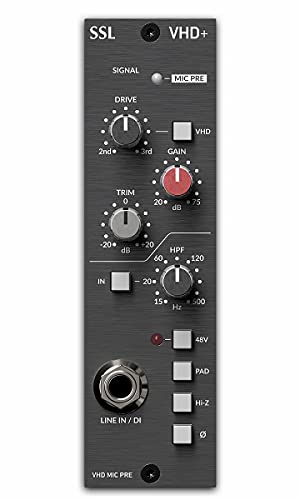
- Clean SSL SuperAnalogue sound
- Variable Harmonic Drive adds warmth or grit
- 48V, hi-Z, and HPF included
Best For: Engineers who want one 500 series preamp that can stay clean or add controlled analog color.
Best for Abbey Road Tone
Chandler Limited TG2-500 Mic Preamp

- EMI TG12428-inspired console character
- Creamy mids with a smooth, open top end
- Ideal for adding vintage color in 500 series racks
Best For: Engineers who want classic British console tone for vocals, guitars, drums, and mix sources.
Best for Console-Style Channel Strip Tones
SSL SiX CH 500 Series Channel Strip
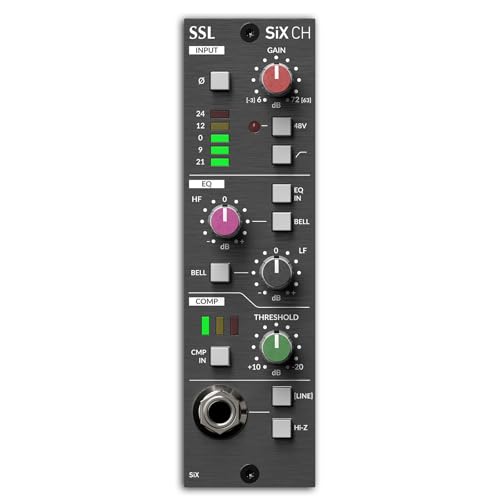
- Clean SuperAnalogue mic pre with wide gain range
- Switchable shelf/bell EQ for flexible shaping
- One-knob compressor and front-panel Hi-Z input
Best For: Engineers who want an SSL-style all-in-one channel strip in a single 500 series slot.
Best for DI and Vocal Boosting
Heritage Audio Lang 312L 500 Series Preamp
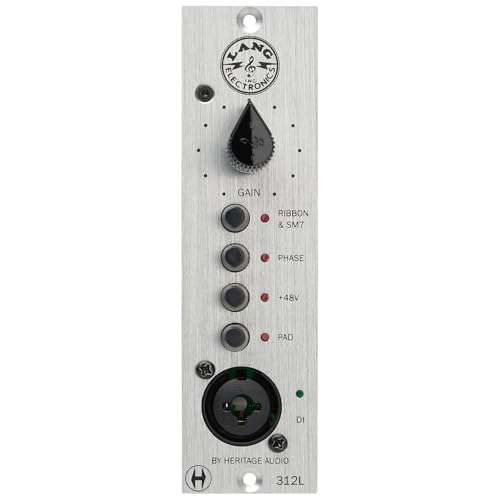
- +25dB lifter for extra input boost
- Built-in DI for instruments
- 48V phantom, phase, and pad controls
Best For: Engineers and musicians who want a flexible 500-series preamp/DI with extra gain and practical tracking controls.
Best Vintage SSL Tone

- SSL 4000 E-Series-inspired EQ with Black/Brown voicing
- 4-band layout with bell option on the shelves
- Musical mid bands for broad, usable tone shaping
Best For: Engineers who want classic SSL console EQ color in a compact 500-series module.
Best for Maximum Gain
PRE-573 MKIII 500 Series Mic Preamp

- Up to 80dB of mic gain
- Mic, line, and instrument inputs
- LED meter and switchable impedance
Best For: Engineers and home-studio users who need a flexible, high-gain 500-series preamp.
Best for Flexible Front-Panel I/O

- Transformer-coupled Jensen input for added character
- Front combo XLR/¼" makes quick patching easy
- HP/LP filters, pad, phase, Hi-Z, and 48V included
Best For: Engineers who want a versatile 500-series preamp with easy front-panel connectivity and useful onboard shaping.
Best for Feature-Rich Flexibility
Neve 88RLB 500-series Mic/Line/Instrument Preamp
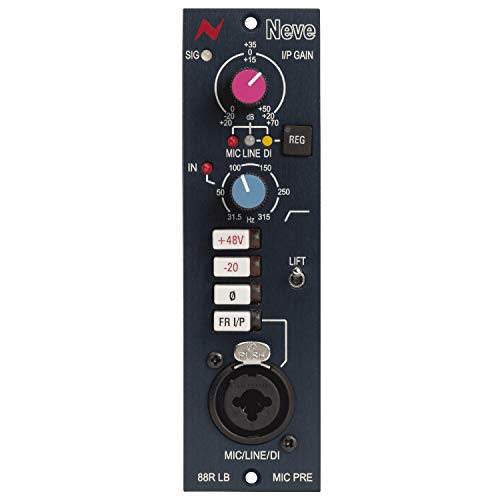
- Mic, line, and instrument input support
- Sweepable highpass filter for cleanup
- Phantom power, phase invert, and -20dB pad
Best For: Engineers and home-studio owners who want a flexible Neve-style 500-series preamp.
Classic Tone
Neve 1073LB 500 Series Mono Preamp

- Authentic Neve 1073 character with transformer color
- Up to 80dB of gain for dynamic and ribbon mics
- Insert and gain trim add useful workflow flexibility
Best For: Producers who want a legendary, colored preamp for a 500-series rack.
Best for Clean-to-Color Flexibility – Cranborne Audio Camden 500
The Cranborne Audio Camden 500 is a strong pick if you want one of the more versatile 500 series preamps for tracking everything from vocals to instruments. It starts out impressively clean and low-noise, then lets you add character only when you want it, making it easy to keep your signal chain flexible in a compact 500-series rack.
Best For: Engineers and home-studio users who want a transparent preamp with optional analog saturation and highpass filtering.
Pros:
- Very clean, low-distortion sound with strong frequency and phase linearity
- Mojo circuit adds two character modes: Thump and Cream
- Works as a mic, line, or instrument preamp
- Selectable input impedance and highpass filter expand routing and tone options
Cons:
- Not the cheapest option in the 500 Series preamp category
- Character is switchable, so it may feel too neutral for users chasing instant color
For buyers comparing 500 series preamps, the Camden 500 stands out because it does both pristine and colored without forcing you into one personality. If you want a modern preamp that can stay invisible on one session and add warmth on the next, this is an easy module to justify.
Best for Harmonic Color – SSL 500 Series VHD+ Pre
If you want one of the most flexible 500 series preamps for adding character on demand, the Solid State Logic VHD+ Pre is a smart pick. It gives you clean SSL SuperAnalogue gain when you need transparency, then lets you dial in controllable 2nd- and 3rd-order harmonic distortion for everything from subtle warmth to aggressive grit.
Best For: Engineers and producers who want an SSL-quality 500 series mic preamp that can go from pristine to colored without swapping gear.
Pros:
- Ultra-clean SSL-style preamp sound with plenty of headroom
- VHD circuit adds selectable harmonic color for warmth, edge, or heavy saturation
- Includes 48V phantom power, hi-Z input, and high-pass filter
Cons:
- More expensive than straightforward utility preamps
- Character controls may be overkill if you only want transparent gain
As far as 500 series preamps go, this one stands out for combining serious clean gain with built-in tonal shaping. If your sessions benefit from both polish and attitude, the VHD+ Pre is built to cover a lot of ground.
Best for Abbey Road Tone – Chandler Limited TG2-500 Mic Preamp
If you want one of the most characterful 500 series preamps, the Chandler Limited TG2-500 is built for engineers who like vintage color with a polished top end. It recreates the EMI TG12428 circuit associated with Abbey Road-era consoles, so it is aimed at tracks that need warmth, punch, and a recognizable console-style voice rather than ultra-clean transparency.
Best For: Producers and engineers who want classic British console tone in a 500 series rack for vocals, guitars, drums, and mix sources.
Pros:
- Recreates the rare EMI TG12428-inspired sound
- Delivers creamy mids with an open, clear high end
- Transformer-balanced, discrete design adds musical color
- Great choice when you want vintage vibe in 500 series format
Cons:
- Not the best fit if you want a fully transparent preamp
- Its character may be too colored for some clean-recording workflows
For engineers comparing 500 series preamps, the TG2-500 stands out because it prioritizes tone and vibe over neutrality. If you want a preamp that can add size, sheen, and a bit of harmonic grit in a very musical way, this is an easy one to shortlist.
Best for Console-Style Channel Strip Tones – SSL SiX CH 500 Series Channel Strip
If you want one of the more versatile 500 series preamps for tracking and tone shaping, the Solid State Logic SiX CH brings SSL’s clean SuperAnalogue sound into a single-slot module. It combines a mic pre, two-band EQ, and a simple but effective compressor, so it can cover vocals, instruments, and direct input duties without cluttering your rack.
Best For: Engineers and producers who want an SSL-flavored channel strip with clean gain, musical EQ, and easy compression in one 500 series slot.
Pros:
- SuperAnalogue mic pre delivers a clean, fast, low-noise signal path
- Switchable shelf/bell EQ adds flexibility for broad tonal shaping
- Single-knob compressor is quick to dial in for tracking
- Front-panel TRS input with Hi-Z mode works well for guitars and sources on the fly
Cons:
- Only one compressor control, so it’s less detailed than full-featured units
- Two-band EQ is useful, but not as surgical as more advanced channel strips
- Higher price than basic utility preamps
For buyers comparing 500 series preamps, the SiX CH stands out if you value speed, consistency, and SSL character more than deep control. It’s a polished all-in-one channel strip that makes tracking simpler while still sounding pro.
Best for DI and Vocal Boosting – Heritage Audio Lang 312L 500 Series Preamp
If you want 500 series preamps that do more than just add gain, the Heritage Audio Lang 312L is worth a close look. It combines a microphone preamp and DI module with a built-in +25dB lifter, plus practical studio controls that make it easy to shape levels at the source.
Best For: Engineers, home-studio owners, and guitar or bass players who want a flexible 500-series front end with extra clean gain and simple control.
Pros:
- Built-in +25dB lifter helps with low-output sources and gain-hungry mics
- Includes +48V phantom power, phase switch, and -20dB pad for flexible tracking
- DI capability adds value for instrument recording in a 500-series rack
Cons:
- Requires a compatible 500-series chassis
- More specialized than a simple basic preamp
For buyers comparing 500 series preamps, this model stands out for utility rather than flash: it’s a compact, studio-friendly module that can handle mics and instruments while giving you useful gain-management tools. That makes it a smart pick if you want one slot to cover more tracking situations.
Best Vintage SSL Tone – SSL E-EQ Mk2 500 Series EQ
If you want the classic SSL EQ sound in your rack, the Solid State Logic E-EQ Mk2 is a strong pick for 500 series preamps and channel-strip style setups. It gives you the familiar 4000 E-Series character with enough flexibility to shape vocals, guitars, drums, and buses without losing the punchy SSL feel.
Best For: Engineers and home-studio owners who want authentic SSL console EQ color in a compact 500-series module.
Pros:
- Authentic SSL 4000 E-Series-inspired EQ with Black and Brown flavors
- Versatile 4-band layout with bell option on the high and low shelves
- Musical mid bands that make detailed tonal shaping easy
Cons:
- EQ-only module, so it does not provide preamp gain or other processing
- More about classic character than surgical transparency
For buyers comparing 500 series preamps and processing modules, this stands out as a tone-shaping tool that adds recognizable SSL polish rather than clean utility. It’s a smart choice if you already have gain covered and want a proven analog EQ with real console heritage.
Best for Maximum Gain – PRE-573 MKIII 500 Series Mic Preamp
If you want one of the more flexible 500 series preamps for tracking a wide range of sources, the PRE-573 MKIII is built around a single-channel design with up to 80dB of mic gain, plus line and instrument input support. It also adds switchable impedance, phantom power, and an LED output level meter, making it a practical option for compact racks and straightforward studio workflows.
Best For: Engineers and home-studio users who want a versatile, high-gain 500-series preamp for mics, line sources, and DI recording.
Pros:
- Up to 80dB of mic gain for demanding sources
- Works with mic, line, and instrument inputs
- Switchable impedance helps tailor the tonal response
- LED output meter makes level checking easy
Cons:
- Single-channel design only
- Lacks extra features like EQ or compression
- May be more utility-focused than character-focused for some users
For buyers comparing 500 series preamps, the PRE-573 MKIII stands out as a solid all-rounder if you value gain range and input flexibility over added processing. It’s a sensible pick for lean setups where one dependable preamp needs to cover multiple recording tasks.
Best for Flexible Front-Panel I/O – Harrison 32 Classic PrePlus
The Harrison 500 Series 32 Classic PrePlus is a practical choice for 500 series preamps buyers who want clean gain, flexible routing, and easy front-panel access. With +20 to +70 dB of smooth gain, transformer-coupled input handling, and onboard HP/LP filters, it’s built to cover everything from vocals to ribbons without making setup more complicated.
Best For: Engineers and home-studio users who want a versatile 500-series preamp with front-panel combo input, useful filtering, and enough gain for demanding microphones.
Pros:
- Jensen JT-MB-CPCA transformer coupling adds character and solid mic handling
- Front-mounted combo XLR/¼” input makes patching mics or instruments fast
- HP and LP filters plus 180° phase, pad, Hi-Z, and 48V give it broad utility
- Bi-color input LED provides quick level and clipping feedback
Cons:
- Single-channel module means you’ll need multiple slots for stereo use
- Feature set may be more than minimalists need if they only want a basic preamp
- Priced like a serious 500 series module, not an entry-level option
As far as 500 series preamps go, this Harrison stands out for combining classic transformer flavor with modern convenience features that actually help in real sessions. If you want one module that can handle different sources cleanly and still feel studio-grade, it’s an easy one to consider.
Best for Feature-Rich Flexibility – Neve 88RLB 500-series Mic/Line/Instrument Preamp
If you want one of the more versatile 500 series preamps for a rack that needs mic, line, and instrument duties covered, the Neve 88RLB is built for exactly that kind of flexible studio workflow. It adds practical controls like +48V phantom power, a sweepable highpass filter, phase invert, and a -20dB pad, plus REGeneration for a more adaptable recording chain.
Best For: Engineers and home-studio owners who want a Neve-flavored 500-series preamp with extra routing and tone-shaping control.
Pros:
- Mic, line, and instrument inputs in one 500-series module
- Sweepable highpass filter helps clean up low-end rumble
- Includes phantom power, phase invert, and -20dB pad
- Useful REGeneration feature for expanded signal flexibility
Cons:
- More feature-focused than a stripped-down utility preamp
- Likely overkill if you only need a basic mic gain stage
In a roundup of 500 series preamps, the Neve 88RLB stands out for users who value versatility and control as much as sound quality. It’s a strong fit when you need one module that can adapt to different sources without giving up pro-level front-end features.
Classic Tone – Neve 1073LB 500 Series Mono Preamp
If you want one of the most recognizable colors in the world of 500 series preamps, the Neve 1073LB is a strong choice. It brings the famous 1073 character to a lunchbox format, with transformer-based punch, plenty of gain, and the kind of midrange presence that works especially well on vocals, bass, and other sources that benefit from added weight.
Best For: Engineers and producers who want authentic Neve coloration in a 500-series rack for vocals, instruments, and tracking with character.
Pros:
- Classic Neve 1073 circuit vibe with Marinair transformers
- Up to 80dB of gain for demanding microphones
- Includes gain trim and insert functionality for flexible tracking
- 500-series format fits modern modular studio setups
Cons:
- Requires a compatible 500-series chassis and power supply
- More about tone than transparent, ultra-clean capture
- Pricier than many entry-level preamps
For buyers comparing 500 series preamps, this module stands out less as an all-purpose utility piece and more as a character preamp with real studio pedigree. If your priority is adding depth, thickness, and harmonic attitude, the 1073LB delivers that familiar Neve feel in a compact format.
How We Picked the Best 500 Series Preamps
We focused on 500 Series Preamps that offer a clear reason to exist in a modular rig: strong gain performance, useful tone options, solid build quality, and compatibility with common studio workflows. We also favored units with a distinct sonic purpose, so you can choose based on sound rather than marketing.
Because the 500 format is often about building a custom rack, we prioritized models that either deliver clean transparency, classic coloration, or added utility such as EQ and compression.
Quick Comparison: What Each Type Is Good for
In this group, some preamps aim for clean and accurate capture, while others lean into harmonic thickness, transformer drive, or vintage-inspired bite. A few products go beyond preamp duties and add channel-strip functionality, which can be a smart choice if you want fewer modules to cover more tasks.
As a simple rule, choose transparency for vocal and acoustic realism, choose character for drums and electric sources, and choose a multi-function module when rack space is limited.
Key Buying Factors for 500 Series Preamps
Gain Range and Noise Performance
Make sure the module can provide enough clean gain for the microphones you use most, especially ribbons and low-output dynamics. Low self-noise matters more than many buyers expect, particularly for detailed vocals, piano, and ambient recording.
Tonal Color Versus Transparency
Some 500 Series Preamps are designed to stay out of the way, while others add obvious saturation, thickness, or edge. If you already own a colorful mic collection or outboard chain, a cleaner preamp may give you more flexibility. If your setup feels too sterile, a colored preamp can bring tracks to life fast.
Extra Processing and Workflow
Built-in EQ or compression can be a major advantage when tracking, but only if you actually want to commit on the way in. For engineers who prefer speed and fewer patch points, a channel-strip style module can be ideal.
Power, Space, and Compatibility
Check rack power capacity, module width, and any special current demands before buying. The best-sounding preamp is still a poor fit if it pushes your lunchbox too hard or leaves no room for future expansion.
Who Should Buy Which 500 Series Preamps?
If you want the most neutral starting point, look for cleaner 500 Series Preamps that preserve microphone detail. If you want rock, drum, or vocal attitude, choose models known for thicker or more saturated behavior. If you record fast and value simplicity, consider a preamp with EQ or compression built in.
For most buyers, the right choice comes down to one question: do you want a module that captures sound faithfully, or one that becomes part of the sound itself? Answering that first will narrow the field quickly and help you buy a 500 series preamp that fits your workflow for years.