Choosing the right mic preamp can change the feel of every recording, from subtle clarity to rich harmonic color. In the 500 Series format, you can build a compact front end that matches your workflow and sonic goals.
Below, we’ve narrowed the field to 10 standout options for different studio needs, from clean, modern preamps to unmistakably musical vintage-inspired designs.
Best 10 500 Series Mic Preamps Picks for 2026
Best for Clean-or-Colored Tracking

- Exceptionally clean, neutral front end
- Mojo circuit adds Thump or Cream saturation
- Mic, line, and instrument inputs boost versatility
Best For: Engineers who want a transparent 500 Series preamp with optional analog color.
Best Premium 500 Series Channel Strip
SSL SiX CH 500 Series Channel Strip
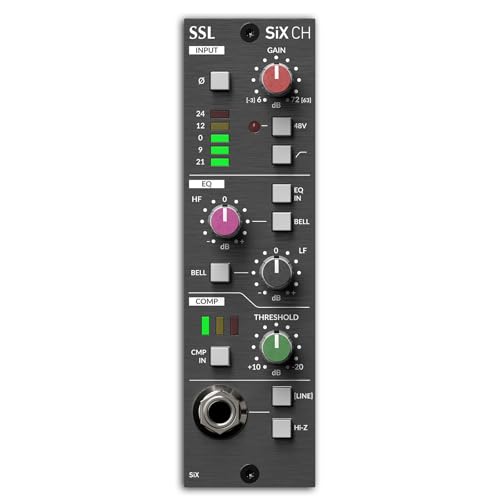
- Clean SuperAnalogue mic pre with wide gain range
- Built-in EQ and one-knob compressor
- Front-panel Hi-Z line input for quick instrument tracking
Best For: Engineers who want a premium SSL channel strip with preamp, EQ, and compression in one 500 Series module.
Best for Abbey Road Color
Chandler Limited TG2-500 Mic Preamp

- EMI/Abbey Road-inspired vintage tone
- Transformer-balanced warmth and punch
- Adds flattering color to vocals and instruments
Best For: Engineers who want a classic British-flavored 500 Series preamp with lots of character.
Best Vintage British Color
Avedis Audio MA-5 Mic Pre 500-Series Module

- Classic Class-A tone with transformer color
- Stepped gain and output trim for easy control
- High headroom, low-noise design
Best For: Engineers who want a colorful, vintage-inspired 500-series mic pre with British-style character.
Best for Feature Control
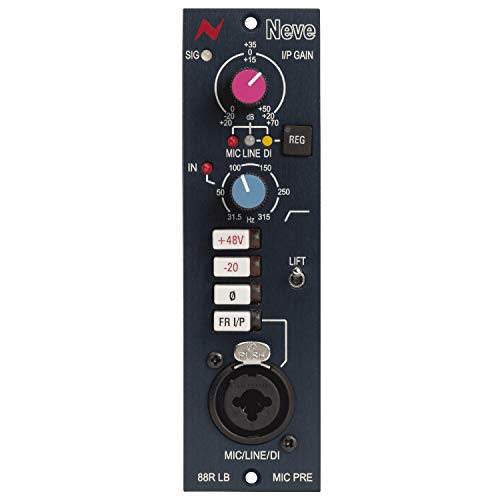
- Mic, line, and instrument inputs
- Sweepable highpass filter for cleaner tracking
- Phase invert, pad, and phantom power included
Best For: Engineers who want a flexible Neve channel with useful front-end controls.
Best for Vintage Tone

- Transformer-coupled mic preamp
- 2-band Pultec-style EQ onboard
- Single-slot, single-channel design
Best For: Engineers who want a colored preamp/EQ combo for tracking with character.
Best for Built-In Lifter
Heritage Audio Lang 312L 500 Series Preamp
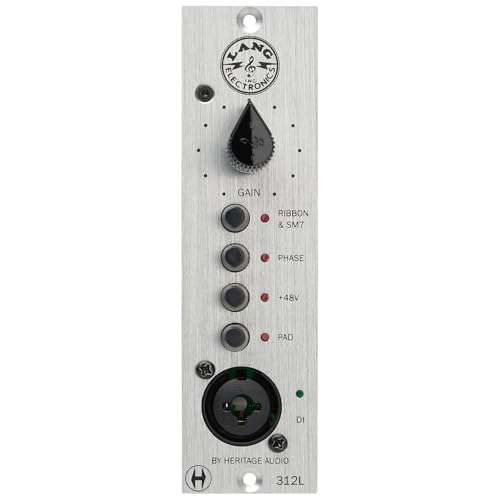
- +25dB lifter for added input flexibility
- Preamp/DI module with phantom power
- Phase switch and -20dB pad for quick control
Best For: Engineers who want a flexible 500-series preamp/DI with practical tracking controls.
Best Budget Character Preamp
PRE-573 MKIII 500 Series Preamp

- 80dB of gain for mics and ribbons
- Separate gain and output controls for coloration
- Includes phantom power, DI, and switchable impedance
Best For: Project studios and budget-conscious buyers who want vintage-style tone in a 500 Series slot.
Best for Classic Neve Tone
Neve 1073LB 500 Series Mono Preamp

- Classic Marinair transformer sound
- 80dB gain with phantom power
- Insert and gain trim for flexible tracking
Best For: Engineers who want authentic Neve coloration in a 500-series mono preamp.
Best for Front-Panel Flexibility
Harrison 500 Series 32 Classic PrePlus

- Jensen transformer-coupled mic pre with character
- Front combo XLR/¼" input for quick patching
- HP/LP filters plus pad, phase, phantom, and Hi-Z
Best For: Engineers who want a versatile 500-series preamp with easy front-panel access and built-in tone shaping.
Best for Clean-or-Colored Tracking – Cranborne Camden 500 Preamp
The Cranborne Audio Camden 500 stands out among 500 series mic preamps because it can stay extremely clean and neutral, then add character only when you want it. That makes it a smart fit if you need one preamp to handle vocals, instruments, and line sources without forcing a fixed sonic flavor.
Best For: Engineers and home studio owners who want a transparent 500 Series preamp with optional analog saturation for flexible tracking.
Pros:
- Very clean, low-noise, low-distortion preamp performance
- Mojo circuit adds two useful saturation flavors: Thump and Cream
- Mic, line, and instrument input support increases versatility
- Selectable impedance helps tailor the response to different sources
Cons:
- Costs more than basic no-frills 500 Series preamp modules
- Character options are subtle compared with heavily colored designs
If you want one of the most flexible 500 series mic preamps for tracking clean sources one moment and adding tasteful analog warmth the next, the Camden 500 is an excellent all-purpose choice.
Best Premium 500 Series Channel Strip – SSL SiX CH 500 Series Channel Strip
If you want one of the most fully featured 500 series mic preamps in a single-slot format, the SSL SiX CH is built like a compact front end for serious tracking. It pairs a clean SuperAnalogue mic pre, broad-stroke EQ, and a single-knob compressor, so you can capture vocals, guitars, or instruments with very little outboard gear.
Best For: Engineers and home-studio users who want a premium SSL channel strip with preamp, EQ, compression, and Hi-Z input in one module.
Pros:
- SuperAnalogue mic pre delivers clean, fast, low-noise gain.
- Built-in EQ and compressor make it a flexible tracking channel.
- Front-panel TRS input with Hi-Z mode is handy for instruments.
- 500 Series format keeps the setup compact and modular.
Cons:
- More expensive than a basic standalone mic preamp.
- Single-knob compressor offers less hands-on control than full-featured units.
The SiX CH stands out when you want polished SSL sound and workflow in the 500 Series rack. Among 500 series mic preamps, it’s especially appealing for buyers who value integrated processing over a bare-bones preamp-only design.
Best for Abbey Road Color – Chandler Limited TG2-500 Mic Preamp
If you want one of the most characterful 500 series mic preamps, the Chandler Limited TG2-500 is built for engineers who want vintage EMI/Abbey Road tone rather than a clean, clinical front end. It brings a thick, punchy midrange, a touch of harmonic grit, and an airy top end that can flatter vocals, guitars, drums, and other sources that benefit from added color.
Best For: Engineers and home-studio owners who want a classic British-flavored preamp with real personality in a 500 Series rack.
Pros:
- Recreates the rare EMI TG12428-style sound associated with Abbey Road consoles
- Transformer-balanced design delivers warmth, punch, and smooth musical saturation
- Excellent choice for adding flattering color to vocals, guitars, and drums
Cons:
- Not the best fit if you need ultra-clean, transparent gain
- Premium pricing compared with many other 500 series mic preamps
- Coloration may be too pronounced for users seeking a neutral recording chain
The TG2-500 stands out when you want 500 series mic preamps with a true vintage vibe and a sound that feels bigger and more finished before any EQ or compression is added.
Best Vintage British Color – Avedis Audio MA-5 Mic Pre 500-Series Module
If you want one of the more characterful 500 series mic preamps, the Avedis MA-5 is built to deliver that classic early-70s British Class-A feel with modern low-noise performance. It’s a strong fit when you want thickness, clear mids, and smooth top-end detail without losing headroom or control.
Best For: Engineers and home-studio owners who want a punchy, transformer-based mic pre with vintage-inspired tone.
Pros:
- Class-A design with the roomy, colorful sound many buyers want from 500 series mic preamps
- Stepped gain and output trim make it easy to dial in repeatable settings
- High headroom and low-noise design help it stay clean under pressure
- “28kHz” switch adds extra air and detail when needed
Cons:
- Not the most transparent option if you want a totally neutral preamp
- Premium pricing puts it above basic utility modules
- Requires a 500-series rack, so it’s not a standalone preamp
The MA-5 stands out when your priority is vibe as much as gain. Among 500 series mic preamps, it’s a smart choice for adding weight, sheen, and musical harmonics to vocals, drums, and guitars.
Best for Feature Control – Neve 88RLB 500-Series Preamp
If you want a 500-series preamp with practical studio tools built in, the Neve 88RLB is a strong choice. It combines mic, line, and instrument input support with phantom power, a sweepable highpass filter, phase invert, and a -20dB pad, making it easy to adapt to different recording sources.
Best For: Engineers who want a flexible Neve channel with useful front-end controls for tracking vocals, instruments, and line sources.
Pros:
- Mic, line, and instrument inputs in one 500-series module
- Includes +48V phantom power, phase invert, and -20dB pad
- Sweepable highpass filter helps tame low-end rumble
- REGeneration feature adds extra routing flexibility
Cons:
- More feature-rich than a simple clean preamp
- Not the most budget-friendly option in 500 series mic preamps
The 88RLB stands out if you want more than basic gain from your 500 series mic preamps. It is geared toward users who value flexible tracking tools and a polished, channel-strip-style workflow in a compact format.
Best for Vintage Tone – 6X500 6X-500 Mic Preamp & EQ
If you want one of the more characterful 500 series mic preamps, the 6X500 6X-500 gives you a transformer-coupled mic preamp plus a 2-band Pultec-style EQ in a single slot. That makes it a practical choice for tracking sources that benefit from added weight, color, and quick musical shaping without loading down a 500-series rack.
Best For: Engineers and home-studio users who want a colored mic preamp/EQ combo for vocals, bass, drums, or guitars.
Pros:
- Transformer-coupled preamp adds vintage-style character
- Built-in 2-band Pultec-style EQ saves rack space
- Single-channel design is straightforward for tracking
Cons:
- One channel only, so it is not ideal for stereo duties
- Flavor-forward design may not suit those wanting ultra-clean gain
- Less flexible than separate preamp and EQ modules
As a combo module, the 6X500 is appealing if you want 500 series mic preamps that do more than just amplify—it’s aimed at adding tone and simple analog shaping right at the source. For buyers who value compact workflow and a musical sound, it is a strong niche pick.
Best for Built-In Lifter – Heritage Audio Lang 312L 500 Series Preamp
If you want 500 series mic preamps with extra utility built in, the Heritage Audio Lang 312L is a smart pick. It combines microphone preamp and DI duties in a single 500-series module, and the +25dB lifter, phantom power, phase switch, and -20dB pad make it easy to handle a wide range of recording tasks without adding extra outboard gear.
Best For: Engineers and home-studio users who want a flexible 500-series preamp/DI with useful front-panel controls for fast tracking.
Pros:
- Built-in +25dB lifter adds flexibility for lower-output sources
- Includes phantom power, phase reversal, and -20dB pad
- Preamp/DI design makes it more versatile than a basic mic amp
Cons:
- Requires a 500-series rack to use
- Not the simplest choice if you only need a barebones preamp
For buyers comparing 500 series mic preamps, this module stands out for packing practical recording features into one slot. It is a good fit when you want a flexible, session-ready front end rather than a stripped-down single-purpose preamp.
Best Budget Character Preamp – PRE-573 MKIII 500 Series Preamp
If you want one of the more affordable ways to get a colored, vintage-flavored front end in your rack, the Golden Age Project PRE-573 MKIII is worth a close look. Among 500 series mic preamps, it stands out for offering 80dB of gain, output level control, and useful extras like phantom power and switchable impedance without pushing into high-end pricing.
Best For: Project studios, home recordists, and engineers who want Neve-style character on a tighter budget.
Pros:
- 80dB of gain works well with dynamic mics and passive ribbons
- Separate gain and output controls make color shaping easier
- Includes phantom power, DI, and switchable impedance
- Great value for a character preamp in the 500 Series format
Cons:
- Only one channel per module
- Not the most transparent option if you want a clean sound
- Requires a compatible 500 Series rack
This is a smart pick if you want 500 series mic preamps with real personality rather than a sterile utility sound. The PRE-573 MKIII aims at classic-style coloration and does a strong job of delivering that feel at a project-studio price.
Best for Classic Neve Tone – Neve 1073LB 500 Series Mono Preamp
If you want one of the most recognizable sounding 500 series mic preamps, the Neve 1073LB brings the classic transformer-coupled character in a compact 500-series module. It offers up to 80dB of gain, phantom power, gain trim, and an insert point, making it a flexible choice for tracking vocals, instruments, and outboard processing.
Best For: Engineers and musicians who want authentic Neve coloration and a high-gain mono preamp in a 500-series setup.
Pros:
- Classic Neve Marinair transformer sound
- Up to 80dB of gain for demanding sources
- Gain trim and insert feature add routing flexibility
- 48V phantom power for condenser mics
Cons:
- Only one channel, so stereo setups need two units
- Priced as a premium boutique preamp
- No extra EQ or compression in the module
For buyers comparing 500 series mic preamps, the 1073LB stands out when tonal character matters more than a bare-bones utility preamp. It is a strong pick if you want that familiar Neve depth and punch in a modern rack format.
Best for Front-Panel Flexibility – Harrison 500 Series 32 Classic PrePlus
The Harrison 500 Series 32 Classic PrePlus is a practical choice for engineers comparing 500 series mic preamps that need smooth gain, useful onboard filtering, and easy front-panel access. With up to +70 dB of gain, transformer-coupled input character, and direct front XLR/¼" connectivity, it’s built to handle everyday studio sources as well as ribbons.
Best For: Users who want a flexible 500-series preamp for quick mic or instrument hookups, plus useful tone-shaping tools in the rack.
Pros:
- Jensen transformer coupling for added character and solid mic pre performance
- Front-panel combo XLR/¼" input makes patching fast and convenient
- HP and LP filters add useful shaping right on the module
- Up to +70 dB of gain with pad, phase, phantom power, and Hi-Z options
Cons:
- More feature-rich than a stripped-down “clean” preamp
- Filtering and transformer color may not suit those wanting ultra-transparent sound
This module stands out among 500 series mic preamps because it combines classic Harrison utility with front-panel convenience, making it a strong fit for tracking rooms that value speed and versatility. If you want a preamp that can cover vocals, ribbons, and direct instrument inputs without extra routing hassle, this is an easy one to consider.
How We Picked These 500 Series Mic Preamps
We focused on preamps that are relevant to real-world recording needs: sound character, gain range, build quality, noise performance, feature set, and how well each module fits into a practical 500-series rack. We also considered whether the design is best for tracking vocals, instruments, drums, or mix-stage coloration.
Quick Comparison
Some 500 Series Mic Preamps are built for transparency and headroom, while others intentionally add transformer weight, transformerless precision, or vintage-style saturation. If you want one flexible module for many sources, a clean preamp with extra shaping options makes sense. If you already own a neutral front end, a more colored option can add contrast and depth.
Key Buying Factors for 500 Series Mic Preamps
Gain and Noise Floor
Make sure the preamp offers enough gain for the microphones you use most, especially ribbons and low-output dynamics. Low self-noise matters if you record quiet sources or stack multiple tracks in a dense arrangement.
Tonal Character
Ask whether you want a transparent, detailed sound or a thicker, harmonically rich presentation. This is often the biggest difference between competing 500 Series Mic Preamps, and it should match the voices and instruments you record most often.
Headroom and Input Handling
Higher headroom is useful for drums, brass, and aggressive vocal performances. If you track loud sources, look for a design that stays composed when pushed.
Extra Tools and Workflow
Some modules add EQ, compression, impedance switching, or tone-shaping controls. Those can be a major advantage in small studios where space and speed matter, but a simpler preamp may be better if you prefer to shape sound later in the chain.
Who Should Buy Which 500 Series Mic Preamps?
If you want the most versatile all-rounder, prioritize a clean preamp with enough character control to cover multiple roles. If your goal is vintage flavor, choose a transformer-based design with proven musical coloration. Engineers who track a lot of vocals may prefer a module with a smooth top end and forgiving midrange, while drum and guitar users often benefit from models with punch, depth, and higher headroom.
For hybrid studios and growing collections, the best approach is often to pair one transparent module with one or two colored options. That gives you flexibility without overbuilding your rack, and it makes 500 Series Mic Preamps a smart long-term investment.