The right equalizer can make a home-studio setup easier to control, helping you reduce problem frequencies, shape tone, and create clearer mixes without replacing your entire signal chain.
We selected 10 options spanning professional rack units, compact stereo EQs, Bluetooth-enabled models, and feature-rich spectrum-display designs, so you can match the controls and connections to your workspace.
Best 10 Audio Equalizers for Home Studios Picks for 2026
Rackmount Precision

- Dual 31-band, 1/3-octave EQ
- Switchable 6 or 12 dB boost/cut
- TRS/XLR I/O and LED monitoring
Best For: Precise dual-channel rack-based studio EQ
Connected Home Audio
Decibelvibe TNZ SGE6 Equalizer

- Dual-channel 15-band EQ
- Bluetooth, USB, RCA, and 3.5 mm I/O
- Built-in microphone and spectrum display
Best For: Flexible home audio and DJ systems
Subwoofer Control
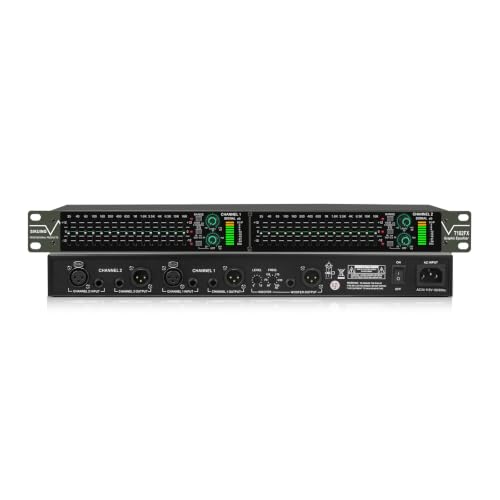
- Independent dual 15-band EQ
- Dedicated 50–250 Hz subwoofer output
- Low-cut filter, bypass, and LED metering
Best For: Rack systems requiring focused bass management
Compact Analog Control

- Seven fixed EQ bands with ±6 dB range
- Simultaneous XLR and RCA connectivity
- Compact aluminum-alloy enclosure
Best For: Simple EQ in compact home audio systems
Most Versatile
31-Band Bluetooth Graphic Equalizer

- 31-band tuning with spectrum analysis
- Optical, coaxial, USB, and Bluetooth connectivity
- Auto-save presets and noise reduction
Best For: Flexible home studio and multi-device setups
Best Compact Option
Douk Audio EQ5 Bluetooth Preamp

- Five-band EQ with independent processing
- Bluetooth 5.0 wireless playback
- Dual VU meters and bypass control
Best For: Compact desktop and stereo studio systems
Best Rack-Mount Choice
15-Band Dual-Channel Graphic EQ

- 15 bands per channel with ±12dB adjustment
- Low-cut filter and dedicated subwoofer output
- XLR and 1/4-inch TRS connectivity
Best For: Rack-based studios and dual-channel audio systems
Feature-Rich Studio Hub
EQ8100 20-Band Graphic Equalizer
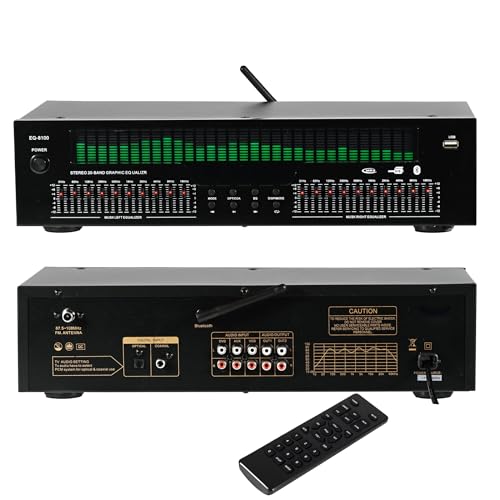
- 20-band EQ with 31-band spectrum display
- Bluetooth, USB, optical, coaxial, and RCA connectivity
- Rack-ready aluminum chassis with presets
Best For: Connected home studios and multi-purpose audio systems
Hands-On Analog Control
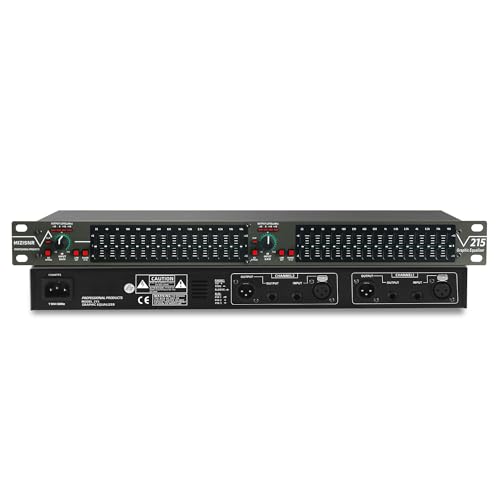
- Dual-channel 15-band graphic EQ
- Low-cut filter for rumble and hum
- Balanced XLR and unbalanced TRS I/O
Best For: Hands-on studio, DJ, and live-system tuning
Visual Digital Tuning
31-Band EQ with Subwoofer Output

- 31-band DSP EQ with LED spectrum display
- Bluetooth 5.2, USB playback, and ten presets
- Adjustable 50–250Hz independent subwoofer output
Best For: Detailed studio and home-theater tuning with bass control
Rackmount Precision – dbx 231s 31-Band Equalizer
For home studios that need detailed signal shaping, the dbx 231s is a practical choice among audio equalizers for home studios. Its dual 31-band, 1/3-octave constant-Q design provides fine-grained control, while balanced TRS and XLR connections suit rack-based setups.
Best For: Home studios and rack systems requiring precise dual-channel EQ control.
Pros:
- Dual 31-band, 1/3-octave constant-Q frequency bands
- Switchable 6 or 12 dB boost/cut ranges
- TRS and XLR inputs and outputs with 4-segment LED monitoring
Cons:
- Rack-oriented design may be more than a simple desktop setup needs
- Its 7.9-pound chassis is relatively substantial
The 231s stands out when adjustment precision and conventional balanced connectivity matter more than compact size or extra playback features.
Connected Home Audio – Decibelvibe TNZ SGE6 Equalizer
The Decibelvibe TNZ SGE6 combines equalization with flexible home-audio connectivity. For buyers comparing audio equalizers for home studios, its two-channel 15-band EQ, RCA and 3.5 mm I/O, Bluetooth 5.0, USB, and built-in microphone make it a versatile option for systems beyond a traditional studio rack.
Best For: Home audio, DJ, and studio setups that value wireless, USB, and visualizer features.
Pros:
- Two-channel 15-band EQ with a 31-band music spectrum display
- Rear RCA and 3.5 mm auxiliary inputs and outputs
- Bluetooth 5.0, USB, built-in microphone, and adjustable display settings
Cons:
- Provides fewer EQ bands than a 31-band studio equalizer
- Its feature-rich design may be unnecessary for strictly wired monitoring chains
The SGE6 is a strong fit when connectivity and visual feedback are priorities, especially in a mixed home-audio or DJ environment.
Subwoofer Control – 15-Band Stereo EQ
This 15-band stereo equalizer is designed for practical system control, making it a useful contender among audio equalizers for home studios. Independent channels, a low-cut filter, dedicated adjustable subwoofer output, and XLR/TRS connectivity support both studio and live-oriented signal chains.
Best For: Rack-based home studios needing low-end management and dedicated subwoofer adjustment.
Pros:
- Independent 15-band channels covering 25 Hz to 16 kHz
- Adjustable low-cut filter and EQ bypass for quick comparisons
- Dedicated subwoofer output adjustable from 50 Hz to 250 Hz
- Full-metal 1U chassis with rack-mounting hardware and LED metering
Cons:
- Offers fewer bands than a 31-band equalizer
- Its rackmount format may not suit compact desktop systems
The dedicated subwoofer section gives this model a clear advantage for systems where bass integration, noise reduction, and rack installation are central concerns.
Compact Analog Control – Douk Audio T7 7-Band EQ
The Douk Audio T7 offers straightforward tone shaping in a compact enclosure. For smaller audio equalizers for home studios, its seven fixed frequency bands, ±6 dB adjustment range, and simultaneous XLR/RCA output make it a convenient choice for home stereo, amplifier, or computer-speaker systems.
Best For: Compact home setups needing simple analog EQ and flexible XLR/RCA connectivity.
Pros:
- Seven frequency bands from 64 Hz to 8 kHz with ±6 dB adjustment
- XLR and RCA inputs and outputs operate simultaneously
- Compact aluminum-alloy enclosure with stated 104 dB-plus SNR
Cons:
- Seven bands provide less detailed control than 15- or 31-band models
- No volume control knob
The T7 prioritizes simplicity and compactness, making it better suited to modest home systems than highly detailed studio correction work.
Most Versatile – 31-Band Bluetooth Graphic Equalizer
For home studio users who need extensive sound-shaping control, this 31-band model is one of the more adaptable audio equalizers for home studios. Its real-time spectrum analyzer, customizable modes, noise reduction, and broad connectivity make it suitable for refining vocals, bass, mids, and treble across several audio sources.
Best For: Home studios and hybrid setups that connect mixers, studio monitors, receivers, or USB playback devices.
Pros:
- 31 independently adjustable bands cover detailed bass-to-treble tuning.
- Real-time spectrum monitoring helps visualize frequency changes.
- Supports optical, coaxial, USB, and Bluetooth connectivity.
- Auto-save presets and multiple customizable modes simplify repeat setups.
Cons:
- The extensive controls may be more than beginners need.
- The notes do not specify detailed input and output connector layouts.
This is a strong choice when flexibility matters more than a minimal interface. Its portable, rack-mountable design also makes it practical for home, live, and studio applications.
Best Compact Option – Douk Audio EQ5 Bluetooth Preamp
The Douk Audio EQ5 is a compact choice among audio equalizers for home studios, offering five focused frequency bands rather than a large graphic-EQ layout. Independent op-amp processing, Bluetooth 5.0, bypass control, and dual VU meters provide useful sound adjustment and monitoring in a small metal chassis.
Best For: Small desktop studios, computer-speaker systems, and stereo setups where compact size and wireless playback are priorities.
Pros:
- Five dedicated bands target key bass, midrange, and treble frequencies.
- Bluetooth 5.0 supports convenient wireless music streaming.
- Large dual VU meters provide real-time signal-level monitoring.
- Compact all-metal body includes gold-plated input and output interfaces.
Cons:
- Five bands offer less detailed control than 15- or 31-band equalizers.
- It requires a 5V DC power source.
Choose this model when you want straightforward tone shaping and visual metering without filling a rack space. Its bypass and balance controls add useful flexibility for desktop listening and small studio chains.
Best Rack-Mount Choice – 15-Band Dual-Channel Graphic EQ
For users who prefer conventional rack hardware, this 15-band dual-channel unit is a practical option among audio equalizers for home studios. It provides separate per-channel adjustment, low-cut filtering, balanced and unbalanced connections, and a dedicated subwoofer output for more controlled system integration.
Best For: Rack-based home studios, DJ systems, live sound setups, and installations requiring dual-channel control.
Pros:
- Offers 15 adjustable bands per channel with a ±12dB range.
- Low-cut control helps reduce unwanted low-frequency noise.
- XLR balanced and 1/4-inch TRS unbalanced connections support varied setups.
- Dedicated adjustable bass output and 1U rack-mount format expand integration options.
Cons:
- The 18.9-inch rack-style chassis is less suitable for compact desktop spaces.
- It is corded and does not list Bluetooth or USB playback.
- Its professional connections and controls may require more setup knowledge.
This model stands out when reliable physical routing and channel-by-channel control are more important than wireless convenience. The bypass switch and low-cut function also make it useful for comparing processed and unprocessed signals.
Feature-Rich Studio Hub – EQ8100 20-Band Graphic Equalizer
For shoppers comparing audio equalizers for home studios, the EQ8100 stands out as a connectivity-focused signal-processing hub. Its 20-band graphic EQ, spectrum display, Bluetooth, USB, optical, and coaxial inputs support detailed tuning across studio, home theater, DJ, and live audio setups.
Best For: Home studios and hybrid audio systems that need broad digital connectivity, real-time visual monitoring, and rack-ready hardware.
Pros:
- 20-band graphic equalizer with a 31-band real-time spectrum analyzer.
- Supports Bluetooth 5.4, USB, optical, coaxial, and RCA connections.
- Offers customizable modes, auto-save presets, and a bypass-style workflow for quick adjustments.
- Rugged 1U aluminum chassis suits permanent racks or mobile setups.
Cons:
- The feature set may be more extensive than necessary for a simple two-channel studio chain.
- Its listed 19-inch dimensions should be checked against your rack or workspace before purchase.
The EQ8100 is a versatile choice when visual feedback and multiple connection options matter as much as EQ control. It is especially appealing for users moving between recording, playback, home theater, and live applications.
Hands-On Analog Control – EQ-215 15-Band Stereo EQ
If you want straightforward audio equalizers for home studios, the EQ-215 focuses on practical dual-channel control rather than added playback features. Its 15 bands per channel, selectable low-cut filtering, and balanced or unbalanced connections make it a useful fit for studio, DJ, installation, and live signal chains.
Best For: Users who prefer hands-on, dual-channel EQ adjustment with standard rack mounting and flexible pro-audio I/O.
Pros:
- Provides 15 adjustable bands on each stereo channel.
- Offers up to ±12 dB of adjustment for detailed tonal shaping.
- Low-cut switch helps reduce wind noise, floor rumble, and electrical hum.
- XLR balanced and 1/4-inch TRS unbalanced inputs and outputs support varied setups.
Cons:
- It does not list Bluetooth, USB playback, or a spectrum analyzer.
- Its analog-style controls may be less convenient for users seeking recallable digital presets.
The EQ-215 is a focused option for buyers who want tactile EQ controls and noise reduction in a conventional 1U format. Its bypass switch is also useful when checking an unprocessed signal during setup or troubleshooting.
Visual Digital Tuning – 31-Band EQ with Subwoofer Output
For audio equalizers for home studios that combine detailed control with playback convenience, this 31-band digital EQ adds a real-time LED spectrum display, Bluetooth 5.2, USB playback, and independent subwoofer management. It is designed for studio, home audio, DJ, KTV, and live applications.
Best For: Home studios and entertainment systems that need fine-grained EQ, visual monitoring, wireless or USB playback, and adjustable bass integration.
Pros:
- 31-band DSP equalizer provides detailed frequency adjustment with real-time monitoring.
- Ten custom presets make it easier to recall different sound modes.
- Dedicated subwoofer output offers adjustable crossover frequency from 50Hz to 250Hz.
- Includes Bluetooth 5.2, USB playback, bypass, and 1U rack mounting.
Cons:
- The feature-rich design may be unnecessary for setups that only need basic analog EQ.
- Subwoofer output and multiple operating modes can add setup complexity.
This model is a strong fit when you want more frequency-resolution than a typical 15-band unit and also value playback flexibility. The spectrum display and bypass switch make adjustments and quick comparisons easier during system setup.
How We Picked the Best Audio Equalizers for Home Studios
We compared these models by looking at band count, channel layout, connection options, control accuracy, noise-reduction features, display visibility, and suitability for recording, mixing, monitoring, or general home audio. We also considered whether each equalizer is best used in a rack, between a source and amplifier, or as part of a computer-based setup.
Higher band counts can provide more precise correction, while simpler five- or seven-band designs are often faster to operate. Bluetooth, USB, microphone, and auxiliary inputs may be useful for playback-oriented systems, but they are not essential for every recording workflow.
Quick Comparison
- For detailed room or monitor correction: Choose a 20- or 31-band graphic equalizer with clearly marked controls and dual-channel operation.
- For traditional rack setups: Look for 1U rack-mount construction, balanced inputs and outputs, and dependable front-panel metering.
- For home stereo and computer speakers: Compact preamp-style EQs with RCA, XLR, or auxiliary connectivity may be more convenient.
- For wireless playback: Bluetooth-equipped models add source flexibility, though connection quality and codec support should be verified.
Key Buying Factors for Audio Equalizers for Home Studios
Band Count and Control Range
Fifteen bands offer broad tonal shaping, while 20- and 31-band designs allow narrower adjustments. More bands are helpful when addressing room modes or specific feedback frequencies, but they also require more careful setup.
Connections and Signal Compatibility
Check whether your equipment uses balanced XLR or TRS connections, unbalanced RCA, or 3.5 mm auxiliary inputs. A mismatch can require adapters and may introduce unwanted noise. Confirm that the equalizer supports the signal level and stereo or dual-mono routing your system needs.
Noise, Headroom, and Bypass
A useful EQ should add minimal hiss or distortion and provide enough headroom for your interface, mixer, amplifier, or powered monitors. A bypass function makes it easier to compare processed and unprocessed audio while setting levels.
Displays and Workflow
LED meters, VU meters, spectrum analyzers, and illuminated sliders improve visibility, especially in dim rooms. Prioritize straightforward controls over decorative features if you mainly mix with software or need repeatable settings.
Who Should Buy Which Audio Equalizers for Home Studios?
Choose a professional rack-mount graphic EQ if you run a mixer, external monitor chain, or live-room system and need dual-channel control, robust connections, and precise frequency adjustments.
Choose a compact preamp-style EQ if you want simple tone shaping between a source and amplifier, computer speakers, or a home stereo system. These models are generally easier to install and occupy less space.
Choose a Bluetooth or USB-equipped unit if wireless playback and multiple consumer sources matter as much as recording. For critical mixing, however, prioritize stable wired connections and predictable gain staging.
Whichever model you select, make small cuts before making large boosts, keep left and right channels consistent when appropriate, and evaluate changes from your normal listening position. An equalizer works best as a correction and shaping tool—not as a substitute for good speaker placement, acoustic treatment, or balanced recording levels.