The right equalizer can help tame feedback, clarify vocals, shape instruments, and make a live system easier to control. This roundup compares 10 options across graphic EQ, mixer, Bluetooth, and rack-mount formats.
Whether you run a small venue, mobile DJ rig, rehearsal space, or professional PA, focus on band count, connectivity, noise control, and hands-on usability before you buy.
Best 10 Audio Equalizers for Live Sound Picks for 2026
Best Versatile Rack EQ

- Dual 15-band stereo control
- Low-cut and bypass switches
- XLR, TRS, and subwoofer output
Best For: Rack-based live, studio, and home audio systems
Best All-in-One Mixer

- Eight microphone and instrument channels
- Bluetooth, USB, MP3, and reverb
- Includes 48V phantom power
Best For: Compact karaoke, event, and small-band systems
Best Visual Control
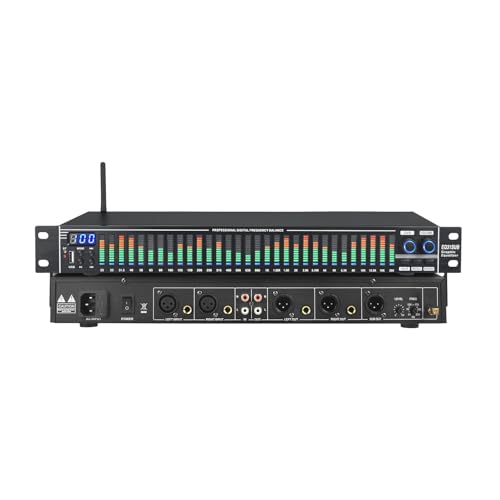
- Detailed 31-band frequency adjustment
- LED spectrum display
- Noise gate and suppression processing
Best For: Stage, studio, DJ, and home systems needing fine EQ control
Best Subwoofer Tuning
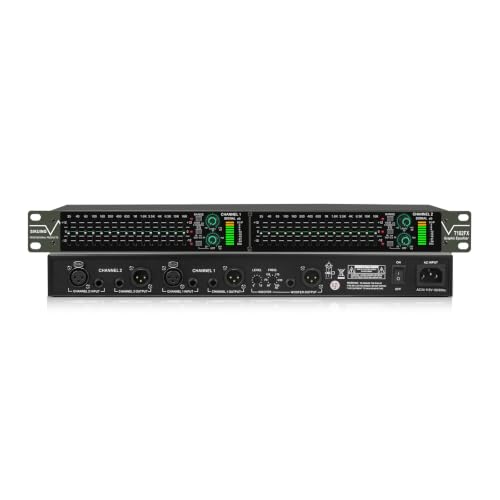
- Adjustable 50–250Hz sub output
- Low-cut filter and EQ bypass
- LED metering with clip protection
Best For: Live racks requiring bass management and stereo EQ
Most Precise
31-Band Stereo Graphic Equalizer

- 31 bands per channel for detailed tonal shaping
- Low-cut filter reduces rumble, hum, and wind noise
- XLR and 1/4-inch TRS connectivity with LED monitoring
Best For: Live sound engineers needing detailed stereo EQ control
Most Compact

- Five bands provide straightforward tone adjustment
- Bluetooth 5.0 enables wireless playback
- Dual VU meters and compact metal housing
Best For: Compact stereo systems and wireless audio setups
Best Rack-Mount Value
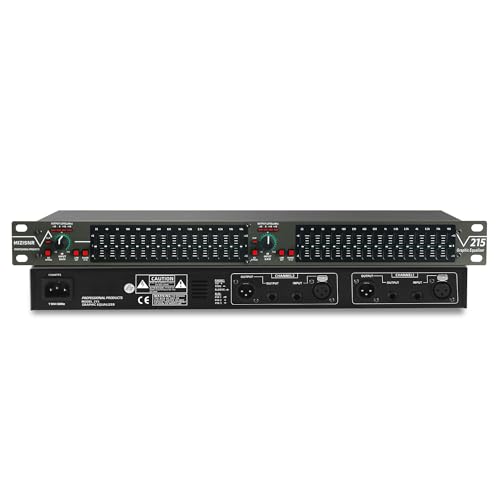
- 15 bands per channel with up to ±12 dB adjustment
- Low-cut and bypass switches support system control
- Standard 1U rack-mount design
Best For: Rack-based live rigs and audio installations
Feature-Rich Pick

- 31-band control with LED spectrum display
- 10 presets, noise reduction, and bypass switch
- Bluetooth, USB, XLR, and TRS connectivity
Best For: Live stages, DJ booths, studios, and flexible home audio setups
Dual-Channel Value

- 15 bands of control per stereo channel
- Adjustable low-cut filter for unwanted bass noise
- Rack-ready XLR and 1/4-inch TRS connectivity
Best For: Stereo live events, DJ rigs, studios, and installations
Visual Monitoring Pick

- 31-band control with four-color LED indication
- 10 presets, bypass, and intelligent noise reduction
- Bluetooth, USB, XLR, and TRS connections
Best For: Live applications and setups where real-time EQ visibility matters
Best Versatile Rack EQ – Stereo 15-Band Equalizer
This stereo 15-band unit is a practical choice among audio equalizers for live sound when you need independent channel shaping, low-cut control, and flexible system connections. Its rack-ready design also suits studio and home audio setups.
Best For: Live rigs and rack systems needing stereo tone shaping, bypass comparison, and subwoofer integration.
Pros:
- Independent 15-band equalization on both stereo channels
- Low-cut switch helps tighten sub-bass frequencies
- XLR and 1/4-inch TRS connectivity supports varied systems
- Dedicated subwoofer output and 1U rack-mount format
Cons:
- Provides 15 bands rather than the finer control of a 31-band equalizer
- Its 4.79-pound chassis may be more than needed for very small setups
The EQ and bypass switches make quick A/B listening straightforward, while the low-cut function and subwoofer output add useful control for live-system tuning.
Best All-in-One Mixer – 8-Channel Bluetooth Mixer
Although it is a mixer rather than a standalone equalizer, this 8-channel console can be useful alongside audio equalizers for live sound. It combines microphone and instrument inputs with Bluetooth, USB, reverb, and phantom power for compact event and performance systems.
Best For: Karaoke, small bands, school activities, conferences, and live setups needing mixing and playback in one unit.
Pros:
- Eight-channel layout supports microphones and instruments
- Includes 48V phantom power for compatible microphones
- Built-in Bluetooth 5.0, MP3, USB recording, and reverb
- Ultra-thin design measures about 1.57 inches thick
Cons:
- It is not a dedicated graphic equalizer with multiple frequency bands
- Voltage and plug are specified for 110V American power
- Software update support is listed as unknown
This is best viewed as a compact control center rather than a precision EQ processor. Its broad connectivity and built-in playback features can simplify smaller live systems.
Best Visual Control – EQ31SUB 31-Band Digital EQ
For detailed frequency shaping, this 31-band digital processor is one of the more control-oriented audio equalizers for live sound. Its LED spectrum display, noise-reduction processing, and multiple connector types support tuning in stage, studio, DJ, and home stereo environments.
Best For: Users who want fine-grained EQ adjustment with visual monitoring and broad system compatibility.
Pros:
- 31 bands provide detailed low, mid, and high-frequency control
- LED spectrum display shows audio activity in real time
- Integrated noise gate and suppression help reduce background hiss
- XLR, RCA, and 6.35 mm connections simplify integration
Cons:
- Its 5.07-pound metal chassis may be less portable than compact units
- More detailed controls may require additional setup time
The combination of 31-band adjustment and live visual feedback makes this a strong fit for careful system tuning. Its noise-reduction processing adds another tool for improving perceived clarity.
Best Subwoofer Tuning – 15-Band Stereo EQ
This 15-band stereo graphic equalizer is designed for practical live-system tuning, with a low-cut filter, signal metering, clip indication, and an adjustable subwoofer output. It is a useful option among audio equalizers for live sound when bass management and straightforward rack installation matter.
Best For: Live and studio racks that need stereo EQ, feedback control, and adjustable active-subwoofer integration.
Pros:
- Dual 15-band EQ covers 25Hz to 16kHz
- Adjustable subwoofer output spans 50Hz to 250Hz
- Low-cut filter helps remove hum and muddy low frequencies
- LED signal metering and clip light aid level monitoring
Cons:
- Offers fewer bands than a 31-band processor
- Analog operation may be less flexible than a digital processor
- At 2.29 kg, it is not the lightest compact rack option
The dedicated subwoofer controls distinguish this model for systems built around an active sub. Its bypass button, metering, and rack hardware also support efficient setup and troubleshooting.
Most Precise – 31-Band Stereo Graphic Equalizer
For live sound setups that need detailed tonal control, this 31-band stereo unit gives each channel a wide range of adjustment. Its low-cut filter, bypass switch, level LEDs, and balanced XLR connectivity make it a practical choice for live applications, installations, and studios.
Best For: Live sound engineers and audio users who need fine-grained stereo EQ control.
Pros:
- 31 bands per channel with up to ±12 dB adjustment.
- Low-cut switch helps reduce wind noise, floor rumble, and electrical hum.
- Supports XLR balanced and 1/4-inch TRS unbalanced connections.
- Four-segment LED ladders provide gain and output-level monitoring.
Cons:
- Its 18.9-inch rack-style footprint may be too large for compact systems.
- At 6.69 pounds, it is less portable than a mini EQ.
Choose this model when precise frequency-by-frequency shaping and visual level feedback matter more than portability.
Most Compact – 5-Band Bluetooth EQ Preamp
This compact EQ preamp offers a simpler approach to audio equalizers for live sound and small audio systems. Five independent bands, Bluetooth 5.0, bypass and balance controls, and dual VU meters make it useful when convenient wireless playback and basic tone shaping are priorities.
Best For: Compact stereo systems, computer speakers, and users who want Bluetooth audio with hands-on EQ controls.
Pros:
- Five adjustable bands cover 75 Hz through 10 kHz.
- Bluetooth 5.0 supports wireless music streaming.
- Dual 45 mm VU meters show real-time signal levels.
- Compact metal housing uses a 5V DC power supply.
Cons:
- Five bands offer less detailed correction than a 15- or 31-band graphic EQ.
- Its feature set is aimed more at compact stereo listening than complex live installations.
This is the practical pick for smaller setups where wireless convenience, visual metering, and straightforward tone adjustment are more important than extensive live-sound control.
Best Rack-Mount Value – 15-Band Stereo Graphic EQ
For live sound users who want meaningful frequency control without moving up to a 31-band unit, this 15-band stereo EQ is a balanced option. It combines dual-channel adjustment with low-cut and bypass switches in a standard 1U rack-mount design.
Best For: Rack-based live rigs, audio installations, and studios needing practical stereo EQ control.
Pros:
- 15 bands per channel provide useful tonal adjustment.
- Adjustable range reaches ±12 dB per band.
- Low-cut switch helps attenuate rumble, hum, and wind noise.
- Standard 1U rack-mount format simplifies installation.
Cons:
- Provides fewer frequency bands than the comparable 31-band model.
- The rack-mount form factor is less suitable for portable systems.
This model makes sense when you need a conventional rack EQ for live sound but prefer a simpler, more space-conscious control layout than a 31-band design.
Feature-Rich Pick – 31-Band Digital Equalizer
For shoppers comparing audio equalizers for live sound, this 1U rack-mount model offers detailed 31-band control, visual frequency monitoring, and flexible connectivity. Its bypass switch and saved presets can also help streamline adjustments during setup or performance.
Best For: Live stages, DJ booths, KTV venues, studios, and home audio systems that need extensive EQ control and Bluetooth or USB playback.
Pros:
- 31-band DSP equalizer with real-time LED spectrum monitoring.
- Up to 10 custom presets plus adjustable high, mid, and low frequencies.
- Bluetooth 5.2, USB playback, XLR balanced, and 1/4-inch TRS connections.
- Dedicated subwoofer output with adjustable 50Hz–250Hz range.
Cons:
- Its broader feature set may be more than needed for simple stereo setups.
- The unit is designed for rack mounting and requires corded power.
Choose this model when visual feedback, deep frequency control, and multiple playback options matter. The bypass control is especially useful for quick troubleshooting and comparing processed versus unprocessed sound.
Dual-Channel Value – 15-Band Stereo Graphic EQ
This dual-channel unit is a practical choice among audio equalizers for live sound when separate stereo control and straightforward rack integration are priorities. Its low-cut control can help reduce unwanted low-frequency noise before a performance or installation.
Best For: Stereo live-event systems, studios, DJ setups, and audio installations needing 15-band adjustment on each channel.
Pros:
- Provides 15-band graphic control per channel with an adjustable ±12dB range.
- Low-cut feature includes a rotary frequency adjustment for managing low-end noise.
- Offers XLR balanced and 1/4-inch TRS unbalanced inputs and outputs.
- Includes a dedicated bass output with adjustable frequency and a bypass mode.
Cons:
- Offers fewer bands than the supplied 31-band alternatives.
- Its 1U rack-mount design may not suit compact, non-rack systems.
This model favors focused stereo control over the maximum number of frequency bands. It is a sensible fit when low-cut adjustment, dual-channel operation, and conventional balanced or unbalanced connections cover your system’s needs.
Visual Monitoring Pick – 31-Band Spectrum Equalizer
If you are evaluating audio equalizers for live sound, this rack-mount stereo graphic equalizer emphasizes visual feedback and quick operation. Its 31-segment LED indication shows frequency activity in real time, while presets and bypass simplify repeated setups.
Best For: Live applications, audio installations, studios, home theaters, KTV venues, and DJ equipment requiring real-time frequency display.
Pros:
- 31-band digital EQ with four-color LED spectrum indication.
- Supports 10 saved preset effects and independent high, mid, and bass adjustment.
- Includes Bluetooth 5.2 and USB playback for flexible source options.
- Provides XLR and 1/4-inch TRS I/O plus an adjustable independent bass output.
Cons:
- The supplied notes do not specify the subwoofer output’s frequency range.
- Its corded, rack-mount format may be excessive for casual listening systems.
This is a strong option for users who want frequency changes displayed clearly while working. The combination of saved effects, bypass operation, and broad connectivity makes it adaptable across performance, installation, and home audio environments.
How We Picked These Audio Equalizers for Live Sound
We selected these 10 products by comparing their intended use, equalization controls, channel configuration, connectivity, rack-mount suitability, and practical features such as subwoofer outputs, spectrum displays, noise reduction, Bluetooth, and phantom power. The list includes dedicated graphic equalizers as well as a multi-channel mixer that may suit smaller or more integrated systems.
Because product specifications can vary by listing and revision, verify the current input/output layout, frequency bands, power requirements, and included accessories before ordering.
Quick Comparison
| Type | Best For | What to Look For |
|---|---|---|
| 15-band stereo EQ | Small PA systems and DJs | Simple tone shaping, dual-channel control, rack mounting |
| 31-band graphic EQ | Detailed room and feedback correction | Finer frequency adjustment, clear metering, reliable bypass |
| Mixer with built-in effects | Compact live setups | Channel count, phantom power, routing, Bluetooth, and reverb |
| Bluetooth or five-band EQ | Home, rehearsal, and casual systems | Easy source connection and straightforward controls |
Key Buying Factors for Audio Equalizers for Live Sound
Band Count and Control Resolution
A 15-band EQ offers broad, fast adjustments and is often enough for small venues or mobile rigs. A 31-band model provides narrower control, which can help identify feedback frequencies and compensate for difficult rooms. More bands are useful only when the operator can make measured, restrained adjustments.
Inputs, Outputs, and System Compatibility
Check whether the unit uses balanced XLR, TRS, RCA, or unbalanced connections, and confirm that its signal level matches your mixer, amplifier, powered speakers, or crossover. Subwoofer outputs can simplify systems that use a separate low-frequency section, while stereo channels are useful for maintaining left-right balance.
Feedback Control and Signal Quality
For live work, prioritize accurate frequency controls, low operating noise, a dependable bypass switch, and visible level or spectrum metering. Noise reduction can be helpful, but it should not replace correct gain staging. Keep the EQ near unity and cut problem frequencies rather than applying heavy boosts.
Installation and Operation
A 1U rack-mount design is convenient for permanent installations and touring racks. Front-panel sliders are fast to use during a performance, while digital displays may provide more precise visual feedback. Make sure the layout remains readable under stage lighting.
Who Should Buy Which Audio Equalizers for Live Sound?
- Small bands and mobile DJs: Choose a 15-band stereo graphic EQ for accessible control and quick setup.
- Venues with challenging acoustics: Consider a 31-band digital or graphic EQ for more precise feedback and room correction.
- Compact event rigs: A mixer with multiple channels, phantom power, reverb, and media connectivity may reduce the need for separate equipment.
- Home and rehearsal users: A simpler five-band or Bluetooth-enabled EQ can provide convenient tone shaping without a full rack system.
- Installed PA operators: Favor rack-mount construction, balanced connections, clear metering, and dependable bypass operation.
Before purchasing, map the EQ into your signal chain: typically after the mixer and before the amplifier or powered speakers. Confirm connector compatibility, available rack space, and whether you need independent left-right adjustment or a dedicated subwoofer feed.