The best audio interface with loopback can combine microphone audio, music, calls, and computer playback into a clean stream or recording. The right model also needs dependable monitoring, suitable inputs, and simple connectivity for your setup.
These 10 options cover compact solo rigs, two-input recording, mobile workflows, podcasting, gaming, and home studios. Use the guide below to compare their most important differences before buying.
Best 10 Audio Interface with Loopback Picks for 2026
Best for Mobile Creators
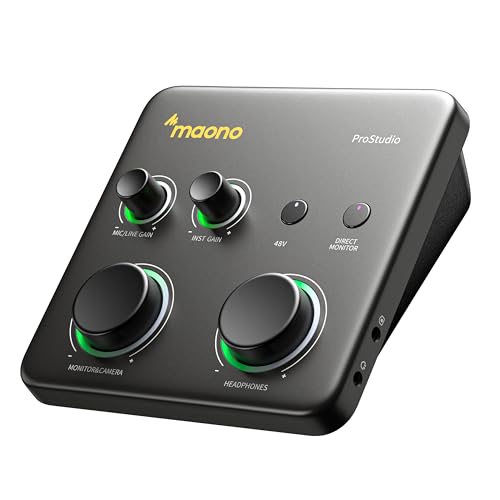
- Built-in loopback for desktop, voice, and instrument audio
- Dual USB ports connect computer and mobile device
- 70dB gain with Auto-Gain and 24-bit/192kHz recording
Best For: Mobile creators, streamers, podcasters, and musicians
Best for Two-Input Recording
Focusrite Scarlett 2i2 4th Gen

- Two mic preamps and two Hi-Z instrument inputs
- 120dB dynamic range with 24-bit/192kHz support
- Auto Gain, Clip Safe, and Air mode included
Best For: Musicians and home studios recording two sources
Best Budget Loopback Pick
PIYONE Q28 USB Audio Interface

- Monitor mix/loopback function in a portable 2x2 design
- Two combo inputs with 48V phantom power
- USB-C bus power and 24-bit/192kHz recording
Best For: Home recording and mobile users needing basic loopback
Best Compact Solo Setup
Focusrite Scarlett Solo 4th Gen

- One XLR mic input plus one Hi-Z instrument input
- 120dB dynamic range and 24-bit/192kHz recording
- Compact design with Air mode and bundled software
Best For: Songwriters, vocalists, and guitarists recording solo
Best Plug-and-Play Value

- USB-C, driver-free setup
- 24-bit/192kHz two-input recording
- Loopback and zero-latency monitoring
Best For: Home creators and mobile laptop recording
Best Feature-Rich Choice

- Loopback for voice and app audio
- MIDI I/O and USB hub included
- Five-year warranty and bundled software
Best For: Flexible home studios and content creation
Best for Streaming Control

- Loopback mixes inputs with computer playback
- 32-bit/192kHz recording resolution
- Direct monitoring and stereo/mono output
Best For: Streaming, podcasting, and two-source recording
Budget Recording Starter
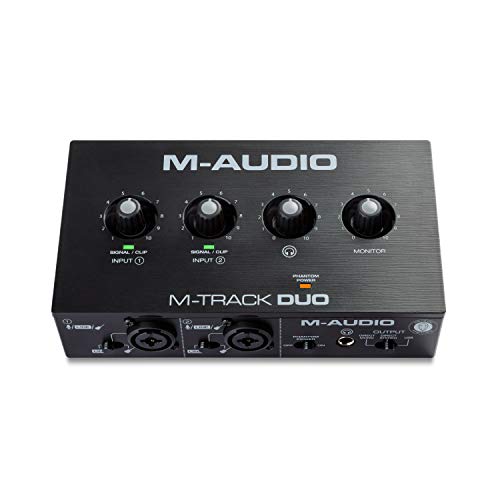
- Two combo inputs with phantom power
- Zero-latency USB/Direct monitoring
- Includes MPC Beats software
Best For: Beginners recording vocals, guitar, podcasts, or streams
Simple Loopback Streaming

- Hardware Loopback switch for streaming
- Direct monitoring without extra software
- USB-C bus-powered portability
Best For: Solo musicians, podcasters, and streamers
Best for Mobile Creators – MAONO P1 USB Audio Interface
If you need an audio interface with loopback for streaming, podcasting, or music creation across multiple devices, the MAONO P1 offers flexible routing and broad connectivity. Its dual USB ports can connect a computer and a phone or iPad simultaneously, while built-in loopback combines voice, instruments, backing tracks, and desktop audio.
Best For: Mobile creators, streamers, podcasters, and musicians who need computer-and-phone recording flexibility.
Pros:
- Built-in loopback and ProStudio2 routing support desktop audio, backing tracks, instruments, and vocals.
- Up to 70dB of gain, 24-bit/192kHz recording, and -130dB EIN support clean recordings.
- Dual USB connectivity works with computers, phones, and tablets, while Auto-Gain simplifies setup.
- Independent headphone, monitor, and mute controls help during live recording and streaming.
Cons:
- Its extensive routing features may take time to learn.
- The product is aimed at creator workflows rather than a minimal two-input setup.
The MAONO P1 is the most purpose-built option here for creators who need loopback and multi-device workflows. Its software routing and control layout are especially useful when streaming desktop and live audio together.
Best for Two-Input Recording – Focusrite Scarlett 2i2 4th Gen
The Focusrite Scarlett 2i2 4th Gen is a strong general-purpose choice for anyone comparing an audio interface with loopback for recording and content production. It provides two mic preamps, two Hi-Z instrument inputs, 24-bit/192kHz conversion, and automatic level tools for more dependable takes.
Best For: Musicians and home studios recording two microphones, instruments, or a combination of both.
Pros:
- Two mic preamps and two Hi-Z instrument inputs support flexible recording setups.
- 120dB dynamic range and 24-bit/192kHz support target studio-quality capture.
- Auto Gain and Clip Safe help maintain usable levels and reduce clipping concerns.
- Air mode adds presence and harmonic drive to vocals and guitars.
Cons:
- The supplied notes do not specify a dedicated loopback feature.
- It is less compact than the Scarlett Solo.
Choose the Scarlett 2i2 when two-input recording matters more than specialized loopback routing. Its automatic level features, Air mode, and included software make it a practical starting point for music production.
Best Budget Loopback Pick – PIYONE Q28 USB Audio Interface
For shoppers seeking an affordable audio interface with loopback, the PIYONE Q28 combines a 2×2 design with a monitor mix/loopback function. It uses USB-C for data and bus power, includes two combo inputs, and supports 24-bit/192kHz recording for PC, Mac, and iOS-oriented setups.
Best For: Home recording and mobile users who want basic loopback, two inputs, and a portable USB-C setup.
Pros:
- Monitor mix/loopback functionality supports combined monitoring and routing workflows.
- Two XLR/TRS combo inputs accept microphones and instruments, with 48V phantom power.
- USB-C provides data and bus power without a separate power supply.
- Direct monitoring and a 3.5mm headphone output support low-latency tracking.
Cons:
- The supplied compatibility details list Windows, so other operating systems should be verified before purchase.
- The notes do not identify bundled recording software.
The Q28 is a practical feature-focused option if loopback, portability, and two combo inputs are priorities. Its bus-powered USB-C design keeps the setup simple, though buyers should confirm platform compatibility for their particular device.
Best Compact Solo Setup – Focusrite Scarlett Solo 4th Gen
The Focusrite Scarlett Solo 4th Gen is a compact option for a simple audio interface with loopback-style content workflows, though the supplied specifications do not explicitly list a dedicated loopback function. It offers one XLR mic preamp, one Hi-Z instrument input, 24-bit/192kHz recording, and compatibility with Mac, Windows, and iOS.
Best For: Songwriters, vocalists, and guitarists who record one microphone and one instrument in a compact setup.
Pros:
- One XLR mic input and one Hi-Z instrument input suit solo recording.
- 120dB dynamic range and 24-bit/192kHz support detailed recordings.
- Improved Air mode adds presence and harmonic drive to vocals and guitars.
- Compact 14.4-ounce design and included software make it easy to start recording.
Cons:
- The supplied notes do not specify a dedicated loopback feature.
- It has fewer microphone inputs than the Scarlett 2i2.
The Scarlett Solo is best when space and simplicity matter. It is a focused choice for one-person recording, but shoppers specifically requiring confirmed loopback should consider a model whose notes explicitly provide that function.
Best Plug-and-Play Value – PIYONE Q2 Alloy Grey
If you want an audio interface with loopback for straightforward recording and monitoring, the PIYONE Q2 combines two combo inputs, USB-C connectivity, and a monitor mix/loopback function in a portable design. Its 24-bit/192kHz conversion, 48V phantom power, and class-compliant operation make it a practical choice for computer or mobile setups.
Best For: Home creators, vocalists, guitarists, and laptop users seeking an easy two-input interface with high-resolution recording.
Pros:
- USB-C plug-and-play operation without proprietary drivers.
- 24-bit/192kHz recording with two XLR/TRS combo inputs.
- Loopback, direct monitoring, 48V phantom power, and a 3.5mm headphone output.
Cons:
- Limited to two input channels.
- Supplied details list Windows compatibility, while broader mobile compatibility is described in the product notes.
The Q2 is a sensible starter interface when simple connections, portable USB-C power, and loopback functionality matter more than extensive routing or MIDI connectivity.
Best Feature-Rich Choice – Arturia MiniFuse 2
The Arturia MiniFuse 2 is a versatile audio interface with loopback for recording voice alongside computer or in-app audio. It adds MIDI connectivity, balanced outputs, phantom-powered combo inputs, and a USB hub, making it useful for creators who want a broader home-studio setup.
Best For: Musicians, vocalists, content creators, and beginners who need loopback plus MIDI and bundled production software.
Pros:
- Loopback supports capturing voiceovers with in-app or in-game audio.
- Includes two combo mic/instrument/line inputs with 48V phantom power.
- Adds five-pin MIDI I/O, balanced line outputs, a headphone output, and a USB hub.
- Includes creative software and a five-year warranty.
Cons:
- Its feature set may be more than needed for basic two-input recording.
- The supplied specifications describe a 192kHz maximum rate but do not state the bit depth.
With loopback, MIDI, and an unusually generous software bundle, the MiniFuse 2 is a strong all-around option for users building a flexible recording, streaming, or songwriting workspace.
Best for Streaming Control – BOMGE BMG22
The BOMGE BMG22 is an audio interface with loopback designed to combine microphone or instrument inputs with computer playback and return the mix to the computer. Its direct monitoring, stereo/mono output switching, and high-resolution specifications suit podcasting, streaming, and basic recording workflows.
Best For: Streamers, podcasters, vocalists, and guitarists who need computer-audio mixing with two physical inputs.
Pros:
- Loopback mixes both interface inputs and computer playback into two return channels.
- Two combo inputs with gain controls and Class A mic preamps.
- 32-bit/192kHz resolution and zero-latency direct monitoring.
- Supports Windows and Mac generic-driver operation, with an additional 5V power option for iPad use.
Cons:
- Phantom power is specified for input 1 and requires the XLR socket.
- DAW software is not included.
- The supplied details do not identify the full compatible-device range.
The BMG22 focuses on practical routing for live content and recording. Choose it when loopback mixing and direct monitoring are priorities, especially if you already have preferred DAW software.
Budget Recording Starter – M-Audio M-Track Duo
The M-Audio M-Track Duo is a straightforward audio interface with loopback alternative? Its supplied features focus on recording, podcasting, and streaming with two combo inputs, phantom power, and zero-latency direct monitoring. It is a practical choice for basic home recording when you need guitar, microphone, and line-level connectivity.
Best For: Beginners recording vocals, guitar, podcasts, or livestream audio on Mac or PC.
Pros:
- Two combo XLR/line/instrument inputs with phantom power
- USB/Direct switch supports zero-latency monitoring
- Includes MPC Beats and other production software
Cons:
- Maximum sample rate is 48 kHz
- The supplied notes do not specify a dedicated loopback function
The M-Track Duo covers essential inputs and monitoring at an accessible size and price point. However, shoppers specifically seeking a confirmed audio interface with loopback should consider the Zoom AMS-22 or MAONO P2 instead.
Simple Loopback Streaming – Zoom AMS-22
The Zoom AMS-22 is a compact audio interface with loopback built directly into the hardware. Its Loopback switch combines your input with computer playback for streaming, while Direct Monitor supports real-time listening without extra software.
Best For: Solo musicians, podcasters, and streamers who want simple hardware loopback and portable USB-C operation.
Pros:
- Hardware Loopback switch combines input and computer playback
- Direct monitoring works without additional software
- Bus-powered and compatible with Mac, PC, iOS, and Android
- Includes XLR/TRS and stereo 3.5mm inputs
Cons:
- Offers one XLR/TRS combo input rather than two full-size combo inputs
- Maximum sample rate is 48 kHz
The AMS-22 is especially appealing when uncomplicated loopback matters more than extensive I/O. Its Music and Streaming modes make it easy to shift between DAW recording and software-free livestreaming.
Advanced Creator Routing – MAONO P2 Hybrid
The MAONO P2 is a flexible audio interface with loopback for creators who record and stream across computers, phones, and tablets. Dual USB connectivity, 24-bit/192 kHz recording, independent monitoring controls, and software-based routing make it suited to more involved content workflows.
Best For: Podcasters, streamers, musicians, and mobile creators combining microphones, instruments, backing tracks, and desktop audio.
Pros:
- Dual USB ports connect a computer and phone or iPad simultaneously
- Built-in loopback routes voice, instruments, backing tracks, and desktop audio
- Supports up to 24-bit/192 kHz recording with 56 dB of gain
- Independent headphone, monitor, and mute controls aid streaming workflows
Cons:
- Advanced routing relies partly on the included ProStudio 2 software
- Its larger feature set may be more than a basic recording setup needs
The P2 stands out for hybrid workflows and creator-focused routing. If you need to combine mobile devices, microphones, instruments, and computer audio, it offers considerably more flexibility than a basic two-input interface.
How We Picked the Best Audio Interface with Loopback
We focused on interfaces that suit streaming, podcasting, voice recording, music production, and hybrid setups. Selection factors included input count, microphone preamp capability, phantom power, direct monitoring, loopback support, connection type, device compatibility, and portability. We also considered whether each interface makes sense for beginners, mobile creators, or more demanding home-studio users.
Specifications can vary by revision and operating system, so confirm current manufacturer details—particularly loopback behavior, iOS or phone support, bundled cables, and required power—before ordering.
Quick Comparison
| Best For | What to Prioritize |
|---|---|
| Solo streaming and voice | Simple loopback, one quality preamp, headphone monitoring |
| Two-microphone podcasts | Two independent mic inputs, phantom power, separate gain controls |
| Guitar and vocal recording | Combo inputs, instrument mode, low-latency monitoring |
| Mobile recording | Phone or iPad compatibility, compact design, suitable power options |
| Small home studio | Reliable drivers, MIDI if needed, balanced monitor outputs |
Key Buying Factors for an Audio Interface with Loopback
Loopback Implementation
Loopback routes computer audio back into the interface or recording software. Check whether it is hardware-based, software-controlled, or limited to particular applications. A clear routing utility is valuable when mixing a microphone with music, game audio, or a video call.
Inputs and Preamps
Count the sources you will connect at the same time. XLR inputs suit microphones, while combo XLR/TRS inputs also accept line and instrument connections. Phantom power is necessary for most condenser microphones, and sufficient gain matters for quieter dynamic microphones.
Monitoring and Latency
Direct monitoring helps you hear your microphone without distracting delay. Look for a dedicated headphone output, useful monitor controls, and a practical mix or balance control if you need to blend live input with computer playback.
Compatibility and Power
USB-C or USB connectivity is only part of the equation. Verify Windows and macOS support, mobile-device compatibility, adapter requirements, and whether the interface receives enough power from a phone or tablet. Class-compliant operation can simplify mobile use.
Build and Expansion
A metal enclosure and firm controls are worthwhile for frequent travel or daily streaming. MIDI connectivity is useful for keyboards and controllers, while balanced outputs can reduce noise in powered monitors. Buy only the expansion features you expect to use.
Who Should Buy Which Audio Interface with Loopback?
Choose a compact one- or two-input interface if you mainly record a single voice, guitar, or stream. A two-input model is the better long-term choice for interviews, stereo sources, or simultaneous vocal and instrument recording. Mobile creators should favor models explicitly designed for phones and tablets and confirm their power requirements.
For podcasting or live content, prioritize dependable loopback controls and easy headphone monitoring over headline sample-rate numbers. Musicians should place greater weight on preamp gain, instrument compatibility, latency, and driver stability. If you are building a small studio, select the model with the right outputs and inputs now rather than paying for unused specifications.