Choosing an audio interface with ADAT expansion gives your studio room to grow without replacing its core recording setup. Add more microphone inputs, connect external preamps, or integrate compatible digital hardware as your tracking needs increase.
This roundup includes full-featured USB interfaces, dedicated ADAT expanders, and practical options for building a flexible multichannel recording system.
Best 10 Audio Interface with Adat Expansion Picks for 2026
Best All-in-One Expansion Hub

- 18x20 USB audio/MIDI I/O
- Eight MIDAS mic preamps
- ADAT I/O with 96 kHz support
Best For: Larger home and project studios
Best Modern 8-Channel Expander

- Eight-channel ADAT input expansion
- 24-bit/96 kHz support
- Rack ears included
Best For: Adding eight XLR inputs to an existing ADAT setup
Best Value Mic Preamp Expander

- Eight mic preamp channels
- 8-in/8-out ADAT connectivity
- 24-bit operation up to 48 kHz
Best For: Standard-rate studio and live recording expansion
Best Console-Focused Expansion Module

- Up to 32 channels at 48 kHz
- Four optical inputs and outputs
- BNC word-clock connectivity
Best For: Midas and Behringer digital console systems
Studio Expansion Pick

- Eight mic preamps plus dual ADAT
- 18 inputs and 20 outputs
- Auto Gain, Clip Safe, and 192kHz conversion
Best For: Larger recording setups and expandable project studios
Compact Starter Pick
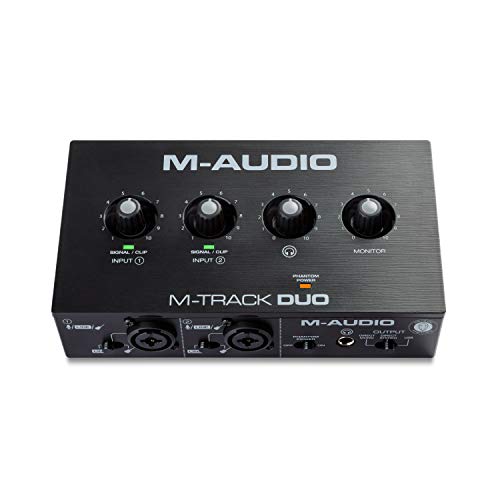
- Two combo XLR/line/instrument inputs
- Zero-latency USB/Direct monitoring
- Portable 48kHz recording interface
Best For: Basic recording, podcasting, and streaming
Balanced Expansion Pick

- Four mic preamps and eight line inputs
- ADAT, S/PDIF, and MIDI I/O
- 18 inputs, 16 outputs, and 192kHz support
Best For: Expandable project studios with moderate output needs
Best All-Around Expansion Hub
Focusrite Scarlett 16i16 4th Gen

- 16-in/16-out interface with ADAT, S/PDIF, and MIDI
- Two preamps, two Hi-Z inputs, and six line inputs
- Auto Gain, Clip Safe, Air modes, and 24-bit/192 kHz conversion
Best For: Producers planning a flexible, expandable studio
Best Premium Two-Preamp Option

- ADAT input adds up to eight digital channels
- Two Clarett+ preamps with low noise and high headroom
- Air circuitry and JFET inputs suit vocals and guitars
Best For: Small studios wanting premium two-channel recording with expansion
Best All-in-One Expansion Hub – UMC1820
The Behringer UMC1820 is a strong choice if you need an audio interface with ADAT expansion plus substantial direct connectivity. It combines 18 inputs, 20 outputs, eight MIDAS-designed mic preamps, MIDI, and USB connectivity in one unit, with support for sample rates up to 96 kHz.
Best For: Home and project studios recording multiple microphones and instruments while retaining room for ADAT expansion.
Pros:
- 18×20 USB audio/MIDI interface with ADAT I/O
- Eight MIDAS-designed mic preamps with +48V phantom power
- Supports 24-bit/96 kHz audio and popular recording software
- Streams 18 inputs and 20 outputs with ultra-low latency
Cons:
- Its broad feature set may be more than a small setup needs
- ADAT expansion requires compatible external equipment
- The listed dimensions indicate a relatively wide unit
For buyers wanting one interface to handle a larger recording setup, the UMC1820 offers unusually high I/O capacity and built-in preamps before expansion is added.
Best Modern 8-Channel Expander – AudioFuse X8 IN
The Arturia AudioFuse X8 IN is a focused audio interface with ADAT expansion for adding eight inputs to a compatible setup. It provides 24-bit/96 kHz operation, XLR inputs, rack ears, and compatibility with Mac and Windows software.
Best For: Producers and engineers who need eight additional XLR inputs at up to 96 kHz in a rack-friendly format.
Pros:
- Adds eight channels through ADAT connectivity
- Supports 24-bit/96 kHz operation
- Includes rack ears and an 8-in power supply
- Compatible with Mac and Windows software
Cons:
- It is an input expander rather than a complete USB interface
- Requires a host device with compatible ADAT input
- The supplied notes do not specify onboard mic preamp features
The X8 IN is a straightforward way to increase input count without replacing an existing interface, especially when rack mounting and high-resolution recording are priorities.
Best Value Mic Preamp Expander – ADA8200
Behringer ADA8200 Audiophile 8 In/8 Out ADAT Audio Interface with Midas Mic Preamplifiers
Check Price On AmazonThe Behringer ADA8200 is a practical audio interface with ADAT expansion for adding eight microphone inputs and eight outputs to compatible equipment. Its Midas mic preamps and 24-bit converters operate at 44.1 or 48 kHz, making it suited to standard studio and live-recording workflows.
Best For: Users who need eight additional mic preamps and ADAT I/O at common 44.1/48 kHz sample rates.
Pros:
- Eight-channel microphone preamp configuration
- Eight inputs and eight outputs over ADAT
- Includes Midas mic preamps
- Supports 24-bit conversion at 44.1/48 kHz
Cons:
- Maximum sample rate is 48 kHz
- Requires compatible ADAT equipment for operation as an expander
- Its larger chassis may not suit compact desktops
Choose the ADA8200 when channel count and additional mic preamps matter more than 96 kHz recording. It is a focused, conventional expansion option for studios and live setups.
Best Console-Focused Expansion Module – DN32-ADAT
Klark Teknik DN32-ADAT ADAT Expansion Module with up to 32 Record/Playback Channels
Check Price On AmazonThe Klark Teknik DN32-ADAT is a specialized audio interface with ADAT expansion for Midas and Behringer digital consoles. It supports up to 32 simultaneous record/playback channels at 48 kHz and adds four optical input and four optical output connectors, plus BNC word-clock connectivity.
Best For: Studio or live engineers connecting compatible Midas or Behringer digital consoles to ADAT-equipped recorders.
Pros:
- Supports up to 32 record/playback channels at 48 kHz
- Provides four TOSLINK optical inputs and four outputs
- Includes BNC word-clock input or output for synchronization
- Designed for Midas and Behringer digital consoles
Cons:
- Compatibility is limited to specified Midas and Behringer digital consoles
- Maximum sample rate is 48 kHz
- It is an expansion module, not a standalone computer interface
The DN32-ADAT is the specialized choice here: a high-channel-count console module for dependable optical routing and external clock synchronization rather than a general-purpose desktop interface.
Studio Expansion Pick – Scarlett 18i20 4th Gen
For a recording setup that needs an audio interface with ADAT expansion, the Focusrite Scarlett 18i20 4th Gen combines eight mic preamps with dual ADAT, S/PDIF, MIDI, and Word Clock connections. Its 18-input, 20-output layout is suited to larger tracking sessions and studio monitoring.
Best For: Home and project studios recording multiple microphones, instruments, and expanded digital channels.
Pros:
- Eight mic preamps, two Hi-Z inputs, and eight line inputs provide flexible recording options.
- Dual ADAT, S/PDIF, MIDI I/O, and Word Clock support broader studio integration.
- 24-bit/192kHz converters, Air modes, Auto Gain, and Clip Safe add useful recording tools.
- Includes Pro Tools Intro+, Ableton Live Lite, Cubase LE, and Hitmaker Expansion.
Cons:
- Its larger 17.37-inch depth and 8-pound weight make it less portable.
- The extensive I/O may be more than a two-channel or small desktop setup requires.
The 18i20 is the strongest choice here for a growing studio. It offers substantial analog I/O today and the digital connections needed to expand later, while its workflow features help streamline recording.
Compact Starter Pick – M-Track Duo USB Interface
The M-AUDIO M-Track Duo is a simple, portable option for basic recording, podcasting, and streaming. However, it is not an audio interface with ADAT expansion: its two combo inputs and 48kHz operation are designed for straightforward two-channel setups.
Best For: Beginners, podcasters, streamers, and musicians who need a compact two-input interface.
Pros:
- Two combo XLR/line/instrument inputs support microphones, guitars, and line-level sources.
- Phantom power accommodates condenser microphones.
- USB/Direct switching enables zero-latency monitoring.
- Includes MPC Beats and a portable USB-powered design.
Cons:
- No ADAT, MIDI, or other digital expansion connections are listed.
- Its maximum sample rate is 48kHz, below the 192kHz capability of the Focusrite options.
- With two channels, it is limited for larger multitrack recording sessions.
The M-Track Duo makes sense when affordability and simplicity matter more than expandability. Choose it for a compact starter rig, but look to an ADAT-equipped interface if you expect your input count to grow.
Balanced Expansion Pick – Scarlett 18i16 4th Gen
The Focusrite Scarlett 18i16 4th Gen is a practical audio interface with ADAT expansion for producers who need extensive inputs without the 18i20’s larger output count. It provides four mic preamps, eight line inputs, ADAT, S/PDIF, and MIDI in a compact 18-input, 16-output design.
Best For: Producers and project studios needing substantial input capacity, digital expansion, and flexible routing.
Pros:
- Four mic preamps, two Hi-Z inputs, and eight line inputs cover varied sources.
- ADAT, S/PDIF, and MIDI I/O support an expandable studio workflow.
- 24-bit/192kHz converters offer detailed recording with a stated 122dB dynamic range.
- Air modes, Auto Gain, and Clip Safe provide useful tracking features.
Cons:
- It has fewer mic preamps and outputs than the Scarlett 18i20.
- The external power supply adds another component to the setup.
- Its broad I/O may be unnecessary for simple two-channel recording.
The 18i16 sits between a basic interface and a full studio hub. It is a strong fit when you want ADAT expansion and many line inputs, while keeping output requirements more moderate than the 18i20.
Best Budget 4-Channel Pick – Depusheng 4-Channel USB Interface
If you need an affordable audio interface with ADAT expansion, note that this Depusheng model does not list ADAT connectivity. It is instead focused on straightforward four-channel USB recording, with combo inputs, Hi-Z switches, phantom power, and ASIO drivers for low-latency monitoring.
Best For: Beginners and home-studio users recording several microphones, guitars, or line-level sources at once.
Pros:
- Four combo inputs support microphones, guitars, and line sources.
- 24-bit/192 kHz recording and ASIO drivers support detailed, low-latency sessions.
- Includes +48V phantom power, direct/DAW monitoring, and four TS main outputs.
Cons:
- No ADAT expansion is listed, so it is not suitable for adding an eight-channel digital preamp.
- Supplied details list Windows compatibility, while broader Mac compatibility is not specified.
The Depusheng is a practical entry-level USB interface for users who prioritize analog inputs and simple monitoring over digital expansion. Choose it for a compact four-input setup, but look elsewhere if ADAT is essential.
Best All-Around Expansion Hub – Focusrite Scarlett 16i16 4th Gen
The Focusrite Scarlett 16i16 is a strong choice when an audio interface with ADAT expansion must also handle a growing studio. Alongside ADAT, it provides S/PDIF, MIDI, two mic preamps, Hi-Z inputs, six line inputs, and 16 inputs and outputs overall.
Best For: Producers who want a flexible central interface for microphones, instruments, line-level gear, and future digital expansion.
Pros:
- Combines ADAT, S/PDIF, and MIDI I/O with 16-in/16-out connectivity.
- Two 4th-generation preamps offer up to 69 dB of gain, while 24-bit/192 kHz converters provide a 122 dB dynamic range.
- Auto Gain and Clip Safe simplify level setting and help manage clipping.
- Includes Air modes and a substantial software bundle with Pro Tools Intro+, Ableton Live Lite, and Cubase LE.
Cons:
- Its broad I/O layout may be more than needed for a small, two-input recording setup.
- Requires an external power supply rather than relying solely on USB-C bus power.
With ADAT and several other digital connections, the Scarlett 16i16 offers room to expand without immediately replacing the interface. It is the most versatile option here for a producer planning a more connected studio setup.
Best Premium Two-Preamp Option – Focusrite Clarett+ 2Pre
The Focusrite Clarett+ 2Pre is a focused audio interface with ADAT expansion for recording two sources now and adding up to eight digital channels later. Its two Clarett+ preamps, JFET instrument inputs, Air circuitry, and 24-bit/192 kHz converters target clean, detailed studio recording.
Best For: Guitarists, vocalists, and small studios that need high-quality two-channel recording with a clear path to more inputs.
Pros:
- ADAT optical input provides eight channels of digital expandability with compatible equipment.
- Two Clarett+ preamps offer high headroom, low distortion, and low noise.
- All-analogue Air circuitry adds presence and harmonic character to preamp signals.
- Dedicated high-impedance JFET inputs preserve the natural tone of guitars.
Cons:
- Only two built-in mic preamps are provided, so additional simultaneous sources require ADAT equipment.
- USB-C bus power requires a 15W USB-C port, which may limit compatibility with some setups.
The Clarett+ 2Pre makes sense when recording quality and future expansion matter more than a large number of built-in analog inputs. It is a refined two-channel starting point that can grow through its ADAT input.
How We Picked the Best Audio Interface with Adat Expansion
We compared these products by looking at their connection types, channel counts, ADAT functionality, preamp features, conversion specifications, computer compatibility, and likely studio use. We also separated complete USB recording interfaces from dedicated expanders, since they solve different problems.
Priority went to products that offer a clear upgrade path, dependable connectivity, useful monitoring controls, and enough inputs or outputs for their intended role. A dedicated expander can be excellent when you already own an interface with ADAT input, while a USB interface with ADAT I/O is generally more versatile as the center of a new system.
Quick Comparison
| Best For | Recommended Type | What to Look For |
|---|---|---|
| Starting a scalable studio | USB interface with ADAT I/O | Mic preamps, headphone outputs, and future expansion |
| Adding microphone inputs | ADAT expander | Eight-channel analog input and optical ADAT output |
| Large live or installed systems | High-channel expansion module | Console compatibility and channel capacity |
| Small recording setups | Compact USB interface | Simple routing, low latency, and essential I/O |
Key Buying Factors for an Audio Interface with Adat Expansion
ADAT Inputs, Outputs, and Channel Count
Check whether the unit provides ADAT input, output, or both. At standard sample rates, one optical ADAT connection commonly carries up to eight channels. Higher sample rates can reduce channel capacity through S/MUX, so confirm the interface and expander support the sample rate you plan to use.
Analog Inputs and Preamps
Count the microphone, line, and instrument inputs you need today, then allow space for future sessions. Built-in phantom power is important for condenser microphones, while dedicated line inputs may be preferable when connecting external preamps, synthesizers, or outboard gear.
Computer Connection and Monitoring
USB-C describes the connector, not necessarily the performance standard, so review the actual compatibility and driver requirements. For comfortable tracking, consider direct monitoring, headphone output count, independent cue mixes, and reliable low-latency operation.
Clocking and Setup Compatibility
Digital devices must share a compatible clock. Many systems use ADAT clocking, while larger installations may benefit from word-clock connections. Confirm optical format, clock settings, sample-rate support, and software control before buying an expander.
Who Should Buy Which Audio Interface with Adat Expansion?
Choose a full USB interface with ADAT I/O if you need the main hub for a computer-based studio and want to add external channels later. These models are the most flexible choice for musicians recording multiple sources.
Choose a dedicated eight-channel ADAT expander if your existing interface already has an ADAT input and you mainly need more microphone or line inputs. This is often the most economical way to expand a working setup.
Choose a high-capacity expansion module for compatible digital mixers, larger tracking rigs, or installations where channel count matters more than portability.
Choose a compact interface if you record only a few sources at once and do not expect to build a large multichannel system. Avoid paying for expansion hardware you will not use, but verify that the model meets your required input, output, and monitoring needs.