The best audio interface with MIDI input combines clean recording, dependable instrument control, and straightforward computer connectivity in one practical setup. The right model depends on how many microphones, instruments, and MIDI devices you plan to use.
We compare 10 options for beginners, producers, vocalists, bands, and expanding studios, with attention to inputs, outputs, monitoring, software, and long-term flexibility.
Best 10 Audio Interface with Midi Input Picks for 2026
Best Mobile MIDI Value

- 2x2 recording with MIDI I/O
- Onyx preamps with 48V phantom power
- Bus-powered and built for portability
Best For: Mobile recording and compact home studios
Best Expandable Studio Hub
Focusrite Scarlett 4i4 4th Gen

- 4-in/4-out with MIDI I/O
- Two mic pres and four line inputs
- Auto Gain, Clip Safe, and Air mode
Best For: MIDI-equipped home studios with multiple devices
Best Four-Input Budget Workhorse

- 4x4 USB audio with MIDI I/O
- Four MIDAS-designed mic preamps
- 24-bit/192kHz support and metal chassis
Best For: Bands and project studios recording multiple sources
Best Two-Channel Starter Interface
Focusrite Scarlett 2i2 4th Gen

- Two mic preamps and two Hi-Z inputs
- 120dB dynamic range at 24-bit/192kHz
- Auto Gain, Clip Safe, and Air mode
Best For: Solo recording and compact vocal-guitar setups
Best for Expanding Home Studios

- 18x20 USB audio/MIDI I/O
- Eight MIDAS mic preamps with phantom power
- ADAT expansion and 24-bit/96 kHz support
Best For: Larger home studios and multi-microphone recording
Best for Portable Music and Podcasting
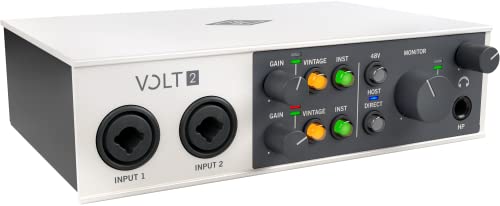
- Compact 2x2 USB-C interface with MIDI
- 24-bit/192 kHz recording support
- Vintage 610 preamp-emulation mode
Best For: Solo creators and mobile recording setups
Best Value MIDI Pick
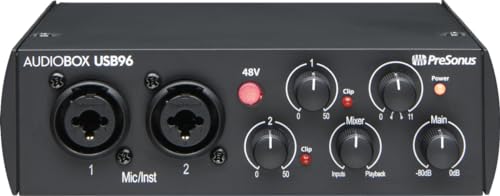
- MIDI I/O with two mic and instrument inputs
- 24-bit/96 kHz recording and USB bus power
- Includes Studio One Artist and other recording software
Best For: Budget-conscious home musicians needing MIDI and portable recording
Best for Solo Songwriters
Focusrite Scarlett Solo 4th Gen

- 120 dB dynamic range and 24-bit/192 kHz support
- Air mode enhances vocals and guitars
- MIDI input is not listed in the supplied specifications
Best For: Solo vocal-and-guitar recording without stated MIDI connectivity
Best Vintage-Style Sound
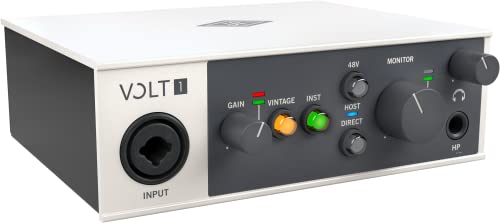
- Vintage mode draws on UA 610 preamp character
- 24-bit/192 kHz recording with MIDI-device compatibility listed
- Supports Mac, Windows, iPad, and iPhone recording
Best For: Mobile producers wanting Vintage mode and high-resolution recording
Best Mobile MIDI Value – Mackie Onyx Producer 2-2
Mackie Audio Interface, Onyx Producer 2X2 USB Audio Interface with MIDI (Onyx Producer 2-2)
Check Price On AmazonThe Mackie Onyx Producer 2-2 is a practical audio interface with MIDI input for musicians who need two recording channels, instrument connectivity, and portable USB bus-powered operation. It combines two Onyx mic preamps with 24-bit/192kHz recording and zero-latency direct monitoring.
Best For: Mobile recording, singer-songwriters, and small home studios using microphones, guitars, or MIDI hardware.
Pros:
- Includes MIDI I/O alongside two mic/line/Hi-Z combo inputs.
- Two Onyx preamps provide 48V phantom power for condenser microphones.
- Bus-powered USB 2.0 design supports portable recording without a power adapter.
- Includes a collection of 23 plugins and instruments.
Cons:
- Only two inputs and two outputs may limit larger recording setups.
- Warranty coverage is listed as one year.
Choose this Mackie when portability and straightforward MIDI connectivity matter more than a high channel count. Its rugged design and direct monitoring make it a capable compact setup.
Best Expandable Studio Hub – Focusrite Scarlett 4i4 4th Gen
The Focusrite Scarlett 4i4 4th Gen is a versatile audio interface with MIDI input for producers connecting microphones, guitars, synths, drum machines, and other studio gear. Its four inputs, four outputs, MIDI I/O, and 24-bit/192kHz support provide room to grow.
Best For: Producers and home studios that need multiple line connections, MIDI hardware support, and flexible routing.
Pros:
- Offers 4-in/4-out connectivity with MIDI input and output.
- Includes two mic preamps, two Hi-Z inputs, four line inputs, and four line outputs.
- Features 120dB dynamic range, Air mode, Auto Gain, and Clip Safe.
- Includes recording software, instruments, effects, and mastering tools.
Cons:
- Its broader I/O may be more than a basic two-channel setup requires.
- Includes a USB-C power supply, so the setup is less minimal than a fully bus-powered interface.
The Scarlett 4i4 is a strong choice when MIDI and line-level expansion are priorities. Auto Gain and Clip Safe add useful safeguards for recording, while the extra I/O accommodates more complex sessions.
Best Four-Input Budget Workhorse – Behringer UMC404HD
The Behringer U-PHORIA UMC404HD is an audio interface with MIDI input designed for recording several microphones or instruments at once. It provides four inputs, four outputs, MIDI I/O, 24-bit/192kHz resolution, and four MIDAS-designed mic preamps in a metal chassis.
Best For: Bands, project studios, and producers needing four simultaneous inputs with MIDI hardware connectivity.
Pros:
- Provides 4×4 USB audio connectivity plus MIDI I/O.
- Four mic preamps include +48V phantom power.
- Supports 24-bit/192kHz recording and ultra-low-latency streaming.
- Impact-resistant metal chassis is described as built like a tank.
Cons:
- Its listed operating-system details are limited compared with newer models.
- At 2.7 pounds, it is heavier than some compact two-input interfaces.
For users who need four mic or instrument sources without moving to a larger rack-style system, the UMC404HD offers useful capacity and MIDI support. Its durable chassis also suits regular studio use.
Best Two-Channel Starter Interface – Focusrite Scarlett 2i2 4th Gen
The Focusrite Scarlett 2i2 4th Gen is a compact two-channel audio interface with MIDI input support for a streamlined recording setup. It offers two mic preamps, two Hi-Z instrument inputs, 24-bit/192kHz recording, and compatibility with computers, tablets, and smartphones.
Best For: Solo artists, vocalists, guitarists, and beginners who need a simple two-input recording interface.
Pros:
- Includes two mic preamps and two Hi-Z instrument inputs.
- Provides 120dB dynamic range with 24-bit/192kHz support.
- Auto Gain and Clip Safe help manage recording levels.
- Air mode adds presence and harmonic drive to vocals and guitars.
Cons:
- Two inputs and two channels limit simultaneous recording options.
- Compared with the Scarlett 4i4, it has fewer line connections and outputs.
The Scarlett 2i2 is a sensible pick for a focused vocal-and-instrument rig. It keeps the setup compact while adding level-management tools and included production software for getting started quickly.
Best for Expanding Home Studios – Behringer UMC1820
For larger recording setups, the Behringer UMC1820 is a practical audio interface with MIDI input, extensive I/O, and ADAT expansion. It supports up to 18 inputs and 20 outputs over USB, making it suitable for recording multiple microphones and instruments at once.
Best For: Home studios, bands, and producers who need many simultaneous inputs plus ADAT expansion.
Pros:
- 18×20 USB audio and MIDI connectivity
- Eight MIDAS-designed mic preamps with +48V phantom power
- Up to 24-bit/96 kHz resolution with ADAT I/O
- Compatible with popular software such as Pro Tools, Ableton Live, and Cubase
Cons:
- Larger and heavier than compact two-input interfaces
- Its extensive channel count may be more than a simple recording setup requires
The UMC1820 makes the most sense when expandability and high input capacity matter more than portability. It is a strong choice for growing studios that need MIDI alongside substantial analog connectivity.
Best for Portable Music and Podcasting – Universal Audio Volt 2
The Universal Audio Volt 2 is a compact audio interface with MIDI input for musicians, podcasters, and streamers. Its two-in, two-out USB-C design supports up to 24-bit/192 kHz recording, while Vintage mode adds 610 preamp-inspired character.
Best For: Solo musicians, mobile creators, podcasters, and streamers who want a compact two-input interface.
Pros:
- Compact 2×2 USB-C interface with MIDI
- Up to 24-bit/192 kHz recording quality
- Vintage mode provides 610 tube-emulation-style preamp coloration
- Supports Mac, Windows, iPad, and iPhone recording setups
Cons:
- Only two input channels
- Mobile iPad use may require external power and an Apple Lightning adapter, depending on the device
The Volt 2 is a convenient fit for smaller setups where portability and straightforward operation are priorities. Its limited I/O is best suited to solo recording rather than full-band tracking.
Best Budget MIDI Recording Hub – Behringer UMC204HD
The Behringer UMC204HD is a practical audio interface with MIDI input for smaller studios. It combines two combination XLR/TRS inputs, four outputs, inserts for external effects, and up to 24-bit/192 kHz conversion in a compact USB design.
Best For: Musicians and home recordists who need MIDI hardware connectivity, two microphone or instrument inputs, and flexible monitoring.
Pros:
- Built-in MIDI I/O for keyboards and external MIDI hardware
- Two combination XLR/TRS inputs with MIDAS-designed preamps
- 2×4 routing with analog inserts, TRS, and RCA playback options
- Supports up to 24-bit/192 kHz resolution
Cons:
- Two inputs limit simultaneous recording capacity
- USB 2.0 connectivity is less current than USB-C designs
The UMC204HD offers useful routing and MIDI connectivity without the footprint of a larger interface. It is especially well matched to compact desktop studios using a keyboard, microphones, or external effects.
Best Value MIDI Pick – PreSonus AudioBox 96
The PreSonus AudioBox 96 is a practical choice if you want an audio interface with MIDI input for home recording, portable setups, and basic instrument production. It combines MIDI I/O with two mic preamps, two instrument inputs, zero-latency monitoring, and USB bus power.
Best For: Budget-conscious home musicians who need MIDI connectivity, microphone inputs, and portable operation.
Pros:
- MIDI I/O plus two mic preamps and two high-headroom instrument inputs.
- Records and plays back at up to 24-bit/96 kHz.
- USB bus-powered design and included Studio One Artist, Ableton Live Lite, and Studio Magic software.
- Global +48V phantom power supports condenser microphones.
Cons:
- Maximum sample rate is lower than the 192 kHz offered by some competing models.
- Its two-channel layout may be limiting for larger recording sessions.
The AudioBox 96 stands out for delivering MIDI I/O and a useful set of recording features at a value-oriented price. Its bus-powered design also makes it well suited to mobile recording.
Best for Solo Songwriters – Focusrite Scarlett Solo 4th Gen
The Focusrite Scarlett Solo 4th Gen is designed for solo recording with one mic preamp and one Hi-Z instrument input. If you need an audio interface with MIDI input specifically, note that the supplied specifications do not list MIDI I/O; it is better suited to microphone-and-guitar workflows.
Best For: Songwriters and solo performers recording vocals and a guitar or other instrument.
Pros:
- 120 dB dynamic range and up to 24-bit/192 kHz recording.
- Air mode adds presence and harmonic drive to vocals and guitars.
- Compact, lightweight USB-C interface compatible with Mac, Windows, and iPad.
- Includes Pro Tools Intro+, Ableton Live Lite, Cubase LE, and Hitmaker Expansion.
Cons:
- The supplied details do not identify MIDI input or MIDI I/O.
- Only one XLR mic preamp and one instrument input are provided.
Scarlett Solo is a strong compact recording interface, but it is not the most direct match for a MIDI-focused setup. Choose it when straightforward vocal-and-instrument recording matters more than connecting external MIDI hardware.
Best Vintage-Style Sound – Universal Audio Volt 1
The Universal Audio Volt 1 is a compact two-channel interface for recording microphones and electric guitar, with listed compatibility for MIDI devices. Its Vintage mode is designed to provide the rich character of UA’s classic 610 preamps, while 24-bit/192 kHz conversion supports detailed recording.
Best For: Mobile musicians and producers who want MIDI-device compatibility, Vintage preamp coloration, and high-resolution recording.
Pros:
- Vintage mode is modeled after UA’s classic 610 preamps.
- Supports recording at up to 24-bit/192 kHz.
- Works with Mac, Windows, iPad, and iPhone for flexible recording setups.
- Includes access to LUNA and listed music-production tools and plug-ins.
Cons:
- Requires an external Volt power supply.
- iPhone and some iPad setups require an Apple Lightning to USB Camera Adapter.
- The supplied details do not specify the physical MIDI connection type.
Volt 1 is an appealing option for producers who value UA-inspired preamp character alongside high-resolution recording. Confirm the MIDI connection details and power requirements before building it into a specific hardware setup.
How We Picked the Best Audio Interface with Midi Input
We evaluated these interfaces by looking at their I/O, MIDI connectivity, preamp quality, conversion specifications, monitoring controls, computer connection, bundled software, and likely use cases. We also considered whether each model makes sense for a compact bedroom studio, a mobile rig, or a larger multitrack recording system.
Not every interface offers the same MIDI implementation or expansion potential, so check the product specifications carefully before buying. Some models are best for a single performer, while others are designed to accommodate several microphones, line-level sources, and external hardware.
Quick Comparison
| Best For | What to Prioritize | Suitable Choices |
|---|---|---|
| Solo recording | Simple controls, one or two preamps, compact size | Scarlett Solo, Volt 1, AudioBox 96 |
| Vocalists and producers | Two inputs, MIDI I/O, low-latency monitoring | Onyx Producer 2-2, Volt 2, UMC204HD |
| Small bands | Four microphone or line inputs | Scarlett 4i4, UMC404HD |
| Expandable studios | Many inputs, outputs, and digital expansion | UMC1820 |
Key Buying Factors for an Audio Interface with Midi Input
Inputs and Recording Capacity
Count the sources you need to record simultaneously. One or two inputs work for vocals, guitar, keyboards, and overdubbing. Four or more inputs are more practical for drum machines, stereo instruments, multiple performers, or a small band.
MIDI Connections and Hardware Support
Confirm that the interface includes the MIDI ports you need, typically five-pin MIDI In and Out. MIDI lets you connect keyboards, drum machines, controllers, and other hardware without relying solely on USB. If you use several devices, also check the available line outputs and routing options.
Latency, Monitoring, and Preamp Performance
Direct monitoring can help you hear your performance with minimal delay, while strong headphone output matters for recording and mixing. Look for phantom power if you use condenser microphones, and make sure the preamps provide enough gain for your microphones without excessive noise.
Expansion and Connectivity
USB-C or USB connectivity affects compatibility and convenience, but the interface’s driver support and operating-system compatibility matter just as much. If your studio may grow, consider additional outputs, loopback features, or ADAT expansion rather than buying only for today’s setup.
Software and Build Quality
Bundled recording software, instruments, and plug-ins can reduce startup costs. A sturdy metal chassis, clear meters, responsive controls, and reliable drivers are valuable if the interface will travel or remain in daily use.
Who Should Buy Which Audio Interface with Midi Input?
Choose a compact two-channel model if you record one or two sources at a time and want a simple setup for vocals, guitar, keyboards, or basic production. Models such as the Scarlett 2i2, Volt 2, Onyx Producer 2-2, and UMC204HD fit this category.
Choose a one-input model if portability and low cost matter most and you rarely record stereo or multiple sources. The Scarlett Solo and Volt 1 are sensible starting points, provided their available connections match your MIDI workflow.
Choose a four-input interface if you expect to record several sources, connect stereo hardware, or collaborate with another performer. The Scarlett 4i4 and UMC404HD provide more room to grow than entry-level two-input units.
Choose the UMC1820 for a larger setup with many microphones, external processors, or future ADAT expansion. It is the most appropriate option here for users building a more capable multichannel studio rather than a minimal desktop rig.