Clear, intelligible audio is essential in worship spaces, where microphones, instruments, speakers, and livestream feeds must work together reliably. The best channel strips for church sound systems can shape vocals, control dynamics, reduce noise, and simplify signal management.
This roundup includes dedicated channel strips alongside mixers, distribution amplifiers, stage boxes, and loudspeaker-management tools that may suit different church audio layouts. Use the guide below to match features, connectivity, and scale to your sanctuary and volunteer team.
Best 10 Channel Strips for Church Sound Systems Picks for 2026
Vocal Control Essential

- Four independent processing sections for vocals and instruments
- XLR and 1/4-inch inputs with loop-out
- Rack-mountable 1U chassis with status LEDs
Best For: Dedicated single-channel vocal processing in church racks
Speaker System Tuner

- Two analog inputs and six analog outputs
- Parametric EQ for inputs and outputs
- 24-bit/96 kHz conversion with 113 dB dynamic range
Best For: Church speaker management and multi-output system tuning
Tube Vocal Character
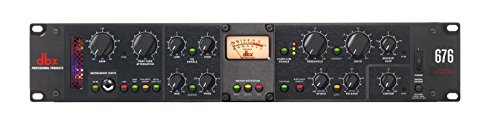
- 250-volt Class-A tube preamp for tonal flexibility
- Compressor/limiter and three-band parametric EQ
- XLR, 1/4-inch, instrument input, and VU meter
Best For: Featured vocal or instrument channels needing hands-on tone shaping
Complete Digital Mixing Hub
Behringer X AIR XR18 Digital Mixer
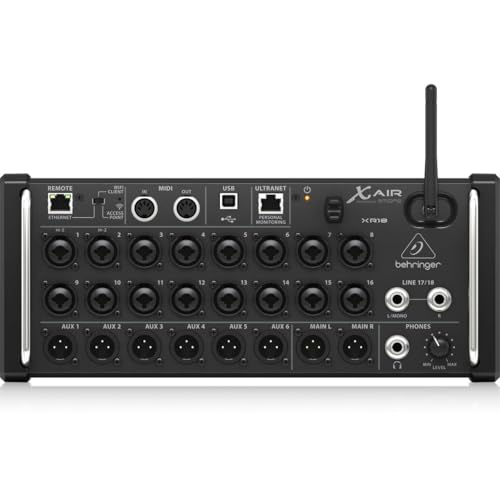
- 18-channel, 12-bus digital mixer for live sound
- 16 programmable Midas-designed mic preamps
- Built-in Wi-Fi and 18-by-18 USB interface
Best For: Full worship-band mixing, remote control, and multichannel recording
Multi-Zone Distribution
Rolls RA163 8-Channel Distribution Amplifier

- Mono to eight outputs or stereo to four stereo outputs
- Balanced XLR inputs and outputs
- Selectable +20 dB gain
Best For: Distributing balanced audio to multiple church sound system zones
Single-Channel Processing
Behringer Ultravoice UV1 USB Channel Strip

- Mic/line preamp with compressor and gate
- Built-in expander and de-esser
- USB interface with up to 192 kHz support
Best For: One processed mic or line channel with computer connectivity
Small Worship Mixing
Shure SCM268 4-Channel Microphone Mixer

- Four mic channels in a half-rack chassis
- 12V phantom power and low-cut filters
- Paging ducking and jukebox muting functions
Best For: Compact worship, paging, and public-address installations
Tube Control Center
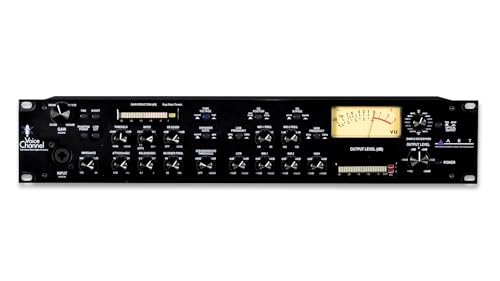
- Tube preamp adds warmth and definition
- Compressor, expander, de-esser, and gate included
- USB and multiple digital output formats
Best For: Dedicated processing for one vocal or instrument source
Stagebox Expansion

- 32 programmable Midas-designed mic preamps
- 16 servo-balanced XLR outputs
- AES50 and Ultranet connectivity
Best For: Large networked worship-stage I/O systems
Compact Front End

- Five-channel compact mixer design
- One mic/line input with phantom power
- Stereo line and RCA playback connections
Best For: Small worship setups and simple playback rigs
Vocal Control Essential – dbx 286s Channel Strip
For church sound systems that need focused vocal processing, the dbx 286s combines a microphone preamp with compression, de-essing, enhancement, and an expander/gate. Its straightforward controls and status LEDs make it practical for shaping a worship leader, pastor, or announcement microphone before the signal reaches the mixer.
Best For: Churches wanting dedicated, single-channel vocal processing with rack-mount installation.
Pros:
- Combines compression, de-essing, enhancement, and expander/gate in one unit.
- Accepts XLR microphone and 1/4-inch line or instrument inputs.
- Rack-mountable 1U design with metering LEDs and loop-out connectivity.
Cons:
- Provides processing for one channel only.
- Its wired, corded design requires rack space and power.
The dbx 286s is a sensible choice when a church needs reliable front-end control for a key microphone without adding a full digital mixer. Compression and de-essing are especially useful for keeping speech and vocals clear and consistent.
Speaker System Tuner – Behringer DCX2496LE
The Behringer DCX2496LE is a loudspeaker management system rather than a conventional microphone channel strip, making it a better fit for church sound systems focused on speaker crossover, EQ, and distribution. It provides two analog inputs and six analog outputs for flexible system routing.
Best For: Churches tuning and managing multi-output loudspeaker systems.
Pros:
- Offers two analog inputs and six analog outputs.
- Includes parametric EQs selectable on inputs and outputs.
- Uses 24-bit/96 kHz converters with a stated 113 dB dynamic range.
Cons:
- It is a speaker management processor, not a vocal preamp or traditional channel strip.
- Its supplied details do not list microphone preamp inputs or channel-strip vocal effects.
Choose the DCX2496LE when the priority is system-level speaker control rather than processing individual microphones. Its output count and input/output EQ flexibility can suit installations with multiple speaker feeds, but it should complement—not replace—a dedicated vocal processor or mixer channel.
Tube Vocal Character – dbx 676FX Channel Strip
For church sound systems seeking more tonal flexibility on a featured microphone or instrument, the dbx 676FX combines a high-voltage Class-A tube preamp, compressor/limiter, and three-band parametric EQ. It can provide clean, warm, or more saturated character while giving operators detailed control over the signal.
Best For: Churches wanting premium-style tone shaping for a lead vocal, instrument, or recording feed.
Pros:
- High-voltage tube preamp supports clean, warm, and richly driven tones.
- Includes compressor/limiter, side-chain insert, and three-band parametric EQ.
- Provides XLR and 1/4-inch connectivity plus a front-panel instrument input.
Cons:
- Its 2U rack size occupies more space than a compact channel strip.
- Tube-based processing may offer more tonal control than a basic speech channel requires.
- The supplied notes do not specify multiple-channel operation.
The 676FX is a strong choice for a church that wants to shape one important source with hands-on control and tube coloration. Its VU meter, EQ, and dynamics section can be valuable for lead vocals, instruments, or a dedicated broadcast and recording path.
Complete Digital Mixing Hub – Behringer X AIR XR18 Digital Mixer
The Behringer X AIR XR18 is a full digital mixing solution for church sound systems, with 18 inputs, 12 buses, and 16 programmable Midas-designed microphone preamps. Tablet control, built-in Wi-Fi, and an 18-by-18 USB interface make it suited to live worship, recording, and flexible remote operation.
Best For: Churches that need many channels, programmable preamps, wireless tablet control, and USB recording.
Pros:
- Provides 18 input channels and 12 buses for larger worship setups.
- Includes 16 programmable Midas-designed microphone preamps.
- Built-in tri-mode Wi-Fi and an 18-by-18 bidirectional USB interface support remote mixing and recording.
Cons:
- It is a complete digital mixer rather than a single-channel hardware strip.
- Operation depends on tablet control and its built-in network system.
- The supplied notes do not list traditional front-panel channel-strip controls.
The XR18 is the most scalable option here for churches that need to manage an entire band, choir, or service rather than process one microphone. It offers the channel count and routing flexibility of a digital mixer while also covering recording and tablet-controlled live operation.
Multi-Zone Distribution – Rolls RA163 8-Channel Distribution Amplifier
For church sound systems that need to send one source to multiple destinations, the Rolls RA163 is a practical distribution amplifier rather than a traditional microphone channel strip. It supports mono operation to eight outputs or stereo operation to four stereo outputs, with balanced XLR connections throughout.
Best For: Churches distributing a high-level balanced audio signal to multiple rooms, zones, or system inputs.
Pros:
- Flexible mono or stereo operating modes
- Eight channels for broad signal distribution
- Balanced XLR inputs and outputs
- Selectable +20 dB gain
Cons:
- It is a distribution amplifier, not a one-channel mic preamp or full channel strip
- Designed for signal distribution rather than onboard vocal processing
The RA163 makes the most sense when your church system needs dependable routing across several outputs. Its eight-channel design and balanced connections can simplify larger installations, but choose a different product if you need compression, de-essing, or individual microphone-channel control.
Single-Channel Processing – Behringer Ultravoice UV1 USB Channel Strip
The Behringer Ultravoice UV1 is a focused option among channel strips for church sound systems when you need one mic or line channel with integrated processing and USB connectivity. Its feature set includes a mic/line preamp, compressor, gate, expander, de-esser, and USB audio interface.
Best For: Churches needing one processed microphone or line channel alongside computer-based recording or playback.
Pros:
- Combines a one-channel preamp with dynamics and de-essing tools
- Includes compressor, gate, expander, and de-esser functions
- USB audio interface supports up to 192 kHz sample rate
- Compatible with Windows 10 and Mac OS X 10.4 or higher
Cons:
- Only one channel is provided
- Its computer compatibility is listed for Windows 10 and Mac OS X 10.4 or higher
The UV1 is a useful fit for a pastor, vocalist, announcement mic, or recording feed that benefits from dedicated processing. It is less suitable when a church needs several independently processed microphone channels in a single unit.
Small Worship Mixing – Shure SCM268 4-Channel Microphone Mixer
The Shure SCM268 is a compact choice for smaller church sound systems that need straightforward microphone mixing and auxiliary audio support. It provides four microphone channels, 12V phantom power, built-in low-cut filters, transformer-equipped inputs, and paging-oriented features.
Best For: Smaller houses of worship, meeting rooms, educational paging, and compact public-address systems.
Pros:
- Four microphone channels in a half-rack format
- 12V phantom power supports condenser microphones
- Built-in low-cut filters help shape mic inputs
- Paging ducking and jukebox muting functions are included
Cons:
- Four channels may be limiting for larger worship productions
- Auxiliary connections use unbalanced phono connectors
- It is a mixer with basic filtering rather than a fully featured channel strip with compression
The SCM268 is a sensible installation mixer when reliability, compact size, and simple paging or auxiliary integration matter more than extensive channel processing. Its rack hardware and included IEC cord also suit permanent small-system setups.
Tube Control Center – ART VoiceChannel
The ART VoiceChannel is a single-channel tube channel strip for church sound systems that need detailed control over a vocal, instrument, or other important source. Its tube preamp, dynamics tools, and broad digital connectivity make it especially useful where warmth and routing flexibility matter.
Best For: Churches recording or processing a featured vocal, instrument, or direct source with analog and digital routing options.
Pros:
- Tube preamp is designed to provide warmth and definition.
- Includes compressor, expander, de-esser, and gate controls.
- Offers USB, ADAT, AES/EBU, S/PDIF, and TOSLink digital connectivity.
- Supports sample rates up to 192 kHz.
Cons:
- Only one channel, so it is not a solution for processing an entire band or choir.
- Its extensive connectivity may be more than a simple live vocal setup requires.
Choose the VoiceChannel when one source deserves dedicated preamp and dynamics treatment, particularly in a church that also records services or needs flexible computer and digital-console integration.
Stagebox Expansion – Behringer S32 Stage Box
The Behringer S32 is a 32-channel stage box suited to larger church sound systems that need many microphone inputs and distributed outputs. Its programmable Midas-designed preamps, AES50 networking, and personal-monitoring connectivity support a more integrated stage-to-PA setup.
Best For: Larger worship stages using compatible digital networking and requiring high input capacity with multiple output and monitoring connections.
Pros:
- Provides 32 fully programmable Midas-designed mic preamps.
- Includes 16 servo-balanced XLR outputs.
- AES50 ports are designed for low-jitter, low-latency networking.
- Supports Ultranet personal monitoring and two AES-3 ports.
Cons:
- It is a stage box rather than a standalone channel strip with onboard dynamics controls.
- Its networking and monitoring features are most useful in a compatible system.
The S32 is a practical infrastructure choice when a church needs to place substantial I/O on or near the stage. Confirm compatibility with the rest of the digital system before buying.
Compact Front End – Mackie Mix5 Compact Mixer
The Mackie Mix5 is a compact five-channel mixer for small church sound systems, overflow rooms, simple playback rigs, or basic recording tasks. It offers one mic/line input with phantom power, two stereo line inputs, and straightforward tone shaping in a small desktop format.
Best For: Small worship setups needing a simple mixer for one microphone plus stereo instruments, playback, or recording connections.
Pros:
- Compact five-channel design is easy to place and operate.
- Mic/line input includes two-band EQ and phantom power.
- Provides two stereo 1/4-inch line inputs.
- Dedicated stereo RCA inputs and outputs support playback or recording.
Cons:
- Only one mic/line input limits use for larger worship teams.
- It does not provide the dedicated dynamics processing found in a full channel strip.
- Its feature set is intended for simple systems rather than complex digital routing.
The Mix5 makes sense when affordability and simplicity matter more than extensive channel processing. For a full church band, choir, or multichannel stage, its five-channel layout will be restrictive.
How We Picked the Best Channel Strips for Church Sound Systems
We evaluated these 10 products by considering the jobs they can perform in a church audio system, including microphone preamplification, compression, equalization, feedback control, routing, monitoring, and system expansion. We also looked at connection types, phantom-power support, channel count, rack or stage installation, digital control, and ease of use.
Not every item is a traditional single-channel strip. Some churches need a complete digital mixer, stage box, distribution amplifier, or loudspeaker processor rather than another rack-mounted vocal processor. Those broader options are included because they can solve common signal-management challenges in worship venues.
Quick Comparison
| Best For | Look For | Most Relevant Features |
|---|---|---|
| Lead vocals and spoken word | Dedicated channel processing | Preamp, compressor, EQ, de-esser, gate |
| Multiple microphones | Compact analog mixing | Several inputs, phantom power, low-cut filtering |
| Large worship teams | Digital expansion | Many preamps, remote control, buses, stage-box compatibility |
| Speaker-system control | Loudspeaker management | Crossovers, limiting, delay, EQ, presets |
| Distributed audio | Signal splitting | Multiple outputs and consistent level control |
Key Buying Factors for Channel Strips for Church Sound Systems
Input and Output Compatibility
Check whether the unit uses XLR, 1/4-inch, USB, digital outputs, or network connections that match your existing console and amplifiers. Balanced connections are preferable for longer cable runs, while phantom power is important for condenser microphones and many active direct boxes.
Processing Controls
For speech and vocals, compression can make levels more consistent, de-essing can reduce harsh consonants, and a high-pass or low-cut filter can remove rumble. A gate or expander may help with stage noise, but aggressive settings can cut off quiet words or musical phrases.
System Size and Workflow
A small church may benefit from a straightforward analog mixer or single vocal channel strip. Larger teams generally need multiple buses, recallable presets, remote control, and enough preamps for singers, instruments, and streaming feeds. Consider who will operate the system on a typical service, not just its maximum technical capability.
Reliability and Installation
Rack-mountable hardware can protect connections and keep settings organized, while a stage box can reduce long cable runs to the front of the room. For permanent installations, prioritize dependable connectors, clear metering, accessible controls, and backup plans for wireless or network-dependent features.
Who Should Buy Which Channel Strips for Church Sound Systems?
Choose a dedicated channel strip when one or two important sources—such as a pastor’s microphone, lead vocalist, or broadcast feed—need more focused processing than the main mixer provides. A tube-style unit may suit users who specifically want its character, while a clean solid-state processor is often easier to standardize across volunteers.
Choose a digital mixer and stage box when the church has a larger band, multiple monitor mixes, livestream requirements, or operators who need remote control from a tablet. A compact analog mixer is better for simple events, overflow rooms, or backup duties. Finally, choose a loudspeaker-management processor or distribution amplifier when the main challenge is consistent speaker coverage and signal delivery rather than vocal processing.