The right channel strip can help a small band capture vocals, guitars, bass, and other sources with cleaner gain, controlled dynamics, and a more finished sound before the signal reaches the recorder.
These 10 picks cover compact voice-focused processors, tube designs, USB-equipped units, premium studio channels, and software options, making it easier to match features and budget to your recording setup.
Best 10 Channel Strips for Small Bands Picks for 2026
Versatile Analog Control

- Mic and instrument preamp with compression
- De-esser, enhancer, and expander/gate
- Rack-mountable 1U design with metering
Best For: Vocal channels and compact live racks
DAW Mixing Power

- Six-band parametric EQ with detailed filtering
- Separate gate and compressor processing
- Delay for multi-mic track alignment
Best For: Mac-based project-studio mixing
Tube Tone and Dynamics

- Class A 12AX7 tube preamplifier
- VCA compressor with flexible timing controls
- Three-band EQ with variable-Q mid band
Best For: Tube-flavored vocal and instrument recording
USB Vocal Front End

- One-channel mic/line preamp and USB interface
- Compression, gate/expander, and de-esser
- Up to 192 kHz sample-rate support
Best For: Single-vocal computer recording setups
Versatile Digital Hub
ART VoiceChannel Tube Channel Strip
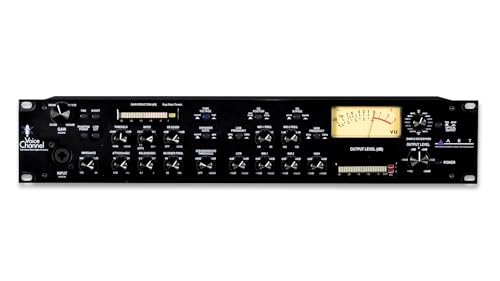
- Tube preamp for warmth and definition
- Compressor, expander, de-esser, and gate
- USB plus multiple digital outputs
Best For: Small-band studios needing one flexible recording channel
Focused Tracking Control
SPL Track One MK3 Mono Channel Strip

- Mic and instrument preamp
- Compressor/limiter with output metering
- 3-band EQ and de-esser
Best For: Mono vocal and instrument tracking in compact studios
Tube Tone Shaper
ART Pro Channel III Channel Strip

- Mono tube channel-strip design
- Opto and FET compression voicings
- 4-band semi-parametric EQ
Best For: Detailed vocal and instrument shaping with tube processing
Flexible Tube Control
dbx DBX676FX Tube Channel Strip
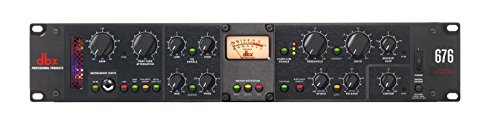
- High-voltage Class-A tube preamp
- Compressor/limiter with side-chain insert
- Sweepable-mid parametric EQ
Best For: Bands wanting one versatile strip for tone, dynamics, and EQ
Classic Vocal and Instrument Chain
Universal Audio 6176 Channel Strip

- 610-derived all-tube mic preamp
- 1176LN Class A FET compressor
- Split-or-join signal operation
Best For: Bands seeking a classic preamp-and-compressor recording chain
Programmable Modeling Power
Focusrite Liquid Channel Strip

- Emulates classic preamp and compressor designs
- 99 program memories for recall
- USB remote-control support
Best For: Project studios needing varied, repeatable channel-strip sounds
Versatile Analog Control – dbx 286s Channel Strip
For small bands that need hands-on control before the signal reaches the mixer, the dbx 286s is a practical choice among channel strips for small bands. Its microphone and instrument preamp combines compression, de-essing, enhancement, and expander/gate processing in a single rack unit, with front-panel metering for quick monitoring.
Best For: Vocal channels, electronic instruments, and compact rack-based live or project-studio setups.
Pros:
- Combines mic and instrument preamplification with four independent processing sections.
- Classic dbx compression can help bring vocals forward and even out dynamics.
- Includes de-essing, enhancer, expander/gate, insert, and loop-out connectivity.
- Rack-mountable 1U chassis with XLR and 1/4-inch inputs plus status LEDs.
Cons:
- Provides one channel, so larger bands may need multiple units.
- Its corded, rack-mounted design is less convenient for minimal portable rigs.
The 286s is a strong all-purpose option when a band wants dedicated vocal and instrument processing without relying entirely on software or mixer effects. Its broad feature set is especially useful for shaping a primary vocal before it enters the rest of the system.
DAW Mixing Power – Metric Halo ChannelStrip 2
Metric Halo ChannelStrip 2 is a software option for bands mixing in a compatible Mac-based DAW. It models an analog-style console workflow while combining multi-band EQ, expansion/gating, compression, and delay alignment, making it a flexible choice among channel strips for small bands working in the box.
Best For: Mac-based project studios that need detailed track shaping and efficient DAW processing.
Pros:
- Offers six parametric EQ bands with multiple filter types and a 20 Hz–22 kHz range.
- Includes separate expander/gate and compressor sections with automatic gain-riding functions.
- Delay function can help time-align tracks from multi-microphone recordings.
- Designed for low CPU overhead and a console-style mixing workflow.
Cons:
- It is a plug-in rather than a physical preamp or live channel-strip unit.
- The supplied note advises Pro Tools 10+, VST, and Mac AU users to consider ChannelStrip 3 instead.
- Its compatibility information is oriented toward Mac OS X and supported host software.
This plug-in makes the most sense after recording, where precise EQ, dynamics, and timing control matter more than front-end hardware processing. Check host compatibility carefully because the supplied information identifies it as an older version.
Tube Tone and Dynamics – PreSonus Studio Channel
The PreSonus Studio Channel combines a Class A 12AX7 tube preamplifier, VCA compressor, and three-band EQ in a rugged 1U chassis. For small bands comparing channel strips for small bands, it offers a hardware path for adding preamp drive, shaping frequency balance, and controlling dynamics on vocals or instruments.
Best For: Project studios and live racks seeking tube preamp character with integrated compression and EQ.
Pros:
- High-voltage Class A tube preamp provides gain and tube-drive controls.
- Includes mic, line, and instrument inputs along with phantom power, polarity reverse, and a high-pass filter.
- Variable VCA compressor offers automatic attack/release and soft or hard knee settings.
- Three-band EQ includes a variable-Q mid band and shelving or peak options on the outer bands.
Cons:
- Its tube-based 1U design is heavier than some compact alternatives.
- The supplied details specify a one-year warranty for the original purchaser from an authorized dealer.
The Studio Channel is a good fit when tonal coloration is part of the goal, especially for vocals, bass, acoustic guitar, or keyboards. Its combination of tube drive and flexible dynamics makes it more tone-focused than a simple clean preamp.
USB Vocal Front End – Behringer UV1 Channel Strip
The Behringer Ultravoice UV1 combines a one-channel mic/line preamp and USB audio interface with compressor, gate, and expander/de-esser functions. For small bands seeking channel strips for small bands, it is a practical computer-facing option when a single processed input is more useful than a multi-channel interface.
Best For: Solo vocalists, small-band recording, and computer-based setups needing one processed input.
Pros:
- Combines a mic/line preamp, channel processing, and USB audio interface.
- Includes compression, gate/expander, and de-esser functions for vocal-focused control.
- Supports Windows 10 and Mac OS X 10.4 or higher according to the supplied details.
- Lists a maximum sample rate of 192 kHz.
Cons:
- It provides only one channel, limiting simultaneous band recording.
- The supplied information does not specify detailed analog input or output connector options.
- Its processing is oriented toward a single source rather than full-band front-end coverage.
The UV1 is most compelling when a band needs a straightforward one-channel USB path with vocal-oriented processing. It can simplify a small recording or streaming setup, but bands recording several sources at once will need additional inputs or hardware.
Versatile Digital Hub – ART VoiceChannel Tube Channel Strip
For small bands building a flexible recording setup, the ART VoiceChannel combines a tube preamp with dynamics control and extensive digital connectivity. Its single-channel design suits focused vocal, instrument, or direct-recording duties.
Best For: Small-band studios that need one versatile channel with USB and digital output options.
Pros:
- Tube preamp design provides warmth and definition.
- Includes compressor, expander, de-esser, and gate controls.
- Supports USB, ADAT, AES/EBU, S/PDIF, and TOSLink connectivity.
- Offers sample rates up to 192 kHz.
Cons:
- Only one channel is available.
- At 5.5 kg, it may be heavier than simpler desktop options.
- Its many connectivity choices may be more than a basic setup requires.
The VoiceChannel is a strong choice when a small band wants tube character, comprehensive dynamics processing, and a path to both computer and digital hardware recording.
Focused Tracking Control – SPL Track One MK3 Mono Channel Strip
The SPL Track One MK3 is a mono channel strip for small bands that want core recording controls in one unit. It combines a mic/instrument preamp with compression, metering, EQ, and de-essing for practical tracking and vocal processing.
Best For: Vocalists, instrumentalists, and small recording setups that value straightforward mono signal processing.
Pros:
- Provides both microphone and instrument preamp functionality.
- Includes compressor/limiter control for managing dynamics.
- Offers a 3-band EQ and de-esser in the same channel strip.
- Output metering supports level monitoring.
Cons:
- It is a mono channel strip, so it handles one channel at a time.
- The supplied specifications list a 10.26-pound weight.
- Its feature set is centered on core processing rather than extensive connectivity options.
With its preamp, dynamics, EQ, de-essing, and metering sections, the Track One MK3 offers a concentrated set of tools for shaping individual band tracks before recording.
Tube Tone Shaper – ART Pro Channel III Channel Strip
The ART Pro Channel III gives small bands a mono tube channel strip built around flexible tone shaping. Switchable microphone impedance, selectable opto or FET compression voicings, and a 4-band semi-parametric EQ make it suited to detailed source processing.
Best For: Small-band recording setups that want tube processing and multiple compression character options.
Pros:
- Uses a tube channel-strip design.
- Offers switchable microphone impedance.
- Provides selectable opto and FET compression voicings.
- Includes a 4-band semi-parametric EQ for detailed adjustment.
Cons:
- It is a mono unit, limiting simultaneous processing to one channel.
- Its 10.61-pound weight may matter in portable rigs.
- The supplied notes do not specify digital connectivity.
The Pro Channel III is a compelling option for bands that prioritize analog-style tube tone and hands-on control over a single vocal or instrument signal.
Flexible Tube Control – dbx DBX676FX Tube Channel Strip
For small bands needing versatile channel strips, the dbx DBX676FX combines a high-voltage Class-A tube preamp with compression, limiting, and a sweepable three-band parametric EQ. Its instrument input and XLR/¼-inch connectivity make it practical for both recording and live setups.
Best For: Small bands that want warm tube character, detailed tone shaping, and built-in dynamics control.
Pros:
- High-voltage tube design supports warm, clean, or driven tones.
- Includes compressor/limiter and side-chain insert for mix control.
- Sweepable-mid parametric EQ provides precise frequency shaping.
- Front-panel instrument input and rack-mountable 2U chassis add flexibility.
Cons:
- Its 2U rack format and 13-pound weight may be more than a compact setup needs.
- The broad control set may take longer to learn than a simpler preamp.
The DBX676FX is a strong all-around choice when one rack unit needs to cover preamp color, dynamics, and EQ duties for several band sources.
Classic Vocal and Instrument Chain – Universal Audio 6176 Channel Strip
The Universal Audio 6176 gives small bands a focused channel strip built around an all-tube 610-style mic preamp and an 1176LN Class A FET compressor. Its split-or-join operation lets you use the sections separately or run them in series.
Best For: Small bands prioritizing classic tube preamp character and familiar FET compression.
Pros:
- All-tube preamp section is derived from the Bill Putnam-designed 610 console.
- 1176LN Class A FET compressor offers a well-established dynamics section.
- Split or Join switching supports separate or series processing.
- Variable input impedance, gain, and output levels provide useful control.
Cons:
- The supplied notes list high- and low-frequency shelving EQ rather than a fully parametric EQ.
- Its specialized classic-channel design may be less flexible than a strip with broader modern routing features.
The 6176 is a compelling pick for bands seeking a deliberately classic recording chain, especially when the preamp and compressor are the main priorities.
Programmable Modeling Power – Focusrite Liquid Channel Strip
The Focusrite Liquid Channel is a practical option for small bands that need multiple preamp and compressor flavors without choosing a single fixed character. Its analog design uses SHARC DSP to emulate classic mic-pre and compressor combinations, with 99 program memories and USB remote-control support.
Best For: Small bands and project studios that value recallable sounds and broad channel-strip emulation.
Pros:
- Can emulate classic microphone preamp and compressor designs.
- Supports sample rates from 44.1 through 192kHz.
- Stores settings in 99 program memories for repeatable sessions.
- Rear-panel USB enables remote control.
Cons:
- Its DSP-based approach may not appeal to users seeking a single, fixed analog circuit.
- The supplied notes identify USB remote control but do not specify broader connection details.
The Liquid Channel stands out when flexibility and recall matter more than committing to one signature preamp or compressor sound.
How We Picked These Channel Strips for Small Bands
We focused on channel strips that combine several recording essentials in one signal path: microphone preamplification, compression or limiting, equalization, de-essing, gating, enhancement, or useful digital connectivity. For a small band, that combination can reduce the need for multiple rack units while making it easier to achieve consistent tracks during rehearsals, demos, live recordings, and home-studio sessions.
We also considered application range. Some models are particularly useful for vocals, while others offer stronger instrument flexibility, tube coloration, recallable software processing, USB interfacing, or high-end studio conversion. Build quality, control layout, expandability, and the practicality of the input and output options were important factors as well.
Quick Comparison
| Priority | Look for | Best fit |
|---|---|---|
| Simple vocal recording | Compression, de-essing, and easy metering | Singers, rehearsal spaces, and demo studios |
| Instrument versatility | Flexible EQ, dynamics, and line or instrument inputs | Small bands tracking multiple sources |
| Analog character | Tube circuitry or transformer-style coloration | Players seeking thicker, more distinctive tones |
| Computer-based production | USB, digital outputs, or plug-in integration | Compact home and project studios |
| Premium tracking | Low-noise preamps, refined processing, and robust metering | Serious recording rooms and professional engineers |
Key Buying Factors for Channel Strips for Small Bands
Choose the Right Input and Output Format
Check whether you need XLR microphone input, a quarter-inch instrument input, line-level operation, insert points, or digital outputs. A USB-equipped unit may serve as a direct recording interface, while a traditional rack channel strip usually requires a separate audio interface with suitable line inputs.
Match the Processing to Your Sources
For vocals, a de-esser, compressor, and adjustable high-frequency control can be especially valuable. Bass and electric guitar may benefit from strong preamp headroom, flexible EQ, and a dependable compressor. A gate or expander is useful when stage bleed, room noise, or headphone leakage needs control.
Decide Whether You Want Clean or Colored Tone
Clean designs prioritize transparency and detail, which is useful when you want to shape tracks later. Tube and character-oriented circuits can add warmth, density, or harmonic texture, but they may offer less neutrality and require more careful gain staging.
Consider Workflow and Future Expansion
Front-panel controls are convenient for fast tracking, while software processing can offer presets, recall, and multiple instances. If the band plans to record several sources at once, confirm how many preamps are required; one channel strip improves a single input path rather than replacing a multichannel interface.
Who Should Buy Which Channel Strips for Small Bands?
Choose a compact voice-oriented model if vocals are your main priority and you want straightforward compression, de-essing, and enhancement. Select a flexible analog channel strip if one unit must cover vocals, bass, guitars, and keyboards. Tube models suit musicians who want audible coloration, while clean premium units are better for detailed tracking and later mixing.
For a computer-centered setup, prioritize USB or digital integration and verify driver, operating-system, and sample-rate compatibility. If you already own a capable interface, a conventional rack unit may provide the most practical upgrade. Finally, make sure the strip offers enough headroom, appropriate connectors, and controls you can confidently use; the best choice is the one that improves recording speed without complicating the band’s signal flow.