The right channel strip can turn a raw vocal into a cleaner, more controlled track before it reaches your interface. These picks cover practical home-studio processors, versatile solid-state designs, and premium tube-based units for singers, producers, and engineers.
We focused on preamp quality, compression, EQ, de-essing, noise control, connectivity, and workflow so you can choose a vocal channel strip that fits both your microphone and recording setup.
Best 10 Channel Strips for Recording Vocals Picks for 2026
Best All-in-One Vocal Processing

- Mic preamp with four independent processors
- De-esser helps control vocal sibilance
- Rack-mountable 1U design with LED metering
Best For: Home studios and vocal recording chains needing comprehensive front-end control
Best Complete Tube Recording Bundle

- Tube preamp with VCA compression and parametric EQ
- Includes condenser microphone and closed-back headphones
- Adds cables, shock mount, and pop filter
Best For: Beginners building a complete home vocal recording setup
Best Premium Mono Vocal Strip

- Mic and instrument preamp in a mono channel strip
- Compressor/limiter and three-band EQ included
- Dedicated de-esser with output metering
Best For: Single-source vocal recording and focused front-end processing
Best Tube Tone and Flexible Metering
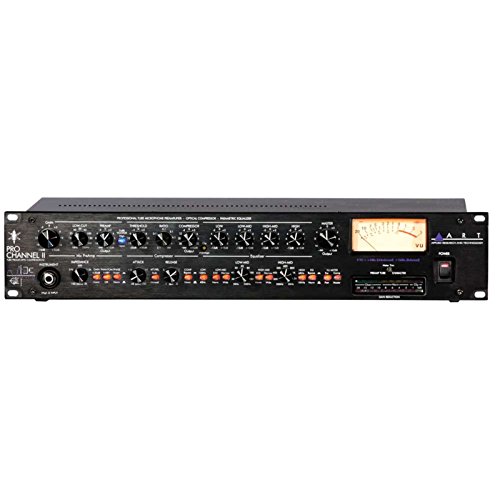
- Independent tube preamp, compressor, and EQ modules
- Selectable optical or tube compression
- VU meter monitors multiple signal stages
Best For: Vocal recording setups seeking tube coloration and hands-on routing
Classic Vocal Character

- 610-derived all-tube mic preamp
- 1176LN Class A FET compressor
- Split or series signal-path operation
Best For: Tube warmth and classic FET vocal compression
Flexible Digital Tracking
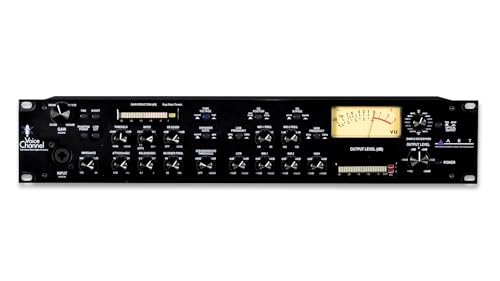
- Tube preamp with warmth and definition
- Compressor, expander, de-esser, and gate
- ADAT, AES/EBU, S/PDIF, TOSLink, and USB
Best For: Digitally connected vocal and project studios
Comprehensive Analog Processing

- Mic/line preamp with DI
- Compressor, expander, gate, and ducker
- Four-band parametric EQ with USB recall
Best For: Detailed vocal shaping and studio signal control
Tube Tone Control

- Class A 12AX7 tube preamp with drive control
- VCA compressor with automatic attack and release
- Three-band EQ with parametric midrange
Best For: Vocal recording setups needing an all-in-one rack channel strip
Quiet Vocal Cleanup

- Analog expander/gate for ambient noise control
- Designed for placement after a mic preamp
- Compact 10.6-ounce hardware unit
Best For: Home studios and podcasts needing post-preamp noise reduction
Classic Tube Recording

- Dedicated tube recording channel strip
- Designed for studio recording applications
- Full-size unit weighing 12.97 pounds
Best For: Studios seeking a focused Universal Audio tube front end
Best All-in-One Vocal Processing – dbx 286s Channel Strip
The dbx 286s is a practical choice for anyone comparing channel strips for recording vocals and wanting several essential processors in one rack unit. Its microphone preamp is paired with compression, de-essing, enhancement, and an expander/gate, giving you useful control over vocal dynamics, sibilance, detail, and unwanted noise before the signal reaches your interface or mixer.
Best For: Home studios, vocalists, broadcasters, and performers who want comprehensive front-end processing with straightforward metering.
Pros:
- Combines a microphone preamp with compression, de-essing, enhancement, and expander/gate processing.
- De-esser helps reduce harsh high frequencies and sibilance in vocal recordings.
- Includes an insert/loop-out connection and an additional 1/4-inch line input.
- Rack-mountable 1U design with status LEDs for monitoring levels and processor activity.
Cons:
- Single-channel design is intended for one source at a time.
- Requires corded power and uses 1/4-inch TRS outputs rather than a stated USB connection.
With its broad set of vocal-focused tools and clear LED monitoring, the 286s is a strong value for recording chains that need practical processing without assembling multiple units.
Best Complete Tube Recording Bundle – PreSonus StudioChannel Bundle
This bundle is aimed at buyers who want more than a standalone channel strip for recording vocals. It combines the PreSonus StudioChannel tube-based preamp strip with a condenser microphone, headphones, cables, shock mount, and pop filter, creating a broadly equipped starting point for a home recording setup.
Best For: Beginners and home-studio users who want a tube preamp, vocal microphone, monitoring headphones, and basic accessories in one package.
Pros:
- StudioChannel provides tube gain and drive, a variable VCA compressor, and a three-band parametric EQ.
- Includes an 80Hz high-pass filter, 20dB pad, phase invert, and selectable EQ pre/post compressor routing.
- Bundle includes a large-diaphragm cardioid condenser microphone and closed-back studio headphones.
- Accessories include an XLR cable, shock mount, windscreen/pop filter, and extra headphone ear pad.
Cons:
- Bundle contents and model listings are presented inconsistently in the supplied description, so buyers should verify the exact package.
- The microphone requires 48V phantom power.
- A bundled package may be more equipment than buyers who already own a microphone and headphones need.
The StudioChannel adds tube coloration and substantial dynamics and EQ control, while the included accessories make this a convenient entry point for assembling a vocal recording rig.
Best Premium Mono Vocal Strip – SPL Track One MK3
The SPL Track One MK3 is a dedicated mono channel strip for recording vocals and other single sources. It combines a microphone/instrument preamp with a compressor/limiter, output metering, three-band EQ, and a de-esser, covering the core stages of shaping and controlling a vocal signal.
Best For: Recordists who want a focused mono front end with dedicated vocal-control features, including de-essing and output metering.
Pros:
- Combines mic and instrument preamplification with compression and limiting.
- Includes a three-band EQ for tonal shaping.
- Dedicated de-esser is useful for managing vocal sibilance.
- Output metering supports level monitoring during recording.
Cons:
- Mono channel-strip format is limited to one channel.
- The supplied notes do not specify connectivity details or individual control ranges.
- Its listed weight and dimensions suggest a substantial unit for smaller setups.
For buyers prioritizing a dedicated vocal-oriented signal path, the Track One MK3 offers the essential building blocks in a single mono strip, though detailed feature comparisons may require checking the manufacturer’s specifications.
Best Tube Tone and Flexible Metering – ART Pro Channel II
ART Pro Channel II Microphone Preamp/Compressor/EQ Professional Tube Based Selectable VU Metering
Check Price On AmazonThe ART Pro Channel II is a tube-based channel strip for recording vocals when you want preamp, compression, and EQ stages in one professional audio unit. Its three independent modules use a tube mic preamp, switchable optical/tube compressor, and tube EQ, with selectable VU metering to help monitor different points in the signal path.
Best For: Vocalists and engineers seeking tube-based coloration with separate preamp, compressor, and EQ sections.
Pros:
- Provides independent tube mic preamp, compressor, and EQ modules.
- Compressor can be switched between optical and tube modes.
- Selectable VU metering can monitor mic pre output, compressor output, or main output.
- Includes XLR, 1/4-inch TRS, and 1/4-inch TS connectivity.
Cons:
- Single-channel design is not intended for stereo processing.
- Tube-based hardware is relatively heavy at 13.4 pounds.
- The supplied notes do not identify a built-in de-esser.
The Pro Channel II stands out for its configurable tube signal path and selectable metering, making it a compelling option for vocal chains where tonal character and hands-on control matter.
Classic Vocal Character – Universal Audio 6176
The Universal Audio 6176 combines an all-tube 610-derived microphone preamp with an 1176LN Class A FET compressor, making it a strong choice among channel strips for recording vocals when you want recognizable analog character and hands-on dynamics control.
Best For: Vocalists and engineers seeking tube warmth, FET compression, and flexible tracking control.
Pros:
- All-tube mic preamp section derived from the Bill Putnam-designed 610 console.
- Signature 1176LN Class A FET compressor section.
- Split or Join switching supports separate or series operation of the preamp and compressor.
- Variable impedance, gain, and output controls plus high- and low-frequency shelving EQ.
Cons:
- Its feature set is centered on a single channel.
- The supplied notes do not indicate digital connectivity or onboard de-essing.
The 6176 is particularly compelling when the preamp and compressor are central to your vocal-recording workflow. Its split/join flexibility also lets you adapt the signal path to different tracking or processing needs.
Flexible Digital Tracking – ART VoiceChannel
The ART VoiceChannel is a practical option among channel strips for recording vocals, pairing a tube preamp with compressor, expander, de-esser, and gate controls. Its broad digital-output selection also suits hybrid and computer-based recording setups.
Best For: Home and project studios needing tube preamp color, vocal dynamics control, and multiple digital connection options.
Pros:
- ART tube preamp design provides warmth and definition.
- Includes compressor, expander, de-esser, and gate processing.
- Supports ADAT, AES/EBU, S/PDIF, TOSLink, and USB digital connectivity.
- Offers a stated maximum sample rate of 192 kHz.
Cons:
- It is a single-channel unit.
- The supplied notes do not specify an analog EQ section.
For vocal tracking, the built-in de-esser and gate can help address common recording-stage issues before the signal reaches your software. The combination of XLR input, USB, and several digital outputs gives this channel strip unusual connection flexibility.
Comprehensive Analog Processing – Neve 8801
The Neve 8801 is a single-channel mic/line preamp and DI with an extensive processing section, making it a serious choice among channel strips for recording vocals when detailed shaping and dynamics control are priorities.
Best For: Engineers who want mic, line, and DI inputs alongside broad dynamics and four-band parametric EQ control.
Pros:
- Combines mic/line preamp and DI functionality in one channel.
- Includes compressor, expander, gate, and ducker processing.
- Provides four-band parametric EQ and an insert send/return.
- USB connectivity supports recall.
Cons:
- It is a one-channel unit.
- The supplied notes do not list multiple digital output formats.
The 8801 stands out for its broad integrated toolkit: vocal signals can be preamplified, dynamically controlled, and shaped with parametric EQ in one channel. Its insert loop and USB recall further support a structured studio workflow.
Tube Tone Control – PreSonus StudioChannel
The PreSonus StudioChannel is a full-featured option for anyone comparing channel strips for recording vocals. Its Class A 12AX7 tube preamp, VCA compressor, and three-band EQ provide a practical signal-shaping chain for home or professional studios.
Best For: Vocalists and recording engineers who want tube coloration, compression, and EQ in one rackmount unit.
Pros:
- Class A vacuum-tube preamp offers adjustable gain and tube drive.
- Includes a VCA compressor with auto attack/release and soft or hard knee settings.
- Three-band EQ includes a variable-Q parametric midrange and shelving or peak high and low bands.
- Accepts mic, instrument, and line-level sources and includes phantom power, polarity reverse, and a high-pass filter.
Cons:
- At 10.5 pounds, it is a substantial rackmount unit.
- Its one-year warranty applies to the original purchaser through an authorized dealer.
Choose the StudioChannel when you want an integrated analog-style front end with broad control over vocal tone and dynamics. It is more versatile than a basic preamp, though its larger rack format may not suit compact setups.
Quiet Vocal Cleanup – Rodweil RO05 Noise Gate
The Rodweil RO05 takes a focused approach to channel strips for recording vocals by targeting ambient and preamp noise. Its fully analog expander/gate is designed for home studios, podcasting, and stage use where cleaner pauses and low-level passages are priorities.
Best For: Home vocalists and podcasters who need analog noise reduction after a microphone preamp.
Pros:
- Designed to reduce ambient background noise and preamp floor noise.
- Fully analog signal processing avoids analog-to-digital conversion and is intended for nearly zero latency.
- Balanced circuitry is designed for smoother, more continuous gating than a basic cutoff-style gate.
- Compact 3.35-by-2.95-by-1.97-inch design weighs 10.6 ounces.
Cons:
- It must be placed after a mic preamp or in a line-level chain.
- A microphone should not be connected directly because raw mic-level signals are too weak for the unit.
- The manufacturer notes that a slight circuit echo on power-off can occur.
The RO05 is best viewed as a specialized noise-control processor rather than a complete preamp, compressor, and EQ channel strip. It makes sense when unwanted room or equipment noise is the main problem and your setup already provides a suitable preamp.
Classic Tube Recording – Universal Audio LA-610 MKII
The Universal Audio LA-610 MKII is a dedicated tube recording channel strip for engineers seeking a classic hardware front end for vocals. The supplied information identifies it as a tube recording channel, making it a focused choice for studio tracking rather than a feature-by-feature all-purpose processor.
Best For: Recording studios and vocalists looking specifically for a tube-based Universal Audio channel strip.
Pros:
- Built as a tube recording channel strip for studio use.
- Provides a dedicated hardware front end for recording applications.
- Substantial 12.97-pound construction suggests a full-size studio unit.
Cons:
- The supplied product information does not specify detailed controls or connectivity.
- Its 12.97-pound weight may be less convenient for portable recording rigs.
The LA-610 MKII is worth considering when a purpose-built tube recording channel from Universal Audio fits your workflow. Because the available specifications are limited, verify the exact included features and connections before buying.
How We Picked the Best Channel Strips for Recording Vocals
We evaluated these channel strips by looking at the features that matter most during vocal tracking: microphone preamp quality, available gain, compression behavior, EQ flexibility, de-essing, expander or gate controls, metering, outputs, and overall usability. We also considered whether each model suits a clean modern vocal, a colored tube sound, broadcast-style speech, or a more hands-on studio workflow.
A channel strip is most useful when its processing complements your microphone and room rather than forcing you into one sound. For that reason, this list includes both focused vocal processors and broader recording-channel designs.
Quick Comparison
| Best For | Look For |
|---|---|
| Affordable home studios | Integrated compression, de-essing, and simple metering |
| Tube character | Tube gain stages, selectable coloration, and transformer-style saturation |
| Clean, flexible tracking | Transparent preamps, adjustable EQ, and precise dynamics controls |
| Voiceover and podcasting | Low noise, expander or gate controls, and easy output routing |
| Professional studio use | High-quality components, robust metering, and broad headroom |
Key Buying Factors for Channel Strips for Recording Vocals
Preamp Character and Gain
Choose a clean preamp if you want maximum flexibility in mixing. Tube or transformer-based designs can add warmth, thickness, and harmonic color, but they may be less neutral. Confirm that the unit provides enough gain for your microphone, especially with low-output dynamic or ribbon microphones.
Compression and De-Essing
Vocal compression should control peaks without making the performance sound flat. A useful compressor offers adjustable threshold, ratio, attack, release, and makeup gain, while a de-esser helps reduce harsh “s” and “sh” sounds. These tools are particularly valuable when recording a polished vocal in one pass.
EQ, Gating, and Noise Control
Parametric or semiparametric EQ gives you more control over proximity buildup, nasal tone, and presence. An expander or gate can reduce headphone bleed, computer noise, and room ambience, but overly aggressive settings may clip word endings. Look for controls that are easy to monitor while tracking.
Connections and Metering
Check whether the channel strip provides balanced line outputs, insert points, digital outputs, or an output format compatible with your interface. Clear VU or LED metering makes it easier to set consistent levels and avoid converter clipping.
Who Should Buy Which Channel Strips for Recording Vocals?
Home-studio vocalists usually benefit from an affordable all-in-one unit with compression, de-essing, and noise control. Singers seeking warmth or vintage-style saturation should consider a tube channel strip with adjustable drive. Producers who record many sources may prefer a flexible preamp and EQ combination rather than a vocal-only processor.
For professional rooms, premium channel strips make sense when you value refined headroom, distinctive analog character, dependable construction, and repeatable results. Voiceover artists and podcasters should prioritize low noise, simple dynamics control, and convenient routing over extensive instrument-oriented features.
Before buying, match the strip to your microphone, interface inputs, available rack or desk space, and preferred recording method. The best choice is the one that gives you the desired sound while making gain staging and monitoring straightforward.