The best desktop computer for 3D printing should make slicing models quick, previews responsive, and design software dependable without wasting money on unnecessary hardware.
This roundup compares 10 desktops with practical combinations of processor performance, memory, storage, graphics capability, connectivity, and upgrade potential for makers, students, professionals, and home workshops.
Best 10 Desktop Computer for 3d Printing Picks for 2026
Best All-Around Performance
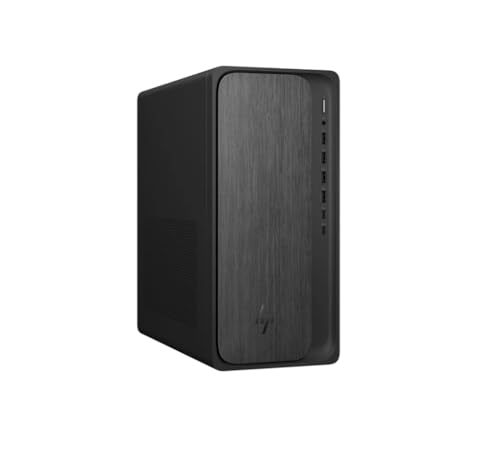
- Ryzen 7 8700G with 32GB DDR5
- Fast 1TB PCIe Gen4 NVMe SSD
- Includes keyboard and mouse
Best For: Makers needing balanced performance for design, slicing, and everyday use
Best for Expandability
Dell Tower Core Ultra 7 Desktop

- Core Ultra 7 processor and 32GB DDR5
- Supports up to four FHD displays
- Tool-less, upgrade-friendly tower design
Best For: Makers and offices prioritizing multitasking, displays, and upgrades
Best Value for Everyday Printing
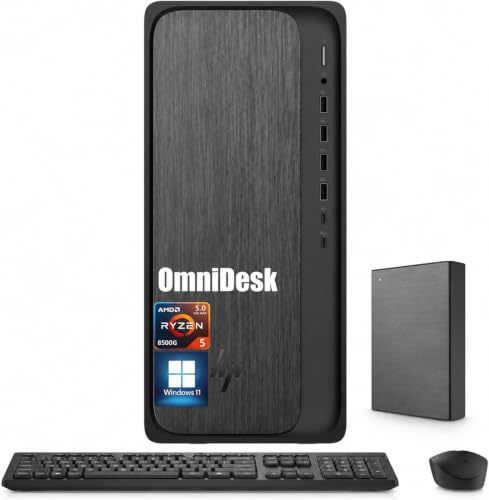
- Ryzen 5 8500G up to 5GHz
- 512GB SSD plus 512GB external storage
- Supports up to four monitors
Best For: Home users and students running routine slicing and productivity tasks
Best Dedicated-GPU Workstation

- Dedicated Quadro K1200 4GB GPU
- 32GB RAM for creative applications
- 1TB SSD plus 4TB HDD storage
Best For: CAD, 3D design, and engineering workflows needing dedicated graphics
Best Budget Workhorse

- Core i7-7700 with 32GB RAM
- Fast 1TB SSD storage
- Compact design with Wi-Fi and dual-display outputs
Best For: Home 3D-printing and productivity workflows
Best Dedicated Graphics
Dell Precision 3431 Workstation

- Quadro P620 dedicated GPU
- Six-core i5-9500 processor
- 1TB SSD with DisplayPort outputs
Best For: CAD, 3D modeling, and graphics-focused printing workflows
Best Six-Core SFF Pick

- Six-core i7-8700 up to 4.60GHz
- Fast 512GB NVMe SSD
- Wi-Fi, Bluetooth, and dual DisplayPort
Best For: Multitasking across slicers, utilities, and productivity apps
Balanced Home Workshop Pick

- Six-core i5-8500 processor
- 32GB RAM and 1TB SSD
- Wi-Fi, Bluetooth, HDMI, and DisplayPort
Best For: Home 3D printing plus everyday computing
Connectivity-Focused Value Pick

- Core i7 processor with 32GB RAM
- 1TB NVMe SSD
- Wi-Fi 6E and up to three 4K displays
Best For: Multi-display 3D-printing and productivity setups
Performance Upgrade Pick

- Eight-core i7-9700 processor
- 32GB RAM and 1TB NVMe SSD
- Wi-Fi 6E, Bluetooth, and dual displays
Best For: Multitasking-heavy 3D-printing workflows
Best All-Around Performance – HP OmniDesk Ryzen 7 Desktop
If you need a capable desktop computer for 3d printing, the HP OmniDesk combines an eight-core Ryzen 7 8700G processor, 32GB of DDR5 memory, and a 1TB PCIe Gen4 NVMe SSD. Its integrated Radeon 780M graphics can also support general 3D design and slicing workflows, while the included keyboard and mouse make setup straightforward.
Best For: Makers who want strong everyday performance, generous memory, and fast storage in a ready-to-use desktop.
Pros:
- Ryzen 7 8700G processor with 8 cores and a 4.2GHz base speed
- 32GB DDR5 memory supports multitasking across design and slicing software
- 1TB PCIe Gen4 NVMe SSD provides fast boot and application loading
- Includes a keyboard and mouse, plus Wi-Fi 6 and Bluetooth 5.4
Cons:
- Radeon 780M graphics are integrated rather than a dedicated workstation GPU
- Only one HDMI video output is listed
This is a well-balanced choice for 3D-printing preparation, general design work, and everyday computing. Consider a dedicated-GPU workstation if your workflow involves especially demanding 3D rendering.
Best for Expandability – Dell Tower Core Ultra 7 Desktop
The Dell Tower is a practical desktop computer for 3d printing when you value processing headroom, multiple displays, and future upgrades. Its Intel Core Ultra 7-265 processor and 32GB of DDR5 RAM suit multitasking, while the tool-less entry and removable side panel simplify access to internal components.
Best For: Home offices, classrooms, and makers who want a business-oriented tower with upgrade-friendly access.
Pros:
- Intel Core Ultra 7 processor includes built-in AI capabilities
- 32GB DDR5 memory provides useful multitasking capacity
- Supports up to four FHD monitors or two 4K displays
- Tool-less access makes internal upgrades more convenient
Cons:
- Uses integrated Intel UHD Graphics rather than a dedicated GPU
- Supplied notes do not specify the SSD capacity
The Dell is a sensible choice for organizing projects, running slicers, and keeping several applications or displays active. Its integrated graphics make it less suited to demanding 3D rendering than a workstation with a dedicated graphics card.
Best Value for Everyday Printing – HP OmniDesk Ryzen 5
For everyday slicing and project management, this HP OmniDesk is a straightforward desktop computer for 3d printing with a six-core Ryzen 5 8500G processor, 16GB of DDR5 memory, and 512GB of internal SSD storage. A separate 512GB external drive is included, giving you additional space for models, profiles, and finished project files.
Best For: Home users, students, and small offices handling routine 3D-printing preparation and general computing.
Pros:
- Six-core Ryzen 5 8500G reaches up to 5GHz
- 16GB DDR5 memory is suitable for everyday multitasking
- Includes 512GB SSD storage plus a 512GB external drive
- Supports up to four monitors and includes Wi-Fi 6 and Bluetooth 5.4
Cons:
- Radeon 740M graphics are integrated with shared memory
- Memory is listed at a 16GB maximum, limiting future expansion
- Less processing and graphics headroom than the higher-tier systems here
This HP offers a convenient setup for standard slicing, browsing, and office tasks. It is best viewed as an everyday productivity machine rather than a system for complex 3D modeling or rendering.
Best Dedicated-GPU Workstation – HP Quadro Design Desktop
This renewed HP workstation stands out as a desktop computer for 3d printing when graphics support and storage capacity matter more than newer platform hardware. It pairs an Intel eighth-generation hexa-core Core i5 with 32GB of DDR4 RAM and an NVIDIA Quadro K1200 4GB GPU, with stated compatibility for 3D design, AutoCAD, 3DS Max, and other creative software.
Best For: Designers, engineers, and makers who need a dedicated graphics card and substantial local project storage.
Pros:
- Dedicated NVIDIA Quadro K1200 graphics with 4GB of memory
- 32GB RAM supports creative applications and multitasking
- Combines a 1TB SSD with a 4TB HDD for boot speed and file capacity
- Many connection options, including two DisplayPort outputs and USB Type-C
Cons:
- Uses an older eighth-generation Intel Core i5 and DDR4 memory
- Renewed condition may not offer the same experience as a new system
- Wi-Fi 5 is older than the Wi-Fi 6 connectivity in some newer options
The Quadro GPU and ISV-oriented positioning make this the most purpose-built option for CAD and 3D design in the group. Its older hardware platform is a tradeoff, but the dedicated graphics and 5TB combined storage remain useful for demanding project libraries.
Best Budget Workhorse – Dell OptiPlex 7050 SFF
If you need a practical desktop computer for 3d printing, the renewed Dell OptiPlex 7050 offers a capable Intel Core i7 processor, generous memory, and fast SSD storage in a compact small-form-factor design. Its integrated graphics are suitable for general 3D-printing software and everyday computer use, though it is not built around a dedicated graphics card.
Best For: Home users who want plentiful RAM and storage for slicers, printer management, design applications, and general productivity.
Pros:
- Intel Core i7-7700 processor and 32GB DDR4 RAM support multitasking.
- 1TB SSD provides fast boot times and substantial file storage.
- Compact SFF case includes Wi-Fi, Bluetooth, HDMI, and DisplayPort outputs.
- Includes a wired keyboard and mouse, plus a 90-day seller warranty.
Cons:
- Integrated Intel UHD Graphics 630 is less suitable for demanding 3D modeling than a dedicated GPU.
- The small-form-factor chassis may limit upgrade flexibility.
This renewed OptiPlex is a sensible value choice when your 3D-printing workflow emphasizes slicing, file preparation, and everyday use rather than advanced GPU-heavy modeling. The 32GB of RAM and 1TB SSD are particularly useful for a ready-to-use workstation.
Best Dedicated Graphics – Dell Precision 3431 Workstation
For shoppers seeking a desktop computer for 3d printing with more graphics capability, the renewed Dell Precision 3431 stands out with its dedicated NVIDIA Quadro P620 GPU. The six-core Intel Core i5-9500, 16GB of DDR4 memory, and 1TB SSD create a balanced foundation for CAD, 3D modeling, slicing, and office work.
Best For: Makers, students, engineers, and creatives who need workstation-oriented graphics for CAD or 3D-modeling applications.
Pros:
- Dedicated NVIDIA Quadro P620 graphics card includes 2GB of VRAM.
- Six-core Intel Core i5-9500 processor supports multitasking.
- 1TB SSD offers fast storage and room for project files.
- Supports DisplayPort and Mini DisplayPort outputs for multi-display setups.
Cons:
- 16GB RAM is less generous than the 32GB offered by some alternatives.
- The listed warranty is 30 days, shorter than the 90-day coverage on the other renewed Dell systems here.
- Display connectivity is centered on DisplayPort and Mini DisplayPort.
The Precision 3431 is the most graphics-focused option in this group. Its Quadro P620 makes it a stronger fit for design and modeling work, while the 1TB SSD keeps project storage and application loading convenient.
Best Six-Core SFF Pick – Dell OptiPlex 7060
The Dell OptiPlex 7060 is a strong desktop computer for 3d printing if you value CPU performance, quick storage, and a compact business-oriented system. Its six-core Intel Core i7-8700 reaches up to 4.60GHz, while the NVMe SSD is designed for fast booting and file access.
Best For: Users running slicers, printer utilities, browser tabs, and other productivity applications at the same time.
Pros:
- Six-core Intel Core i7-8700 processor reaches up to 4.60GHz.
- 512GB M.2 NVMe SSD supports fast startup and application loading.
- Built-in Wi-Fi and Bluetooth simplify network and peripheral connections.
- Multiple USB ports and two DisplayPort outputs support a flexible workspace.
Cons:
- Graphics are integrated Intel UHD Graphics 630 rather than dedicated.
- 512GB of storage provides less capacity than the 1TB systems in this roundup.
- Memory specifications in the supplied listing vary between 16GB and 32GB, so buyers should verify the configuration.
With its newer six-core i7 processor and NVMe storage, this OptiPlex is well suited to responsive everyday 3D-printing tasks. It is a practical choice for users who prioritize CPU-based performance and connectivity over dedicated graphics.
Balanced Home Workshop Pick – Dell OptiPlex 3060 i5
If you need a desktop computer for 3d printing, the renewed Dell OptiPlex 3060 offers a practical balance of processing power, memory, and storage for slicer software, design work, and everyday computing. Its six-core Intel processor, 32GB DDR4 RAM, and 1TB SSD make it well suited to multitasking, while integrated graphics keep the setup focused on general-purpose use rather than demanding 3D rendering.
Best For: Home 3D-printing users who also want a capable office, browsing, media, and light creative-work PC.
Pros:
- Six-core Intel Core i5-8500 processor supports multitasking.
- 32GB DDR4 RAM and a 1TB SSD provide comfortable working capacity.
- Built-in Wi-Fi and Bluetooth simplify wireless setup.
- Includes HDMI, DisplayPort, and eight USB ports for flexible connectivity.
Cons:
- Intel UHD Graphics 630 are integrated, so this is not aimed at demanding 3D rendering.
- As a renewed PC, it comes with a 90-day warranty rather than a new-system warranty.
This OptiPlex is a sensible choice when your 3D-printing workflow centers on preparing files and managing a printer instead of intensive modeling or rendering. The generous RAM and SSD are its main advantages, while the integrated graphics define its performance ceiling.
Connectivity-Focused Value Pick – Dell OptiPlex 7040 i7
For shoppers seeking a desktop computer for 3d printing with strong connectivity, the refurbished Dell OptiPlex 7040 pairs an Intel Core i7-6700 with 32GB DDR4 RAM and a 1TB NVMe SSD. It is suited to slicer applications, file handling, office work, and multi-display setups, with built-in Wi-Fi 6E and support for up to three 4K monitors listed in the product details.
Best For: Users who want a refurbished 3D-printing workstation with fast storage, wireless connectivity, and multiple displays.
Pros:
- Core i7-6700 processor and 32GB RAM support simultaneous applications.
- 1TB M.2 NVMe SSD is designed for faster booting and storage access.
- Intel AX210 Wi-Fi 6E supports 2.4GHz, 5GHz, and 6GHz bands.
- Two DisplayPorts and one HDMI port support up to three monitors according to the listing.
Cons:
- Integrated Intel HD Graphics 530 is better suited to slicing and productivity than demanding 3D graphics work.
- The product notes indicate that a particular configuration selection is required for the listed Wi-Fi 6E features.
- It is a refurbished system, so configuration and condition should be checked before purchase.
The OptiPlex 7040 stands out for users who value a fast NVMe drive and an expanded wireless setup. It can handle practical 3D-printing tasks well, but its integrated graphics make it a productivity-focused choice rather than a rendering machine.
Performance Upgrade Pick – Dell OptiPlex 7070 i7-9700
The Dell OptiPlex 7070 is a strong desktop computer for 3d printing when you want more CPU headroom for multitasking, design applications, and printer-management tools. Its eight-core Intel Core i7-9700, 32GB DDR4 RAM, and 1TB NVMe SSD provide a responsive foundation, while the small-form-factor design and dual-display support suit a home office or workshop.
Best For: Advanced home users and small offices that want a fast, general-purpose PC for 3D-printing workflows and productivity.
Pros:
- Eight-core Core i7-9700 reaches speeds up to 4.70GHz according to the listing.
- 32GB DDR4 RAM supports heavier multitasking.
- New 1TB NVMe M.2 SSD offers fast boot and application storage.
- Built-in Wi-Fi 6E, Bluetooth, nine USB ports, and two display outputs add flexibility.
Cons:
- Integrated Intel UHD Graphics 630 limits suitability for demanding 3D rendering.
- The small-form-factor chassis may offer less expansion flexibility than a larger tower.
- This renewed system includes a 90-day warranty.
With the strongest processor in this group, the OptiPlex 7070 is the most compelling option for running a slicer alongside design, browser, and office applications. It remains best for CPU-oriented workflows, since its integrated graphics are not intended for high-end visualization.
How We Picked the Best Desktop Computer for 3d Printing
We focused on specifications that matter during real 3D-printing workflows: CPU performance for slicing, at least 16GB of RAM where possible, fast SSD storage, reliable Windows compatibility, and graphics suitable for CAD, modeling, and visual previews. We also considered value, form factor, wireless connectivity, and whether a system appears practical to upgrade.
Newer systems generally offer better efficiency and longer useful life, while refurbished Dell OptiPlex and Precision models can provide strong productivity performance at a lower cost. Because included graphics vary considerably, buyers should match the computer to their modeling software and workload rather than choosing by processor name alone.
Quick Comparison
- Best overall balance: A newer Ryzen 7 or Intel Core Ultra 7 tower with 32GB RAM and an NVMe SSD.
- Best for demanding design work: A workstation-class computer with a dedicated NVIDIA Quadro GPU.
- Best budget approach: A refurbished OptiPlex with an Intel Core i5 or i7 processor, 16GB or 32GB RAM, and an SSD.
- Best compact option: A small-form-factor OptiPlex, provided you accept tighter upgrade limits and potentially weaker graphics options.
Key Buying Factors for a Desktop Computer for 3d Printing
Processor
CPU speed affects slicing, model preparation, exports, and general responsiveness. Modern Ryzen 7 and Core Ultra 7 processors are strong choices for frequent use and multitasking. Older Core i7 systems remain capable for basic slicing and CAD, especially when paired with ample memory and an SSD.
Memory and Storage
Choose 16GB of RAM as a practical minimum for most users and 32GB for complex models, large assemblies, or simultaneous browser and design-software use. An NVMe SSD makes software launches and file handling noticeably faster. A 1TB drive is preferable if you keep model libraries, slicer profiles, and project files locally.
Graphics and Upgradeability
Integrated graphics can handle many slicers and light modeling workloads, but dedicated NVIDIA graphics are more suitable for detailed 3D design, viewport-heavy applications, and rendering. Check the case size, power supply, available PCIe slots, and cooling before planning an upgrade—small-form-factor systems may require low-profile components.
Connectivity and Compatibility
Wi-Fi and Bluetooth simplify printer and peripheral connections, while Ethernet can provide a more stable network link for shared or remote printers. Confirm that the computer supports your preferred CAD, modeling, and slicing software, and check the seller’s Windows license and refurbishing details.
Who Should Buy Which Desktop Computer for 3d Printing?
Beginners and casual makers should prioritize an affordable SSD-based system with 16GB or more memory. Students and home users will benefit from a newer midrange tower that leaves room for future storage or memory upgrades. Professional designers should favor 32GB systems with a dedicated graphics card and stronger multicore processing. Budget-conscious buyers can choose a refurbished OptiPlex, but should inspect warranty coverage, port selection, condition, and upgrade limitations before purchasing.