A crowded desk does not have to mean cramped, uncomfortable typing. The right keyboard stand can lift your keyboard into a more natural position while freeing valuable space for a mouse, notebook, or monitor base.
This roundup covers 10 keyboard stands for small spaces, from ultra-compact acrylic risers to adjustable folding stands for digital pianos. We focus on footprint, stability, adjustability, compatibility, and how easily each design fits into a busy workspace.
Best 10 Keyboard Stands for Small Spaces Picks for 2026
Clear Acrylic Comfort
Full-Size Ergonomic Keyboard Stand

- 17-inch clear acrylic platform for standard keyboards
- Low lip and silicone anti-slip case
- Polished, rounded edges with a fixed ergonomic angle
Best For: Standard keyboards on home-office or school desks
Invisible Folding Fit
Portable Adjustable Keyboard Stand
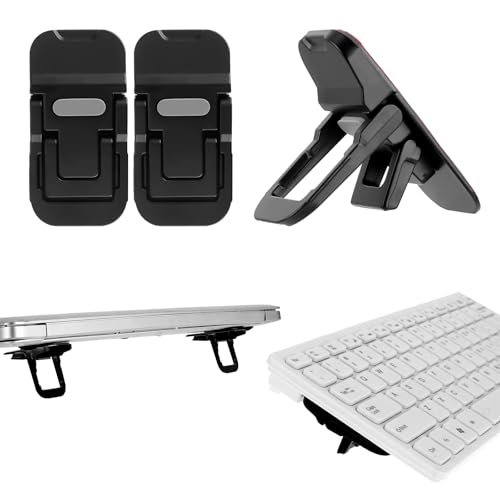
- Two-piece zinc-alloy design weighs 30 grams
- Folds compactly for travel and storage
- Two tilt angles with adhesive feet
Best For: Travel, compact desks, and multi-device use
Compact Acrylic Angle

- 11.8-inch tray for compact and 78-key keyboards
- Fixed incline for typing and wrist support
- Silicone strip and low front lip improve stability
Best For: Compact keyboards on narrow desks
Attach-and-Go Tilt

- Mounts directly to compatible flat-back keyboards
- Three adjustable tilt settings
- 45-gram foldable design with washable grip pads
Best For: Portable use with compact to mid-size flat-back keyboards
Best Desktop Riser
KOTEMON Acrylic Tilted Keyboard Stand

- Compact 17" x 5.5" footprint
- Angled ergonomic typing surface
- Silicone anti-slip protection
Best For: Small desks needing a fixed-height keyboard riser
Best Adjustable Option

- One-second tool-free adjustment
- 17.71–38.18-inch height range
- Supports up to 132 pounds
Best For: Flexible floor setups for 61- to 88-key keyboards
Best Low-Profile Holder
Richboom Acrylic Keyboard Stand

- 17" x 5.5" space-saving footprint
- Ergonomic fixed-angle design
- Low lips and silicone anti-slip strip
Best For: Compact home, school, or office desktops
Best Folding Floor Stand
Adjustable Single-X Keyboard Stand
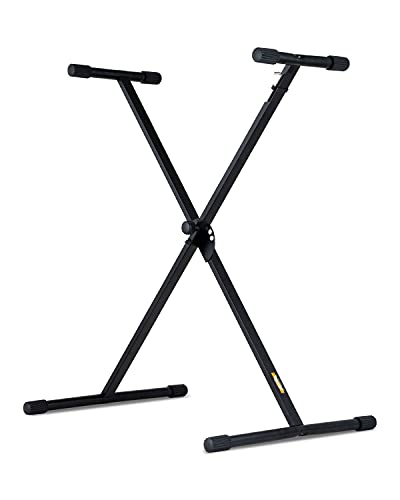
- Adjustable width and height for seated or standing play
- Folds slim for travel and storage
- Bolted metal X-frame with cushion feet
Best For: Portable keyboard and digital piano setups
Best Ultra-Compact Riser
11.8-Inch Clear Acrylic Keyboard Stand

- Tiny footprint for crowded desks
- Fits compact and numberless keyboard layouts
- Silicone strips help prevent sliding
Best For: Mini and compact desktop keyboards
Best Ergonomic Desk Riser
Klearlook Adjustable Keyboard Stand

- Three height settings for customizable tilt
- Silicone wrist rest adds typing comfort
- Storage slot and cable outlet organize the desk
Best For: Compact ergonomic workstations
Clear Acrylic Comfort – Full-Size Ergonomic Keyboard Stand
For shoppers comparing keyboard stands for small spaces, this clear acrylic riser offers a slim, angled platform for most standard keyboards without adding visual bulk. Its 17-inch width, polished edges, low front lip, and silicone anti-slip case are designed for comfortable, stable desk use.
Best For: Standard-size keyboards in home offices, school workspaces, and compact desk setups.
Pros:
- Fits most standard keyboards and provides an ergonomic tilt.
- Low front lip helps hold the keyboard without interfering with typing.
- Silicone anti-slip case helps keep the stand stable and protects the desk.
- Clear, polished acrylic has rounded edges and a lightweight design.
Cons:
- Its 17-inch width may be too large for very narrow desks.
- It has one fixed level rather than adjustable height.
- It is intended for standard keyboards, not specifically compact layouts.
This is a practical choice when you want an ergonomic angle and a clean appearance while still accommodating a traditional keyboard. Measure your available desk width before buying.
Invisible Folding Fit – Portable Adjustable Keyboard Stand
If you need keyboard stands for small spaces, this two-piece metal stand is designed to nearly disappear when folded. Its compact, 30-gram design offers two tilt settings and self-adhesive feet for keyboards, laptops, tablets, and other devices.
Best For: Travelers and users who need a lightweight, portable riser for compact desks or multiple devices.
Pros:
- Folds nearly flat and weighs only 30 grams.
- Offers two adjustable angles, listed as 35mm and 60mm.
- Open design supports ventilation and airflow.
- Works with most keyboards and a range of other devices.
Cons:
- Self-adhesive feet may require careful placement and surface preparation.
- The small format may provide less support for larger or heavier keyboards.
- The notes do not specify a maximum supported weight.
This stand is especially useful when portability and minimal storage space matter more than a substantial desktop platform. Its adjustable design also makes it more flexible than a fixed-angle riser.
Compact Acrylic Angle – 78-Key Keyboard Stand
Among keyboard stands for small spaces, the KOTEMON is specifically sized for shorter 78-key and compact keyboards. Its 11.8-inch acrylic tray creates a fixed incline while keeping the footprint modest, making it a focused option for narrow desks.
Best For: Compact or 78-key keyboards that need a stable, space-conscious typing angle.
Pros:
- Compact 11.8-inch width suits small keyboards and limited desk space.
- Angled design supports a more comfortable typing position.
- White silicone strip helps prevent slipping and desk scratches.
- Low front lip helps keep slim keyboards in place.
Cons:
- Not designed for traditional full-size keyboards.
- Provides one fixed angle rather than adjustable positioning.
- Its compatibility depends on the keyboard fitting the compact tray dimensions.
Choose this model when you have a compact keyboard and want a simple acrylic riser that occupies less desk area. Full-size keyboard owners should look at a wider stand instead.
Attach-and-Go Tilt – Portable Keyboard Riser
For keyboard stands for small spaces, the GPG2 ESC Flip takes a different approach: it attaches to the keyboard rather than occupying a separate tray. The 45-gram riser folds for portability, uses washable TPU micro-suction pads, and provides three adjustable tilt settings.
Best For: Compact to mid-size flat-back keyboards that move between desks or need a consistent angle.
Pros:
- Attaches directly to compatible keyboards and moves with them.
- Three adjustable tilt settings support different wrist positions.
- Lightweight, foldable design takes up very little space.
- Washable TPU pads are designed to release cleanly and regain grip after cleaning.
Cons:
- Not compatible with keyboards that have ridges, vents, battery doors, or curved backs.
- Requires a smooth, clean keyboard back for proper attachment.
- It is designed for compact to mid-size models rather than every keyboard size.
This is a strong space-saving choice if your keyboard has a smooth, flat back and you frequently reposition it. Confirm compatibility before buying, since the attachment system is more selective than a tray-style stand.
Best Desktop Riser – KOTEMON Acrylic Tilted Keyboard Stand
For keyboard stands for small spaces, the KOTEMON acrylic riser keeps a full-size keyboard elevated without requiring a separate floor stand. Its 17-by-5.5-inch footprint fits neatly on many desktops while the angled design supports a more comfortable typing position.
Best For: Desktop users who want a compact, angled keyboard holder for a standard keyboard.
Pros:
- Compact 17″ x 5.5″ footprint suits space-conscious desks.
- Slanted surface raises a flat keyboard for ergonomic typing.
- Silicone strip helps prevent sliding and protects the desktop.
- Low front lip helps keep the keyboard in place.
Cons:
- Designed for desktop use rather than standing or floor setups.
- The 1.5-inch height is fixed.
- Its acrylic construction may be less suitable for users seeking a heavy-duty metal stand.
The KOTEMON is a simple choice when desk space is limited and you want a stable, polished keyboard riser without adding a bulky frame.
Best Adjustable Option – AODSK Single-X Keyboard Stand
Among keyboard stands for small spaces, the AODSK Single-X offers flexible setup rather than the smallest footprint. Its trigger-style adjustment lets you change the height and width quickly, making it useful when one stand must serve different keyboards, rooms, or playing positions.
Best For: Musicians and home users who need a portable, adjustable stand for 61- to 88-key keyboards.
Pros:
- One-handed, tool-free height adjustment takes about one second.
- Height adjusts from 17.71 to 38.18 inches.
- Width adjusts from 11.81 to 36.02 inches.
- Supports up to 132 pounds and includes non-slip rotating pads.
Cons:
- The single-X frame requires more floor space than a desktop keyboard riser.
- Its 39-inch listed length may be bulky in especially tight rooms.
- It is a floor stand, not a solution for a crowded desktop.
The AODSK is the more versatile pick when adjustability and load capacity matter, but its larger floor footprint makes it less ideal for truly cramped work areas.
Best Low-Profile Holder – Richboom Acrylic Keyboard Stand
The Richboom acrylic riser is a practical pick for keyboard stands for small spaces because it adds an ergonomic tilt while taking up only 17 by 5.5 inches of desk area. Its low front lips help secure the keyboard without creating much contact with the hands while typing.
Best For: Home, school, and office desks that need a compact keyboard holder with a subtle profile.
Pros:
- Small footprint avoids taking up too much desktop space.
- Angled design supports a more comfortable typing posture.
- Silicone strip helps prevent movement and protect the table.
- Polished acrylic has smooth rounded edges and a simple appearance.
Cons:
- Fixed one-level design offers no height adjustment.
- Intended for desktop use, not floor or standing setups.
- Its 1.5-inch height may not suit users seeking a taller lift.
The Richboom combines a compact footprint with a restrained design, making it a strong fit for users who want ergonomic positioning without crowding a small desk.
Best Folding Floor Stand – Adjustable Single-X Keyboard Stand
For shoppers comparing keyboard stands for small spaces, this folding Single-X model offers adjustable width and height without requiring a permanent setup. Its slim folded profile makes it practical for home studios, classrooms, travel, and storage.
Best For: Digital piano and keyboard players who need a portable floor stand with adjustable playing positions.
Pros:
- Adjusts from 13.3 to 31.9 inches wide and 24.6 to 38.2 inches high.
- Folds into a slim profile for transport and storage.
- Bolted X-frame construction, cushion feet, and keyboard rests support stability.
- Assembles in four straightforward steps with the included Allen wrench.
Cons:
- The floor-standing design still requires dedicated floor space while in use.
- Its single-X configuration provides one support level rather than multiple tiers.
This is a versatile choice when compact storage and adjustable height matter more than a built-in workstation or tiered layout. The metal construction and one-year warranty add practical reassurance for regular use.
Best Ultra-Compact Riser – 11.8-Inch Clear Acrylic Keyboard Stand
Among keyboard stands for small spaces, this tiny acrylic riser is designed for compact desktop keyboards rather than full-size models. Its 11.8-inch width takes up minimal room while adding a modest ergonomic lift.
Best For: 78-key compact, 68-key mini, 61-key slim, and other numberless keyboards on a crowded desk.
Pros:
- Measures just 11.8 inches wide, 5.1 inches deep, and 1.3 inches high.
- Angled design can help reduce wrist, forearm, and elbow tension while typing.
- Silicone strips help prevent sliding and protect the desk surface.
- Polished acrylic has rounded, smoothed edges and corners.
Cons:
- Does not fit full-size keyboards; the ends may hang off.
- Its compact dimensions limit compatibility to shorter keyboard layouts.
If desk space is extremely limited and you use a compact keyboard, this riser provides a simple lift without adding bulk. Confirm your keyboard’s width and layout before buying, since it is intentionally too short for standard full-size models.
Best Ergonomic Desk Riser – Klearlook Adjustable Keyboard Stand
This Klearlook model is a strong option for keyboard stands for small spaces when you want more than a basic lift. Its 16.85-inch footprint accommodates Magic Keyboards and standard keyboards while adding adjustable height, a wrist rest, cable routing, and under-stand storage.
Best For: Desk users who want an ergonomic keyboard riser with comfort and organization features.
Pros:
- Three height settings provide 0, 1, or 2 cm of keyboard tilt adjustment.
- Included silicone wrist rest supports longer typing sessions.
- Storage slot holds small items such as a phone or Bluetooth headphones.
- Rear groove outlet helps route cables, while silicone strips improve stability.
Cons:
- Its 16.85-by-5.5-inch footprint is larger than the smallest compact risers.
- The design is intended for desktop keyboards, not floor-standing instruments.
This riser balances space efficiency with useful desk organization, making it suitable when a minimal workstation still needs comfort features. The three-level adjustment and wrist rest offer more flexibility than a fixed acrylic platform.
How We Picked the Best Keyboard Stands for Small Spaces
We compared these stands by the factors that matter most when desk space is limited: overall footprint, keyboard compatibility, height and angle adjustment, stability, portability, and setup. We also considered whether each stand is designed for a compact computer keyboard, a full-size 88-key instrument, or both.
Small-space accessories should solve a problem without creating another one. Designs with silicone feet, wrist rests, locking straps, or broad support surfaces can help prevent slipping and wobbling. Foldable models received additional consideration for users who need to clear their desk regularly.
Quick Comparison
| Stand Type | Best For | Main Advantage |
|---|---|---|
| Acrylic riser | Compact desktop keyboards | Minimal footprint and clean appearance |
| Foldable laptop-style stand | Portable workstations | Easy storage and adjustable angles |
| Attached tilt stand | Users wanting a fixed keyboard angle | Keeps the riser connected to the keyboard |
| Single-X instrument stand | Digital pianos and larger keyboards | Adjustable width and height |
| Riser with wrist rest | Long typing sessions | Combines elevation with front-edge support |
Key Buying Factors for Keyboard Stands for Small Spaces
Measure the Footprint First
Check your available desk depth and width before choosing a stand. Compact acrylic models are useful for 61- or 78-key computer keyboards, while instrument stands need substantially more floor or desktop clearance. Remember to allow room for cables and your hands.
Match the Stand to Your Keyboard
Confirm the supported keyboard width, key count, and weight. A stand made for a compact computer keyboard may not safely support a digital piano. For full-size instruments, look for locking straps, reinforced joints, and a stable base.
Choose the Right Adjustment Range
A fixed tilt is simple and space-efficient, but multi-angle or height-adjustable stands offer more flexibility. If several people share the desk, or if you alternate between typing and gaming, adjustable positions may be worth the slightly larger footprint.
Prioritize Grip and Stability
Silicone strips, anti-slip feet, and locking mechanisms help keep the keyboard secure. A lightweight stand is convenient to move, but it should not slide when you press keys. Avoid placing any stand on an uneven or unstable surface.
Who Should Buy Which Keyboard Stands for Small Spaces?
Choose a clear acrylic riser if your priority is a tidy, low-profile desk and you use a compact computer keyboard. A foldable dual-angle stand is better for students, hybrid workers, and anyone who packs away equipment. An attached tilt stand suits users who want the keyboard and riser to move as one unit.
For digital pianos or 61- to 88-key instruments, choose a Single-X-style stand with adjustable width, height control, and locking support. If typing comfort is your main concern, a model with a silicone wrist rest may offer the best balance of elevation and ergonomic support. Before ordering, verify dimensions, weight limits, and the return policy in case your keyboard does not fit as expected.