A dependable metronome can make daily practice more focused by providing a steady pulse for scales, exercises, and repertoire. Mechanical models add visible pendulum movement and do not require batteries, making them a practical choice for many musicians.
This roundup compares 10 mechanical metronomes across compact designs, traditional tower styles, loudness, versatility, and value. Use the guide below to match the right option with your instrument, practice space, and budget.
Best 10 Mechanical Metronomes Picks for 2026
Classic Practice Pick
Tempi Brown Grain Mechanical Metronome

- 40–208 BPM range
- Selectable 0/2/3/4/6 beat bell
- Two-year warranty included
Best For: Musicians wanting a decorative, no-battery metronome for multi-instrument practice
Compact Minimalist
Wittner Taktell Piccolo Black Metronome

- Compact 5.9-inch height
- Lightweight at 6.4 ounces
- No-bell design
Best For: Players prioritizing a small, lightweight mechanical metronome
Beginner-Friendly Workhorse
Wood Grain High-Precision Metronome

- Metal movement
- 40–208 BPM range
- Six beat-setting options
Best For: Beginners and children learning rhythm on multiple instruments
Traditional Yamaha Design
Yamaha MP-90BK Black Metronome

- Spring-driven pendulum
- Rich, deep sound
- Fingerprint-resistant matte finish
Best For: Musicians wanting a classic Yamaha metronome with traditional styling
AODSK
Universal Mechanical Metronome

- Battery-free mechanical operation
- 40–208 BPM with five beat selections
- Loud sound for multi-instrument practice
Best For: Musicians wanting a versatile, easy-to-use rhythm aid
Ueteto

- Classic wood-grained tower appearance
- Wind-up click and bell with no batteries
- 40–208 BPM and sub-1% stated tolerance
Best For: Players seeking traditional styling and audible timing feedback
H311
Standard Black Mechanical Metronome

- Beginner- and child-friendly operation
- 40–208 BPM with five accent settings
- Includes one-year manufacturer warranty
Best For: New musicians who want simple, supported tempo practice
Best All-Around Value
Ueteto Black Mechanical Metronome

- Wind-up, battery-free operation
- 40–208 bpm with selectable accents
- Audible click and bell for varied instruments
Best For: Beginners and multi-instrument practice
Best Budget-Friendly Pick
Universal Green Mechanical Metronome
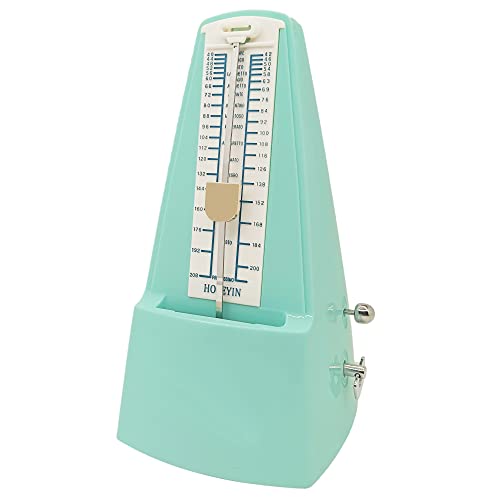
- Beginner-friendly wind-up design
- 40–208 bpm with five beat settings
- 30-day returns and one-year warranty
Best For: Affordable practice for students and beginners
Classic Practice Pick – Tempi Brown Grain Mechanical Metronome
For musicians seeking mechanical metronomes with a traditional appearance and flexible tempo control, the Tempi combines a visible pendulum with a brown grain veneer finish. Its broad tempo range and selectable bell make it suitable for everyday practice across several instruments.
Best For: Piano, guitar, violin, drums, and other musicians who want a decorative, no-battery practice tool.
Pros:
- 40–208 BPM range supports varied practice speeds.
- Selectable 0/2/3/4/6 beat bell settings.
- Steel gears, approximately 20-minute wind, and included two-year warranty.
- Classic brown grain veneer and visual pendulum display.
Cons:
- Plastic construction may not suit shoppers specifically seeking an all-wood body.
- Its traditional winding design requires manual setup before practice.
The Tempi is a well-rounded choice when appearance, adjustable rhythm emphasis, and a generous tempo range matter. The warranty and included cleaning cloth add practical value for regular home use.
Compact Minimalist – Wittner Taktell Piccolo Black Metronome
The Wittner Taktell Piccolo is one of the more compact mechanical metronomes for musicians who prefer a straightforward design. Its black plastic casing and lightweight construction make it a practical option where portability and simplicity are priorities.
Best For: Players who want a small, lightweight metronome without a bell.
Pros:
- Compact dimensions of approximately 1.97 x 2.76 x 5.9 inches.
- Lightweight 6.4-ounce design.
- Simple black plastic casing.
Cons:
- It does not include a bell.
- Plastic construction offers a less decorative look than wood-grain alternatives.
- The supplied details do not list a tempo range.
This model focuses on basic mechanical timing in a small package. Choose it if you value a lightweight, no-bell format and do not need the additional features listed for larger metronomes.
Beginner-Friendly Workhorse – Wood Grain High-Precision Metronome
This wood-grain model is designed for beginners who need mechanical metronomes with a clear practice routine and broad instrument compatibility. Its metal movement, 40–208 BPM range, and selectable beat settings provide a flexible foundation for learning steady timing.
Best For: Beginners and children practicing piano, guitar, violin, bass, drums, or other instruments.
Pros:
- Metal movement is intended for long-term use and stable performance.
- 40–208 BPM range accommodates slow and fast practice.
- 0/2/3/4/6 beat selection supports different rhythmic needs.
- Step-by-step setup is designed to be easy for beginners.
Cons:
- At 1.12 pounds, it is heavier than the compact Wittner model.
- The body uses plastic and metal rather than solid wood.
With its broad compatibility and beginner-oriented setup, this metronome is a sensible choice for lessons and foundational rhythm work. Its wood-grain appearance adds a traditional touch while the metal movement supports its practical focus.
Traditional Yamaha Design – Yamaha MP-90BK Black Metronome
The Yamaha MP-90BK brings a familiar triangular pyramid style to the mechanical metronomes category. Its spring-driven pendulum and rich, deep sound suit musicians who prefer a traditional visual and audible timing reference, while the matte finish helps reduce visible fingerprints.
Best For: Musicians seeking a traditional Yamaha pendulum metronome with a deep sound and low-maintenance matte exterior.
Pros:
- Spring-driven pendulum design provides traditional mechanical operation.
- Rich, deep sound offers a clear timing reference.
- Triangular pyramid styling has a classic appearance.
- Matte finish helps prevent fingerprints from sticking.
Cons:
- The supplied details do not specify its tempo range or beat-bell settings.
- Its larger pyramid-style body is less compact than the Wittner Piccolo.
The MP-90BK is a strong fit for shoppers who value classic styling and a substantial sound over a long feature list. Its matte black finish also makes it convenient for maintaining a clean appearance during regular use.
AODSK – Universal Mechanical Metronome
For musicians seeking straightforward mechanical metronomes, the AODSK Universal model offers a battery-free way to practice consistent rhythm. Its loud sound, 40–208 BPM range, and selectable beat patterns support practice across several instruments.
Best For: Piano, guitar, violin, bass, and drum players who want a simple, versatile practice aid.
Pros:
- Operates without batteries through a mechanical pendulum.
- Provides a 40–208 BPM tempo range with 0, 2, 3, 4, and 6 beat selections.
- Loud sound helps players track tempo during practice.
- Suitable for multiple instruments and music-learning settings.
Cons:
- Plastic construction may feel less substantial than a fully wooden metronome.
- Its loud output may not suit every practice environment.
The AODSK is a practical choice when you value clear operation, broad instrument compatibility, and no battery replacements. Its tower-style plastic design keeps the focus on essential rhythm practice.
Ueteto – Wood-Grained Tower Metronome
The Ueteto is one of the mechanical metronomes designed for traditional, hands-on tempo practice. Its wind-up mechanism, audible click and bell, and wood-grained tower appearance make it suitable for structured practice at home or in a music room.
Best For: Students and players who want a classic-looking metronome with a long wind-up cycle and precise timing.
Pros:
- Requires no batteries and produces an audible click with bell ring.
- Offers 40–208 BPM and 0, 2, 3, 4, and 6 beat settings.
- A full wind lasts at least 18 minutes, depending on tempo.
- Plastic housing with a metal mechanism is specified to maintain tolerance below 1%.
Cons:
- Requires winding during longer practice sessions.
- Plastic housing may not provide the feel of a solid-wood body.
- The bell feature may be more pronounced than some players prefer.
With its classic tower profile and wood-grained finish, the Ueteto combines visual appeal with practical tempo control. It is especially attractive for players who prefer audible mechanical feedback and a longer stated wind duration.
H311 – Standard Black Mechanical Metronome
The H311 Standard Black is a practical option among mechanical metronomes for beginners, children, and developing musicians. It combines simple controls with a 40–208 BPM range, selectable accented beats, and a mechanical movement built from plastic and metal components.
Best For: Beginners and families looking for an accessible metronome for piano, violin, guitar, drums, or other instruments.
Pros:
- Designed for easy use by beginners and children.
- Adjustable tempo from 40 to 208 BPM.
- Includes 0, 2, 3, 4, and 6 accented-beat settings.
- Backed by a 30-day unconditional return policy and one-year manufacturer warranty.
Cons:
- The standard black version has a relatively basic appearance.
- Plastic and metal construction may not appeal to those wanting a premium finish.
- The listing does not specify a battery-free design directly.
The H311 focuses on approachable operation and core rhythm functions rather than decorative details. Its broad tempo range, multiple color availability, and stated warranty make it a sensible entry-level choice.
Best All-Around Value – Ueteto Black Mechanical Metronome
For musicians comparing mechanical metronomes, the Ueteto offers a traditional wind-up design with an audible click, bell accents, and a broad 40–208 bpm range. Its straightforward controls make it practical for home practice, lessons, and multiple instruments.
Best For: Beginners and players who want a versatile, battery-free metronome for piano, violin, guitar, bass, or drums.
Pros:
- Wind-up mechanism requires no batteries.
- Supports 40–208 bpm and 0, 2, 3, 4, or 6 beat selections.
- Audible click and bell help reinforce the beat.
- One full wind provides up to 2,160 clicks, or at least 18 minutes depending on tempo.
Cons:
- Requires winding during longer practice sessions.
- At 1.2 pounds, it is less lightweight than a compact electronic unit.
The Ueteto is a solid choice when you want familiar mechanical operation, clear rhythm cues, and broad instrument compatibility without relying on batteries.
Best Budget-Friendly Pick – Universal Green Mechanical Metronome
This universal mechanical metronome combines a traditional wind-up movement with adjustable tempos from 40 to 208 bpm. It is designed for accessible practice, while its plastic-and-metal construction and available color options add practical flexibility.
Best For: Children, beginners, and players seeking an affordable metronome for piano, guitar, violin, drums, or other instruments.
Pros:
- Adjustable 40–208 bpm tempo range.
- Offers 0, 2, 3, 4, and 6 beat bell settings.
- Plastic-and-metal movement is designed for precise, stable performance.
- Includes a 30-day unconditional return policy and one-year manufacturer warranty.
Cons:
- Uses plastic and metal rather than an all-metal body or movement.
- As a mechanical model, it needs winding and does not provide electronic features.
With essential tempo and accent controls plus warranty coverage, this model is a sensible entry point for learners who want a straightforward mechanical metronome.
Best Premium-Feel Design – TERENCE Transparent Mechanical Metronome
The TERENCE stands out among mechanical metronomes with an all-metal mechanical movement, metal accent bell, and transparent ABS housing. Its 40–208 bpm range and loud sound are suited to focused practice across instruments and dance training.
Best For: Musicians and teachers who value a visible design, sturdy components, and pronounced beat tracking.
Pros:
- All-metal mechanical movement is designed for extended use with less frequent winding.
- Metal accent bell produces a clear, loud sound.
- Transparent ABS body provides a distinctive look and is designed not to yellow easily.
- Includes a 40–208 bpm range and adjustable beat control.
Cons:
- At 1.59 pounds, it is the heaviest option in this selection.
- Its larger package dimensions may make it less convenient for compact storage.
The TERENCE is a compelling pick for buyers who want mechanical reliability with a more distinctive transparent finish and strong audible feedback.
How We Picked These Mechanical Metronomes
We focused on practical features that matter during real practice sessions: tempo range, beat settings, audible volume, stability, ease of adjustment, construction, portability, and instrument compatibility. The selection includes established options such as Wittner and Yamaha alongside affordable universal models and wood-grained designs.
Because product specifications and user needs vary, consider this list a starting point rather than a strict ranking. A metronome that works well for piano practice may not be the best fit for a loud drum room or frequent travel.
Quick Comparison
- Best for a compact traditional design: Wittner Taktell Piccolo.
- Best for familiar brand reliability: Yamaha MP-90BK.
- Best for budget versatility: AODSK, Tempi, and standard universal models.
- Best for visual appeal: Ueteto wood-grained tower designs.
- Best for louder practice environments: models specifically advertised with loud sound and high precision.
Key Buying Factors for Mechanical Metronomes
Tempo Range and Beat Selection
Check that the available tempo range covers your exercises and repertoire. Adjustable beat settings can help with accents, subdivisions, and rhythm training, although a simple regular pulse may be all a beginner needs.
Volume and Sound Character
Mechanical Metronomes produce an acoustic click, but loudness varies by design and room. Choose a model described as loud if you practice near a piano, in a group, or around other instruments. For quiet rooms, a moderate click may be more comfortable.
Stability and Construction
A weighted base and solid housing help prevent movement while the pendulum swings. Plastic models are often lighter and easier to carry, while tower-style designs may offer a more traditional appearance and a steadier footprint.
Size and Portability
Consider where you practice. Compact models suit lessons and travel, while larger tower metronomes are better for a dedicated music room. Mechanical units do not need batteries, but they must be wound and handled carefully.
Who Should Buy Which Mechanical Metronomes?
Beginners and families should look for straightforward controls, a stable base, and a clear audible beat. Pianists and home practitioners may prefer a traditional tower design with strong visibility and sound. Traveling students should prioritize a smaller, lighter model such as a compact Taktell-style metronome. Players of guitar, violin, bass, or drums should choose a universal model with a sufficiently loud click and a tempo range suited to their practice.
Before buying, confirm the exact dimensions, finish, tempo markings, and included features on the product page. The best mechanical metronome is the one you will keep visible, easy to use, and consistent throughout your practice routine.