Traveling musicians need a metronome that keeps practice consistent without adding much bulk to a case or carry-on. The best portable models make tempo adjustments simple, remain audible in busy spaces, and offer dependable battery life for rehearsals, lessons, and warmups.
This roundup compares 10 metronomes for travel, from compact Seiko and BOSS models to rechargeable units with tuners, clip-on designs, color displays, and voice counting. Use the guide below to match features, power options, and portability to your instrument and routine.
Best 10 Metronomes for Travel Picks for 2026
Rugged Rhythm Companion

- Compact 5.2-inch design for packing
- Visual assistance and odd-meter support
- Headphone jack and auto power-off
Best For: Traveling musicians who want flexible rhythm practice
All-in-One Practice Tool
KLIQ MetroPitch Tuner & Metronome

- Metronome, tuner, and tone generator
- 30–250 BPM with tap tempo
- Pouch and two AAA batteries included
Best For: Musicians carrying one compact practice accessory
Simple Travel Timing

- Lightweight 35-gram design
- High-contrast LCD display
- Clock function and volume control
Best For: Musicians wanting a basic, easy-to-carry metronome
Rechargeable Vocal Practice
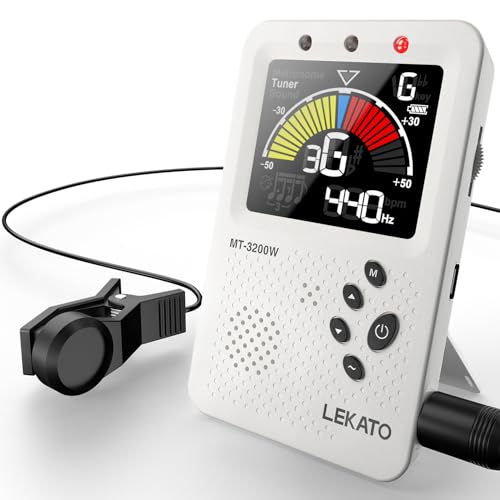
- Metronome, tuner, and tone generator
- Human voice beats and headphone output
- Rechargeable lithium battery
Best For: Travel practice requiring versatile, rechargeable features
Travel Timekeeper

- Lightweight 3.87-ounce design with neck strap
- Includes metronome, clock, timer, alarm, and reference tones
- All functions can be used simultaneously
Best For: Travelers wanting a compact metronome with utility features
Rechargeable Practice Companion
Flatsons MT-41 Metronome Tuner

- Combines metronome, tuner, and tone generator
- Rechargeable battery supports portable practice
- Color display and LED beat indicator aid visual timing
Best For: Multi-instrument musicians who want one rechargeable travel tool
Large-Display Rhythm Tool
EX-GEAR Rechargeable Metronome

- Large color LCD shows tempo and accented beats clearly
- USB-C rechargeable battery supports portable use
- Offers varied rhythms, beat tones, speaker, and headphone output
Best For: Travelers prioritizing readability and flexible practice sound options
Classic-Style Digital Pick
Adjustable Electronic Metronome

- 40–208 BPM with tap tempo
- Nine rhythms and adjustable volume
- AAA battery or USB-C power
Best For: Flexible practice across many instruments
Smallest Clip-On Choice
LEKATO M65 Rechargeable Metronome

- Mini clip-on body with LCD screen
- 30–280 BPM and 10 beat sounds
- Headphone output for private practice
Best For: Compact practice in backpacks and instrument bags
Long-Session Travel Pick
SDREAM Rechargeable Digital Metronome

- More than 8 hours of Type-C use
- Human or electronic beat voices
- Palm-sized with headphone jack
Best For: Extended portable practice and quiet sessions
Rugged Rhythm Companion – BOSS DB-30 Portable Metronome
For musicians seeking metronomes for travel, the BOSS Dr. Beat DB-30 is a compact, rugged option with visual practice support and useful rhythm features. Its 5.2-by-3.45-by-1.35-inch design is easy to pack, while the headphone jack and auto power-off function suit practice away from home.
Best For: Travelers who want a durable, feature-packed metronome for rhythm practice.
Pros:
- Compact, portable build designed for travel.
- Provides visual practice assistance and odd-time-signature support.
- Includes a headphone jack and auto power-off function.
- Offers play-along patterns for varied practice.
Cons:
- Uses a lithium metal battery rather than a rechargeable battery.
- Its feature-rich design may be more than users seeking a basic metronome need.
The DB-30 is a strong travel pick when portability, headphone practice, and flexible rhythmic exercises matter more than having built-in tuning functions.
All-in-One Practice Tool – KLIQ MetroPitch Tuner & Metronome
The KLIQ MetroPitch is a practical choice among metronomes for travel because it combines a metronome, chromatic tuner, and tone generator in a pocket-sized unit. It includes a padded carrying pouch and two AAA batteries, making it convenient for musicians who want to reduce the number of accessories they carry.
Best For: Guitar, bass, piano, string, brass, and woodwind players who want tuning and rhythm tools together.
Pros:
- Combines a metronome, chromatic tuner, and tone generator.
- Offers 30–250 BPM, tap tempo, and beat subdivisions.
- Provides A0–C8 tuning range and 410–490Hz pitch calibration.
- Includes a padded pouch and two AAA batteries.
Cons:
- Requires AAA batteries rather than a rechargeable battery.
- Its 3-in-1 feature set may be unnecessary for users who only need tempo.
With a pouch, broad tempo range, and useful tuning controls, the MetroPitch is well suited to compact practice kits and instrument-focused travel.
Simple Travel Timing – Seiko DM51B Digital Metronome
The Seiko DM51B keeps things straightforward for musicians comparing metronomes for travel. Its digital format includes a high-contrast LCD, easy volume control, and a clock function, while the lightweight 35-gram build is convenient for carrying between lessons, rehearsals, and practice spaces.
Best For: Travelers who prefer a lightweight, uncomplicated digital metronome.
Pros:
- Very lightweight at 35 grams.
- High-contrast LCD is designed for easy viewing.
- Includes a clock function and easy volume control.
- Battery is included.
Cons:
- Notes do not list tuner, tone-generator, or headphone features.
- Its simpler feature set may not suit players wanting advanced rhythm tools.
The DM51B is a sensible minimalist option when low weight, readable display information, and basic convenience features are the priority.
Rechargeable Vocal Practice – LEKATO 3-in-1 Metronome Tuner
The LEKATO 3-in-1 device is a versatile choice among metronomes for travel, combining tempo practice, tuning, and tone generation in a pocket-sized unit. Its rechargeable lithium battery, folding kickstand, color LCD, and headphone output make it convenient for practice on the go.
Best For: Players who want rechargeable, multi-function practice support with vocal counting.
Pros:
- Combines a tuner, metronome, and tone generator.
- Supports 30–250 BPM, 0–6 beats per measure, and tap tempo.
- Offers human voice beats, adjustable volume, color LCD, and headphone output.
- Rechargeable lithium battery avoids frequent battery replacement.
Cons:
- Its 5.3-ounce weight is higher than the lightweight Seiko option.
- The vocal metronome requires pressing the designated button to control the feature.
For travelers who want more than a basic click, the LEKATO adds tuning, tone generation, vocal counting, and rechargeable convenience in one portable package.
Travel Timekeeper – Seiko DM90B Compact Metronome
For musicians comparing metronomes for travel, the Seiko DM90B is a compact, lightweight option with more than basic rhythm practice. Its clock, stopwatch, timer, alarm, sound reference tones, and temperature/humidity meter make it useful for practice and everyday timekeeping.
Best For: Travelers who want a lightweight metronome with several practical timekeeping functions.
Pros:
- Compact 3.87-ounce design with a neck strap for portability.
- Combines metronome, reference tones, clock, stopwatch, timer, alarm, and temperature/humidity readings.
- All functions can be used simultaneously.
- CR2032 battery is included.
Cons:
- Uses a replaceable CR2032 battery rather than a rechargeable battery.
- Its small 1-inch display may be less convenient for users who prefer larger screens.
The DM90B stands out for travelers who value versatility and a very light carry. Choose it when extra clock and utility features matter as much as metronome practice.
Rechargeable Practice Companion – Flatsons MT-41 Metronome Tuner
The Flatsons MT-41 is a practical choice among metronomes for travel because it combines rhythm practice, tuning, and tone generation in one pocket-sized device. Its rechargeable battery and visual beat indicator help reduce packing needs for musicians who practice with multiple instruments.
Best For: Musicians traveling with guitar, bass, ukulele, violin, or other supported instruments who want metronome and tuning functions together.
Pros:
- Combines a metronome, tuner, and tone generator in one compact unit.
- Built-in rechargeable battery avoids disposable battery changes.
- Supports multiple instruments and chromatic tuning, with A4 calibration from 430–450 Hz.
- Color LCD and dual-color LED beat indicator provide visual feedback.
Cons:
- The supplied notes do not specify battery runtime or charging time.
- Its feature set may be more than needed for travelers seeking only a basic metronome.
With tuning and tone generation alongside its metronome, the MT-41 can replace several small practice tools in a travel bag. It is especially appealing when instrument flexibility and rechargeable operation are priorities.
Large-Display Rhythm Tool – EX-GEAR Rechargeable Metronome
For shoppers seeking metronomes for travel with easy-to-read controls, the EX-GEAR model pairs a large color LCD with USB-C recharging and flexible rhythm settings. It supports instruments from piano and guitar to violin and drums, while its speaker and headphone output suit different practice environments.
Best For: Musicians who want a readable display, varied beat sounds, and private or shared practice options on the go.
Pros:
- Large color LCD clearly shows tempo, beats, and accented beats.
- USB-C rechargeable lithium battery eliminates routine disposable battery swaps.
- Offers broad tempo adjustment, multiple beat patterns, and common or complex time signatures.
- Includes five beat tones, a speaker, volume controls, and a headphone jack.
Cons:
- At 5.3 ounces, it is heavier than the Seiko DM90B.
- The supplied notes describe the package dimensions but not the device dimensions.
- Its many rhythm and sound options may be unnecessary for simple click-track practice.
The EX-GEAR is a strong fit when visibility and sound flexibility matter more than having the smallest possible device. USB-C charging and headphone support add convenience for travel and varied practice settings.
Classic-Style Digital Pick – Adjustable Electronic Metronome
For musicians comparing metronomes for travel, this compact electronic model offers a familiar mechanical-metronome look with digital controls. Its 40–208 BPM range, tap tempo, adjustable volume, and multiple beat and rhythm patterns make it suitable for varied practice needs.
Best For: Musicians who want broad tempo and rhythm options, a clear display, and flexible battery or USB-C power.
Pros:
- Supports 40–208 BPM, tap tempo, nine rhythm patterns, and beat settings from 0 to 9.
- Includes adjustable volume and electronic or vocal beat sounds.
- Runs on three included AAA batteries or USB-C power.
- Compact package size and 7-ounce weight suit portable practice.
Cons:
- Uses three AAA batteries when not powered by USB-C.
- Does not list a headphone output for silent practice.
This is a versatile travel option for players who prioritize control variety and loud, adjustable sound. The classic exterior may also appeal to anyone who prefers a traditional-looking practice accessory.
Smallest Clip-On Choice – LEKATO M65 Rechargeable Metronome
When portability is the priority, the LEKATO M65 is a practical choice among metronomes for travel. Its mini clip-on design, lanyard hole, LCD screen, rechargeable battery, and headphone output make it convenient for practice sessions away from home.
Best For: Travelers, students, and beginners who want a very small metronome with private headphone practice.
Pros:
- Mini clip-on design fits easily in a backpack or instrument bag.
- Offers 30–280 BPM, tap function, diverse rhythms, and 10 beat sounds.
- Built-in rechargeable battery provides about 4–5 hours at medium volume.
- Adjustable volume and a 3.5mm headphone output support quieter practice.
Cons:
- Reported battery life is about 4–5 hours at medium volume.
- Plastic body may feel less substantial than a metal-bodied model.
The M65 stands out for its genuinely small footprint and clip-on convenience. It is especially useful when luggage space is limited or when you need to practice without disturbing others.
Long-Session Travel Pick – SDREAM Rechargeable Digital Metronome
The SDREAM digital metronome combines a compact, palm-sized design with rechargeable operation, making it a strong candidate among metronomes for travel. It provides human or electronic counting, 10 beat patterns, 40–208 BPM control, and a headphone jack for focused practice.
Best For: Beginners and experienced musicians who want a lightweight, rechargeable metronome for regular practice on the go.
Pros:
- Palm-sized design weighs about 0.29 pounds and fits in a pocket or instrument bag.
- Rechargeable Type-C operation can work for more than 8 hours.
- Offers human English voice or electronic beats and 10 beat patterns.
- Includes a 3.5mm headphone jack for less disruptive practice.
Cons:
- Tempo range is 40–208 BPM, narrower than some mini metronomes.
- Plastic body may not appeal to shoppers seeking a metal construction.
- The listed dimensions are relatively tall despite the palm-sized description.
SDREAM is a well-rounded travel model for players who value longer rechargeable use and vocal counting. Its headphone jack and compact form add flexibility for rehearsals, lessons, and outdoor practice.
How We Picked These Metronomes for Travel
We focused on practical features that matter when practicing away from home: compact dimensions, low weight, clear displays, adjustable volume, dependable tempo controls, and flexible power options. We also included several models with built-in tuners, rechargeable batteries, clip-on functionality, or voice counting because those features can reduce the amount of gear you need to pack.
The selection covers both established compact metronomes and multifunction digital designs. Since travel conditions vary, no single model is ideal for everyone; the best choice depends on whether you prioritize simplicity, battery convenience, visibility, or instrument support.
Quick Comparison
| Best For | Look For |
|---|---|
| Smallest practice setup | Compact body, simple controls, and low weight |
| Reducing packed gear | Metronome-and-tuner combination |
| Frequent practice sessions | Rechargeable battery and clear battery indicator |
| Noisy environments | Adjustable volume, strong speaker, or headphone support |
| Quick instrument access | Clip-on design or easy tabletop placement |
Key Buying Factors for Metronomes for Travel
Size and Durability
A travel metronome should fit in an accessory pouch without being so fragile that it requires special handling. Check the control layout and screen readability as well as the listed dimensions. A slightly larger unit may be worthwhile if it has easier buttons or a more visible display.
Power and Battery Life
Rechargeable models can eliminate spare batteries, but they require access to a charging cable. Battery-powered units are useful for longer trips or emergency practice. Whichever style you choose, look for straightforward battery access or charging indicators.
Sound, Tempo Range, and Controls
Adjustable volume is important in shared rooms and noisy spaces. A broad tempo range and precise increment controls help with both slow technical work and faster playing. Voice counting may also be helpful for beginners or rhythm exercises, while a simple click can be preferable for focused practice.
Tuner and Display Features
A built-in tuner is valuable for guitar, bass, violin, and other melodic instruments because it combines two practice tools. Large LCD screens are easier to read, but compact displays may better suit a minimalist travel kit.
Who Should Buy Which Metronomes for Travel?
Choose a basic compact metronome if you primarily need reliable tempo practice and want the fewest controls. A rechargeable metronome is a better fit for musicians who practice frequently and do not want to carry replacement batteries. If you play guitar, bass, violin, or another instrument that needs regular tuning, a metronome-tuner combination can save space and simplify your setup.
Players who practice in rehearsal rooms, hotel rooms, or other distracting environments should prioritize volume control and display visibility. Beginners may appreciate voice-counting or clearly labeled rhythm functions, while experienced players may prefer fast tempo adjustments and a straightforward interface. Before buying, confirm the charging or battery requirements, tuner support for your instrument, and whether the unit is small enough for the case or bag you actually use.