A dependable tuner makes every practice session, rehearsal, and performance easier. The best guitar tuners combine clear displays with accurate pitch detection, flexible mounting, and controls you can use without interrupting your playing.
This roundup compares 10 clip-on and multifunction models, including rechargeable tuners, budget-friendly options, and versatile choices for guitar, bass, ukulele, violin, and other instruments.
Best 10 Guitar Tuners Picks for 2026
Simple Clip-On Pick

- Full-color display
- Guitar and bass tuning range
- Front- or back-of-headstock use
Best For: Straightforward everyday guitar and bass tuning
Rechargeable Viewing Flexibility

- Up to 24 hours per charge
- 360-degree rotating display
- 415–465Hz calibration range
Best For: Players wanting rechargeable, adjustable clip-on tuning
Practice-Ready Multitool

- Tuner, metronome, and tone generator
- 30–260 BPM tempo range
- Backlit display with headphone jack
Best For: Practice-focused musicians needing multiple functions
Noise-Blocking Rechargeable Pick
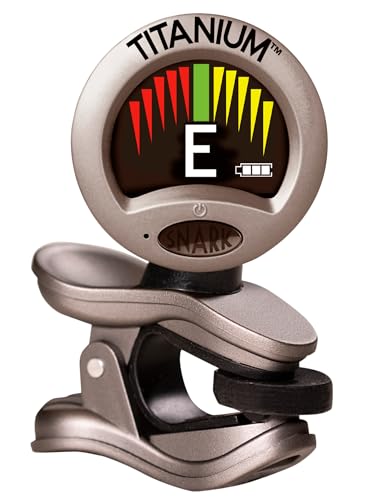
- Titanium-and-rubber housing
- Super-bright display
- Rechargeable with USB cable
Best For: Players tuning in noisy spaces who prefer rechargeable power
Versatile All-Instrument Pick

- Vibration sensing for loud or quiet settings
- Modes for guitar, bass, ukulele, and violin
- Color LCD display with dual-hinge clip
Best For: Multi-instrument players needing flexible tuning
Easy-Read Accuracy Pick
D'Addario Eclipse Clip-On Tuner
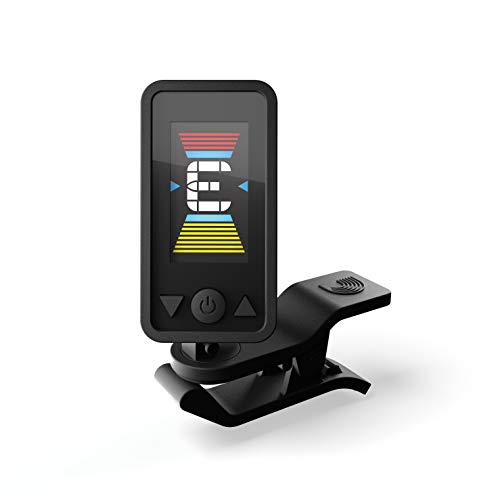
- Full-color vertical display
- 435-450Hz adjustable calibration
- Strong clamp with dual swivels
Best For: Players wanting flexible viewing and readable tuning
Simple Budget-Friendly Pick

- One-button operation
- Sensitive vibration detection
- Rotating display for multi-angle viewing
Best For: Beginners and players who want compact simplicity
Best Overall
Fender FT-1 Professional Clip-On Tuner

- Full-range chromatic tuning for guitar and bass
- Dual-rotating hinges with LCD display
- CR2032 battery included with limited warranty
Best For: Players seeking a versatile, easy-to-read branded tuner
Best Budget Pick
Rotatable Clip-On Guitar Tuner

- Supports guitar, bass, ukulele, violin, and banjo
- Vibration sensor works in noisy surroundings
- 360-degree screen with automatic shutoff
Best For: Beginners and players wanting an affordable multi-instrument tuner
Best Rechargeable Option
New Bee GT30 Color-Screen Tuner

- USB-C rechargeable battery lasts up to 10 hours
- Color display with 360-degree rotation
- Supports five instruments plus open tuning
Best For: Players wanting a rechargeable tuner with expanded features
Simple Clip-On Pick – Snark SN5X Chromatic Tuner
If you want straightforward guitar tuners for everyday setup, the Snark SN5X offers a full-color display and a compact clip-on design. Its tuning range is tailored to guitar and bass, and it can mount on either the front or back of the headstock.
Best For: Guitarists and bass players seeking a simple, lightweight clip-on tuner.
Pros:
- Full-color display is easy to read.
- Frequency range is tailored to guitar and bass.
- Can be used on the front or back of the headstock.
- Lightweight 1.58-ounce design.
Cons:
- Uses a replaceable lithium battery rather than a rechargeable design.
- Its feature set is focused on basic chromatic tuning.
The SN5X is a practical choice when you want compact, dedicated guitar tuners without extra practice features or complicated controls.
Rechargeable Viewing Flexibility – D'Addario Nexxus 360 Tuner
The D’Addario Nexxus 360 is one of the more convenient guitar tuners for players who prefer rechargeable power and flexible screen positioning. Its head rotates 360 degrees, while the strong clamp is designed to stay mounted on the headstock.
Best For: Guitar and bass players who want rechargeable operation and adjustable viewing angles.
Pros:
- Provides up to 24 hours of tuning per charge.
- 360-degree rotating head and display support varied viewing positions.
- Wide 415–465Hz calibration range with adjustable calibration.
- Bright LED screen and strong headstock clamp.
Cons:
- Requires USB charging when the battery is depleted.
- Its rechargeable electronics may be more than needed for basic tuning.
With its bright rotating display, secure clamp, and rechargeable battery, the Nexxus 360 is a strong fit for players who tune frequently and value setup flexibility.
Practice-Ready Multitool – Ulumac Aroma 3-in-1 Tuner
For musicians who want more than basic guitar tuners, the Ulumac Aroma AMT-560 combines a chromatic tuner, digital metronome, and tone generator. It supports a broad A0–C8 range, adjustable tempos from 30–260 BPM, and a backlit display for practice in varied lighting.
Best For: Players who want tuning, rhythm practice, and reference tones in one compact unit.
Pros:
- Combines a tuner, metronome, and tone generator.
- Offers 30–260 BPM, 10 beat patterns, and 8 rhythm styles.
- Supports multiple instruments with ±0.5-cent accuracy.
- Includes a 45-degree backlit display, adjustable volume, and headphone jack.
Cons:
- Requires two AAA batteries.
- The notes state that it is not suitable for piano tuning.
- It is larger and heavier than a basic clip-on tuner.
The AMT-560 makes the most sense for lessons, practice sessions, and musicians who will use its metronome and tone-generator functions as often as its tuner.
Noise-Blocking Rechargeable Pick – Snark ST-8 Titanium
The Snark ST-8 Titanium is a rechargeable option among guitar tuners, with a super-bright display and a titanium-and-rubber housing designed to block room noise. It includes a USB charging cable and is built for convenient clip-on tuning.
Best For: Guitarists who want rechargeable power, a bright display, and added room-noise blocking.
Pros:
- Titanium-and-rubber housing helps block room noise.
- Super-bright display improves visibility.
- Rechargeable lithium-ion battery is included.
- USB charging cable is included.
Cons:
- At 2.39 ounces, it is heavier than the Snark SN5X.
- The supplied notes do not specify battery runtime or calibration range.
The ST-8 Titanium is a focused choice for players who regularly tune in noisy spaces and prefer charging over replacing batteries.
Versatile All-Instrument Pick – Fender FCT-2 Clip-On Tuner
Fender FCT-2 Professional Multi-Instrument Clip-On Tuner for Guitar, Bass, Ukulele, and Violin
Check Price On AmazonIf you need guitar tuners that can move between instruments and playing environments, the Fender FCT-2 is a practical choice. Its vibration sensing helps maintain accurate tuning in loud venues or quiet rooms, while the color LCD needle display makes pitch changes easy to follow.
Best For: Players who use guitar, bass, ukulele, and violin and want one versatile clip-on tuner.
Pros:
- Vibration-based tuning works in noisy or quiet settings.
- Supports Guitar, Bass, Ukulele, Violin, and Chromatic modes.
- Dual-hinge clip and color display provide flexible, clear viewing.
- Includes a CR2032 battery and offers a B0-B7 tuning range.
Cons:
- The molded plastic body may feel less premium than metal alternatives.
- Its broad instrument support may be more than single-instrument players need.
The FCT-2 stands out for adaptable, vibration-based tuning and straightforward visual feedback. It is especially useful for musicians who regularly switch instruments or tune in changing environments.
Easy-Read Accuracy Pick – D'Addario Eclipse Clip-On Tuner
The D’Addario Eclipse is among the guitar tuners designed for quick, readable adjustments. Its full-color vertical screen, adjustable viewing angles, and strong clamp make it easy to mount and monitor on guitar, bass, or ukulele headstocks.
Best For: Guitarists and bassists who prioritize a large, adjustable display and flexible headstock placement.
Pros:
- Quick tuning with a full-color screen.
- Wide 435-450Hz calibration range for adjustable accuracy.
- Dual swivels accommodate left- or right-handed viewing positions.
- Strong clamp is designed to stay mounted on the headstock.
Cons:
- The supplied notes specify a CR2 battery rather than the more common CR2032 format.
- Its stated ideal instruments are guitar, bass, and ukulele, so it is less broadly specified than some multi-instrument tuners.
With its large vertical display and adjustable calibration, the Eclipse is a sensible option when visibility and positioning matter. The strong clamp also helps make repeated tuning adjustments more convenient.
Simple Budget-Friendly Pick – Donner DT-2 Clip-On Tuner
Donner Guitar Tuner Clip on-Accurate Chromatic,Acoustic Guitar Bass Violin Ukulele Tuner DT-2
Check Price On AmazonThe Donner DT-2 keeps guitar tuners simple for practice, lessons, and travel. A one-button control, sensitive vibration clip, and rotating display let you clip it on, power it up, and tune without a complicated setup.
Best For: Beginners and traveling players who want a compact chromatic tuner with simple controls.
Pros:
- One-button operation is quick to learn.
- Sensitive vibration detection supports fast tuning.
- Rotational display and clip provide multi-angle viewing.
- Works with guitar, bass, violin, and ukulele.
Cons:
- The six-month guarantee is shorter than the one-year warranty listed for some alternatives.
- The mini design and basic controls may offer fewer adjustment options.
The DT-2 is a straightforward choice for players who value ease of use over extensive features. Its compact design, chromatic detection, and multi-instrument support make it a practical everyday tuner.
Best Overall – Fender FT-1 Professional Clip-On Tuner
The Fender FT-1 is a practical choice for players who want a recognizable, full-range chromatic guitar tuner with a clear display and flexible positioning. Its dual-rotating hinges, included CR2032 battery, and compatibility with electric, acoustic, and bass guitars make it a convenient everyday accessory.
Best For: Guitarists who want a compact, brand-name clip-on tuner with an easy-to-read display.
Pros:
- Works with electric, acoustic, and bass guitars.
- Dual-rotating hinges allow flexible viewing and positioning.
- LCD display and tuning needle show how close the note is to pitch.
- Includes a CR2032 battery and a limited warranty.
Cons:
- Uses a replaceable coin-cell battery rather than rechargeable power.
- Plastic construction may feel less substantial than metal-bodied alternatives.
The FT-1 balances straightforward operation, useful adjustment range, and broad instrument compatibility. It is a dependable pick for practice, rehearsals, or keeping in a guitar case.
Best Budget Pick – Rotatable Clip-On Guitar Tuner
Guitar Tuner Clip On 1 Pack Tuners for Acoustic Electric Guitar Bass Ukulele Violin banjo Tuning
Check Price On AmazonThis compact clip-on guitar tuner is designed for quick, accurate tuning across several stringed instruments. Its vibration sensor helps it work in noisy surroundings, while the 360-degree rotatable screen makes it easier to read from different playing positions.
Best For: Budget-minded musicians who need one simple tuner for multiple stringed instruments.
Pros:
- Supports acoustic and electric guitar, bass, ukulele, violin, and banjo.
- Vibration sensing helps with tuning in noisy environments.
- 360-degree rotatable screen allows flexible viewing.
- Automatic shutoff activates after three minutes without continued operation.
Cons:
- The supplied details do not indicate that a battery is included.
- Plastic construction may not offer the feel of a more premium tuner.
With broad instrument support and a swiveling display, this tuner covers the basics without adding complexity. It is a sensible option for beginners, classrooms, or musicians who need an inexpensive backup.
Best Rechargeable Option – New Bee GT30 Color-Screen Tuner
The New Bee GT30 stands out among guitar tuners with a vivid color screen, USB-C charging, and up to 10 hours of tuning per charge. It supports several instruments and includes open tuning detection for guitar, while its rotatable, silicone-padded clamp is designed for flexible viewing and a secure grip.
Best For: Players who prefer rechargeable power, a color display, and multi-instrument support.
Pros:
- High-resolution color screen is designed for clear visibility in any light.
- Supports guitar, bass, ukulele, violin, cello, chromatic, and open tuning.
- USB-C rechargeable battery provides up to 10 hours of tuning.
- 360-degree screen and silicone-padded clamp improve positioning and instrument protection.
Cons:
- Requires recharging rather than using a readily replaceable battery.
- Its broader feature set may be more than casual users need.
The GT30 is a strong fit for musicians who dislike keeping spare batteries on hand. Its color display, rechargeable design, and support for open tuning make it especially useful for regular practice and varied instrument setups.
How We Picked the Best Guitar Tuners
We focused on the features that matter most in everyday tuning: pitch accuracy, display visibility, response speed, clip stability, instrument compatibility, and ease of use. We also considered power design, including replaceable batteries versus USB recharging, plus useful extras such as metronomes, multiple tuning modes, rotating screens, and wide calibration ranges.
Because players have different priorities, this list includes straightforward chromatic tuners alongside more feature-rich models. A simple tuner may be the best choice for a beginner or backup kit, while a rechargeable or multi-instrument model can offer better convenience for frequent practice and performance.
Quick Comparison
| Best For | Look For |
|---|---|
| Beginners and casual players | Large display, simple controls, and dependable clip |
| Frequent practice | Rechargeable battery and automatic shutoff |
| Gigging musicians | Fast response, strong visibility, and secure mounting |
| Multiple instruments | Chromatic mode and broad instrument compatibility |
| Rhythm practice | Built-in metronome and adjustable tempo |
Key Buying Factors for Guitar Tuners
Accuracy and Tuning Modes
A chromatic tuner detects the note you play and shows whether it is sharp, flat, or in tune. This is the most flexible option for standard tuning, alternate tunings, and instruments beyond guitar. Some models also provide dedicated guitar, bass, ukulele, or violin modes, which can make basic tuning faster.
Display and Viewing Angle
Choose a bright, high-contrast screen that remains readable in your normal playing position. A 360-degree rotating head or dual-hinge design helps when the tuner is mounted behind the headstock. For stage use, prioritize visibility under changing lighting.
Power and Portability
Rechargeable tuners reduce disposable battery use and are convenient when charged regularly. Battery-powered models can be preferable as emergency backups because replacement batteries are easy to carry. Check charging time, runtime, and whether the tuner powers down automatically.
Clip Strength and Instrument Fit
The clip should grip securely without scratching the headstock. Confirm that its opening suits your instrument, especially if you use a thin ukulele headstock, a wide bass headstock, or multiple instruments. A stable clip improves readings by reducing movement and vibration.
Who Should Buy Which Guitar Tuners?
Beginners should choose an uncomplicated clip-on tuner with a clear screen and automatic note detection. Players who practice often may prefer a rechargeable model to avoid frequent battery changes. Gigging guitarists should prioritize quick response, strong construction, and a display that is easy to read from the playing position.
If you play guitar plus bass, ukulele, violin, or other instruments, select a broad-range chromatic model. Musicians working on timing as well as pitch may benefit from a tuner with a built-in metronome. Finally, keeping an inexpensive compact tuner in a gig bag is sensible even if your primary tuner is more advanced: it provides a convenient backup when batteries run low or equipment is misplaced.