A reliable metronome can make bass practice more focused by tightening your timing, clarifying subdivisions, and helping you build speed without sacrificing control. The right model should be easy to hear over your instrument and simple to adjust while you play.
We selected 10 options ranging from compact digital units and rechargeable tuner combinations to a traditional mechanical design. Use the guide below to compare features and find the best fit for your practice setup, performance needs, and budget.
Best 10 Metronomes for Bass Guitars Picks for 2026
Versatile 3-in-1 Pick

- Combines metronome, tuner, and tone generator
- 30–260 BPM with eight rhythms
- Large angled LCD display
Best For: Bassists wanting one device for timing and tuning
Rugged Practice Companion

- Supports visual practice and odd time signatures
- Includes headphone jack and auto power-off
- Portable, rugged construction
Best For: Bassists practicing odd meters on the go
Rechargeable Rhythm Trainer
- Vocal counting and three sound types
- Tap tempo, 10 patterns, and 40–208 BPM
- Rechargeable with USB and headphone output
Best For: Bassists wanting structured, headphone-friendly practice
Portable All-in-One Choice
Wegrower Rechargeable Metronome

- Rechargeable metronome, tuner, and tone generator
- 30–250 BPM with eight rhythms
- Multiple pickup methods and headphone jack
Best For: Bassists wanting compact rechargeable versatility
Classic Rhythm Pick
Mechanical Wood-Grain Metronome

- Metal movement for stable, long-term use
- 40–208 BPM with five beat selections
- Traditional wind-up design for beginners
Best For: Bassists who prefer a classic mechanical practice tool
All-in-One Practice Pick
Flatsons MT-41 Rechargeable Metronome

- Metronome, tuner, and tone generator in one
- Rechargeable battery for portable practice
- Color display and visual beat indicator
Best For: Bassists who want tuning and rhythm tools together
Quiet Practice Pick
Ueteto Rechargeable Digital Metronome
- 40–208 BPM with nine rhythms and ten beat settings
- Headphone output for quieter practice
- Up to 16 hours of rechargeable use
Best For: Bassists practicing privately at home or while traveling
Best Classic-Style Pick
SDREAM Rechargeable Digital Metronome

- 40–208 BPM range with 10 beat patterns
- Human voice and electronic beat options
- USB-C charging plus headphone output
Best For: Portable bass practice with vocal counting
Best 3-in-1 Value

- Metronome, chromatic tuner, and tone generator
- 30–260 BPM with 8 rhythm styles
- Backlit display and headphone output
Best For: Bassists wanting timing and tuning in one device
Best Training Features
Donner Rechargeable 3-in-1 Metronome

- Trainer mode provides visual rhythm feedback
- 30–280 BPM and tempo detection
- Rechargeable with tuner and headphone jack
Best For: Interactive timing practice and rhythm development
Versatile 3-in-1 Pick – Donner DMT-01 Metronome Tuner
For players seeking metronomes for bass guitars, the Donner DMT-01 combines timing practice with tuning and pitch reference in one compact device. Its broad tempo range, multiple rhythms, clip sensitivity, and angled display make it practical for home practice, rehearsals, and live use.
Best For: Bassists who want a metronome, tuner, and tone generator together.
Pros:
- Combines metronome, tuner, and tone generator functions.
- Offers 30–260 BPM, 0–9 beats per measure, and eight rhythms.
- Includes a large LCD screen with a 45° viewing angle.
Cons:
- Requires one AAA battery.
- Its feature set may be more than needed if you only want a basic metronome.
The DMT-01 is a flexible choice for bass practice when accurate tuning and rhythm training are equally important. The jog dial and wide adjustment range support quick changes between exercises.
Rugged Practice Companion – BOSS DB-30 Dr. Beat
The BOSS DB-30 Dr. Beat is a portable option for bassists comparing metronomes for bass guitars. It is designed for convenient practice, with visual assistance, odd-time support, play-along patterns, a headphone jack, and automatic power-off.
Best For: Bass players who value portability, visual practice help, and odd-meter exercises.
Pros:
- Supports practice with visual assistance and odd time signatures.
- Includes a headphone jack for more convenient practice.
- Portable, ruggedly built, and equipped with play-along patterns.
Cons:
- The supplied notes do not specify its tempo range or rhythm count.
- It uses a lithium metal battery rather than a rechargeable battery.
With its compact form and practice-oriented features, the DB-30 suits bassists who need a dependable metronome to carry between lessons, rehearsals, and practice sessions.
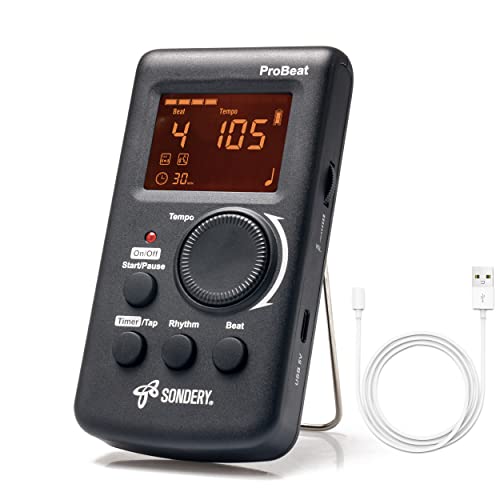
Rechargeable Rhythm Trainer – Sondery ProBeat Metronome
The Sondery ProBeat offers useful practice controls for bassists looking at metronomes for bass guitars. Its color screen, vocal counting, tap tempo, timer settings, headphone connection, and rechargeable battery make it suited to structured daily practice.
Best For: Bassists who want vocal counting, timed sessions, and headphone-friendly practice.
Pros:
- Provides vocal counting and three digital sound types.
- Includes tap tempo, 10 beat patterns, and a 40–208 BPM range.
- Rechargeable via a 5V USB power source and includes a headphone jack.
Cons:
- Its tempo range starts at 40 BPM, narrower than some alternatives.
- It does not include a tuner or tone generator.
The ProBeat stands out for bassists building consistent routines. Vocal counting and selectable timers can add structure, while the speaker, LED indicator, and headphone output offer flexible feedback options.
Portable All-in-One Choice – Wegrower Rechargeable Metronome
The Wegrower combines timing, tuning, and tone generation in a rechargeable pocket-sized unit, making it a practical contender among metronomes for bass guitars. Its adjustable volume, headphone jack, large color LCD, and multiple pickup methods support practice in different settings.
Best For: Bassists who want rechargeable power and flexible tuning options in a compact device.
Pros:
- Combines a metronome, tuner, and tone generator.
- Offers 30–250 BPM, 0–9 beats, and eight rhythms.
- Supports microphone, included clip, and direct cable pickup.
Cons:
- The supplied notes do not specify the rechargeable battery’s runtime.
- Its compact controls may be less suitable for players wanting a dedicated, full-size metronome.
The Wegrower is a well-rounded travel option for bassists who want fewer separate devices in their case. Rechargeable power and multiple pickup methods add convenience for lessons, rehearsals, and performances.
Classic Rhythm Pick – Mechanical Wood-Grain Metronome
For players comparing metronomes for bass guitars, this mechanical model offers a traditional visual and audible way to practice steady timing. Its metal movement, 40–208 BPM range, and selectable beat patterns make it a practical option for bassists who prefer a wind-up design.
Best For: Beginners and musicians who want a traditional metronome for bass, guitar, piano, violin, or drums.
Pros:
- Metal movement is designed for long-term use and stable performance.
- Provides a 40–208 BPM tempo range for varied practice speeds.
- Offers 0, 2, 3, 4, and 6 beat selections.
- Simple wind-up operation is approachable for beginners and children.
Cons:
- Requires winding before practice rather than rechargeable or battery-powered operation.
- Its approximately 1.12-pound body is less portable than pocket digital models.
- Does not include digital tuning or headphone features.
This is a straightforward choice for bassists building rhythm skills and learning to maintain tempo. Choose it if you value classic operation and a prominent physical beat over portability and extra digital functions.
All-in-One Practice Pick – Flatsons MT-41 Rechargeable Metronome
The Flatsons MT-41 is a versatile option for shoppers seeking metronomes for bass guitars that also support tuning. Its rechargeable design combines a metronome, tuner, and tone generator in a compact unit that fits easily in an instrument case.
Best For: Bassists who want rhythm practice and chromatic tuning in one portable device.
Pros:
- Combines a metronome, tuner, and tone generator in one device.
- Supports bass, guitar, electric guitar, ukulele, violin, and chromatic tuning.
- Rechargeable battery avoids disposable battery replacement.
- Color LCD and dual-color LED beat indicator improve visibility.
Cons:
- The supplied notes do not specify its metronome BPM range.
- Uses a nonstandard rechargeable battery rather than common replaceable cells.
- Its compact display may be less substantial than a larger tabletop metronome.
For bass practice, the MT-41’s strongest advantage is convenience: tune the instrument and work on timing without carrying two separate tools. It is especially appealing for lessons, travel, and practice sessions away from a full-size setup.
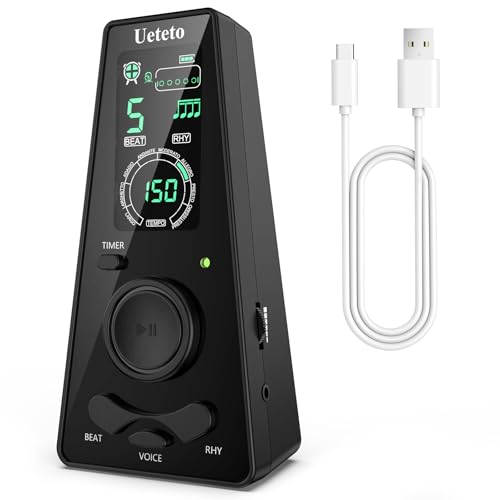
Quiet Practice Pick – Ueteto Rechargeable Digital Metronome
For bassists comparing metronomes for bass guitars, the Ueteto digital model offers flexible tempo control, visual feedback, and headphone output. Its rechargeable battery, compact size, and adjustable volume make it suitable for home practice, travel, and sessions where a speaker may be distracting.
Best For: Bassists who need visual beats, headphone listening, and extended rechargeable practice.
Pros:
- Provides 40–208 BPM, nine rhythm patterns, and ten beat settings.
- 3.5mm headphone jack supports quieter practice and monitoring.
- Rechargeable battery offers up to 16 hours of continuous use after a roughly two-hour charge.
- Includes LCD display, flashing LED, volume control, and timer settings.
Cons:
- It is a metronome rather than a combined tuner and metronome.
- The plastic body may feel less traditional than a mechanical model.
- Its many rhythm and counting options may be more than a beginner needs.
This model is a strong fit when bass practice needs to stay audible and adaptable without disturbing others. The headphone jack and visual tempo indicator are particularly useful for late-night practice, while the broad controls accommodate different timing exercises.
Best Classic-Style Pick – SDREAM Rechargeable Digital Metronome
For musicians seeking metronomes for bass guitars, the SDREAM combines a familiar pyramid-style design with modern digital controls. Its adjustable tempo, rhythm patterns, human voice option, and headphone output make it practical for focused bass practice.
Best For: Beginners and experienced players who want a compact, rechargeable metronome with vocal counting and flexible beat settings.
Pros:
- Tempo range of 40–208 BPM with 10 beat patterns.
- Offers human English voice counting or electronic beats.
- Rechargeable via USB-C and includes a 3.5mm headphone jack.
- Compact, lightweight design fits easily in an instrument bag.
Cons:
- Its 40–208 BPM range is narrower than some competing options.
- The plastic body may feel less premium than metal alternatives.
The SDREAM is a straightforward choice for bassists who prioritize portability, silent practice, and clear counting over advanced tuning or training features.
Best 3-in-1 Value – Ulumac Aroma Metronome Tuner
The Ulumac Aroma is a versatile option among metronomes for bass guitars because it combines timing practice with chromatic tuning and tone generation. Its broad tempo range, readable angled display, and headphone jack suit practice sessions at home or on the go.
Best For: Bassists who want one compact device for metronome work, instrument tuning, and reference-tone exercises.
Pros:
- Combines a metronome, chromatic tuner, and tone generator.
- Tempo adjusts from 30–260 BPM with 10 beat patterns and 8 rhythm styles.
- Supports bass tuning with a stated ±0.5-cent accuracy and A4 calibration from 430–450 Hz.
- Backlit LCD, LED cues, adjustable volume, and headphone jack support flexible practice.
Cons:
- It is not suitable for piano tuning, according to the supplied notes.
- Uses two AAA batteries rather than a rechargeable battery.
Choose the Ulumac Aroma if tuning convenience matters as much as rhythm practice. It offers more functions than a metronome-only unit while remaining small enough for an instrument case.
Best Training Features – Donner Rechargeable 3-in-1 Metronome
For bassists comparing metronomes for bass guitars, the Donner DBM-100 stands out with a trainer rhythm mode that uses its microphone and light display to provide feedback. It also adds tuning, tempo detection, multiple audio sources, and a rechargeable design.
Best For: Players who want interactive rhythm training alongside metronome, tuner, and tempo-detection functions.
Pros:
- Trainer rhythm mode gives dynamic visual feedback based on detected playing.
- Tempo detection helps measure the speed of a practice song.
- Offers 30–280 BPM, beats 0–9, multiple audio sources, and headphone output.
- Rechargeable pocket-sized design with a bright, full-angle VA LCD display.
Cons:
- A USB-C charging cable is not included.
- The feature-rich interface may require some manual familiarization.
The Donner is the strongest fit for bassists who want more than a steady click. Its feedback-based trainer mode can make timing practice more active, while the tuner and tempo detection add useful rehearsal tools.
How We Picked the Best Metronomes for Bass Guitars
We focused on the features that matter most to bass players: dependable tempo control, clear beat indication, audible volume, useful rhythm or subdivision settings, and practical portability. Because bass practice often involves tuning as well as timing, we also included several 3-in-1 models with chromatic tuners or tone generators.
Rechargeable designs can reduce battery costs and are convenient for regular practice, while standard digital models may be lighter and simpler. The mechanical option is worth considering if you prefer a visual pendulum and a strong acoustic pulse without relying on a screen.
Quick Comparison
| Type | Best For | Features to Look For |
|---|---|---|
| Digital metronome | Everyday practice | Wide tempo range, clear display, adjustable volume |
| Rechargeable 3-in-1 | Bassists who also need tuning | USB charging, chromatic tuning, tone generation |
| Advanced portable unit | Detailed rhythm work | Subdivisions, accents, multiple beat patterns |
| Mechanical metronome | Traditional practice setups | Audible tick, visual pendulum, dependable winding mechanism |
Key Buying Factors for Metronomes for Bass Guitars
Volume and Visibility
Low bass frequencies can overpower a quiet metronome, especially with an amplifier or drummer nearby. Prioritize a loud speaker, headphone support where available, and a large display or strong visual indicator. A flashing LED can help when you cannot hear every click.
Tempo and Rhythm Control
Choose a broad tempo range if you practice slow grooves, double-time passages, or gradual speed-building exercises. Subdivision, accent, and trainer modes are useful for syncopation, odd-feeling patterns, and improving consistency across different rhythmic groupings.
Tuning and Power
A built-in chromatic tuner saves space and makes it easier to keep your bass ready for practice. Rechargeable models are convenient for frequent use, but check charging connectivity and battery indications. Battery-powered units may be preferable as backups or for travel.
Portability and Controls
Look for a stable stand or clip, responsive buttons, and controls that are easy to operate without interrupting practice. A compact body is helpful for lessons, rehearsals, and gig bags, while a larger screen may be easier to read from a music stand.
Who Should Buy Which Metronomes for Bass Guitars?
Beginners and casual players should start with a straightforward digital metronome that offers clear clicks and simple tempo adjustment. Players who tune frequently should choose a rechargeable 3-in-1 unit with a chromatic tuner. Bassists working on advanced subdivisions, groove accuracy, or speed development will benefit from trainer and rhythm modes. If you prefer a screen-free, traditional experience, a mechanical metronome remains a practical choice. For rehearsals or amplified practice, prioritize maximum volume and visual feedback over decorative extras.