Choosing the right nearfield studio monitors can make a bigger difference than almost any other upgrade in a home studio. The best pair gives you clearer mids, tighter bass, and a more honest picture of your mix.
In this roundup, we focus on compact, powered options that work well on desks, in small rooms, and for creator setups where space, value, and accuracy all matter.
Best 10 Nearfield Studio Monitors Picks for 2026
Best Budget Reference
Edifier MR4 Powered Studio Monitors
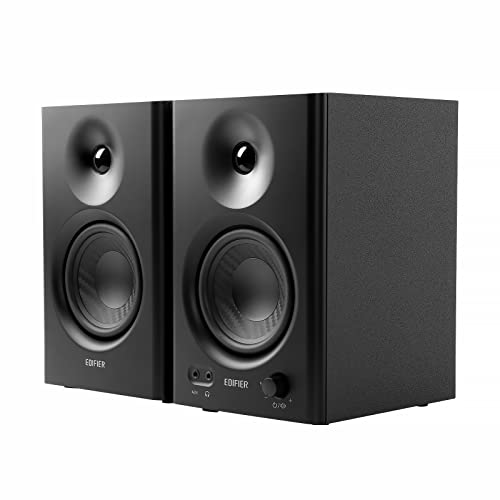
- Near-flat tuning for entry-level monitoring
- TRS, RCA, and AUX inputs for easy hookup
- Front headphone jack and tone controls
Best For: Beginners and home creators who want affordable nearfield studio monitors with flexible connections.
Best for Compact Desktop Monitoring
M-AUDIO BX4 4.5" Studio Monitors

- Zero-latency wired monitoring
- Compact 4.5-inch Kevlar drivers
- Multiple inputs for easy hookup
Best For: Bedroom producers, streamers, and desktop users who need compact wired monitors.
Best Value Near-Field Monitor

- Affordable step up for serious desktop monitoring
- Smooth highs and controlled low end for mixing
- Room-tuning controls add practical flexibility
Best For: Home studios and project rooms needing a capable, affordable monitor.
Best for Wide Sweet Spot
JBL 305P MkII 5" Studio Monitors

- Wide stereo imaging for accurate nearfield work
- Boundary EQ and HF Trim help adapt to your room
- Compact 5-inch powered monitors with XLR/TRS inputs
Best For: Bedroom producers and podcasters who want accurate nearfield monitoring with a spacious sweet spot.
Best Value for Small Studios
PreSonus Eris 4.5 Near Field Monitors

- Accurate sound with a full low end for the size
- Compact footprint works well on desks and shelves
- Flexible analog inputs plus front headphone output
Best For: Bedroom producers and home studio users who want affordable nearfield monitoring in a compact package.
Best for Versatile Connectivity
Ortizan C7 Dual-Mode 2.0 Studio Monitors

- USB, RCA, AUX, TRS, and Bluetooth 5.3 inputs
- Built-in 24-bit DAC for cleaner digital playback
- Compact 3.5-inch drivers for desktop-friendly use
Best For: Creators who want flexible near-field monitoring and easy switching between studio and casual listening.
Best for Accurate Mixing
PreSonus Eris E5 5.25" Monitor Pair
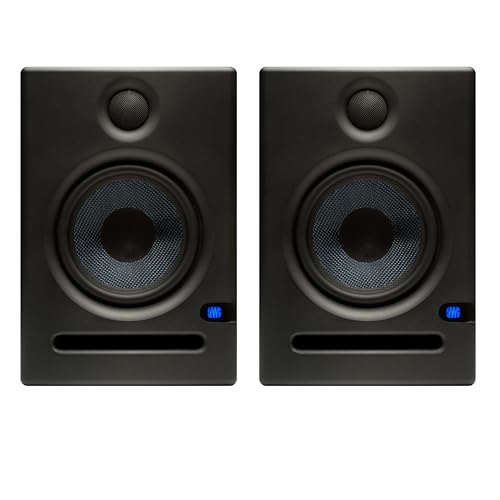
- Balanced sound for mixes that translate well
- Room-tuning controls help adapt to your space
- Flexible XLR, 1/4-inch, and RCA inputs
Best For: Home studios and project studios that need affordable, accurate nearfield monitors.
Best with Extra Features
Ortizan C7 Dual-Mode Studio Monitors

- USB DAC, RCA, AUX, TRS, and Bluetooth 5.3 inputs
- Flat monitor-style tuning for basic mixing and playback
- Compact 3.5-inch woofer and silk dome tweeter
Best For: Home studios and desktop users who want flexible wired and wireless monitor speakers.
Best for Compact Desktops
PreSonus Eris 3.5 Powered Monitors

- Small footprint suits cramped desks and compact studios
- Powered speakers make setup simple
- Good all-around choice for near-field listening
Best For: Beginners and desktop producers who need compact monitors for small spaces.
Best Compact Desktop Monitors

- Compact 3.5-inch powered monitors for desk setups
- Balanced TRS, RCA, and front aux inputs
- Tone controls help adapt sound to your room
Best For: Bedroom producers and desktop users who want compact nearfield studio monitors for accurate everyday monitoring.
Best Budget Reference – Edifier MR4 Powered Studio Monitors
The Edifier MR4 is a practical entry point for buyers who want nearfield studio monitors with a more neutral tuning than typical desktop speakers. Its 4-inch woofer, silk dome tweeter, and multiple inputs make it a flexible choice for home studios, editing desks, and casual critical listening.
Best For: Beginners, home recordists, and desktop creators who want affordable reference-style monitoring with simple connectivity.
Pros:
- Near-flat voicing aimed at music production and mixing.
- Balanced TRS, RCA, and AUX inputs cover common setups.
- Front headphone output and EQ knobs add everyday convenience.
- MDF cabinet helps reduce unwanted resonance.
Cons:
- 4-inch drivers limit bass extension compared with larger monitors.
- No built-in Bluetooth or wireless playback.
- Best suited to small rooms and desktop distances.
The MR4 stands out among budget nearfield studio monitors because it focuses on usable accuracy and flexibility rather than flashy extras. If you want an affordable pair that can serve double duty for monitoring and everyday listening, this is an easy model to consider.
Best for Compact Desktop Monitoring – M-AUDIO BX4 4.5" Studio Monitors
If you want nearfield studio monitors that double as everyday PC speakers, the M-Audio BX4 pair is a practical pick. Their 4.5-inch Kevlar woofers, silk dome tweeters, and bi-amplified design aim for clear, balanced sound in a compact footprint, while the wired inputs make them easy to connect to a desktop, interface, or DJ gear.
Best For: Bedroom producers, streamers, and PC users who want affordable wired monitors for close-up listening and basic music production.
Pros:
- Zero-latency wired connection for monitoring, streaming, and recording
- Compact 4.5-inch drivers fit small desks without giving up full-range sound
- Multiple inputs support 1/4-inch, 1/8-inch, and RCA setups
- MDF cabinet and bass reflex tuning help reduce resonant noise
Cons:
- Not ideal for louder rooms or larger studio spaces
- Low-end output is limited compared with larger monitors or a subwoofer setup
- More of an entry-level monitoring solution than a critical reference speaker
For budget-minded buyers, these nearfield studio monitors offer a solid mix of desk-friendly size, flexible connectivity, and usable clarity for music production or multimedia. They won’t replace higher-end reference monitors, but they make sense if you need an all-around wired speaker set for close listening.
Best Value Near-Field Monitor – PreSonus Eris E5 5.25"
The PreSonus Eris E5 is a smart pick if you want nearfield studio monitors that offer a clear upgrade path from basic desktop speakers without jumping into a much higher price bracket. Its 5.25-inch woofer, silk-dome tweeter, and class AB amplification are built for practical mixing and editing, while the rear acoustic controls help you adapt the sound to your room.
Best For: Home studios, project rooms, and buyers who want an affordable monitor with real mixing-focused features.
Pros:
- 5.25-inch woven composite woofer gives solid low-end response with less distortion.
- 1-inch silk-dome tweeter keeps highs smoother and less fatiguing.
- Balanced XLR and 1/4-inch inputs, plus RCA, make setup flexible.
- Acoustic tuning controls help tailor the sound to your space.
Cons:
- Not the deepest bass without a subwoofer.
- Best results still depend on proper placement and room treatment.
For budget-conscious producers, the Eris E5 hits a useful balance of accuracy, connectivity, and room tuning. It’s a sensible choice if you want nearfield studio monitors that can support everyday mixing without overcomplicating the setup.
Best for Wide Sweet Spot – JBL 305P MkII 5" Studio Monitors
If you want affordable nearfield studio monitors that still deliver a spacious image and dependable mix translation, the JBL 305P MkII is an easy model to consider. The 5-inch woofer, dual Class-D amplification, and Image Control Waveguide are tuned for clear stereo placement and controlled low end in a compact setup.
Best For: Bedroom producers, podcasters, and creators who need accurate nearfield monitoring with a wide sweet spot and flexible room tuning.
Pros:
- Wide, precise imaging thanks to JBL’s Image Control Waveguide
- Room-adjustment controls help tailor the sound to your space
- Compact 5-inch design fits smaller desks and studios
- XLR/TRS inputs work with common audio interfaces
Cons:
- 5-inch bass response is solid, but not as deep as larger monitors
- Rear controls take a little dialing in for best results
- Sold as a pair, which may be more than casual listeners need
For creators shopping nearfield studio monitors, the 305P MkII stands out for its balance of clarity, width, and room-friendly tuning. It’s a practical pick when you want honest monitoring without moving up to a larger, more expensive system.
Best Value for Small Studios – PreSonus Eris 4.5 Near Field Monitors
If you want nearfield studio monitors that balance accurate mixing, everyday listening, and a compact footprint, the PreSonus Eris E4.5 is an easy model to shortlist. It gives you studio-style clarity with enough low-end presence for desktop production without taking over your workspace.
Best For: Bedroom producers, home studios, and anyone who needs affordable nearfield monitoring with flexible inputs.
Pros:
- Clear, accurate sound with a surprisingly full low end for the size
- Compact 4.5-inch design fits desks, shelves, and small production spaces
- Multiple inputs make it easy to connect pro gear, PCs, phones, or turntables
- Front headphone out adds convenient quick-reference monitoring
Cons:
- Not as much bass extension as larger studio monitors
- Best suited to small rooms rather than larger control spaces
For the price, the Eris E4.5 delivers a practical mix of accuracy, connectivity, and room-friendly size. It is one of the more approachable nearfield studio monitors for buyers who want dependable monitoring without spending much or giving up desk space.
Best for Versatile Connectivity – Ortizan C7 Dual-Mode 2.0 Studio Monitors
The Ortizan C7 is a practical option if you want nearfield studio monitors that can also pull double duty for everyday listening, gaming, and casual content work. Its mix of USB, RCA, 3.5mm AUX, TRS balanced input, and Bluetooth 5.3 makes it easy to connect to a computer, mixer, TV, or phone without extra gear.
Best For: Beginners and multitaskers who want one compact speaker pair for near-field music production plus general media use.
Pros:
- Multiple inputs make it easy to switch between studio and desktop setups.
- USB DAC support aims for cleaner playback with less signal loss.
- Balanced TRS input is useful for small recording or mixing rigs.
- Flat-tuned voicing is designed for more accurate monitoring.
Cons:
- 3.5-inch woofers are compact, so bass output will be limited versus larger monitors.
- Bluetooth is convenient, but wired connections are still better for critical monitoring.
Overall, the C7 is appealing if you need nearfield studio monitors that prioritize flexible connectivity and straightforward everyday use over reference-level performance. It is a sensible fit for small rooms, desktops, and budget-conscious creators.
Best for Accurate Mixing – PreSonus Eris E5 5.25" Monitor Pair
If you want nearfield studio monitors that help mixes translate more reliably, the PreSonus Eris E5 pair is a strong, practical upgrade. The 5.25-inch woven composite woofer and silk-dome tweeter aim for a balanced, controlled response, while the front-firing port and tuning controls make it easier to adapt the sound to your room.
Best For: Home studios, project studios, and creators who need affordable monitors with useful room-adjustment tools and clean nearfield playback.
Pros:
- 5.25-inch woofer delivers solid low end with minimal bass distortion
- 1-inch silk-dome tweeter helps reduce harshness in the highs
- Balanced XLR/1/4-inch plus RCA inputs cover most setups
- Acoustic tuning controls help match the monitors to your room
Cons:
- Not ideal if you need very deep bass without a subwoofer
- Smaller size means less output than larger studio monitors
Overall, the Eris E5 is a sensible choice for nearfield studio monitors if you value accuracy, flexibility, and straightforward connectivity over maximum low-end weight. It’s especially appealing for mixers who want dependable translation without moving up to a much pricier tier.
Best with Extra Features – Ortizan C7 Dual-Mode Studio Monitors
The Ortizan C7 is a practical pick for nearfield studio monitors if you want one pair that can handle desktop production, casual listening, and gaming without extra gear. Its mix of USB, RCA, 3.5mm AUX, 6.35mm TRS, and Bluetooth 5.3 makes it easy to hook up to a PC, interface, mixer, or mobile device.
Best For: Home studios, small desks, and buyers who need flexible wired and wireless connections in one compact monitor pair.
Pros:
- USB DAC, RCA, AUX, TRS, and Bluetooth 5.3 cover most common setups
- Flat, monitor-style tuning aims for more accurate playback and mixing checks
- 3.5-inch woofer and silk dome tweeter deliver clear nearfield detail
Cons:
- Smaller drivers limit low-end depth compared with larger studio monitors
- Wireless playback is convenient, but wired connections are still better for monitoring
For budget-minded nearfield studio monitors, the C7 stands out more for connectivity and all-purpose use than for deep bass or high-end refinement. That makes it a smart desk-friendly option when you need a versatile pair for music production, media, and everyday listening.
Best for Compact Desktops – PreSonus Eris 3.5 Powered Monitors
If you want affordable nearfield studio monitors that fit neatly on a desk, the PreSonus Eris 3.5 is an easy model to consider. These powered speakers are built for close-up listening, making them practical for home studios, editing bays, and everyday desktop audio where space is tight.
Best For: Beginners, small-room producers, and anyone who needs compact monitors for near-field listening without a large footprint.
Pros:
- Compact size works well on crowded desks and small workspaces
- Powered design simplifies setup with no external amp required
- Clear, usable sound for music production, streaming, and general listening
- Versatile enough for both studio work and casual hi-fi use
Cons:
- Limited low-end extension compared with larger studio monitors
- Best suited to small rooms rather than full-size control spaces
- Not ideal if you need very high playback volume
Overall, the Eris 3.5 is a sensible pick for buyers who want nearfield studio monitors with a small footprint and straightforward operation. It delivers the convenience and flexibility many desktop setups need, even if it is not the most powerful option in the category.
Best Compact Desktop Monitors – PreSonus Eris 3.5 White Pair
PreSonus Eris 3.5 nearfield studio monitors are a smart pick if you want accurate desktop sound without giving up too much space. They’re compact, easy to hook up to a computer or interface, and tuned to deliver a cleaner, more honest mix than typical bookshelf speakers.
Best For: Bedroom producers, desktop creators, and anyone who needs compact nearfield studio monitors for mixing, listening, or general multimedia use.
Pros:
- Clear, accurate sound with a tight low end for their size
- 50W Class AB amplification gives solid volume on a desk
- Flexible inputs, including balanced TRS, RCA, and front aux
- Tweaks for high and low frequencies help match your room
Cons:
- 3.5-inch drivers limit deep bass compared with larger monitors
- Not ideal for bigger rooms or louder full-range listening
The Eris 3.5 stands out as a practical entry-level option for nearfield studio monitors, especially if you need a compact pair that works well on a desk and still offers real monitoring detail.
How We Picked the Best Nearfield Studio Monitors
We prioritized models that make sense for close-range listening: accurate tonal balance, practical connectivity, consistent build quality, and sizes that suit desktop or small-room placement. We also weighed power output, woofer size, and user-friendly features like balanced inputs and front-mounted controls where available.
Quick Comparison: What Changes Most
With Nearfield Studio Monitors, the biggest differences usually come down to driver size and placement needs. Smaller 3.5-inch and 4-inch models are easier to fit on a desk and can sound great at low to moderate volumes. 4.5-inch and 5.25-inch speakers generally offer more low-end extension and headroom, which can help if you produce bass-heavy music or want a fuller sound without a subwoofer.
Key Buying Factors for Nearfield Studio Monitors
Room Size and Listening Distance
Nearfield monitors are meant for close listening, typically around 3 to 5 feet away. If your setup is very compact, avoid oversizing the speakers; too much output in a small room can exaggerate reflections and bass buildup.
Accuracy Vs. Convenience
If your main goal is mixing and editing, favor neutral voicing and balanced inputs. If you also want everyday desktop listening, Bluetooth, headphone outputs, or extra input flexibility may be useful, but they should not replace basic monitor performance.
Woofer Size and Bass Expectations
Smaller drivers are often more controlled in tight spaces, while larger ones can reach deeper. Still, no compact monitor fully replaces proper room treatment or, when needed, a subwoofer for low-end checking.
Connectivity and Source Matching
Check whether the monitors support the gear you already own. Balanced TRS or XLR connections are ideal for audio interfaces; RCA or aux inputs can work for casual use, but may be less suitable for a dedicated studio signal chain.
Who Should Buy Which Nearfield Studio Monitors?
Budget buyers and general desktop users should look at smaller models that balance size and simplicity. Producers working in small home studios may prefer 4.5-inch or 5.25-inch options for extra detail and low-end reach. If you are mixing more critically, choose the most neutral, best-connected pair you can fit into your space.
For most buyers, the best choice is the monitor that matches both the room and the workflow. The right pair of Nearfield Studio Monitors should help you hear problems faster, make better mix decisions, and stay comfortable during long sessions.