Great monitors can still sound wrong in a bad room. That’s why studio monitors with room correction are so useful: they help compensate for reflections, bass buildup, and placement issues that color what you hear.
In this roundup, we focus on options that make it easier to trust your listening setup, whether you’re mixing music, editing video, or building a compact production desk.
Best 10 Studio Monitors with Room Correction Picks for 2026
Best for Accurate Room Tuning
IK Multimedia iLoud Precision 6 MKII
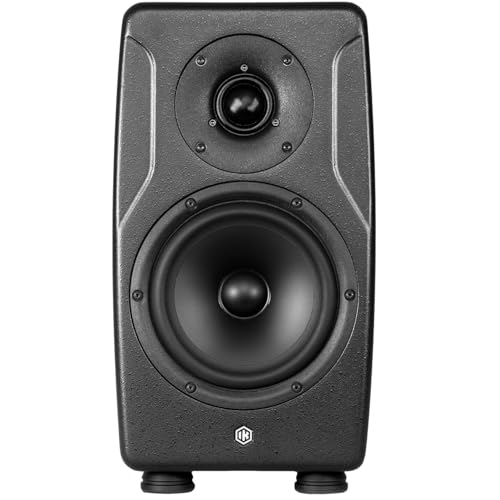
- ARC X room correction with included measurement mic
- Linear-phase, time-coherent monitoring for mix accuracy
- Virtual monitor emulation with 20+ speaker profiles
Best For: Producers and engineers who want highly accurate monitoring with built-in room correction.
Best for Easy Tone Tuning
Mackie CR3.5 Creative Reference Monitors

- Tone knob for quick sound shaping
- Desktop and bookshelf location modes
- Multiple inputs plus headphone output
Best For: Desktop creators, gamers, and casual listeners who want compact speakers with simple tuning controls.
Best Room Correction Processor

- Stand-alone correction processor with included measurement mic
- Improves imaging and tonal balance for more accurate monitoring
- Useful monitor and reference emulation for translation checks
Best For: Home and project studios that want dedicated room correction for their monitors.
Best for Neutral Reference
Yamaha HS5 Powered Studio Monitor Pair

- Accurate, uncolored sound for mix decisions
- Balanced XLR and TRS connectivity
- Compact nearfield design for small studios
Best For: Engineers and home producers who want a clean reference monitor without built-in processing.
Best for Room Tuning

- App-based room compensation and rear EQ controls
- 3-way active design with Hi-Res Audio support
- Wide input options: XLR, TRS, RCA, AUX, Bluetooth 6.0
Best For: Home studio users who want compact monitors with flexible room tuning and broad connectivity.
Best Monitor Controller Pick

- Four stereo inputs plus S/PDIF digital source support
- Three speaker outputs with independent level controls
- Four headphone amps and built-in talkback mic
Best For: Home and project studios that need a desktop monitor controller for multiple speakers and sources.
Best for Comfort
Edifier MR5 3-Way Studio Monitors

- Built-in room compensation and app-based tuning
- 3-way active speaker layout for detailed sound
- Multiple pro and consumer inputs plus Bluetooth 6.0
Best For: Creators who want near-field monitors with easy room adjustment and flexible connectivity.
Best for Compact Desktop Monitoring
NUX AXON 3 Studio Reference Monitor

- App-based acoustic EQ for room and placement tuning
- 90W bi-amp power in a compact nearfield design
- USB, Bluetooth, RCA, 1/4-inch, and 1/8-inch inputs
Best For: Creators who want a small monitor setup with flexible connectivity and quick acoustic tuning.
Best Heavy-Duty Pick
M-Audio BX5BT 5" Desktop Studio Monitors
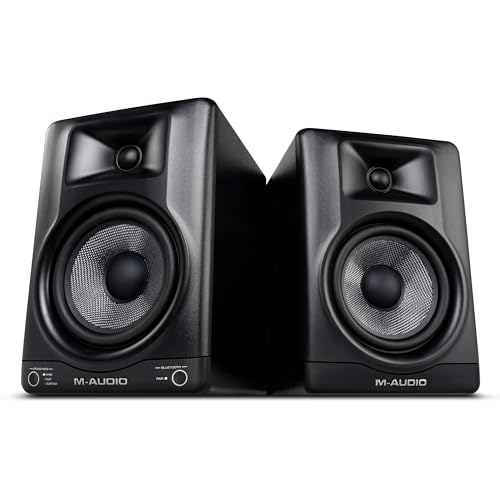
- DSP flat/hype/custom voicing modes
- App EQ and preset control for tuning
- Compact 5-inch bi-amplified desktop design
Best For: Creators who want compact monitors with easy sound-shaping controls for different rooms and tasks.
Best for Tiny Desks
NUX AXON 3 Studio Reference Monitor

- Advanced DSP with app-based acoustic correction
- 90W bi-amp power in an ultra-compact design
- Wide input support: USB DAC, Bluetooth, RCA, and more
Best For: Small desks, portable setups, and creators who want compact monitors with room tuning tools.
Best for Accurate Room Tuning – IK Multimedia iLoud Precision 6 MKII
If you want studio monitors with room correction that go beyond basic calibration, the IK Multimedia iLoud Precision 6 MKII is built for precision-critical mixing and mastering. It combines a 6.5″ woofer, graphene tweeter, and ARC X calibration to help your room translate more reliably.
Best For: Producers, mixers, and mastering engineers who want monitor accuracy, built-in calibration, and virtual speaker emulation in one system.
Pros:
- Built-in ARC room correction with included measurement mic for fast setup
- Linear-phase, time-coherent design aims for highly accurate translation
- ARC X software adds target curves, voicing control, and speaker emulation
- Extended low end and 150W Class-D power suit serious studio use
Cons:
- More expensive than standard nearfield monitors
- Best results depend on using the calibration tools correctly
- Feature depth may be overkill for casual creators
As one of the more advanced studio monitors with room correction, the iLoud Precision 6 MKII stands out for users who care about translation, not just volume or convenience. It is especially appealing if you want monitor voicing, calibration, and speaker emulation in a compact nearfield package.
Best for Easy Tone Tuning – Mackie CR3.5 Creative Reference Monitors
The Mackie CR3.5 is a flexible pick for buyers who want straightforward desktop speakers that can still work as entry-level studio monitors with room correction-like placement control. The tone knob lets you add warmth and sparkle, while the location switch helps tailor the sound for nearfield desktop use or a more relaxed bookshelf setup.
Best For: Desktop creators, gamers, and casual listeners who want simple controls, multiple inputs, and a compact all-in-one speaker pair.
Pros:
- Tone knob makes it easy to shape bass and treble without extra gear
- Location switch helps optimize sound for desktop or bookshelf placement
- TRS, RCA, 3.5 mm, and headphone output add plenty of connection options
- Compact 3.5-inch design fits small desks and home setups
Cons:
- Not a true room-correction system with measurement-based calibration
- 3.5-inch woofer limits deep bass without a subwoofer
- Best suited to small rooms and nearfield listening, not larger studios
As a value-friendly desktop monitor, the CR3.5 stands out more for usability than advanced correction, but it still offers some of the practical benefits shoppers want from studio monitors with room correction. If you need simple tonal adjustment and flexible placement in a compact package, it’s an easy model to consider.
Best Room Correction Processor – IK Multimedia ARC Studio
IK Multimedia ARC Studio is a smart choice for studio monitors with room correction when you want a dedicated system that measures your room, applies calibration, and keeps the correction running outside your computer workflow. It’s built for producers and engineers who need tighter translation, clearer imaging, and a more reliable reference without adding more acoustic treatment or extra hardware.
Best For: Home and project studios that need a straightforward, stand-alone room correction solution for accurate monitoring.
Pros:
- Includes a measurement microphone, calibration software, and stand-alone correction processor
- Improves frequency balance and stereo imaging for more dependable mixes
- Easy to integrate into a wide range of studio setups
- Offers monitor and reference-system emulation for checking translation
Cons:
- Requires an initial setup and measurement process
- Not a substitute for proper acoustic treatment in very poor rooms
For buyers comparing studio monitors with room correction, ARC Studio stands out because it handles correction at the system level rather than relying on a plugin alone. That makes it a practical pick if you want a more consistent listening position and a faster path to mixes that translate well.
Best for Neutral Reference – Yamaha HS5 Powered Studio Monitor Pair
If you want a straightforward, accurate monitor for mixing and editing, the Yamaha HS5 is a classic nearfield option to compare against other studio monitors with room correction. It doesn’t add much color of its own, which makes it useful when you want to hear issues clearly and make decisions that translate well.
Best For: Mix engineers, home studios, and creators who want a clean reference sound over added bass or hype.
Pros:
- Very neutral presentation that helps expose mix problems
- Balanced XLR and TRS inputs for flexible studio hookups
- Compact 5-inch design works well on desks and nearfield setups
- Bi-amped power section delivers solid clarity for the size
Cons:
- No built-in room correction or calibration features
- Limited low-end output compared with larger monitors
- May feel too revealing for casual listening
For buyers comparing studio monitors with room correction, the HS5 is a strong control option if you prefer a simple, honest monitor and plan to handle room issues with placement or external tools.
Best for Room Tuning – Edifier MR5 Studio Monitors
If you want studio monitors with room correction without jumping to a full pro setup, the Edifier MR5 is a practical middle-ground. Its 3-way active design, Hi-Res audio support, and app-based acoustic compensation make it easier to shape the sound for a desk, bedroom studio, or small mix space.
Best For: Home studio creators and desktop listeners who want flexible tuning, compact cabinets, and multiple wired inputs.
Pros:
- Room compensation via the EDIFIER ConneX app plus rear EQ knobs
- 3-way driver layout for clearer mids, highs, and bass separation
- XLR, TRS, RCA, AUX, and Bluetooth 6.0 for broad connectivity
Cons:
- Room correction is helpful, but not the same as advanced DSP calibration
- Compact size means limited low-end output compared with larger monitors
- App-based controls may be more than casual listeners need
The MR5 stands out as one of the more flexible studio monitors with room correction in a compact, affordable-friendly form. It is a strong fit if you need dependable near-field monitoring and want some control over how the speakers interact with your room.
Best Monitor Controller Pick – PreSonus Monitor Station V2
If you’re building a desktop monitoring chain for studio monitors with room correction, the PreSonus Monitor Station V2 gives you a central control point for sources, speaker switching, cue mixing, and headphone monitoring. It’s not a correction device itself, but it fits neatly into a calibrated playback setup where you want quick access to level control and multiple listening paths.
Best For: Home and project studios that need a flexible desktop monitor controller with multiple inputs, speaker pairs, and talkback.
Pros:
- Four stereo input pairs plus S/PDIF digital input for flexible source routing
- Three selectable speaker output pairs with individual level controls
- Four headphone amps and built-in talkback microphone for session workflow
- Main mute, mono, and dim controls help with fast monitoring checks
Cons:
- Does not provide actual room correction or DSP calibration
- Best suited to monitoring control, not speaker processing
- More utility than essential if you only use one speaker pair
For buyers comparing studio monitors with room correction, this PreSonus unit works best as the control hub around that system, not as the correction engine. It’s a practical choice when you want streamlined source switching, easy speaker management, and solid headphone handling from the desktop.
Best for Comfort – Edifier MR5 3-Way Studio Monitors
The Edifier MR5 is a practical pick for shoppers comparing studio monitors with room correction, thanks to its built-in acoustic controls and compact 3-way active design. It combines wired pro-style inputs with Bluetooth convenience, making it a flexible fit for home studios, desktop production, and casual critical listening.
Best For: Creators who want near-field monitors with easy room adjustment, multiple input options, and a compact footprint.
Pros:
- Room compensation via rear controls and the EDIFIER ConneX app
- 3-way design with dedicated woofer, midrange, and tweeter for clear detail
- XLR, TRS, RCA, AUX, and Bluetooth 6.0 for broad connectivity
- Compact MDF cabinets help reduce resonance in small setups
Cons:
- Room correction is useful, but not as advanced as full calibration systems
- Best performance still depends on proper placement and listening distance
- White finish may not suit every studio aesthetic
For buyers who want studio monitors with room correction without jumping to a more expensive DSP-heavy setup, the MR5 hits a smart middle ground. It offers enough tuning flexibility to better match your room while staying simple enough for everyday use.
Best for Compact Desktop Monitoring – NUX AXON 3 Studio Reference Monitor
If you want studio monitors with room correction-style control in a tiny desktop format, the NUX AXON 3 is built for flexible, close-up monitoring. Its DSP features, app-based acoustic EQ, and adjustable tilt make it easier to dial in a clean listening position for mixing, streaming, or editing without taking over your desk.
Best For: Producers, streamers, and creators who need a compact monitor setup with multiple input options and quick acoustic tuning.
Pros:
- Advanced DSP and Acoustic Correction EQ app help tailor the sound to your room and placement.
- 90W bi-amp design with 3-inch woofers delivers detailed nearfield sound in a compact footprint.
- Very flexible inputs, including USB DAC, Bluetooth, RCA, 1/4-inch, and 1/8-inch AUX.
- Magnetic footpads and a 3/8-inch mount make desktop and stand placement easy.
Cons:
- 3-inch drivers limit deep bass compared with larger studio monitors.
- Room correction is app-based, so setup depends on using the software well.
For buyers comparing studio monitors with room correction, the AXON 3 stands out more for compact convenience and placement flexibility than for full-size low-end output. It’s a strong pick when you need accurate nearfield monitoring in a small space and want a practical tuning workflow.
Best Heavy-Duty Pick – M-Audio BX5BT 5" Desktop Studio Monitors
If you want studio monitors with room correction-style flexibility without stepping up to a full DSP monitor system, the M-Audio BX5BT gives you useful tuning tools in a compact desktop package. The built-in DSP modes, app-based EQ, and Bluetooth convenience make them a practical fit for creators who need more control over playback than a basic nearfield speaker.
Best For: Music producers, editors, podcasters, and content creators who want compact monitors with easy sound-shaping options for different rooms and workflows.
Pros:
- DSP modes let you switch between flat, hyped, and custom voicings
- App control adds 5-band EQ and preset saving for room or taste adjustments
- Compact 5-inch design with bi-amplified power suits desks and small studios
- Bluetooth 5.0 adds quick wireless playback for reference listening
Cons:
- Not a true automated room correction system with mic-based calibration
- 5-inch woofer size limits low-end output compared with larger monitors
- Bluetooth is convenient, but wired monitoring is still better for critical work
Overall, the BX5BT is a strong pick if you want studio monitors with room correction-like tuning features in a simple desktop setup. It won’t replace dedicated calibrated correction software, but it does give you enough control to adapt the sound to your space and workflow.
Best for Tiny Desks – NUX AXON 3 Studio Reference Monitor
The NUX AXON 3 is a smart pick if you want studio monitors with room correction in a compact, travel-friendly format. It pairs advanced DSP and acoustic correction via app with 90W bi-amp power, giving you more control over placement, tonal balance, and desk reflections than a basic mini monitor.
Best For: Producers, streamers, and creators working in small rooms or on crowded desks who want compact monitors with digital correction tools and flexible inputs.
Pros:
- Advanced DSP and app-based acoustic correction help adapt the sound to your space.
- 90W bi-amp design with 3-inch woofers delivers strong output for the size.
- Lots of connectivity, including USB DAC, Bluetooth, RCA, 1/4-inch, and 1/8-inch inputs.
- Magnetic footpads and a 3/8-inch mounting socket make placement easy.
Cons:
- 3-inch drivers won’t move as much low end as larger monitors.
- Room correction is app-based, so setup takes a bit more effort than plug-and-play speakers.
For buyers comparing studio monitors with room correction, the AXON 3 stands out for making digital tuning accessible in a very compact form. It is especially appealing if desk space is tight and you want one monitor set that can cover studio work, streaming, and casual listening.
How We Picked the Best Studio Monitors with Room Correction
We looked for models and systems that help reduce room-induced errors without making setup overly complicated. Priority went to products with practical calibration tools, usable EQ or DSP features, and strong value for home studios, desktop rigs, and small project spaces.
We also considered how flexible each option is in real-world use: speaker size, connectivity, control software, and whether the system is best as a full monitor solution or as a calibration add-on for existing speakers.
Quick Comparison
Some picks are complete monitor speakers with onboard tuning, while others are external correction systems or desktop-focused reference speakers. That matters because the best choice depends on whether you need a new pair of monitors, better correction for gear you already own, or a compact setup for content creation.
Key Buying Factors for Studio Monitors with Room Correction
Room Correction Method
Built-in DSP, app-based tuning, and stand-alone calibration systems all take different approaches. Built-in correction is simplest, while external systems can work with more speaker setups and may deliver more precise room compensation.
Speaker Size and Room Match
Smaller rooms often benefit from 3- to 5-inch monitors, which are easier to place and less likely to overwhelm a desk. Larger rooms may justify bigger nearfield models for better low-end reach and headroom.
Connectivity and Workflow
Check for balanced inputs, Bluetooth if you need casual playback, and control features that fit your workflow. If you switch between audio interfaces, computers, and media devices, flexible input options can save time.
Calibration Controls and Usability
The best Studio Monitors with Room Correction should make it easy to measure your room, apply changes, and store settings. Simple software, clear presets, and straightforward gain or tone controls are especially helpful for beginners.
Who Should Buy Which Studio Monitors with Room Correction?
If you want the most straightforward path to better translation, choose a monitor pair with built-in correction or a dedicated calibration system. If your space is small or multipurpose, compact monitors with tuning controls can be enough to improve clarity without overcomplicating the desk.
For producers and creators who already own decent speakers, a room correction system may offer the biggest upgrade per dollar. For buyers building a new setup from scratch, prioritize a monitor that balances honest sound, flexible connectivity, and room-aware tuning.