The right portable DAC for IEMs can improve phone and laptop listening with cleaner conversion, stronger output, and useful 3.5mm or 4.4mm connectivity.
We selected 10 compact options ranging from affordable CX31993-based adapters to feature-rich balanced DAC amplifiers, so you can match sound quality and features to your earphones and daily setup.
Best 10 Portable Dac for Iems Picks for 2026
Compact Hi-Res Pick
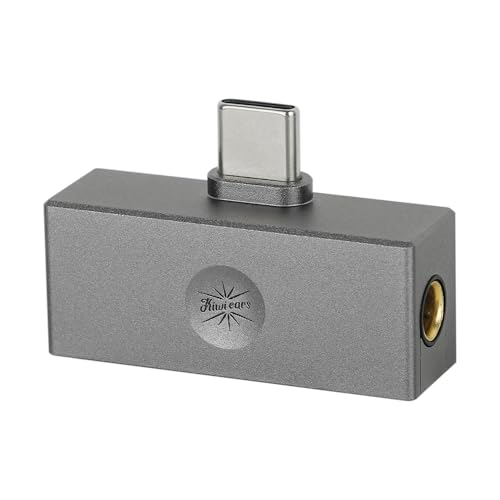
- 3.5mm and 4.4mm outputs
- 32-bit/384kHz PCM and DSD128
- Compact aluminum-alloy body
Best For: Portable listeners wanting flexible wired output options
Budget Dongle Value

- Dual DAC chips with 32-bit/384kHz support
- USB-C and USB-A compatibility
- 3.5mm output with 63mW at 32 ohms
Best For: Everyday 3.5mm IEM and headphone use across multiple devices
Tube-Warmth Powerhouse
MUSEHiFi M3 Ultra Tube DAC Amp
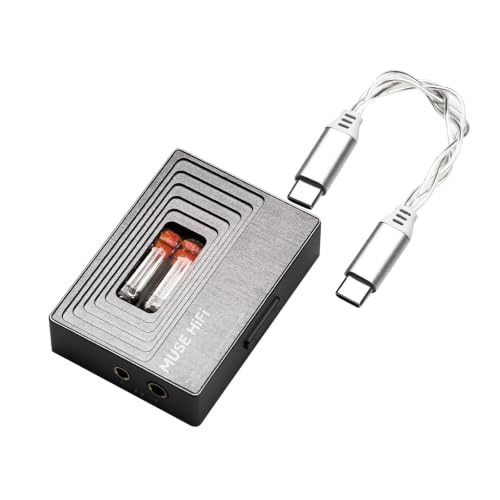
- JAN6418 vacuum tube amplification
- 460mW/480mW stated output
- 3.5mm and 4.4mm outputs
Best For: Listeners wanting tube warmth and high output power
Feature-Rich Portable Amp

- Balanced 4.4mm and S-Balanced 3.5mm
- IEMatch and PowerMatch controls
- 32-bit/384kHz PCM and DSD256
Best For: Users switching between sensitive IEMs and demanding headphones
High-Power Balanced Pick

- 180mW + 180mW balanced output
- PCM 32-bit/384kHz and DSD128 support
- Compact CNC aluminum USB-C design
Best For: Balanced IEM users who want substantial portable output
Smallest Everyday Pick
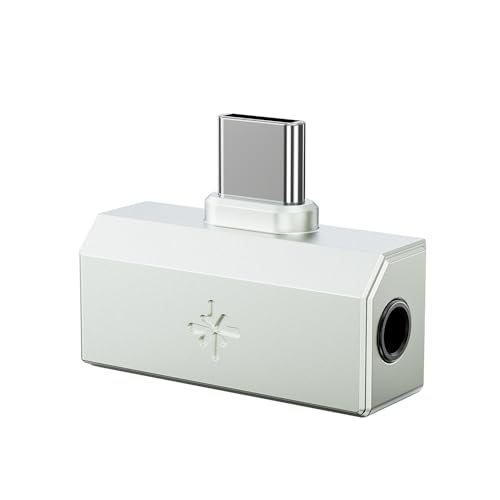
- Only 7g with direct USB-C plug-in design
- 3.5mm output and simultaneous charging
- 10-band PEQ with PCM/DSD support
Best For: Android and PC users prioritizing low weight and tuning control
Most Adjustable Hi-Fi Pick

- 3.5mm and 4.4mm outputs
- Dual CS43198 DAC chips and 124mW + 124mW output
- Interactive app-based parametric EQ
Best For: Listeners wanting dual outputs and detailed DSP customization
Dual-Chip Versatility
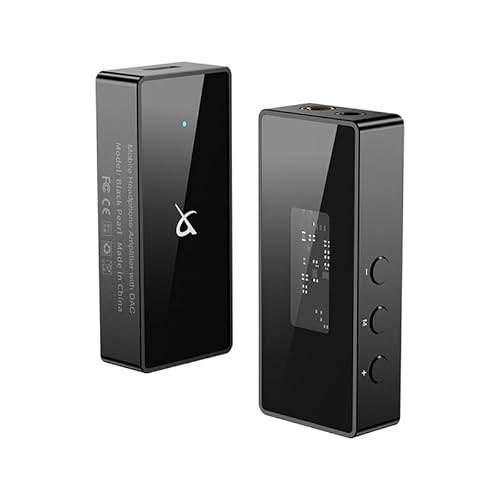
- Dual CS43131 DAC design with PCM and DSD256 support
- 3.5mm and 4.4mm outputs
- 8-band EQ and recording support
Best For: Listeners wanting flexible outputs and app-linked tuning
Ultra-Light Dongle

- Only 10g with a CNC aluminum body
- 3.5mm and 4.4mm dual outputs
- 10-band parametric EQ and 32-bit/384kHz decoding
Best For: Traveling listeners using USB-C phones, tablets, or computers
Best Simple Pick

- Dual CS43198 chips with PCM and DSD256 support
- Up to 262mW at 32 ohms through 4.4mm
- App EQ, five filters, and broad compatibility
Best For: Balanced-IEM users seeking power and detailed tuning
Compact Hi-Res Pick – Kiwi Ears Allegro Mini
The Kiwi Ears Allegro Mini is a practical portable DAC for IEMs when you want both 3.5mm and 4.4mm outputs in a compact aluminum body. It supports high-resolution playback and connects through USB-C, making it a versatile choice for compatible Android devices, phones, and PCs.
Best For: Listeners who want a compact, durable DAC with both single-ended and balanced outputs.
Pros:
- Provides both 3.5mm and 4.4mm headphone outputs.
- Supports PCM up to 32-bit/384kHz and DSD128.
- Aluminum-alloy housing offers a refined, portable design.
- Low stated THD+N of 0.004% at 32 ohms.
Cons:
- Android compatibility is specifically listed for version 5.1 and above.
- The supplied information does not specify battery operation or wireless connectivity.
The Allegro Mini stands out for combining a small footprint with flexible output options and strong hi-res format support. It is especially appealing if you already use both 3.5mm and 4.4mm IEM cables.
Budget Dongle Value – CX31993/MAX97220 USB-C DAC
This USB-C dongle is a straightforward portable DAC for IEMs with a 3.5mm output, dual DAC chips, and support for both USB-C and USB-A connections. Its compact adapter format suits phones, tablets, computers, and car stereos that have compatible ports.
Best For: Buyers seeking a durable, broadly compatible 3.5mm dongle with strong output specifications.
Pros:
- Uses CX31993 and MAX97220 dual DAC chips.
- Supports up to 32-bit/384kHz audio.
- Includes a USB-A interface for added compatibility.
- Rated for 16–600 ohm headphones with 63mW at 32 ohms.
Cons:
- Only a 3.5mm headphone output is listed.
- Its 45g weight may be more noticeable than ultra-light dongles.
- The supplied details list differing warranty durations.
With its reinforced cable, gold-plated connectors, and broad device compatibility, this adapter is a practical everyday option. It makes the most sense for users who want a 3.5mm connection rather than balanced output.
Tube-Warmth Powerhouse – MUSEHiFi M3 Ultra Tube DAC Amp
The MUSEHiFi M3 Ultra is a distinctive portable DAC for IEMs that pairs a JAN6418 vacuum tube with high-power amplification. It offers 3.5mm and 4.4mm outputs, extensive hi-res support, and noise-reduction features for listeners who prefer a warmer, more spacious presentation from a wired USB-C setup.
Best For: IEM and headphone users who want tube coloration, balanced output, and substantial power in a portable unit.
Pros:
- Uses a genuine JAN6418 military-grade vacuum tube.
- Offers stated output power of 460mW via 3.5mm and 480mW via 4.4mm balanced.
- Supports PCM up to 32-bit/384kHz and DSD256.
- Includes triple noise reduction and claims THD+N as low as 0.0003% via 4.4mm.
Cons:
- Tube amplification may not suit listeners seeking a strictly neutral presentation.
- The supplied information does not provide battery-life details.
- Its higher power may be more than sensitive IEMs require.
The M3 Ultra is the most specialized option in this lineup. Its tube circuit, balanced output, and high power make it attractive for users who want both a richer character and the flexibility to drive more demanding headphones.
Feature-Rich Portable Amp – iFi hip-dac 3 Stealth
The iFi hip-dac 3 is a feature-rich portable DAC for IEMs and headphones, with balanced 4.4mm output, S-Balanced 3.5mm output, adjustable gain, and an IEMatch setting for sensitive in-ear monitors. Its USB-C data and charging connections make it well suited to phones, tablets, and computers with USB-C support.
Best For: Users who want adjustable power and output tuning for both sensitive IEMs and demanding headphones.
Pros:
- Provides fully balanced 4.4mm and S-Balanced 3.5mm outputs.
- Supports 32-bit/384kHz PCM, DSD256, and full MQA decoding.
- IEMatch helps optimize output for sensitive IEMs.
- PowerMatch and XBass provide additional listening adjustments.
Cons:
- At 0.2kg, it is larger and heavier than a basic dongle adapter.
- Separate USB-C ports are used for audio data and charging.
- The supplied compatibility details specify devices with USB-C ports.
The hip-dac 3 is a strong all-rounder for listeners who need more control than a simple dongle provides. Its IEMatch and PowerMatch controls are particularly useful when switching between sensitive IEMs and power-hungry headphones.
High-Power Balanced Pick – Kiwi Ears Allegro BAL Mini
If you want a powerful portable DAC for IEMs, the Kiwi Ears Allegro BAL Mini combines balanced output, high-resolution decoding, and a compact USB-C design. Its 4.4mm output delivers substantial power while the CNC aluminum housing keeps the unit durable and travel-friendly.
Best For: Balanced IEM users who want high output power and detailed, high-resolution playback from a phone or gaming device.
Pros:
- 180mW + 180mW balanced output can drive IEMs and many headphones.
- Supports PCM up to 32-bit/384kHz and DSD128.
- Low stated distortion of 0.005% and a 5μV noise floor.
- Compact 90-degree USB-C design with a solid CNC aluminum body.
Cons:
- Its highlighted output is designed around a 4.4mm balanced connection.
- The supplied details list USB-C connectivity but do not specify broader device compatibility beyond smartphones and gaming consoles.
The Allegro BAL Mini is a strong choice when output headroom matters. It may be more power than some sensitive IEMs need, but its balanced connection, low distortion, and compact form make it a capable portable setup.
Smallest Everyday Pick – FiiO/Snowsky Tiny A
The FiiO/Snowsky Tiny A is a practical portable DAC for IEMs when minimal size and simple plug-in use are priorities. At 7g, it connects directly to a USB-C source, includes a 3.5mm headphone port, and adds adjustable PEQ controls for Android and PC users.
Best For: Travelers and phone users who want an exceptionally light 3.5mm DAC with app-based equalizer control.
Pros:
- Lightweight 7g all-metal body with a direct plug-in design.
- Supports PCM 32-bit/384kHz and DSD256 decoding.
- 10-band PEQ, volume control, and UAC options through FiiO Control.
- 3.5mm playback and USB-C charging can be used at the same time.
Cons:
- The control app is supported on Android and cannot run on iOS.
- Its listed headphone output is 3.5mm rather than balanced.
The Tiny A stands out for portability and flexibility rather than a feature-heavy physical layout. It is especially appealing if you use Android or PC and want PEQ tuning without carrying a separate DAC and cable.
Most Adjustable Hi-Fi Pick – MOONDROP Dawn PRO 2
The MOONDROP Dawn PRO 2 is a versatile portable DAC for IEMs with both 3.5mm and 4.4mm outputs, dual CS43198 DAC chips, and app-based DSP customization. Its independent power design and 100-level volume control make it a compelling option for listeners who want detailed control over their portable chain.
Best For: IEM listeners who want dual output options, precise EQ adjustment, and a more advanced Hi-Fi feature set.
Pros:
- Offers both 3.5mm and 4.4mm headphone outputs.
- Uses dual Cirrus Logic CS43198 DAC chips with three independent LDO power chips.
- Supports app-based parametric EQ adjustments for frequency, gain, Q value, and filter type.
- Provides 4Vrms and 124 + 124mW output with 100-level volume control.
Cons:
- The advanced DSP features require using the MOONDROP app.
- Its aluminum housing and vented heat-dissipation design may be less minimal than a simple dongle.
The Dawn PRO 2 is the most feature-oriented choice of the three. Its dual outputs suit different IEM cables, while the interactive DSP and independent volume management give experienced listeners more ways to refine playback.
Dual-Chip Versatility – TRN Black Pearl
The TRN Black Pearl is a flexible portable dac for iems when you want both 3.5mm and 4.4mm connections in one compact wired unit. Its dual CS43131 chips, high-resolution decoding, recording support, and adjustable EQ make it suited to listeners who want more control than a basic adapter.
Best For: IEM users who need both single-ended and balanced outputs, plus app-linked EQ customization.
Pros:
- Dual CS43131 DAC chips support PCM up to 384kHz/32-bit and DSD256.
- Offers both 3.5mm single-ended and 4.4mm balanced headphone outputs.
- Includes recording support and an 8-band EQ with WALK PLAY app linkage.
Cons:
- At 6.56 ounces, it is heavier than ultra-light USB-C dongles.
- Its listed connectivity is wired, so it does not provide wireless playback.
The Black Pearl is a good fit if output flexibility and tuning options matter more than minimum weight. Check your source device and preferred connector before buying.
Ultra-Light Dongle – BQEYZ C30
At just 10g, the BQEYZ C30 is an easy-to-carry portable dac for iems and phones, laptops, and other USB-C devices. It combines 3.5mm and 4.4mm outputs with a 10-band parametric EQ, making it a practical choice for travel and everyday listening.
Best For: Commuters and mobile listeners who prioritize low weight, USB-C plug-and-play use, and flexible EQ.
Pros:
- Lightweight 10g CNC aluminum design with a straight USB-C plug.
- Provides both 3.5mm and 4.4mm outputs and supports simultaneous use.
- Supports PCM up to 32-bit/384kHz and offers 10-band parametric EQ through Android or web controls.
Cons:
- The supplied notes indicate app support is coming soon for iOS users.
- The 4.4mm output is most useful with compatible balanced cables and headphones.
The C30 stands out for portability and broad USB-C compatibility. Android users get the fullest tuning functionality, while iOS users can use its hardware tuning without the app.
Best Simple Pick – EPZ TP35 PRO
The EPZ TP35 PRO is a performance-focused portable dac for iems with dual CS43198 chips and notably different power levels between its outputs. Its 4.4mm balanced connection reaches 262mW at 32 ohms, while app-based EQ, digital filters, and broad device compatibility add listening flexibility.
Best For: IEM users with balanced cables who want stronger output, low measured distortion, and extensive sound customization.
Pros:
- Dual CS43198 chips support PCM up to 32-bit/384kHz and DSD256.
- Delivers up to 112mW through 3.5mm and 262mW through 4.4mm at 32 ohms.
- Offers app EQ with memory, five digital filters, and compatibility with Apple, Android, and Windows devices.
Cons:
- Accessing tuning-driver features may require downloading software from EPZ or contacting the manufacturer.
- The higher-power balanced output requires a compatible 4.4mm cable and device.
The TP35 PRO is the strongest choice here for buyers who can use its balanced output and want detailed control over the sound. Its machined aluminum construction also suits regular portable use.
How We Picked the Best Portable Dac for Iems
We compared these models by focusing on the features that matter most with sensitive in-ear monitors: output noise, connector options, power delivery, size, compatibility, controls, and practical portability. We also considered whether each unit supports balanced output, high-resolution PCM or DSD playback, app-based tuning, and the power demands of demanding headphones.
Specifications can vary by output and device, so treat maximum power figures as a guide rather than a guarantee of real-world performance. For IEMs, a quiet background and usable volume control are generally more important than extreme wattage.
Quick Comparison
- Smallest and simplest: Basic USB-C to 3.5mm adapters are convenient for phones, tablets, and laptops with no headphone jack.
- Best flexibility: Models with both 3.5mm single-ended and 4.4mm balanced outputs accommodate more IEM cables.
- Best for customization: The FiiO/Snowsky Tiny adds PEQ tuning and app or web control.
- Best for extra power: The iFi hip-dac 3 and MUSEHiFi M3 Ultra are better suited to users who also drive larger headphones.
- Best for high-resolution formats: Several selections support PCM up to 384kHz and DSD256, though your source app must also support those formats.
Key Buying Factors for a Portable Dac for Iems
Output Type and Cable Compatibility
Check whether your IEM cable uses 3.5mm single-ended or 4.4mm balanced termination. Balanced output is not automatically better, but it can provide more power and gives you a useful second connection. Never connect a balanced output to an incompatible adapter or cable without confirming the wiring.
Noise and Volume Control
Sensitive IEMs reveal hiss more readily than many over-ear headphones. A low-noise design, precise volume adjustment, and sensible gain options are valuable. Hardware buttons or a physical wheel can also be more convenient than controlling volume only from the phone.
Power, Battery, and Portability
USB-C dongles draw power from the connected device and are usually the lightest choice. Battery-powered units may deliver more output and avoid draining a phone, but they add size and require charging. For most efficient IEMs, excessive power is unnecessary.
Source and Operating-System Support
Confirm USB-C compatibility with your phone, tablet, computer, or gaming device. Some models offer Android apps, PEQ, firmware controls, or display features, while simpler adapters work with fewer setup requirements. High-resolution decoding is useful only when your files and playback software can take advantage of it.
Who Should Buy Which Portable Dac for Iems?
Choose a basic USB-C adapter if you want an inexpensive, compact replacement for a missing headphone jack. Choose a dual-output dongle such as the Kiwi Ears, MOONDROP, TRN, BQEYZ, or EPZ options if you own multiple IEM cables or want to move to 4.4mm balanced later.
Choose the FiiO/Snowsky Tiny if equalizer control and app-based customization matter. Choose the iFi hip-dac 3 or MUSEHiFi M3 Ultra if you need more headroom for both IEMs and less-efficient headphones. For a Portable Dac for Iems that balances compact size with high-resolution support, compare connector layout, noise performance, and everyday controls before chasing the highest decoding number.