The right desktop speaker stand can improve listening position, reduce unwanted vibration, and free up valuable workspace. These 10 options cover compact computer speakers, small studio monitors, and heavier bookshelf-style speakers.
We focused on fit, stability, isolation materials, tilt, height, weight capacity, and everyday desk practicality so you can choose a stand that matches both your speakers and listening setup.
Best 10 Speaker Isolation Stands for Desktop Picks for 2026
Compact Angled Isolation
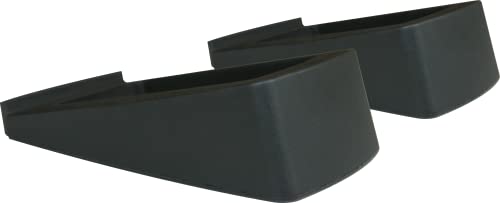
- 15° tilt directs sound toward the listener
- Silicone construction helps reduce vibration
- Supports speakers up to 2–3 inches and 8 pounds
Best For: Small computer and gaming speakers
Foam Monitor Isolation

- High-density acoustic foam supports up to 16 pounds
- Multiple configurations provide adjustable angles
- Sized for 3- to 4.5-inch speakers
Best For: Small studio monitors and bookshelf speakers
Large Silicone Isolation

- Larger 5-by-7.75-inch platform
- Silicone rubber helps limit vibration
- Designed for 4- to 7-inch speakers
Best For: Larger bookshelf speakers on desktop surfaces
Heavy-Duty Tilted Support
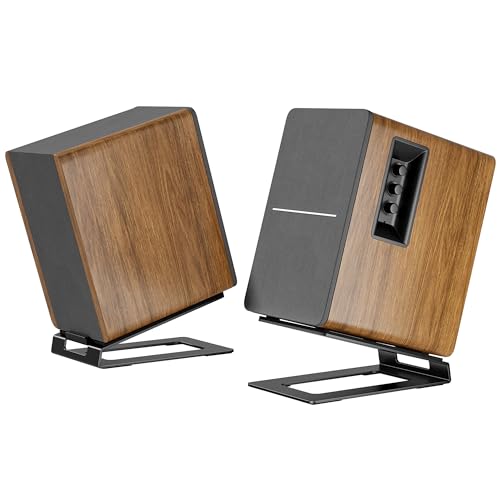
- Supports up to 22 pounds
- 16° tilt with anti-vibration pads
- Freestanding or screw-mount installation
Best For: Heavier bookshelf speakers and gaming desks
Best Adjustable Isolation
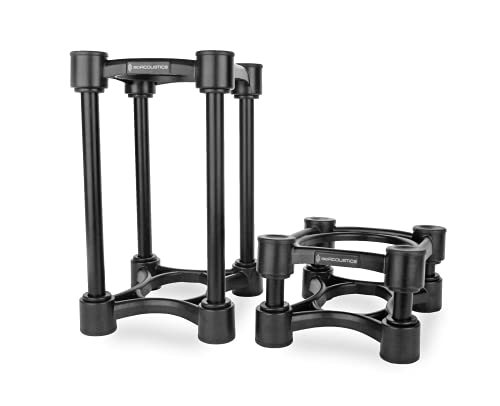
- 14 height-and-tilt variations
- 20-pound weight capacity
- Isolation-focused design
Best For: Precisely positioning desktop monitors
Best Heavy-Duty Value
JiffyPoint Metal Desktop Stands

- 30-pound load capacity
- 5-degree upward tilt
- Under-stand storage clearance
Best For: Stable desktop speakers and monitors
Best Compact Wedge
Monoprice Tilted Desktop Stands

- 15-degree fixed tilt
- Anti-vibration TPR material
- Designed for small speakers
Best For: Small speakers in tight desktop spaces
Sturdy Height Boost
suptek 6.1-Inch Desktop Speaker Stands

- Pair of 6.1-inch speaker stands
- 44-pound capacity per stand
- Anti-slip mats and spacious platforms
Best For: Elevated bookshelf speakers, monitors, and heavier desktop audio setups
Compact Angled Support
Kanto S2 Tilted Desktop Stands
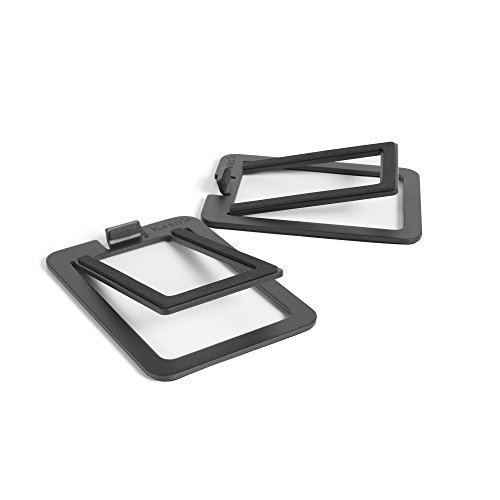
- 16-degree listening-angle tilt
- Foam padding helps reduce resonance
- Supports up to 6 pounds per stand
Best For: Small speakers and minimalist desktop workstations
Medium-Monitor Wedge
Monoprice 15-Degree Speaker Risers

- 15-degree fixed listening angle
- Designed for medium speakers and 5-inch monitors
- Rubber anti-vibration wedge construction
Best For: Medium bookshelf speakers and studio monitors
Compact Angled Isolation – Audioengine DS1
The Audioengine DS1 is a compact option for shoppers comparing speaker isolation stands for desktop setups. Its 15-degree angle raises small speakers toward ear level, while silicone construction helps limit vibration and fits speakers up to 2–3 inches with an 8-pound maximum load.
Best For: Small computer, gaming, and bookshelf speakers on Mac or PC desks.
Pros:
- 15-degree tilt is designed to improve sound projection.
- Silicone rubber helps dampen vibration.
- Compact 3.75-by-6.25-inch base supports small speakers.
- Includes a pair and a three-year warranty.
Cons:
- Limited to speakers up to 2–3 inches and 8 pounds.
- Compact footprint may not suit larger bookshelf speakers.
The DS1 is a practical pick when desk space is limited and your speakers are small enough for its compact platform. Its fixed angle and lightweight silicone design keep installation simple.
Foam Monitor Isolation – SMPad 4
The SMPad 4 uses high-density acoustic foam for desktop speaker isolation without adding a rigid stand. Its 6.3-by-8-inch pads support up to 16 pounds and offer multiple configurations for adjusting the angle of compatible small studio monitors or bookshelf speakers.
Best For: 3- to 4.5-inch studio monitors and bookshelf speakers in home desks or compact recording setups.
Pros:
- High-density 50 kg/m³ acoustic foam helps absorb vibration.
- Supports up to 16 pounds without changing shape.
- Multiple configurations allow different listening angles.
- Includes two pads for a left-and-right speaker pair.
Cons:
- Foam pads do not provide the rigid support of metal stands.
- Designed primarily for smaller 3- to 4.5-inch speakers.
Choose the SMPad 4 if flexible positioning and foam-based damping matter more than elevation. Its broad compatibility and adjustable layouts make it versatile for compact monitor setups.
Large Silicone Isolation – Audioengine DS2
The Audioengine DS2 is a larger silicone-rubber option for shoppers seeking speaker isolation stands for desktop systems with bigger bookshelf speakers. Its angled design is intended to improve sound direction and vibration control, with a listed 4- to 7-inch speaker range and an 8-pound load capacity.
Best For: Larger bookshelf speakers that need a compact, angled desktop support.
Pros:
- 5-by-7.75-inch platform accommodates larger speakers than the DS1.
- Silicone rubber construction helps reduce vibration.
- Angled design directs sound toward the listening position.
- Includes two stands and a three-year warranty.
Cons:
- Listed load capacity is limited to 8 pounds.
- Its larger footprint uses more desk space than compact stands.
The DS2 is a sensible match for larger desktop bookshelf speakers when you want silicone damping and an elevated angle without a tall stand. Check speaker weight carefully before buying.
Heavy-Duty Tilted Support – PEGZONE Desk Stands
These PEGZONE stands suit buyers who need sturdy speaker isolation stands for desktop use with heavier bookshelf speakers. The metal design supports up to 22 pounds, uses a 16-degree tilt, and includes anti-vibration pads plus freestanding or screw-mount installation.
Best For: Heavier bookshelf speakers, gaming stations, and workspaces needing stronger desktop support.
Pros:
- 22-pound capacity supports a broad range of bookshelf speakers.
- 16-degree tilt aims sound toward the listening position.
- Freestanding and screw-mount installation options add flexibility.
- Protective and anti-vibration pads help stabilize equipment and protect the desk.
Cons:
- Its 7.8-by-4.8-inch base takes noticeable desk space.
- Heavier alloy-steel construction weighs 3.1 pounds.
- Only a one-year warranty is listed.
The PEGZONE stands are the strongest choice in this group for heavier speakers and users who value mounting flexibility. Their fixed 16-degree angle and padded base balance stability with desktop placement.
Best Adjustable Isolation – IsoAcoustics Iso-130
For desktop setups where speaker positioning and vibration control both matter, the IsoAcoustics Iso-130 is a highly adjustable choice among speaker isolation stands for desktop use. Its 14 height-and-tilt variations help place tweeters closer to ear level, while the isolation design is intended to reduce vibration transfer and internal reflections.
Best For: Desktop studio monitors or speakers that need precise height and tilt adjustment.
Pros:
- Offers 14 height and tilt combinations.
- Supports up to 20 pounds.
- Designed to reduce surface resonance and internal reflections.
- Includes a pair of stands.
Cons:
- Its 5.1-by-6-inch platform may not suit larger speakers.
- More adjustment than users may need for a simple desktop setup.
The Iso-130 stands out when accurate speaker alignment is a priority. The adjustable design and tested isolation approach make it a strong fit for listeners and producers seeking a more controlled desktop monitoring position.
Best Heavy-Duty Value – JiffyPoint Metal Desktop Stands
The JiffyPoint metal stands are a practical option for speaker isolation stands for desktop setups that need extra support and under-stand storage space. Their C-shaped steel construction adds 4.12 inches of height, while rubber pads help limit slipping, scratching, and vibration.
Best For: Computer speakers and studio monitors weighing up to 30 pounds per pair of stands.
Pros:
- Supports up to 30 pounds.
- 5-degree upward tilt directs sound toward the listener.
- C-shaped design creates storage space underneath.
- Top and bottom rubber pads provide anti-slip and vibration-absorbing contact.
Cons:
- The fixed tilt and height offer less positioning flexibility.
- The 6-inch top plate may be limiting for larger speakers.
- No warranty is listed in the supplied details.
These stands emphasize sturdy construction, a generous load rating, and efficient desktop organization. They are a sensible choice when you want a stable, slightly elevated platform without a complex adjustment system.
Best Compact Wedge – Monoprice Tilted Desktop Stands
For small speakers in a crowded workspace, the Monoprice tilted wedges offer a compact approach to speaker isolation stands for desktop use. Sold as a pair, they use anti-vibration thermoplastic rubber and provide 15 degrees of tilt for straightforward speaker positioning.
Best For: Small bookshelf speakers or studio monitors in limited desktop space.
Pros:
- Provides a pronounced 15-degree tilt.
- Uses anti-vibration thermoplastic rubber material.
- Compact wedge design suits limited desktop space.
- Quick installation and clean appearance.
Cons:
- Designed for small-sized speakers.
- No load capacity is listed in the supplied details.
- Fixed wedges provide no height adjustment.
The Monoprice wedges are best when simplicity and a small footprint matter more than adjustability. Their rubber construction and angled profile make them an easy way to elevate and aim smaller desktop speakers.
Sturdy Height Boost – suptek 6.1-Inch Desktop Speaker Stands
For shoppers comparing speaker isolation stands for desktop setups, the suptek SDM003MB offers a substantial 6.1-inch lift and a spacious 7.9-by-6.5-inch platform. Its heavy-duty construction and anti-slip mats make it a practical choice for bookshelf speakers, studio monitors, PC audio, gaming, and home listening.
Best For: Users who want elevated desktop speakers with broad platforms and high weight capacity.
Pros:
- Pair of stands supports stereo speaker placement.
- 6.1-inch elevation can improve speaker positioning and sound projection.
- Each stand supports up to 44 pounds and includes an anti-slip mat.
- Illustrated instructions enable assembly in about 10 minutes.
Cons:
- The relatively tall, wide design may take more desk space than low-profile wedges.
- The supplied notes do not specify an adjustable angle.
Choose the suptek when stability, height, and load capacity matter more than a compact footprint. Its powder-coated alloy-steel construction and lifetime warranty add reassurance for a long-term desktop setup.
Compact Angled Support – Kanto S2 Tilted Desktop Stands
The Kanto S2 is a compact option for shoppers seeking speaker isolation stands for desktop use with small speakers. Its 16-degree tilt directs sound toward the listener, while foam padding on both surfaces helps stabilize the speakers and reduce unwanted resonance.
Best For: Small desktop speakers, compact 2- to 3-inch monitors, and clean, space-conscious workstations.
Pros:
- 16-degree tilt aims higher frequencies toward the listener.
- Foam padding on the top and bottom helps with stability and resonance control.
- Low-profile 3.9-by-5.3-inch design preserves desktop space.
- Solid metal construction supports up to 6 pounds per stand.
Cons:
- The 6-pound capacity limits compatibility with larger bookshelf speakers.
- The short 1.34-inch height provides less elevation than taller stands.
The S2 makes the most sense when you need angled positioning without adding much visual bulk. Confirm your speakers fit the compact platform and remain within the 6-pound-per-stand limit.
Medium-Monitor Wedge – Monoprice 15-Degree Speaker Risers
These Monoprice tilted wedges are designed for medium-sized desktop speakers, including most standard 5-inch-and-larger bookshelf speakers and studio monitors. A 15-degree tilt can improve listening alignment, while the rubber construction provides an anti-vibration contact surface.
Best For: Medium bookshelf speakers and studio monitors that need a simple angled riser in limited desktop space.
Pros:
- Pair of wedges accommodates stereo setups.
- 15-degree tilt helps aim speakers toward the listening position.
- Designed for medium speakers, including many 5-inch-and-larger models.
- Rubber construction supports an anti-vibration, tidy setup.
Cons:
- The supplied notes do not state a maximum load capacity.
- Fixed wedge angles offer no adjustment after placement.
- At 7.75 inches long, the stands may require more front-to-back desk space than compact models.
Monoprice is a sensible middle ground for users who want angled support for medium monitors without choosing tall stands. Measure your speaker footprint and available desk depth before ordering.
How We Picked the Best Speaker Isolation Stands for Desktop
We compared these Speaker Isolation Stands for Desktop use based on the factors that matter most in a nearfield setup: platform dimensions, supported weight, construction, vibration-damping materials, angle adjustment, stability, and compatibility with common desktop and studio speakers. We also considered whether each design suits compact speakers, medium bookshelf models, or monitors that need more substantial support.
A good stand should position the tweeter closer to ear level, keep the cabinet secure, and limit the amount of vibration transferred into the desk. Foam pads can be convenient and affordable, while silicone, rubber, metal, and engineered isolation platforms may offer a firmer or more durable solution.
Quick Comparison
- Best for compact speakers: Kanto S2, Audioengine DS1, and Audioengine DS2.
- Best for adjustable positioning: IsoAcoustics Iso-130.
- Best for small studio monitors: Monoprice small wedges and foam isolation pads.
- Best for heavier speakers: the 22-pound and 30-pound-capacity desktop stands, plus the Monoprice medium wedge.
- Best for added clearance: the suptek stands with a taller desktop platform.
Key Buying Factors for Speaker Isolation Stands for Desktop
Speaker Size and Weight
Measure the speaker footprint, not just its listed size. The platform should support the cabinet without excessive overhang, and its weight rating should comfortably exceed the speaker’s actual weight. A wider base is generally preferable for tall or front-heavy bookshelf speakers.
Isolation Material
Foam, silicone, rubber, and dedicated isolation platforms all aim to reduce vibration, but they feel different in use. Softer foam is lightweight and easy to position; rubber and silicone can provide a firmer, more stable interface. Choose based on the speaker weight and how much desk-borne resonance you notice.
Height and Listening Angle
Tweeters should point roughly toward your ears from your normal seating position. Tilted wedges help direct sound upward, while adjustable stands offer more control. Avoid raising speakers so high that they become unstable or place the tweeters well above ear level.
Desk Space and Stability
Check the stand’s footprint against your available workspace, monitor, and keyboard clearance. Heavy metal bases can be reassuring, but a compact silicone or foam stand may be better for a crowded desk. Cable routing and clearance underneath the speaker can also affect convenience.
Who Should Buy Which Speaker Isolation Stands for Desktop?
Choose compact angled stands if you use small computer speakers or compact studio monitors and mainly need better listening alignment. Select adjustable isolation stands if you are fine-tuning a studio or critical listening position. Foam pads are a practical low-cost choice for small monitors, especially when you want flexible placement without adding much weight.
For larger bookshelf speakers, prioritize platform dimensions, a high weight capacity, and a broad, stable base over an especially compact design. If your desk vibrates noticeably, favor a stand with substantial damping or a dedicated isolation interface. Before buying, verify the speaker dimensions, weight, desired tilt, and available desktop space against the stand’s specifications.