The best stage monitors for home studios need to do more than get loud. They should deliver clear, dependable sound in a room where space, acoustics, and listening distance may vary.
This roundup compares compact studio monitors, powered PA speakers, and floor wedges so you can choose the right balance of accuracy, output, connectivity, and portability for your setup.
Best 10 Stage Monitors for Home Studios Picks for 2026
Compact Accuracy Pick

- Stereo pair with 4.5-inch woofers and 1-inch tweeters
- XLR/TRS, RCA, and stereo mini inputs
- Response controls for room adjustment
Best For: Desktop production and video editing
High-Output Floor Monitor

- 300-watt active 2-way system
- 12-inch woofer with 1-inch compression driver
- Feedback filter, limiter, and sound processor
Best For: Loud live and playback monitoring
Flexible Connected Pair

- Bluetooth 5.3, USB, RCA, AUX, and balanced TRS inputs
- Built-in 24-bit DAC for USB audio
- Compact 3.5-inch driver and headphone output
Best For: Hybrid home studios and everyday media
All-in-One Vocal Monitor
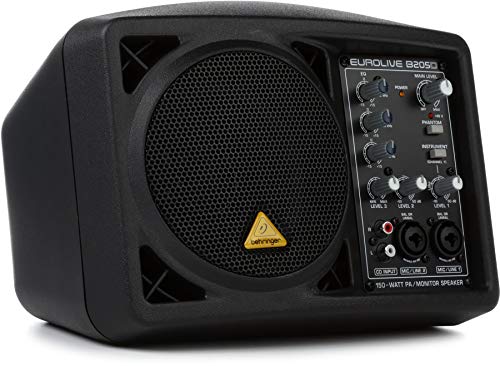
- 150-watt active full-range monitor
- Three-channel mixer with 3-band EQ
- Phantom-powered mic preamps and instrument input
Best For: Vocal, keyboard, and home-recording setups
Desk-Friendly Detail

- Compact 3.5-inch stereo pair
- Tone Knob and Location Switch
- Includes pads and cables
Best For: Desktops and small home studios
Stage Wedge Power

- 10-inch two-way speaker
- Titanium compression horn
- 150W RMS, 300W peak
Best For: Floor monitoring and rehearsal spaces
Wide-Sweet-Spot Mixing

- 6.5-inch woofer and 1.25-inch tweeter
- 100° x 60° EBM waveguide
- Multiple acoustic tuning controls
Best For: Detailed home-studio mixing
Best Pair for Full-Floor Coverage
Sound Town METIS-10MPW Powered Monitors

- Two powered 10-inch stage monitors
- 300W amplification per speaker
- XLR I/O and three-band EQ
Best For: Home studios that also host rehearsals or live monitoring
Best Portable All-Rounder
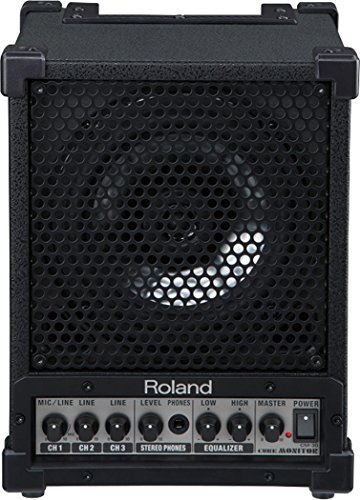
- Stereo monitor with built-in effects
- Portable 12-pound design
- Runs on batteries for mobile use
Best For: Compact studios and portable instrument or vocal setups
Best for Desktop Setups
Pioneer DJ DM-40D Active Monitor Pair

- Compact 4-inch stereo pair
- Built-in amplification for simple setup
- DSP tuning for DJing and production
Best For: Space-conscious home DJ and production desks
Compact Accuracy Pick – Yamaha HS4
For creators seeking stage monitors for home studios, the Yamaha HS4 offers a compact, conventional monitoring setup with a 4.5-inch woofer, 1-inch dome tweeter, and stereo pair configuration. Its multiple wired inputs and rear-panel response controls make it practical for music production and video editing at a desk.
Best For: Desktop music production and video editing in smaller rooms
Pros:
- Sold as a stereo pair with a 2-way design
- Includes XLR/TRS, RCA, and stereo mini inputs
- Room control and high-trim response controls help adapt the sound
- Includes speaker cable, stereo mini-to-RCA cable, and anti-slip pads
Cons:
- 26-watt output is intended for nearfield use rather than high-volume playback
- 4.5-inch woofers provide less low-end reach than larger monitors
- Wired connectivity only
The HS4 is a sensible choice when desk space and straightforward wired connectivity matter more than maximum volume or bass extension. It is particularly well suited to close-range listening in a home workstation.
High-Output Floor Monitor – Behringer F1320D
Among stage monitors for home studios, the Behringer EUROLIVE F1320D is the largest and most powerful option here. Its 300-watt active design, 12-inch woofer, integrated sound processor, and feedback filter make it better suited to vocal, instrument, and playback monitoring when you need substantial output.
Best For: Loud vocal, keyboard, live, and playback monitoring
Pros:
- 300-watt active 2-way monitor system
- 12-inch woofer and 1-inch compression driver
- Built-in feedback filter and limiter support system control
- Class-D amplification keeps the speaker relatively lightweight for its output
Cons:
- Large floor-standing footprint may overwhelm a compact studio
- Sold as a single speaker rather than a stereo pair
- Designed for live and playback applications rather than compact nearfield desk monitoring
The F1320D makes sense when monitoring level and projection are priorities. For a small desk-based studio, its size may be excessive, but it offers useful headroom for louder rehearsals, vocal work, or broader playback duties.
Flexible Connected Pair – Ortizan C7
The Ortizan C7 stands out among stage monitors for home studios by combining compact 3.5-inch monitors with Bluetooth 5.3, USB audio through a built-in 24-bit DAC, and balanced TRS connectivity. That mix suits creators who want one pair for production, casual listening, gaming, and multiple consumer devices.
Best For: Compact hybrid studios needing wired and wireless sources
Pros:
- Bluetooth 5.3, RCA, AUX, USB, and 6.35mm TRS connectivity
- Built-in 24-bit DAC accepts digital audio over USB
- 3.5-inch carbon-fiber mid-bass driver and 0.75-inch silk-dome tweeter
- Includes a front-panel headphone output for convenient monitoring
Cons:
- Small 3.5-inch drivers may offer less bass and output than larger monitors
- Wireless playback is less appropriate when latency-free monitoring is essential
- Product information describes broad home and gaming uses in addition to studio monitoring
The C7 is appealing for a compact workstation where flexibility matters. Its balanced input supports compatible professional gear, while Bluetooth and USB make it easy to switch between production tasks and everyday media playback.
All-in-One Vocal Monitor – Behringer B205D
For home studios that need more than a basic speaker, the Behringer Eurolive B205D combines a 150-watt active monitor with a 3-channel mixer. Its full-range 5.25-inch driver, 3-band EQ, microphone preamps, phantom power, and instrument input make it a practical compact monitoring hub.
Best For: Vocal, keyboard, instrument, and home-recording monitoring
Pros:
- 150-watt active speaker in a compact enclosure
- Built-in 3-channel mixer with 3-band EQ
- Two microphone preamps include phantom power for condenser microphones
- Instrument-ready input does not require a separate DI
Cons:
- Single-speaker design is not a stereo pair
- 5.25-inch full-range driver has less driver area than the F1320D’s 12-inch woofer
- Its mixer-focused layout may be more than needed for simple nearfield playback
The B205D is a strong fit when a home-recording setup needs microphone and instrument connections built into the monitor itself. It is less conventional than a matched stereo pair, but its integrated controls can simplify vocal or keyboard monitoring.
Desk-Friendly Detail – Mackie CR3.5
The Mackie CR3.5 is a practical choice for stage monitors for home studios when desk space is limited. This stereo pair uses 3.5-inch woofers, includes isolation pads and cables, and offers front-panel voicing and placement controls for easier setup.
Best For: Desktop recording, small studios, casual listening, and multimedia setups.
Pros:
- Sold as a pair with isolation pads and necessary cables.
- Tone Knob adjusts the voicing directly from the desk.
- Location Switch helps correct bass response near a wall or in open placement.
Cons:
- 3.5-inch woofers are intended for compact spaces rather than large rooms.
- Maximum output is listed at 50 watts.
The CR3.5 prioritizes convenience and easy placement over larger-scale output. It is a sensible fit for a compact home studio where straightforward controls and included accessories matter.
Stage Wedge Power – Seismic Audio SA-10MT
Seismic Audio - SA-10MTSingle - 10" Floor / Stage Monitor Wedge Style with Titanium Horn
Check Price On AmazonThe Seismic Audio SA-10MTSingle is a floor wedge designed for buyers who want stage monitors for home studios with a more stage-ready format. Its 10-inch speaker, titanium horn, and 150-watt RMS rating suit monitoring applications that need more physical scale than compact desktop speakers.
Best For: Floor-mounted monitoring, rehearsal spaces, and home studios that need a wedge-style speaker.
Pros:
- 10-inch, two-way speaker with a titanium compression horn.
- Rated for 150 watts RMS and 300 watts peak.
- Wedge-style floor design with wired 1/4-inch and Speakon connectivity.
Cons:
- Sold as a single speaker rather than a pair.
- Its 22-pound, 14-by-18-by-13.5-inch cabinet requires more floor space.
- Speaker-only package does not include additional media or accessories.
This model is less suited to a neat desktop and more appropriate when you specifically want a traditional floor monitor. Its larger driver and stage-oriented construction make it the most wedge-like option here.
Wide-Sweet-Spot Mixing – PreSonus Eris E7 XT
PreSonus Eris E7 XT 2-Way Active Studio Monitor with EBM Waveguide (Pack of 1)
Check Price On AmazonThe PreSonus Eris E7 XT is a single active monitor for listeners comparing stage monitors for home studios with a focus on mixing control and imaging. Its 6.5-inch woven-composite woofer, 1.25-inch silk-dome tweeter, and EBM waveguide are paired with adjustment controls for tailoring the monitor to the room.
Best For: Home-studio mixing, wider listening sweet spots, and users who want detailed acoustic tuning.
Pros:
- EBM waveguide provides a stated 100° horizontal by 60° vertical coverage pattern.
- Acoustic controls include level, high-pass filter, LF trim, HF trim, and acoustic space.
- Offers RCA, TRS, and XLR connectivity plus included Studio One Prime and Studio Magic software.
Cons:
- Sold as one monitor, so a stereo setup requires two units.
- The 6.5-inch, 16-inch-tall cabinet needs more space than compact desktop monitors.
- It is not water resistant and is intended for indoor use.
The Eris E7 XT is the most feature-rich mixing option in this group. Its room-tuning controls and wide waveguide make it a strong candidate when placement flexibility and a broad sweet spot matter.
Best Pair for Full-Floor Coverage – Sound Town METIS-10MPW Powered Monitors
For musicians who need stage monitors for home studios as well as rehearsals or small live setups, this Sound Town pair offers substantial output and flexible connections. Each wedge combines a 10-inch woofer, 1-inch compression driver, integrated 300W amplification, and onboard three-band EQ.
Best For: Home studios that also need a stereo pair for rehearsal, live monitoring, church, or bar applications.
Pros:
- Includes two powered floor-monitor speakers.
- 10-inch woofer and 1-inch compression driver provide focused two-way sound.
- XLR input and output support flexible connections and daisy chaining.
- Built-in bass, mid, and treble controls allow quick tonal adjustments.
Cons:
- The wedge pair is considerably larger than compact desktop monitors.
- These speakers are wired and require corded power.
- They are not water resistant.
The METIS-10MPW-PAIR is a strong choice when home-studio monitoring needs extend beyond a desk. Its dual-speaker format, high output, wedge design, and connection options make it more suitable for room-filling monitoring than nearfield desktop listening.
Best Portable All-Rounder – Roland CM-30 Cube Monitor/PA
The Roland CM-30 is a practical option for shoppers seeking stage monitors for home studios without giving up portability. This single monitor provides stereo sound, instrument and vocal amplification, built-in effects, and a compact design that can run on batteries.
Best For: Home-studio users who need one portable monitor for instruments, vocals, computer audio, and occasional live use.
Pros:
- Supports home-studio monitoring, live music, portable audio, and computer speakers.
- Built-in overdrive, chorus, delay, and reverb expand its sound options.
- Compact 12-pound design is described as fitting in a briefcase.
- Can operate on batteries for portable amplification.
Cons:
- It is sold as one monitor rather than a stereo pair.
- Its 30W maximum output is lower than the Sound Town pair.
- The 6.5-inch speaker is less substantial than a 10-inch stage monitor.
The CM-30 suits a flexible workspace where portability matters as much as monitoring. Its effects and stereo functionality make it more versatile than a basic wedge, while its single-speaker format is best for compact setups rather than wide stereo coverage.
Best for Desktop Setups – Pioneer DJ DM-40D Active Monitor Pair
For a desk-based workspace, the Pioneer DJ DM-40D keeps stage monitors for home studios compact and straightforward. This active pair uses built-in amplification, DSP tuning, and a DJ-focused voicing intended for production, mixing, and monitoring from a home desk.
Best For: Home producers, DJs, and laptop-based setups with limited desktop space.
Pros:
- Compact 4-inch active monitors fit easily on a production or DJ desk.
- Built-in amplification eliminates the need for a separate amplifier.
- DSP tuning is designed for clear, balanced monitoring.
- RCA and auxiliary connectivity supports laptops, controllers, and mixers.
Cons:
- Smaller drivers and 42W maximum output are less suited to large rooms.
- Desktop placement is less flexible than a floor-standing wedge design.
- The speakers use wired connectivity only.
The DM-40D is the most space-conscious choice in this group. It makes sense when your home studio centers on a desk, DJ controller, or laptop and you want a powered stereo pair without the size of full-scale stage monitors.
How We Picked the Best Stage Monitors for Home Studios
We focused on practical differences that matter in a home rehearsal, recording, or live-performance space. The selection includes nearfield studio monitors for desktop listening, compact PA speakers for vocal and instrument monitoring, and larger powered wedges for higher-volume use.
We considered speaker size, powered versus passive operation, frequency response, input flexibility, portability, feedback-management features, and likely room placement. We also looked at whether each model is best suited to detailed mixing, casual playback, rehearsal, or small live applications.
Because no single speaker design fits every room, the guide separates accurate nearfield monitors from high-output stage-oriented systems rather than treating them as interchangeable.
Quick Comparison
| Best For | Speaker Type | Primary Strength |
|---|---|---|
| Mixing and production | Powered studio monitor | More controlled, revealing sound |
| Desktop listening | Compact monitor pair | Space-efficient setup |
| Vocal or instrument monitoring | Powered PA monitor | Higher output and flexible placement |
| Rehearsal and live sound | Floor wedge | Direct performer-facing projection |
Key Buying Factors for Stage Monitors for Home Studios
Room Size and Listening Distance
Compact monitors are usually the better fit for a desk or small treated room. Larger cabinets and 10- or 12-inch PA speakers can produce substantially more output, but they may overwhelm a small space and reveal room reflections rather than improve clarity.
Accuracy Versus Maximum Volume
Studio monitors are designed to expose balance problems in recordings, while PA monitors prioritize projection and usable volume. Choose an accurate nearfield pair for mixing; choose a powered wedge or PA speaker when you need to hear vocals, keys, guitar, or backing tracks during rehearsal.
Inputs, Controls, and Connectivity
Check whether the speaker accepts the outputs from your audio interface, mixer, keyboard, or controller. Balanced inputs can reduce noise over longer cable runs, while Bluetooth is convenient for reference playback but should not replace a wired connection for critical monitoring.
Placement and Feedback Control
Position studio monitors at ear level in an equilateral triangle and avoid pushing them tightly against a wall unless the design provides suitable boundary controls. For live use, consider angled wedge cabinets, feedback filters, and the location of microphones relative to the speaker.
Pair or Single Speaker
Most mixing and stereo playback applications require a matched pair. A single powered monitor can make more sense for mono vocal monitoring, a small PA rig, or a wedge placed near one performer.
Who Should Buy Which Stage Monitors for Home Studios?
Choose compact powered studio monitors if you produce music at a desk, need stereo imaging, or want a smaller solution for a bedroom or apartment studio. Models such as the Yamaha, Mackie, Pioneer DJ, and Ortizan options suit space-conscious setups, with features varying from straightforward wired operation to convenient wireless playback.
Choose larger studio monitors if you have more room and want greater low-end extension and headroom for production. The PreSonus Eris E7 XT is better suited to a larger listening area than a tiny desktop pair.
Choose a powered PA monitor if your priority is rehearsal volume, vocal projection, or live monitoring rather than precise mix translation. The Behringer, Sound Town, and Roland options are more appropriate for performers who need flexible, higher-output sound.
Choose a floor wedge when the speaker must face a performer onstage or in a rehearsal room. A wedge-style cabinet is convenient on the floor, but it generally requires more careful microphone placement and room management than nearfield monitors.