Small venues demand stage monitors that deliver clear vocals and dependable feedback control without overwhelming the room. The right compact wedge or personal monitor can make rehearsals, services, and live performances easier to hear and manage.
This roundup compares 10 stage monitors for small rooms, including powered and passive designs across several sizes and output levels. Use the guide below to match speaker format, connectivity, and volume to your setup.
Best 10 Stage Monitors for Small Rooms Picks for 2026
Compact Powered Choice

- 350W powered 8-inch design
- Built-in mixer and Bluetooth
- Wedge or pole-mounted setup
Best For: Small gigs, home studios, and compact stage-monitoring setups
Traditional Wedge Monitor
Seismic Audio SA-10MT 10-inch Stage Monitor

- 10-inch two-way passive wedge
- 150W RMS, 300W peak handling
- Titanium horn and wired inputs
Best For: Small wired systems with a separate compatible amplifier
Ultra-Compact Vocal Monitor

- 150W powered 5.25-inch driver
- Built for one mic plus music
- Tabletop, pole, or mic-stand use
Best For: Vocal monitoring, presentations, classrooms, and solo performers
Rugged Passive 10-inch Option

- 10-inch woofer with compression tweeter
- 150W RMS, 300W peak handling
- Parallel 1/4-inch jacks and rugged cabinet
Best For: Bars, churches, and compact live rigs with separate amplification
Balanced Power
Yamaha BR12M 12-inch Floor Monitor

- 12-inch woofer with titanium compression driver
- 300W program and 600W peak handling
- Built-in pole socket for flexible placement
Best For: Small-room bands needing a full-size, versatile monitor
Personal Focus
Galaxy Audio NSPA Nano Spot Monitor

- Compact 3-inch ceramic-driver design
- 25W output with 150Hz–17kHz response
- Stand/wall mount and power supply included
Best For: Personal monitoring in tight performance spaces
Road-Ready Headroom
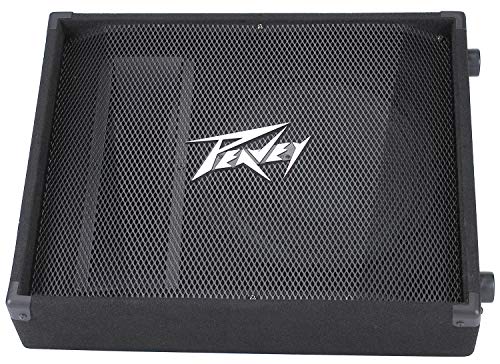
- 500W program and 1,000W peak handling
- 12-inch woofer with titanium compression driver
- 30°/45° wedge angles plus pole mounting
Best For: Durable, high-output monitoring in compact venues
Compact Room Control

- 250-watt powered 12-inch monitor
- Adjustable feedback filter and limiter
- XLR, 1/4-inch, RCA, and Speakon connectivity
Best For: Small-room live monitoring with flexible wired connections
Ultra-Compact Pick

- 50-watt speaker with a 5-inch woofer
- Three-channel mixer and three-band EQ
- Bluetooth streaming plus USB MP3 playback
Best For: Portable vocal monitoring, presentations, and home recording
High-Power Monitor

- 300-watt two-way 12-inch monitor
- Feedback filter, limiter, and sound processor
- Floor-standing design for live and playback
Best For: Small venues needing additional monitor headroom
Compact Powered Choice – ALTO TX408 8-inch PA Speaker
For stage monitors for small rooms, the ALTO TX408 is a practical powered option with an 8-inch woofer, 350W of bi-amplified power, and a wedge-monitor configuration. Its built-in mixer and Bluetooth connectivity make it useful when you need simple setup flexibility for live performance, rehearsal, or small events.
Best For: Small gigs, home studios, DJs, presentations, and stage monitoring where powered convenience and compact size matter.
Pros:
- 350W Class-D amplification with an 8-inch LF driver and 1-inch titanium diaphragm HF driver.
- Built-in two-channel mixer supports microphone, line-level, and Bluetooth inputs.
- Wedge-monitor use, 36mm pole socket, ergonomic handles, and a rugged metal grille support flexible setup.
- Bluetooth True Wireless Stereo and mix output offer useful linking and playback options.
Cons:
- It is not water resistant, so it requires protection in damp conditions.
- Bluetooth operation and corded power may be more than needed for a basic wired monitor setup.
The TX408 stands out for small-room monitoring when you want built-in amplification, straightforward input mixing, and portability in one cabinet. Its 8-inch format is a sensible compromise between footprint and output.
Traditional Wedge Monitor – Seismic Audio SA-10MT 10-inch Stage Monitor
Seismic Audio - SA-10MTSingle - 10" Floor / Stage Monitor Wedge Style with Titanium Horn
Check Price On AmazonAmong stage monitors for small rooms, the Seismic Audio SA-10MTSingle offers a conventional floor-wedge design with a 10-inch speaker and titanium horn. It is a passive monitor, so you will need a compatible amplifier, but its 150W RMS and 300W peak ratings provide a clear basis for a compact wired system.
Best For: Small live setups needing a straightforward passive wedge with a 10-inch driver and horn-loaded high frequencies.
Pros:
- 10-inch two-way design with a 4-by-10-inch horn and titanium compression driver.
- Handles 150W RMS and 300W peak power.
- Floor-monitor wedge format is suited to on-stage placement.
- Wired connectivity includes XLR, 1/4-inch, and Speakon protocols.
Cons:
- As a passive speaker, it requires a separate amplifier.
- At 22 pounds, it is less lightweight than the compact powered alternatives in this group.
- It is not water resistant.
This model makes sense when you already have amplification and want a dedicated 10-inch wedge rather than an all-in-one powered speaker. Confirm amplifier compatibility with its 8-ohm impedance before building the system.
Ultra-Compact Vocal Monitor – Mackie SRM150 Active PA
The Mackie SRM150 is a particularly compact pick for stage monitors for small rooms, using a 5.25-inch full-range driver and 150W Class-D power. It is designed for one microphone plus music rather than full-band reinforcement, making it a useful choice for intimate performances, speech, classrooms, and busking.
Best For: Vocal monitoring, solo performers, public speaking, classrooms, meetings, and small-scale audio work.
Pros:
- Small 5.25-inch format weighs 7.6 pounds and can be carried in one hand.
- 150W Class-D amplification and a built-in limiter help support practical close-range use.
- Offers an XLR microphone input, line input, and built-in mixer.
- Can be used on a tabletop, pole, or with its mic-stand integration system.
Cons:
- Its 100Hz–17.5kHz frequency response is less suited to bass-heavy music.
- The supplied notes position it as a personal PA, not a full-band PA.
- It is not water resistant.
The SRM150 is best when size and setup speed matter more than deep bass or high-output coverage. For a singer, presenter, or solo act in a small room, its compact active design keeps the monitoring rig simple.
Rugged Passive 10-inch Option – Sound Town METIS-10M Monitor
For stage monitors for small rooms, the Sound Town METIS-10M provides a passive 10-inch floor-monitor format with a 1-inch compression tweeter. Its 150W RMS and 300W peak handling suit compact live-sound systems, while parallel 1/4-inch jacks make daisy chaining convenient when your amplifier setup supports it.
Best For: Small live-sound rigs, bars, churches, and portable setups that already use a compatible amplifier.
Pros:
- 10-inch woofer and 1-inch compression tweeter provide a two-driver monitor design.
- 150W RMS and 300W peak power handling suit modest live applications.
- Parallel 1/4-inch jacks support convenient connection and daisy chaining.
- Carpet finish, metal grille, reinforced corners, and recessed side handle support portability.
Cons:
- It is passive and requires a separate amplifier.
- It is not water resistant.
- The 10-inch cabinet takes more room than a compact 5.25- or 8-inch monitor.
The METIS-10M is a sensible fit for buyers who prefer a traditional passive wedge and already have amplification available. Its durable cabinet features and parallel connections are useful for repeat setup and transport.
Balanced Power – Yamaha BR12M 12-inch Floor Monitor
For stage monitors for small rooms, the Yamaha BR12M offers a conventional floor-monitor format with a 12-inch woofer, titanium compression driver, and 300 watts of program handling. Its 97dB sensitivity and built-in pole socket add flexibility for compact live-performance or sound-reinforcement setups.
Best For: Small-room bands, vocalists, and venues that want a full-size monitor with stand-mounting flexibility.
Pros:
- 12-inch woofer and 1-inch titanium compression driver support full-range monitoring.
- 90° x 40° constant-directivity horn helps shape high-frequency coverage.
- Built-in pole socket, steel handles, and corner protectors make placement and transport easier.
- Integral protection circuitry and 300W program handling suit live use.
Cons:
- Its 12-inch cabinet may take more floor space than a personal monitor.
- It requires a wired amplifier or mixer connection; wireless communication is not included.
The BR12M is a practical choice when a small room still needs the headroom and low-end presence of a traditional 12-inch wedge. The pole socket is useful when floor placement is limited.
Personal Focus – Galaxy Audio NSPA Nano Spot Monitor
The Galaxy Audio NSPA takes a compact approach to stage monitors for small rooms. Its 3-inch ceramic driver delivers 25 watts, while the included stand/wall-mount hardware lets you position the speaker close to a performer without using a large floor wedge.
Best For: Singers, presenters, and compact performance spaces that need a discreet personal monitor.
Pros:
- Small 3-inch design is easier to place in tight rooms than a traditional 12-inch wedge.
- Includes both stand/wall bracket hardware and rubber feet.
- 24VDC phantom-power compatibility and an included 18VDC power supply provide installation flexibility.
- Three-inch ceramic driver and 150Hz–17kHz response suit focused personal monitoring.
Cons:
- 25-watt output and 150Hz low-frequency limit are less suited to full-band, high-volume monitoring.
- It does not provide the low-end extension of a larger floor monitor.
The NSPA is best viewed as a space-saving personal monitor rather than a full-range stage wedge. Its compact mounting options make it especially useful where floor space and visual clutter matter.
Road-Ready Headroom – Peavey PV 12M Floor Monitor
The Peavey PV 12M is a rugged option for stage monitors for small rooms when you want substantial output and a conventional wedge profile. It combines a 12-inch Sheffield Pro woofer with a titanium-diaphragm compression driver, 500 watts of program handling, and selectable 30° or 45° floor angles.
Best For: Small venues, rehearsal spaces, and performers who need a durable full-size monitor with strong power handling.
Pros:
- 500W program and 1,000W peak power handling provide considerable headroom.
- 12-inch Sheffield Pro 1200+ woofer and 14XT titanium compression driver support vocal and instrument monitoring.
- Can be angled at 30° or 45° and also used with a pole mount.
- Sound Guard IV tweeter protection, a steel handle, carpet covering, and a heavy-duty grille support road use.
Cons:
- At 41 pounds, it is considerably less portable than a compact personal monitor.
- The 12-inch cabinet may be oversized for very tight stages.
- Its listed response begins at 68Hz, so it may not reproduce deep bass as fully as a dedicated subwoofer.
The PV 12M favors durability and output over minimal size. Its adjustable wedge angles and pole-mount option make it adaptable, while the protected high-frequency driver is useful for demanding live setups.
Compact Room Control – Behringer EUROLIVE F1220D
For stage monitors for small rooms, the Behringer EUROLIVE F1220D offers a powered 12-inch design with 250 watts, a feedback filter, and an integrated limiter. Its wired XLR, 1/4-inch, RCA, and Speakon connectivity suits compact live-performance or music-playback setups.
Best For: Small-room performers who want a powered monitor with useful feedback and protection controls.
Pros:
- 250-watt Class-D powered design with a 12-inch woofer.
- Adjustable feedback filter and integrated limiter.
- Wide frequency bandwidth and dynamic range.
- Multiple wired connection options, including XLR and 1/4-inch inputs.
Cons:
- At 23.6 pounds, it is less portable than ultra-compact monitors.
- It is corded and not water resistant.
The F1220D is a practical middle ground when a small room still needs substantial low-end coverage. Its feedback filter and limiter add useful control, while the 12-inch format provides more output capability than compact desktop-style monitors.
Ultra-Compact Pick – Behringer EUROLIVE B105D
For stage monitors for small rooms, the Behringer EUROLIVE B105D emphasizes easy placement and low weight. This 50-watt speaker includes a three-channel mixer, three-band EQ, Bluetooth audio streaming, and a USB MP3 player for monitoring, presentations, and home recording.
Best For: Home studios, small presentations, vocal monitoring, and setups where portability matters.
Pros:
- Compact 8.2-pound design with a 5-inch woofer.
- Built-in three-channel mixer with three-band EQ.
- Bluetooth streaming and USB MP3 playback.
- Designed for vocal and keyboard monitoring, multimedia, and home recording.
Cons:
- Its 50-watt output and 5-inch woofer offer less power and low-end than larger monitors.
- It is corded and not water resistant.
The B105D is the easiest option to fit into a cramped room or portable rig. Choose it when convenience, integrated playback, and a small footprint matter more than the headroom of a 12-inch monitor.
High-Power Monitor – Behringer EUROLIVE F1320D
For stage monitors for small rooms that need extra headroom, the Behringer EUROLIVE F1320D delivers 300 watts through a 12-inch woofer and 1-inch compression driver. It adds an adjustable feedback filter, integrated limiter, and sound processor for live and playback applications.
Best For: Small venues and performers who need a higher-output floor monitor with built-in system protection.
Pros:
- 300-watt two-way monitor with a 12-inch woofer.
- Adjustable feedback filter and integrated limiter.
- Integrated sound processor for system control and protection.
- Floor-standing design for live and playback use.
Cons:
- At 33.1 pounds, it is the heaviest option in this roundup.
- Its larger 19.5-by-19.5-by-18-inch footprint may be excessive for very tight spaces.
- It is corded and not water resistant.
The F1320D suits buyers who want more output than a compact monitor can provide while retaining feedback and protection controls. Its larger enclosure and weight are trade-offs, so confirm that your small room has enough floor space.
How We Picked the Best Stage Monitors for Small Rooms
We focused on practical monitor options for compact stages, rehearsal spaces, bars, churches, classrooms, and small event setups. The selection includes powered wedges, passive floor monitors, and personal monitoring speakers so different types of performers can find a suitable fit.
We compared speaker size, amplification, portability, input flexibility, feedback-management features, and the kind of coverage each design is likely to provide. Because room size and stage layout vary, no single monitor is ideal for every application.
Quick Comparison
- Compact powered monitors: Best when space, weight, and quick setup matter most.
- 10-inch wedges: A practical middle ground for vocals, keys, guitars, and small bands.
- 12-inch monitors: Better suited to fuller low-mid coverage and louder stage volumes.
- Passive monitors: Useful when you already own a compatible amplifier or powered mixer.
- Personal monitors: Good for individual performers who need focused sound rather than broad stage coverage.
Key Buying Factors for Stage Monitors for Small Rooms
Powered or Passive
Powered monitors include their own amplifier, making them simpler to deploy and easier to match with a mixer. Passive models can be lighter or more flexible within an existing system, but they require appropriate amplification and speaker cabling.
Speaker Size and Output
An 8- or 10-inch monitor is often easier to position in a crowded small room. A 12-inch model may provide more low-frequency body and headroom, but it also takes up more floor space and can add unnecessary volume in reflective rooms.
Inputs and Controls
Check whether the speaker accepts the connections your mixer or instrument provides. XLR and quarter-inch inputs are common for live setups, while compact models may add auxiliary, Bluetooth, or media playback features. Built-in level controls and mix inputs can simplify independent monitoring.
Feedback and Placement
Feedback resistance depends on both the speaker and its placement. Look for feedback filters or EQ controls when available, then keep the monitor aimed toward the performer’s ears and away from microphones. Avoid placing it directly behind vocal microphones.
Portability and Durability
For mobile performers, evaluate cabinet weight, handles, grille protection, and the ease of loading each speaker. A rugged wedge profile is especially useful when monitors will be moved frequently or placed near foot traffic.
Who Should Buy Which Stage Monitors for Small Rooms?
Solo singers, presenters, and acoustic performers should consider a compact powered or personal monitor that offers clear midrange without dominating the room.
Small bands and church groups will generally benefit from powered 10- or 12-inch wedges with enough headroom for vocals and instruments. Choose models with feedback-management features if the stage is reflective or microphones are closely spaced.
DJs and mobile entertainers may prefer a monitor with flexible inputs, straightforward controls, and a cabinet that is easy to transport. Additional playback features can be useful for simple setups.
Existing PA-system owners should look closely at passive models and confirm the amplifier’s impedance, power capability, and connector requirements before buying.