Small gaps around a studio door can undermine an otherwise well-treated recording space. The right door seal can help limit sound leakage while also blocking drafts, dust, and unwanted light.
This roundup compares acoustic kits, kerf-fit strips, adhesive foam, silicone, and rubber seals so you can match the product to your door gap, installation method, and sound-control goals.
Best 10 Studio Door Seals Picks for 2026
Best for Multi-Door Coverage
Audimute Large Soundproofing Door Seal Kit

- Treats up to four standard-size doors
- Includes seals and a door sweep
- Useful for studios and apartments
Best For: Multi-door sound-sealing projects
Best Push-In Installation
Ravinte Q-Shaped Kerf Door Seal

- Installs without adhesive
- Includes 26 feet of foam strip
- Fits 0.35- to 0.59-inch slots
Best For: Doors with compatible kerf grooves
Best for One Door
Audimute Standard Soundproofing Seal Kit

- Designed for one standard-size door
- Includes perimeter seal and sweep
- Helps address sound through door gaps
Best For: Single-door studio or apartment projects
Best for Large Gaps
Kerf Door Frame Weather Stripping

- Seals gaps from 3/10 to 7/8 inch
- Includes 40 feet of material
- Designed for 1/8-inch grooves
Best For: Doors with compatible kerf grooves and larger gaps
Best Adjustable Fit

- Fits variable 0.16–0.37-inch gaps
- 196-inch peel-and-stick strip
- Helps block drafts, dust, and noise
Best For: Studios with uneven, narrow door or window gaps
Best for Large Frames
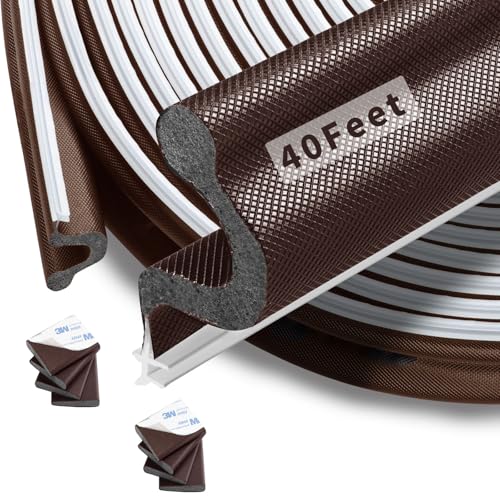
- 40 feet of coverage plus 8 corner seals
- Fits 1/8-inch grooves
- Designed for 0.3–0.8-inch gaps
Best For: Large grooved studio door frames and wider gaps
Best Rubber Seal
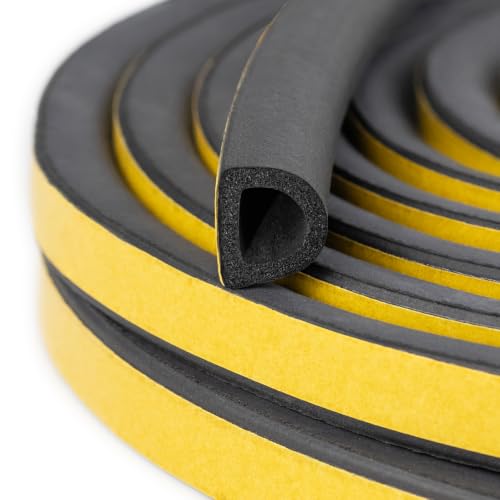
- Fits 5/16–15/32-inch gaps
- Flexible EPDM rubber profile
- 20-foot mesh-backed adhesive strip
Best For: Medium-to-large studio door gaps needing flexible rubber sealing
Sound-Reducing Large-Gap Pick

- Fits 5/16- to 15/32-inch gaps
- 18-foot self-adhesive EPDM roll
- Multi-hole design helps reduce sound and closing pressure
Best For: Studio doors with larger gaps
Small-Gap Silicone Choice

- Recommended for 1/8- to 1/4-inch gaps
- 20-foot cut-to-fit silicone roll
- Helps limit drafts, dust, light, moisture, and noise
Best For: Small studio door and frame gaps
Best for Multi-Door Coverage – Audimute Large Soundproofing Door Seal Kit
Audimute Soundproofing Acoustic Door Seal Kit - Door Sweep and Seal - (Large Size)
Check Price On AmazonIf you need studio door seals for more than one doorway, this large Audimute kit provides enough material to treat up to four standard-size doors. It combines perimeter seals with a door sweep to help reduce sound traveling through door gaps.
Best For: Apartments, recording studios, and multi-door sound-sealing projects.
Pros:
- Designed to treat up to four standard-size doors.
- Includes two 50-foot door seals and one 25-foot door sweep.
- Easy to install and made from polyurethane.
Cons:
- The large quantity may be excessive for a single-door project.
- Installation requires measuring and fitting the supplied seal and sweep.
Choose this kit when coverage and a complete seal around multiple doors matter more than buying only the amount needed for one doorway.
Best Push-In Installation – Ravinte Q-Shaped Kerf Door Seal
For studio door seals that install without adhesive, the Ravinte Q-shaped foam strip fits into existing grooves or recesses. Its high-density foam is designed to block light, drafts, dust, water, and some noise around compatible doors.
Best For: Doors with kerf slots measuring approximately 0.35 to 0.59 inches.
Pros:
- Push-in installation requires no adhesive and should not leave marks.
- Provides 26 feet of flexible polyurethane foam strip.
- Helps reduce light penetration, drafts, and noise.
Cons:
- Requires compatible grooves or recesses in the door.
- The slot dimensions should be checked before ordering.
This is a practical option for a clean, removable installation, provided your door frame matches the specified slot range.
Best for One Door – Audimute Standard Soundproofing Seal Kit
Audimute Soundproofing Acoustic Door Seal Kit - Door Sweep and Seal - (Standard Size)
Check Price On AmazonThis standard Audimute kit is a straightforward choice when you need studio door seals for one standard-size door. It includes a perimeter door seal and a sweep to help address sound leakage through gaps around the doorway.
Best For: Single-door projects in studios, apartments, or other spaces where sound enters or exits through a doorway.
Pros:
- Designed to treat one standard-size door.
- Includes a 25-foot door seal and a door sweep.
- Easy to install and made from polyurethane.
Cons:
- Limited to one standard-size door.
- May not provide enough material for unusually large doors or multiple openings.
For a single doorway, this smaller kit avoids the extra material of a multi-door package while covering both the door perimeter and bottom gap.
Best for Large Gaps – Kerf Door Frame Weather Stripping
If your studio door has a compatible groove and larger gaps to fill, this 40-foot kerf weather strip is designed for a broad fit range. Its notched profile and foam construction target air, light, dust, water, and noise around the frame.
Best For: Doors with 1/8-inch grooves and gaps from approximately 3/10 to 7/8 inch.
Pros:
- Designed to seal larger gaps than many standard strips.
- Provides 40 feet of material for doors of various sizes.
- Includes four extra foam gaskets for adjustment or protective uses.
- Offers wind, dust, water, light, and noise reduction features.
Cons:
- Requires a compatible notched groove for installation.
- Groove and gap measurements must be checked before purchase.
- The included gaskets may be needed if the door does not close normally.
This option makes the most sense when a standard seal is too small, but careful measurement is essential because the kerf design depends on the existing groove.
Best Adjustable Fit – Wedge Foam Door Seal
If you need studio door seals for uneven or changing gaps, this self-adhesive wedge foam strip is a practical option. Its wedge profile is designed for gaps from 0.16 to 0.37 inches and installs without tools on wood, glass, plastic, or metal surfaces.
Best For: Studio doors and windows with variable gaps where draft, dust, insect, or moderate noise reduction is a priority.
Pros:
- Wedge shape compresses and expands to fit uneven gaps.
- 196-inch length provides material for multiple applications.
- Peel-and-stick installation requires no tools.
- Helps reduce drafts, outside noise, dust, pollen, and insects.
Cons:
- Designed for relatively narrow gaps up to 0.37 inches.
- Adhesive installation requires a clean, suitable surface.
This is a convenient studio door seal when gap variation makes rigid or uniformly sized strips difficult to fit. Measure first, especially if your door has larger clearance.
Best for Large Frames – Kerf Door Weather Seal
For studio door seals that need to cover larger frames or substantial gaps, this 40-foot kerf-style strip offers a secure alternative to adhesive-only designs. Its rigid PVC flange fits a 1/8-inch groove and is intended for gaps from 0.3 to 0.8 inches.
Best For: Large studio doors or frames with a compatible kerf groove and wider side gaps requiring extended coverage.
Pros:
- 40-foot total length suits multiple or oversized doors.
- PVC flange inserts into the groove rather than relying solely on adhesive.
- Helps block noise, light, rain, dirt, wind, odors, and drafts.
- Includes eight corner seals for frame installation.
Cons:
- Requires a compatible 1/8-inch groove for the flange.
- Gap range is broad, but measuring before purchase is important.
- Installation involves cutting and fitting the strip and corners.
This is the strongest fit for a studio with grooved door frames and larger gaps. Confirm the groove and clearance dimensions before ordering to avoid an incompatible installation.
Best Rubber Seal – Large-Gap D-Profile
This D-shaped EPDM strip is a useful choice among studio door seals when the closed gap measures 5/16 to 15/32 inches. The hollow rubber profile compresses and rebounds as the door moves, while the mesh-reinforced adhesive backing supports a straightforward cut-and-press installation.
Best For: Studio entry doors, sliding door frames, or windows with medium-to-large uneven gaps and exposure to changing temperatures.
Pros:
- Flexible EPDM rubber remains usable in hot and cold conditions.
- Hollow D profile fits uneven gaps from 5/16 to 15/32 inches.
- Mesh-reinforced adhesive backing supports a secure hold.
- Helps reduce drafts, energy loss, dust, light leaks, and some outside noise.
Cons:
- Only 20 feet long, offering less coverage than the 40-foot option.
- Requires a clean, dry surface and up to 24 hours for the adhesive to bond.
- May not fit gaps outside its specified range.
Choose this seal when you want a flexible rubber profile for a medium-to-large gap and prefer adhesive installation. Accurate measurement and proper surface preparation are key to reliable performance.
Sound-Reducing Large-Gap Pick – VITAM AMO EPDM Weather Seal
For studio door seals covering larger gaps, the VITAM AMO strip combines flexible EPDM rubber with a self-adhesive backing. Its 18-foot roll is designed for gaps from 5/16 to 15/32 inch and includes a multi-hole design intended to help reduce sound transmission and closing pressure.
Best For: Studio doors and other interior or exterior frames with larger gaps where draft, light, and everyday sound reduction are priorities.
Pros:
- Fits relatively large gaps from 5/16 to 15/32 inch.
- Flexible EPDM material is designed for durability and changing temperatures.
- Self-adhesive installation requires no tools or special experience.
- Multi-hole construction is intended to absorb some sound and ease door closing.
Cons:
- The 18-foot roll may require purchasing additional rolls for longer frames.
- Its larger-gap profile may be unsuitable for narrow gaps.
This is a practical studio door seals option when the gap is substantial and you want a simple adhesive installation with added sound-reducing features.
Small-Gap Silicone Choice – 20FT D-Shaped Door Seal
This 20-foot silicone D-shaped strip is a versatile option for studio door seals when the gap measures about 1/8 to 1/4 inch. It is designed to compress smoothly around frames while helping limit drafts, dust, moisture, light gaps, and everyday outside noise.
Best For: Small to moderate door-frame gaps in studios, offices, bedrooms, and entryways where flexible silicone and cut-to-fit installation are useful.
Pros:
- Recommended for gaps from 1/8 to 1/4 inch.
- 20-foot roll can be trimmed with scissors for different projects.
- Flexible silicone is intended to remain soft through changing temperatures.
- Includes an adhesive promoter for stronger bonding on smooth surfaces.
Cons:
- It is not intended for gaps larger than 1/4 inch.
- Proper surface cleaning and preparation are important for adhesion.
Choose this seal when your studio door has a smaller, measured gap and you want a soft silicone profile that can also serve window, cabinet, or other frame-sealing tasks.
High-Volume Coverage Pick – Fingwerk 50FT D-Shape Seal
For larger studio projects or multiple frames, this Fingwerk D-shaped rubber strip supplies 50 feet of material and includes tailor scissors. It is designed for gaps from approximately 1/10 to 11/50 inch, with a self-adhesive backing for straightforward door-frame installation.
Best For: Covering several studio doors, windows, cabinets, or other compatible frames where a long roll and included cutting tool are valuable.
Pros:
- 50-foot roll provides substantial coverage for multi-frame projects.
- Includes tailor scissors for cutting the strip to size.
- Fits approximately 1/10- to 11/50-inch gaps.
- Self-adhesive rubber backing is designed to become firm after 24 hours.
Cons:
- Measuring the gap is important because the recommended range is narrower than some large-gap seals.
- The notes specify a 24-hour period before the adhesive is firmly set.
This is a strong value-oriented choice for studio door seals when you need extensive coverage and want scissors included, provided your measured gaps fit its profile.
How We Picked These Studio Door Seals
We selected products across the main sealing styles used for studio and home-recording doors: complete acoustic kits, kerf-fit frame seals, adhesive foam strips, silicone profiles, and rubber weatherstripping. We prioritized options that address common problem areas, including the gap between the door and frame, the threshold beneath the door, and wider irregular gaps.
We also considered length, profile shape, installation method, stated gap coverage, and whether a product is better suited to sound control, draft blocking, or general insulation. Because door construction and gap size vary considerably, the best choice depends on accurate measurements rather than product length alone.
Quick Comparison
- Best for a complete acoustic upgrade: Audimute Soundproofing Acoustic Door Seal Kits, available in standard and large sizes.
- Best for kerf-equipped doors: Ravinte and other kerf-fit strips that press into an existing channel.
- Best for large or uneven gaps: D-shaped, Q-shaped, and large-gap foam profiles.
- Best for simple installation: Self-adhesive wedge foam, silicone, and rubber strips.
- Best for longer runs: The 40- and 50-foot options, which can cover multiple doors or allow for installation mistakes.
Key Buying Factors for Studio Door Seals
Measure the Gap and Door Configuration
Measure the clearance with the door closed, checking several points along each side and across the bottom. A seal that is too thin may leave leaks, while one that is too thick can prevent the door from closing or latch hardware from engaging. Also determine whether the frame has a kerf slot; kerf products are designed to fit that channel and are not interchangeable with adhesive-backed strips.
Choose the Right Profile
Wedge and Q-shaped foam can compress against the frame, while D-shaped rubber and silicone profiles are useful for broader gaps and repeated door operation. A complete kit is convenient when you need both perimeter sealing and a bottom sweep. For the largest sound-control improvement, sealing the threshold is just as important as treating the sides and top.
Check Adhesion, Durability, and Installation
Clean and dry the mounting surface before applying adhesive-backed products, and avoid stretching foam or rubber during installation. Kerf seals generally offer a cleaner, replaceable fit, while adhesive products are easier to add to existing doors but may require more careful surface preparation. Allow adhesive to set before repeatedly opening and closing the door.
Who Should Buy Which Studio Door Seals?
Choose an Audimute kit if you want a coordinated sweep-and-seal solution for a recording room or rehearsal space. Choose a kerf strip if your door frame already has a compatible groove and you want a tidy, durable replacement. For renters or quick upgrades, self-adhesive foam is usually the simplest route. Select a D-shaped or silicone seal when the gap is relatively wide and you need a resilient profile that can tolerate regular compression. If you are sealing several doors, longer rolls offer better coverage and spare material.