A good subwoofer can make a desktop audio system sound fuller without requiring large speakers or a complicated home-theater setup. The right model adds controlled low-end impact for music, games, movies, and creative work.
This roundup compares 10 compact speaker systems and powered subwoofers, including affordable 2.1 setups, wireless-ready models, and larger bass-focused options. Use the guide below to match power, connectivity, size, and placement needs to your desk.
Best 10 Subwoofers for Desktop Setups Picks for 2026
Balanced Desktop Pick

- Dedicated subwoofer with DSP-tuned sound
- Bluetooth 5.4, USB, USB-C, and AUX
- RGB lighting and one-knob control
Best For: Flexible work-from-home and entertainment desks
Powerful THX Choice

- THX-certified 2.1 speaker system
- 6.5-inch ported side-firing subwoofer
- Control pod with volume and bass gain
Best For: Gaming, movies, and high-output desktop audio
Dedicated Bass Upgrade

- 8-inch driver with 70-watt output
- Low-pass filter reaching down to 38 Hz
- MDF cabinet and automatic standby
Best For: Adding bass to an existing RCA-connected speaker system
Simple Budget Setup

- Complete 2.1 system with subwoofer
- 25 watts RMS output
- 3.5mm AUX and corded control pod
Best For: Basic personal desks and uncomplicated wired audio
Compact Home Bass
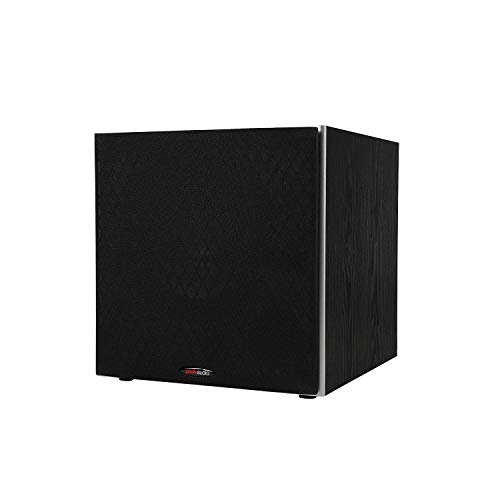
- 10-inch powered woofer for deeper bass
- Up to 100 watts with built-in amplifier
- Adjustable crossover and wired inputs
Best For: Receiver-based desktop audio and small-to-mid-size rooms
Plug-and-Play Desktop Pick
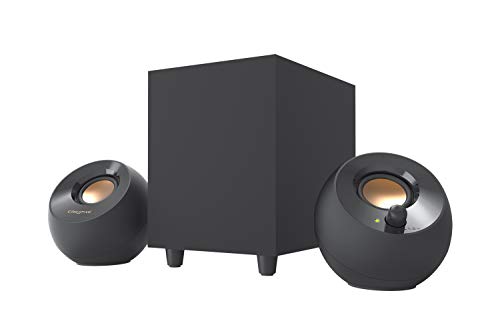
- USB-powered 2.1 desktop speaker system
- Down-firing 4-inch subwoofer
- Up to 8 watts RMS in High Gain mode
Best For: Computers, laptops, and compact personal listening spaces
Studio-Tuned Wireless Bass

- 100-watt 8-inch subwoofer reaches 30 Hz
- Bluetooth 5.0 plus TRS, RCA, and aux inputs
- Adjustable crossover and room-tuning controls
Best For: Music production, studio monitors, and flexible multimedia listening
Compact Power Pick

- 210-watt maximum output with a 6-inch driver
- Compact cabinet for desktop or home theater placement
- Auxiliary and RCA connectivity; W3 adapter compatible
Best For: Powerful bass in a compact desktop audio system
Desktop Gaming Value

- 5.24-inch long-throw woofer for bass extension
- 60-watt maximum output for smaller listening spaces
- Shelf-mount design with vibration pads
Best For: Compact gaming desks and small studio audio setups
Complete 2.1 Solution
Cyber Acoustics CA-3610 Speaker System

- 62-watt peak 2.1 system with a 5.25-inch subwoofer
- Control pod adjusts volume and bass
- 3.5mm input plus headphone jack
Best For: PC and laptop users wanting a complete desktop speaker setup
Balanced Desktop Pick – Bluedee 2.1 Computer Speakers
If you want subwoofers for desktop setups without a complicated installation, the Bluedee SK900PRO combines a dedicated wired subwoofer with two desktop satellites. DSP tuning is designed to keep vocals clear and highs smoother, while Bluetooth 5.4, USB, USB-C, and 3.5mm AUX provide flexible connection options.
Best For: Work-from-home desks, everyday music and video listening, and users who want RGB lighting with multiple input choices.
Pros:
- Dedicated subwoofer adds punchy low-frequency output while keeping the satellites clear.
- Supports Bluetooth 5.4, USB-A, USB-C, and 3.5mm AUX connections.
- DSP tuning aims to reduce distortion and harsh highs.
- Single control knob handles volume, playback, lighting, and mode changes.
Cons:
- Plastic enclosure may feel less substantial than a wood cabinet.
- The subwoofer is wired rather than wireless.
- RGB lighting may not suit minimalist desk setups.
The Bluedee is a practical all-in-one choice when convenience and connectivity matter as much as bass. Its 80-watt peak rating, compact tabletop format, and 18-month warranty make it a versatile desktop entertainment system.
Powerful THX Choice – Klipsch ProMedia 2.1
The Klipsch ProMedia 2.1 is built for listeners who want a more forceful presentation from subwoofers for desktop setups. Its THX certification, MicroTractrix horn technology, and side-firing 6.5-inch ported subwoofer target clear, room-filling sound for games, movies, and music.
Best For: Gaming and media-focused desks where strong output and adjustable bass are priorities.
Pros:
- THX-certified system with a 6.5-inch side-firing, ported subwoofer.
- MicroTractrix horn technology is designed to improve clarity and dispersion.
- Control pod includes main volume and subwoofer gain controls.
- Works with computers, TVs, music players, and gaming consoles through 3.5mm input.
Cons:
- Wired connectivity limits placement flexibility.
- The subwoofer has a relatively large desktop footprint.
- There is no Bluetooth connection listed in the supplied specifications.
With up to 200 watts of peak power and a stated 110 dB in-room maximum output, the ProMedia is aimed at immersive listening rather than subtle background audio. Choose it when output and bass control matter more than a small footprint.
Dedicated Bass Upgrade – Edifier T5 Powered Subwoofer
Edifier T5 Powered Subwoofer - 70w RMS Active Woofer with 8 inch Driver and Low Pass Filter
Check Price On AmazonThe Edifier T5 takes a different approach to subwoofers for desktop setups: it is a standalone powered woofer designed to supplement existing speakers. Its 8-inch driver, 70-watt output, MDF enclosure, and low-pass filter reaching down to 38 Hz are intended to add deeper bass without asking the main speakers to reproduce the lowest frequencies.
Best For: Desktop audio systems with a suitable SUB OUT or line-out connection that need more low-end weight.
Pros:
- Large 8-inch driver provides a dedicated source for low-frequency output.
- Low-pass filter helps direct bass frequencies to the woofer.
- Thick MDF enclosure is designed to reduce acoustic resonance.
- Automatic standby helps avoid unnecessary power use when idle.
Cons:
- It is a subwoofer only, so compatible main speakers are required.
- RCA connectivity may be less convenient than USB or Bluetooth for some desks.
- Its 16.5-inch depth and 8.65 kg weight require substantial floor or desk space.
The T5 makes sense as a bass-focused upgrade rather than a complete computer speaker system. Check that your existing setup provides the required RCA SUB OUT or line-out connection before choosing it.
Simple Budget Setup – Logitech Z313 2.1 System
The Logitech Z313 is a straightforward option for shoppers comparing subwoofers for desktop setups on a smaller scale. This 2.1 multimedia system includes a compact subwoofer, two speakers, a corded control pod, and a 3.5mm auxiliary connection for a simple plug-in desktop arrangement.
Best For: Personal desks, basic computer audio, and users who want an uncomplicated wired speaker system.
Pros:
- Complete 2.1 system includes satellites and a subwoofer.
- Compact subwoofer is suited to everyday desktop use.
- Control pod provides convenient access to the system.
- 25 watts RMS offers a clear step up from many basic built-in computer speakers.
Cons:
- Only a 3.5mm auxiliary connection is specified.
- Its 25-watt RMS output is lower than the other systems listed here.
- There is no confirmed wireless audio connection in the supplied connectivity details.
The Z313 prioritizes simplicity over advanced features or high output. It is a sensible fit for a personal workstation where easy setup, a compact 2.1 layout, and basic bass enhancement are the main goals.
Compact Home Bass – Polk Audio PSW10
The Polk Audio PSW10 is a practical choice for desktop setups that need more low-end impact than compact computer speakers can provide. Its powered 10-inch woofer, adjustable crossover, and wired RCA or speaker-level connections make it best suited to a receiver-based or larger desktop audio system.
Best For: Small-to-mid-size rooms, home theater, and desktop setups built around a receiver or existing speakers.
Pros:
- 10-inch Dynamic Balance woofer delivers added bass depth and punch.
- Built-in 50-watt RMS amplifier provides up to 100 watts of power.
- Adjustable 80–160 Hz crossover helps blend the subwoofer with existing speakers.
- Includes RCA, speaker-level, and speaker-level output connections.
Cons:
- Its 17-inch depth and floor-mount design may be substantial for a small desk.
- Wired connectivity does not offer Bluetooth convenience.
- Not waterproof.
The PSW10 is a strong upgrade when your desktop audio system has room for a conventional powered subwoofer. It offers flexible integration and substantial output, though compact-desk users should measure carefully before buying.
Plug-and-Play Desktop Pick – Creative Pebble Plus
The Creative Pebble Plus is designed specifically for computer desks, making it an accessible option among subwoofers for desktop setups. This USB-powered 2.1 system combines two angled satellite speakers with a standalone down-firing 4-inch subwoofer and front-facing volume controls.
Best For: Desktop and laptop users who want a compact, USB-powered speaker system with more bass than basic computer speakers.
Pros:
- Down-firing 4-inch subwoofer adds bass depth in a compact format.
- USB power avoids the need for a wall socket.
- 45-degree elevated drivers aim sound toward the listener.
- High Gain mode raises output to 8 watts RMS with a 5V/2A USB adapter.
Cons:
- The 8-watt RMS output is suited to personal desktop listening rather than large rooms.
- A 5V/2A USB adapter is not included for High Gain mode.
- Connectivity is primarily wired through USB and 3.5mm AUX.
The Pebble Plus is the simplest option here for a conventional computer desk. Its low-power design and small subwoofer prioritize convenience and footprint over the room-filling output of larger powered models.
Studio-Tuned Wireless Bass – PreSonus Eris Sub 8BT
The PreSonus Eris Sub 8BT is a versatile powered subwoofer for desktop setups used for music production, critical listening, gaming, or multimedia. It combines an 8-inch front-firing driver with Bluetooth 5.0, balanced and unbalanced inputs, adjustable filtering, and room-tuning controls.
Best For: Content creators, studio-monitor users, and listeners who want accurate bass with flexible wired and wireless connections.
Pros:
- 100-watt output reaches down to 30 Hz for extended low-frequency response.
- Highpass and lowpass controls help integrate it with main monitors.
- Bluetooth 5.0 complements balanced TRS, RCA, and front-panel auxiliary inputs.
- Front headphone output and built-in headphone amplifier support quick switching.
Cons:
- Its studio-focused controls and connections may be more than casual desktop listeners need.
- The floor-standing design requires more space than a small computer-speaker subwoofer.
- Not waterproof.
The Eris Sub 8BT is the most adaptable choice for a serious desktop audio station. Its crossover and tuning controls make it easier to blend with monitors, while Bluetooth and multiple inputs keep it useful for everyday listening.
Compact Power Pick – Audioengine S6 Mini Subwoofer
The Audioengine S6 is a strong choice for subwoofers for desktop setups when you want substantial bass without a large cabinet. Its 6-inch driver, front-firing design, and 210-watt maximum output suit desktop audio, gaming, and compact home theater systems.
Best For: Desktop listeners who want powerful, detailed bass in a compact wired subwoofer.
Pros:
- 210-watt maximum output provides plenty of headroom for music, movies, and games.
- Compact 9.92-by-8.74-by-9.96-inch cabinet is easier to place than a full-size subwoofer.
- Supports auxiliary and RCA connections, with compatibility for desktops and stereo receivers.
- Compatible with the Audioengine W3 wireless adapter.
Cons:
- It is a wired subwoofer unless paired with the separate W3 wireless adapter.
- At 15.4 pounds, it is less portable than smaller desktop-focused options.
- The supplied specifications list a mono output mode rather than stereo operation.
The S6 makes the most sense when bass impact is a priority and you have room for a dedicated floor-standing unit. Its 33 Hz frequency-response specification and 3-year warranty add appeal for a more serious desktop or home audio setup.
Desktop Gaming Value – Ortizan V8 Active Subwoofer
The Ortizan V8 is a practical option among subwoofers for desktop setups, especially for gaming desks and small studio systems. It combines a 5.24-inch long-throw woofer with a Class D amplifier, vibration pads, and a shelf-mount design.
Best For: Desktop gamers and studio users seeking a compact active subwoofer with straightforward placement.
Pros:
- 5.24-inch long-throw woofer is designed for deep bass extension.
- 60-watt maximum output fits smaller desktop listening spaces.
- Vibration pads can help support stable shelf or desk placement.
- Compact 8.46-by-8.46-by-10.91-inch footprint is suited to limited space.
Cons:
- The supplied details list Bluetooth connectivity but do not specify auxiliary or RCA inputs.
- Its 60-watt maximum output offers less headroom than higher-powered alternatives.
- At 8.4 pounds, it still requires a dedicated placement area near the desktop.
The V8 is best viewed as a focused desktop bass upgrade rather than a high-output home theater subwoofer. Its modest size, active design, and vibration pads make it a sensible fit for compact gaming or studio audio setups.
Complete 2.1 Solution – Cyber Acoustics CA-3610 Speaker System
The Cyber Acoustics CA-3610 is a convenient alternative to standalone subwoofers for desktop setups because it includes the satellites and control pod needed for a complete 2.1 system. Its 5.25-inch down-firing subwoofer, tuned port, and 62-watt peak output support music, movies, games, and everyday computer audio.
Best For: PC and laptop users who want an affordable all-in-one speaker system with adjustable bass.
Pros:
- Complete 2.1 package includes two satellite speakers and a subwoofer.
- 62-watt peak power and 30-watt RMS provide a useful desktop audio upgrade.
- Control pod offers convenient volume and bass adjustment.
- 3.5mm input and headphone jack support quick device connections and private listening.
Cons:
- The system uses wired auxiliary connectivity rather than wireless operation.
- The plastic enclosure and tabletop design may feel less premium than a dedicated subwoofer.
- The one-year warranty is shorter than the coverage supplied with some competing models.
Choose the CA-3610 when you need the entire desktop speaker system, not just additional bass. Its angled satellites, under-desk-friendly subwoofer, and accessible control pod make setup simple for computers, consoles, and other 3.5mm devices.
How We Picked the Best Subwoofers for Desktop Setups
We focused on models that suit near-field listening and typical desk environments rather than large home-theater rooms. The selection includes complete 2.1 speaker systems for simple upgrades and standalone powered subwoofers for users who already have compatible desktop speakers or studio monitors.
We compared advertised power, driver size, connection options, cabinet footprint, placement flexibility, and intended use. Because manufacturers measure power differently, wattage is useful for broad comparison but should not be treated as a direct guarantee of loudness or sound quality.
Quick Comparison
- Complete 2.1 systems: Bluedee, Klipsch ProMedia, Logitech Z313, Creative Pebble Plus, and Cyber Acoustics CA-3610 include satellite speakers and a subwoofer.
- Standalone subwoofers: Edifier T5, Polk Audio PSW10, PreSonus Eris Sub 8BT, Audioengine S6, and Ortizan are designed to pair with existing speakers.
- Best for small desks: Compact models such as the Creative Pebble Plus, Audioengine S6, and Ortizan are easier to position near a monitor.
- Best for stronger bass: Larger 8- and 10-inch designs generally offer more low-frequency authority, provided your room and speaker system can support them.
Key Buying Factors for Subwoofers for Desktop Setups
System Type and Compatibility
A 2.1 system is the simplest choice because the satellite speakers, crossover, and subwoofer are designed to work together. A standalone subwoofer offers more flexibility, but check whether your speakers or audio interface provide the appropriate line-level output, pass-through, or crossover controls.
Size, Placement, and Vibration
Measure the available floor or shelf space before buying. A subwoofer should not be tightly enclosed, and down-firing or front-firing designs may behave differently depending on placement. Isolation feet or vibration pads can help reduce desk rattle, especially on lightweight furniture.
Power and Driver Size
Driver size gives a rough indication of bass extension and output potential, while amplifier power helps indicate headroom. For a desk, clean and controlled bass is usually more useful than maximum volume. Avoid choosing solely by the highest advertised wattage.
Connectivity and Controls
USB-powered models are convenient for computers, while 3.5mm, RCA, and Bluetooth connections support a wider range of sources. Adjustable volume, crossover, and phase controls make it easier to blend a standalone subwoofer with existing speakers.
Who Should Buy Which Subwoofers for Desktop Setups?
Choose a complete 2.1 system if you want a straightforward computer audio upgrade with minimal setup. These are particularly practical for casual music, gaming, streaming, and office use.
Choose a compact standalone model if desk space is limited or you already own capable speakers. Small subwoofers can add warmth and impact without overwhelming a near-field listening position.
Choose a larger powered subwoofer if you listen at higher levels, watch a lot of action content, or want deeper bass from studio monitors or bookshelf speakers. Confirm that your room, neighbors, and speaker connections are suitable first.
Before purchasing, verify dimensions, input and output types, power requirements, and return policies. Proper placement and level adjustment often make as much difference as the subwoofer itself.