The right subwoofer can make explosions feel physical, deepen a film score, and add realism to sound effects without overwhelming dialogue. This roundup compares 10 powered models across different room sizes, budgets, and home theater setups.
We focused on practical factors such as driver size, amplifier output, low-frequency performance, enclosure design, connectivity, and placement flexibility so you can choose a subwoofer that matches your system instead of simply buying the most powerful option.
Best 10 Subwoofers for Movies Picks for 2026
Big-Screen Impact

- 12-inch front-firing woofer
- 400 watts of dynamic power
- Line/LFE inputs and phase control
Best For: Powerful home-theater bass
Compact Theater Upgrade
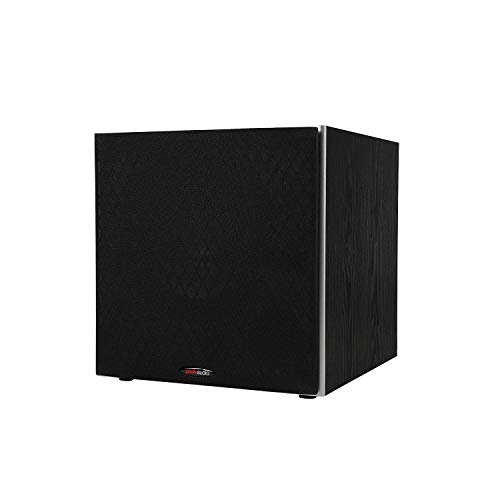
- 10-inch Dynamic Balance woofer
- Up to 100 watts of power
- Designed for small-to-mid-size rooms
Best For: Affordable compact home theaters
High-Output Movie Bass

- 12-inch high-excursion woofer
- 29–120 Hz response at ±3 dB
- 400 watts maximum acoustic output
Best For: Impactful blockbuster soundtracks
Small-Space Precision

- 35 Hz bass with DSP control
- 120-watt peak Class-D amplifier
- LFE, RCA, and high-level inputs
Best For: Compact, adjustable home-theater bass
Big-Screen Bass Power

- 12-inch front-firing woofer
- 200W continuous, 400W dynamic power
- Works with almost any AV receiver
Best For: Powerful bass in medium and large home theaters
Balanced Room-Friendly Bass

- 10-inch cone woofer
- 100W powered output
- Twisted flare port for tight bass
Best For: Compact home theaters and everyday movie viewing
Flexible Movie Impact

- 10-inch front-firing IMG woofer
- 300W peak all-digital amplifier
- Crossover and phase controls
Best For: Tunable bass in versatile home theater systems
Powerful Movie Impact

- 300W RMS powered 10-inch bass
- Adjustable volume, crossover, and phase
- RCA and high-level connections
Best For: High-impact home theater bass
Compact Deep Bass
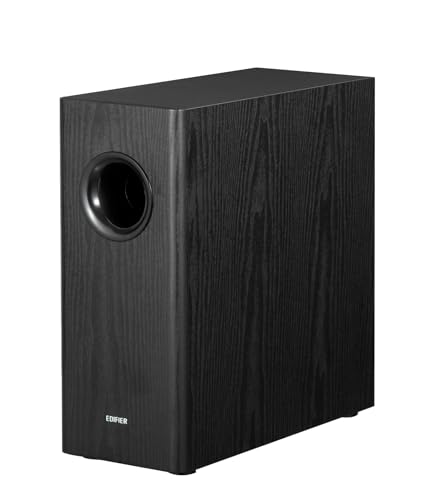
- 70W RMS power with 35Hz bass
- Slim MDF cabinet for smaller spaces
- Adjustable filter and phase selector
Best For: Space-conscious movie and stereo setups
Cinematic Front-Firing Bass
Klipsch Synergy Black Label Sub-100

- 10-inch front-firing Cerametallic woofer
- 150W continuous, 300W dynamic power
- Designed for AV receiver-based systems
Best For: Traditional receiver-driven home theaters
Big-Screen Impact – Klipsch R-12SW
For shoppers seeking subwoofers for movies, the Klipsch R-12SW is built to add substantial low-end impact to a home theater. Its 12-inch front-firing woofer and 400 watts of dynamic power are suited to action scenes, sound effects, and music.
Best For: Home theater listeners who want powerful bass in medium-to-large rooms.
Pros:
- 12-inch copper-spun front-firing woofer
- 400 watts of dynamic amplifier power
- Line/LFE inputs, low-pass crossover, and phase control
- Works with music and movies
Cons:
- Large 20-by-20-by-17.7-inch cabinet
- Wired rather than wireless connectivity
The R-12SW is a strong choice when cinematic scale matters more than a compact footprint. Its adjustable controls and receiver-friendly inputs make integration straightforward.
Compact Theater Upgrade – Polk Audio PSW10
The Polk Audio PSW10 is a practical pick for subwoofers for movies when space and budget are important. Its 10-inch woofer, ported design, and built-in amplifier add bass depth without the larger cabinet of a 12-inch model.
Best For: Small-to-mid-size rooms and compact home theater systems.
Pros:
- 10-inch Dynamic Balance woofer
- 50-watt RMS amplifier with up to 100 watts of power
- Variable 80–160 Hz crossover
- Speaker- and line-level connections
Cons:
- Less amplifier power than the larger Klipsch models
- Wired connectivity only
The PSW10 makes sense for viewers who want fuller movie sound in a modest room. Its flexible inputs and phase toggle also help it blend with an existing speaker setup.
High-Output Movie Bass – Klipsch R-120SW
For subwoofers for movies that emphasize deep, room-filling effects, the Klipsch R-120SW combines a 12-inch high-excursion woofer with up to 400 watts of acoustic output. Its bass-reflex cabinet is designed for home entertainment systems.
Best For: Movie fans who want strong impact and extended bass from a traditional floor-standing subwoofer.
Pros:
- 12-inch high-excursion spun-copper woofer
- 29–120 Hz frequency response at ±3 dB
- 200 watts of amplifier power, 400 watts peak
- Rear-firing bass-reflex port
Cons:
- Requires a relatively generous floor footprint
- RCA wired connection rather than wireless operation
The R-120SW is a compelling option for blockbuster soundtracks and dedicated home entertainment systems. Its combination of low-frequency extension and high output favors impact over minimalism.
Small-Space Precision – BESTISAN MAGICUBE 80
The BESTISAN MAGICUBE 80 offers a compact approach to subwoofers for movies, with an 8-inch design, DSP control, and bass extension to 35 Hz. Its multiple input options make it useful with receivers, amplifiers, soundbars, and stereo systems.
Best For: Compact rooms and viewers who want adjustable, controlled bass with flexible connectivity.
Pros:
- 35 Hz low-frequency extension with built-in DSP
- 80-watt amplifier with 120-watt peak output
- LFE, AUX/RCA, and high-level inputs
- Adjustable 30–160 Hz low-pass filter and phase switch
Cons:
- Lower output than the 12-inch alternatives
- Compact 8-inch design may suit smaller spaces better than large rooms
The MAGICUBE 80 is a flexible choice when clean, tunable bass and easy placement matter more than maximum theater volume. Its auto-standby feature can also reduce power use during inactive periods.
Big-Screen Bass Power – Klipsch SUB-120
The Klipsch Synergy Black Label SUB-120 is built for viewers who want forceful, room-filling bass from one of the more capable subwoofers for movies. Its 12-inch front-firing Cerametallic woofer and 200 watts of continuous power are well suited to action scenes, soundtracks, and home theater setups.
Best For: Large or medium-sized home theater rooms and listeners who prioritize powerful cinematic bass.
Pros:
- 12-inch front-firing woofer delivers substantial low-end output.
- Provides 200 watts continuous and 400 watts dynamic power.
- Compatible with almost any AV receiver.
- Removable grille and contemporary black finish suit varied decor.
Cons:
- Its 21.3-by-17.7-by-23.7-inch size requires dedicated floor space.
- Connection wires are not included.
The SUB-120 is a strong choice when movie impact matters more than compact dimensions. Corner placement is recommended for optimal performance, but measure your space first because this is a substantial subwoofer.
Balanced Room-Friendly Bass – Yamaha NS-SW100BL
The Yamaha NS-SW100BL is a practical option among subwoofers for movies when you want enhanced low-end sound without choosing a larger 12-inch cabinet. Its 10-inch cone woofer, 100-watt output, and twisted flare port are designed for clear, tight bass in a home theater system.
Best For: Smaller rooms and viewers seeking a stylish, straightforward powered subwoofer for everyday movie watching.
Pros:
- Twisted flare port contributes to clear and tight bass.
- Advanced YST II technology supports the powered design.
- Compact 17.5-inch dimensions fit more easily into many rooms.
- Includes bass boost for added low-end emphasis.
Cons:
- 100 watts of output is less than the Klipsch alternatives here.
- The 10-inch woofer may provide less impact in larger rooms.
Yamaha’s NS-SW100BL favors simple integration and manageable proportions. It makes sense for a modest home theater where clear, controlled bass and a room-friendly design are more important than maximum cinematic output.
Flexible Movie Impact – Klipsch R-100SW
The Klipsch R-100SW combines a 10-inch front-firing spun-copper IMG woofer with a 300-watt peak all-digital amplifier, making it a versatile pick among subwoofers for movies. Its volume, low-pass crossover, and phase controls help you tune the bass to your receiver and room.
Best For: Home theater owners who want strong movie bass with useful setup controls and broad receiver compatibility.
Pros:
- 10-inch front-firing woofer provides deep bass for movie soundtracks.
- 300 watts of peak amplifier power adds impact to action scenes.
- Low-pass crossover and phase control support system matching.
- Line-level LFE RCA inputs offer receiver compatibility.
Cons:
- Its listed 32Hz–120Hz frequency response is narrower than some larger subwoofers.
- It uses wired connectivity and has no wireless communication.
The R-100SW is a well-rounded choice for listeners who want more control than a basic powered subwoofer provides. Its 10-inch format keeps it more manageable than the SUB-120 while retaining a 300-watt peak rating for cinematic effects.
Powerful Movie Impact – Rockville Rock Shaker 10"
The Rockville Rock Shaker is a practical pick among subwoofers for movies when you want strong, adjustable bass from a powered 10-inch unit. Its 300W RMS output, built-in Class-D amplifier, and RCA and high-level connections make it adaptable to home theater, TV, and projector setups.
Best For: Home theater listeners who want forceful low end and flexible wired connectivity.
Pros:
- 10-inch woofer with 600W peak and 300W RMS output delivers powerful bass.
- Volume, crossover, phase, and bass-boost controls support system tuning.
- RCA and high-level inputs and outputs accommodate different setups.
- MDF cabinet with a vinyl finish and detachable foam grille offers a durable, finished look.
Cons:
- It is wired and does not offer wireless communication.
- The relatively large 20-pound cabinet may require more floor space.
- It is not water resistant.
Choose the Rock Shaker if you prioritize output and connection flexibility over a compact design. Its powered configuration keeps installation straightforward, while the adjustable controls help integrate it with a movie-focused system.
Compact Deep Bass – Edifier T5s 8-Inch
The Edifier T5s is a compact option among subwoofers for movies, pairing an 8-inch long-throw woofer with 70W RMS power and a stated 35Hz low-frequency response. Its slim cabinet, adjustable low-pass filter, phase selector, and included cables make it convenient for smaller home audio spaces.
Best For: Compact home theater or stereo setups that need controlled bass without a bulky cabinet.
Pros:
- 8-inch woofer and 70W RMS Class-D amplification provide deep bass in a smaller enclosure.
- Low-pass filter adjusts from 30Hz to 160Hz, with selectable 0° or 180° phase.
- Front-firing driver and 18mm MDF cabinet are designed for clean, tight bass.
- Auto-standby and included 3.5mm-to-RCA and RCA cables simplify daily use.
Cons:
- Its 70W RMS output is lower than the other listed 10-inch models.
- Connections are wired RCA; wireless audio is not supported.
- The no-sub-out connection method requires the main speaker to have line-in.
The T5s makes the most sense when space, straightforward setup, and tuning flexibility matter more than maximum room-shaking output. Verify your source and speaker connections before buying, especially if your system lacks a dedicated subwoofer output.
Cinematic Front-Firing Bass – Klipsch Synergy Black Label Sub-100
The Klipsch Synergy Black Label Sub-100 is a dedicated home theater choice among subwoofers for movies, using a 10-inch front-firing Cerametallic woofer and an all-digital amplifier rated at 150W continuous and 300W dynamic power. Its conventional RCA connection is designed for use with an AV receiver, processor, or preamp.
Best For: Home theater systems built around an AV receiver and a front-firing 10-inch subwoofer.
Pros:
- 10-inch spun copper front-firing Cerametallic woofer targets powerful movie bass.
- All-digital amplification supports efficient, true-to-source sound.
- Removable grille and contemporary black finish suit varied room decor.
- Five-year labor and parts warranty is listed in the supplied specifications.
Cons:
- It requires an AV receiver, processor, or preamp and does not operate as a standalone source.
- Connection wires are not included.
- It offers wired RCA connectivity rather than wireless operation.
The Sub-100 is a focused match for a traditional receiver-based movie system, particularly if you can place it near a corner as recommended. Confirm that your electronics provide the required subwoofer connection and plan to supply the necessary cable.
How We Picked the Best Subwoofers for Movies
We selected models that are suitable for home theater use and represent a range of sizes, prices, and performance levels. Our comparison emphasizes powered subwoofers with built-in amplification, since they are easier to integrate with AV receivers, sound systems, and stereo equipment.
We considered woofer size, stated power, claimed frequency response, enclosure and driver design, controls, brand reputation, and likely placement needs. Specifications are useful, but they do not tell the entire story: room acoustics, crossover settings, listening distance, and system compatibility also affect perceived bass.
Quick Comparison
| Best For | Recommended Type | Why It Makes Sense |
|---|---|---|
| Small rooms and modest systems | 8- or 10-inch powered subwoofer | Uses less space while adding noticeable low-end impact |
| Balanced home theater performance | 10-inch model | Offers a useful compromise between extension, output, and cabinet size |
| Large rooms and action movies | 12-inch model | Typically provides greater headroom and stronger room-filling bass |
| Budget upgrades | Compact entry-level subwoofer | Improves movie sound without requiring a complete system replacement |
Key Buying Factors for Subwoofers for Movies
Room Size and Output
A 10- or 12-inch subwoofer is generally a safer choice for medium or large rooms, while an 8-inch model may be more appropriate for a bedroom, office, or compact living room. Larger rooms require more output to produce convincing bass at the seating position.
Driver Size and Amplifier Power
Driver diameter affects how much air the subwoofer can move, but amplifier wattage alone does not determine performance. Look for a combination of driver size, enclosure quality, low-frequency extension, and sufficient headroom. A well-matched 10-inch model can outperform a poorly integrated larger unit.
Connectivity and Integration
Check that the subwoofer accepts the connection provided by your receiver or sound system, typically a line-level or LFE input. Adjustable crossover, phase, and volume controls make blending easier. If your receiver has room correction, use it after setting the subwoofer’s controls appropriately.
Placement and Bass Quality
Placement can dramatically change bass response. Start near the front of the room, then test other positions if the sound is weak or uneven. Avoid placing the cabinet where it rattles furniture or blocks vents. Deep, controlled bass is usually more enjoyable for movies than excessive boom.
Who Should Buy Which Subwoofers for Movies?
Choose a compact 8-inch model if space is limited or you mainly watch television, smaller-scale films, and listen at moderate volume. A 10-inch subwoofer is the most versatile option for many apartments and standard living rooms, delivering stronger cinematic impact without taking over the space.
Move to a 12-inch model if you watch action, science-fiction, or concert films at higher volume, have a larger room, or want more headroom for demanding soundtracks. Budget-focused buyers should prioritize reliable powered operation and easy integration, while enthusiasts may benefit from comparing cabinet size, controls, and the option to add a second matching subwoofer later.