The right subwoofer can add depth, scale, and realism to music without overwhelming vocals or instruments. The best choice depends on your room, main speakers, listening volume, and how much low-end control you want.
This roundup compares 10 powered models ranging from compact 8-inch designs to high-output 12-inch subwoofers, with options for stereo systems, studios, desktops, and home theaters.
Best 10 Subwoofers for Music Picks for 2026
Powerful Music Pick
Klipsch R-12SW 12-inch Subwoofer

- 12-inch front-firing copper-spun woofer
- 400 watts of dynamic amplifier power
- Crossover, phase, and line/LFE controls
Best For: Large rooms and powerful, room-filling music bass
Studio Monitoring Pick

- 8-inch bass-reflex powered design
- 150-watt amplifier with 22Hz–150Hz response
- Adjustable low/high cut and phase controls
Best For: Home studios and music production monitoring
Compact Klipsch Pick
Klipsch R-100SW 10-inch Subwoofer

- 10-inch front-firing spun-copper woofer
- 300 watts of peak power
- RCA line/LFE inputs and phase control
Best For: Medium rooms and mixed music, TV, and gaming systems
Warm-Sounding Value Pick
Fluance DB10 Powered Subwoofer

- 10-inch long-throw driver
- Ported MDF cabinet for warm bass
- Automatic signal-sensing power-on
Best For: Music and home theater systems seeking convenient deep bass
Compact Bass Upgrade
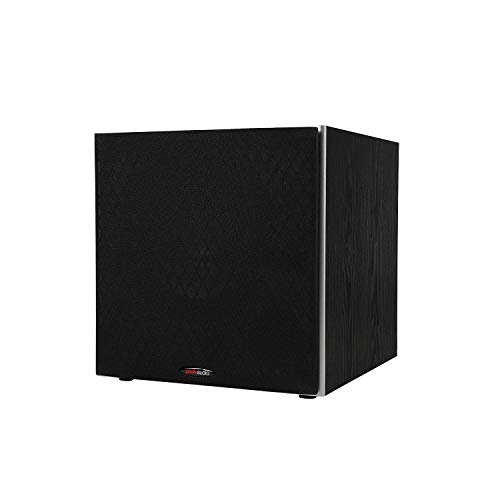
- 10-inch powered woofer for deeper bass
- Up to 100 watts of output
- Adjustable 80–160 Hz crossover
Best For: Small-to-medium rooms and compact wired audio systems
High-Output Home Audio

- 12-inch high-excursion woofer
- 200 watts RMS, 400 watts maximum
- Frequency response down to 29 Hz
Best For: Powerful home entertainment and surround-sound systems
Studio-Focused Wireless Bass

- 8-inch driver reaches down to 30 Hz
- Bluetooth 5.0 plus wired inputs
- Adjustable filters and room-tuning controls
Best For: Music production, nearfield listening, and multimedia setups
Compact Clarity

- 8-inch woofer with 100W dynamic power
- Twisted flare port for tight bass
- Compact wired design for music and home theater
Best For: Small to medium rooms needing compact bass enhancement
Clean Low-End Power

- 12-inch woofer with 200W Class-D amplification
- RCA, LFE, and speaker-level inputs
- Braced cabinet and five-year warranty
Best For: Larger music and home theater systems needing deeper bass
Flexible Compact Bass
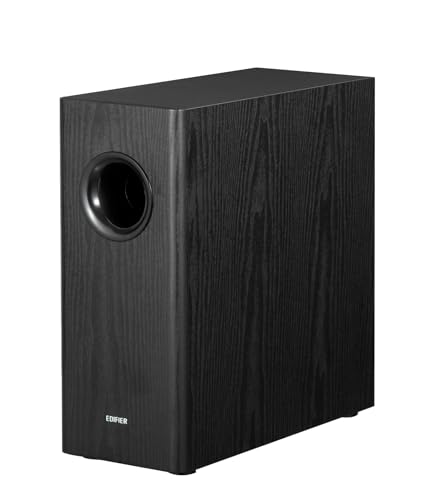
- 8-inch woofer with 70W RMS Class-D power
- Adjustable filter and phase controls
- Slim MDF cabinet with RCA connectivity
Best For: Compact stereo and bookshelf-speaker systems with RCA inputs
Powerful Music Pick – Klipsch R-12SW 12-inch Subwoofer
For listeners who want substantial low-end impact, the Klipsch R-12SW is a strong choice among subwoofers for music. Its 12-inch front-firing woofer and 400-watt dynamic amplifier are designed to add depth while retaining useful setup controls.
Best For: Larger listening rooms and music fans who want powerful, room-filling bass.
Pros:
- Large 12-inch copper-spun front-firing woofer
- 400 watts of dynamic power from an all-digital amplifier
- Low-pass crossover, phase control, and line/LFE inputs
- Works well for both music and movies
Cons:
- Its 12-inch cabinet may be more subwoofer than compact rooms need
- Wired connectivity only
The R-12SW prioritizes scale and output, making it a practical option when deep, prominent bass is more important than a small footprint. Its adjustable controls also make integration with a receiver more flexible.
Studio Monitoring Pick – Yamaha HS8S Studio Subwoofer
The Yamaha HS8S is a focused option for recording and live-music setups. With an 8-inch bass-reflex design, 150-watt amplifier, and adjustable filter controls, it is one of the more studio-oriented subwoofers for music in this roundup.
Best For: Home studios, desktop monitoring, and music production systems using compatible wired connections.
Pros:
- 8-inch bass-reflex powered subwoofer
- 22Hz–150Hz frequency response
- LOW CUT switch and adjustable 80–120Hz low-cut and high-cut controls
- Phase switch for system integration
Cons:
- 150-watt output is less focused on maximum room-shaking volume
- Its studio controls may be more than casual listeners need
The HS8S makes the most sense when accurate low-frequency management and integration matter more than sheer size. Its filter and phase controls give producers and serious listeners useful control over the bass region.
Compact Klipsch Pick – Klipsch R-100SW 10-inch Subwoofer
The Klipsch R-100SW offers a smaller alternative for listeners shopping for subwoofers for music without stepping down to a compact driver. Its 10-inch spun-copper woofer, 300-watt peak amplifier, and adjustable crossover make it suitable for music, television, and gaming systems.
Best For: Medium-sized rooms and mixed-use systems that need deep bass in a more manageable format.
Pros:
- 10-inch front-firing spun-copper IMG woofer
- 300 watts of peak amplifier power
- Line-level and LFE RCA inputs
- Volume, low-pass, phase, and auto-power controls
Cons:
- 32Hz–120Hz response does not reach as low as the larger R-12SW
- Wired RCA connectivity only
The R-100SW balances bass capability with a smaller driver than Klipsch’s 12-inch model. It is a sensible fit when you want strong low-end support for music but also need to consider room size and placement.
Warm-Sounding Value Pick – Fluance DB10 Powered Subwoofer
Fluance DB10 10-inch Low Frequency Ported Front Firing Powered Subwoofer for Home Theater & Music
Check Price On AmazonThe Fluance DB10 is a practical choice for shoppers seeking subwoofers for music and home theater. Its 10-inch long-throw driver, ported MDF cabinet, and 120-watt amplifier are intended to provide deep bass with controlled reproduction.
Best For: Home theater and music listeners who want a ported 10-inch subwoofer with automatic power management.
Pros:
- 10-inch long-throw driver for deep bass
- Ported engineered-MDF cabinet designed for warm, distortion-free sound
- Auto power-on detects a signal and switches the subwoofer on or off
- Includes a two-year manufacturer’s warranty and lifetime customer support
Cons:
- 120-watt output is lower than the Klipsch models listed here
- Supplied notes do not specify adjustable crossover or phase controls
The DB10 emphasizes a warm, ported presentation and convenient automatic operation. It is a good fit for a straightforward music and movie system where ease of use matters alongside added low-frequency depth.
Compact Bass Upgrade – Polk Audio PSW10
For shoppers comparing subwoofers for music, the Polk Audio PSW10 is a practical powered option for adding deeper bass to a small- or medium-sized room. Its 10-inch woofer, 50-watt RMS amplifier, and adjustable crossover make it straightforward to integrate with an existing wired audio system.
Best For: Small-to-medium rooms and listeners who want an affordable, compact bass upgrade for music and home theater.
Pros:
- 10-inch Dynamic Balance woofer and directed port provide added bass depth.
- Built-in amplifier delivers up to 100 watts of power.
- Continuously variable 80–160 Hz crossover supports flexible system matching.
- Includes speaker- and line-level connections plus a phase toggle switch.
Cons:
- Wired connectivity only.
- Its 10-inch, 100-watt design is aimed more at compact systems than very large rooms.
- Not waterproof.
The PSW10 stands out as an easy, space-conscious way to give a basic music setup more weight and punch. Its connection options and adjustable crossover are useful when blending it with existing speakers.
High-Output Home Audio – Klipsch R-120SW
The Klipsch R-120SW is a strong candidate for listeners seeking subwoofers for music with more scale and impact. Its 12-inch spun-copper woofer, 200-watt amplifier, and rear-firing bass-reflex port are suited to adding substantial low-end energy to a home entertainment system.
Best For: Larger home entertainment or surround-sound setups that need powerful, room-filling bass.
Pros:
- Large 12-inch high-excursion woofer supports strong low-frequency output.
- 200 watts of amplifier power and 400 watts maximum acoustic output provide substantial headroom.
- Frequency response reaches down to 29 Hz.
- Bass-reflex enclosure uses a rear-firing port for added output.
Cons:
- At 31 pounds, it is less convenient to move than compact models.
- Wired RCA connectivity may be limiting for some setups.
- Not water resistant.
Choose the R-120SW when deep, forceful bass matters more than a small footprint. Its 12-inch driver and higher power rating make it a compelling match for full-size home entertainment systems.
Studio-Focused Wireless Bass – PreSonus Eris Sub 8BT
For music production, hi-fi listening, or desktop multimedia, the PreSonus Eris Sub 8BT offers a more control-oriented approach to subwoofers for music. Its 8-inch front-firing driver reaches down to 30 Hz, while Bluetooth 5.0, balanced inputs, crossover controls, and room-tuning adjustments support flexible placement and system matching.
Best For: Music producers, nearfield listeners, and multimedia users who want adjustable bass with wireless and professional connection options.
Pros:
- 100-watt powered design reaches down to 30 Hz.
- Bluetooth 5.0 supports convenient wireless playback.
- Balanced TRS, RCA, and front-panel auxiliary inputs accommodate varied equipment.
- Highpass, lowpass, and tuning controls help match the subwoofer to monitors and room conditions.
Cons:
- Its 8-inch driver may provide less physical output than larger home-theater models.
- Wireless range is listed at 10 meters.
- Designed especially to complement compact Eris studio monitors.
The Eris Sub 8BT is the most versatile choice here for controlled, accurate low end. Its filters, tuning controls, headphone output, and multiple inputs make it particularly useful when bass integration matters as much as bass output.
Compact Clarity – Yamaha NS-SW050BL
For listeners seeking compact subwoofers for music, the Yamaha NS-SW050BL adds bass extension without overwhelming a room. Its 8-inch woofer, 100W dynamic power, Advanced YST II technology, and twisted flare port are designed for clear, tight low frequencies.
Best For: Small to medium rooms, music players, and home theater systems that need a compact wired subwoofer.
Pros:
- Twisted flare port supports clear, tight bass.
- Compact 8-inch design suits a range of rooms.
- 100W dynamic power and a 28Hz listed frequency response.
- Includes a two-year manufacturer warranty.
Cons:
- Its 8-inch driver may provide less output than larger subwoofers.
- Wired connectivity limits placement flexibility.
- Plastic enclosure may feel less substantial than an MDF cabinet.
The NS-SW050BL is a straightforward choice when you want Yamaha’s bass-enhancement technology in a relatively compact enclosure. It is especially practical for music and home theater setups where space matters.
Clean Low-End Power – Dayton Audio Classic CS1200
The Dayton Audio Classic CS1200 is a strong candidate among subwoofers for music when you want deeper output and a larger cabinet. Its 12-inch driver, 200W Class-D amplifier, and braced enclosure are designed to deliver tight, accurate bass without excessive boominess.
Best For: Larger music and home theater systems that need substantial low-end extension and flexible wired connections.
Pros:
- 12-inch woofer and 200W amplifier provide substantial bass capability.
- Rigid, braced cabinet is designed to reduce distortion and boominess.
- RCA, LFE, and speaker-level inputs support varied system setups.
- Backed by a five-year manufacturer warranty.
Cons:
- The larger 12-inch cabinet requires more floor space.
- It is a wired, floor-standing design rather than a compact desktop option.
- Only the black grille is included; the gray grille is sold separately.
Choose the CS1200 if your priority is a deeper, more substantial bass foundation for both music and movies. Its broad input selection also makes it easier to integrate with older or mixed-component systems.
Flexible Compact Bass – Edifier T5s Powered Subwoofer
The Edifier T5s offers a space-conscious way to add low end to a music system. This powered subwoofer combines an 8-inch long-throw woofer, 70W RMS Class-D amplification, adjustable low-pass filtering, and phase control for easier integration with compatible speakers and amplifiers.
Best For: Desktop, bookshelf-speaker, and compact home audio systems with RCA or subwoofer-output connectivity.
Pros:
- Adjustable 30Hz–160Hz low-pass filter and 0°/180° phase selector.
- Front-firing driver and MDF cabinet are designed for clean, low-distortion bass.
- Auto-standby helps reduce power use after inactivity.
- Includes 3.5mm-to-RCA and RCA cables for setup flexibility.
Cons:
- Its 35Hz listed frequency response is less extended than some larger models.
- Connectivity is limited to wired RCA connections.
- The no-sub-out connection method requires main speakers with line-in.
The T5s is a practical pick for listeners who want adjustable bass and a relatively slim enclosure. Check your system’s outputs before buying, especially if you plan to use the series-connection method.
How We Picked the Best Subwoofers for Music
We focused on powered subwoofers that can integrate with music-focused systems and offer useful performance for their intended size and price. Our comparison considers driver size, amplifier output, frequency response, enclosure design, connectivity, adjustment controls, and overall placement flexibility.
Because bass performance depends heavily on the room and crossover settings, wattage alone does not determine quality. A compact subwoofer with smooth integration may suit music better than a larger model that produces more output but sounds uncontrolled.
Quick Comparison
- 8-inch models: Best for desktops, bedrooms, small listening rooms, and nearfield setups.
- 10-inch models: A versatile middle ground for compact stereo systems and moderate-sized rooms.
- 12-inch models: Best when you want deeper extension and higher output in larger spaces.
- Studio-oriented models: Prioritize controlled, accurate bass and straightforward integration with monitors.
- Home-audio models: Often emphasize convenient controls, strong output, and flexible placement.
Key Buying Factors for Subwoofers for Music
Room Size and Output
Match the subwoofer to your space and listening habits. Smaller rooms generally need less output, while open-plan areas may benefit from a larger driver and more amplifier headroom. Avoid choosing solely by the highest wattage specification.
Frequency Extension and Musical Detail
Look for a subwoofer that reaches low enough to complement bass guitars, kick drums, organ, electronic music, and cinematic recordings. For music, clean transitions and low distortion matter as much as maximum depth.
Crossover and Phase Controls
A variable crossover helps blend the subwoofer with your main speakers. Phase adjustment can improve bass at the listening position, especially when the subwoofer and speakers are separated or placed along different walls.
Connections and System Compatibility
Check whether your amplifier, receiver, powered speakers, or studio monitors provide the required input. Line-level, speaker-level, LFE, Bluetooth, and wireless options are not interchangeable, so confirm compatibility before buying.
Placement and Calibration
Placement strongly affects bass response. Start near the front wall, then test several locations before settling on one. Keep the subwoofer away from corners if the bass sounds boomy, and use familiar recordings to adjust crossover, volume, and phase.
Who Should Buy Which Subwoofers for Music?
Choose an 8-inch subwoofer for a desktop setup, small room, or nearfield listening position where controlled bass is more important than room-filling output.
Choose a 10-inch model if you want the most flexible all-around option for a living room, compact stereo system, or mixed music and movie use.
Choose a 12-inch model for a larger room, demanding listening levels, or music with substantial sub-bass. It can deliver greater authority, but careful placement and tuning are essential.
Choose a studio subwoofer when accuracy, monitor integration, and a relatively neutral presentation matter most. For casual home listening, a conventional powered subwoofer may provide more convenient controls and stronger value.