Choosing the right distribution amplifier can make a home studio easier to monitor, record, and share across multiple displays or listening positions. The best option depends on your signal type, output count, connector standard, and whether you need active amplification or simple splitting.
This roundup covers 10 practical solutions for composite video, stereo audio, CCTV, TV antenna signals, and multi-person headphone monitoring. Use the guide below to match your equipment and workflow with the right distribution design.
Best 10 Video Distribution Amplifiers for Home Studios Picks for 2026
Best Active RCA Splitter
DTECH Powered 4-Way RCA Splitter

- 1 RCA AV input to 4 outputs
- Built-in signal amplification
- Metal case with included AC adapter
Best For: Analog composite AV distribution in home studios
Best Headphone Distribution Amp
Mackie HM-4 Headphone Amplifier

- Four independent headphone outputs
- Individual volume for each listener
- Compact metal enclosure
Best For: Shared headphone monitoring during studio sessions
Best Simple RCA Duplicator
MT-VIKI 4-Way Composite AV Splitter
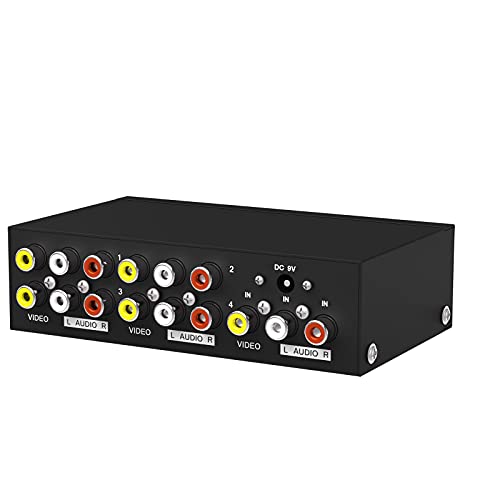
- Mirrors one AV input to four outputs
- RCA-compatible plug-and-play design
- Suitable for TVs and DVRs
Best For: Simple analog composite AV duplication
Best Antenna Distribution Amp
ClearStream JUICE4 Distribution Amplifier

- Four-output RF signal distribution
- Supports ATSC 3.0, 4K, and 8K
- Compact housing with included RG6 cable
Best For: Antenna or CATV distribution to multiple TVs
Best RCA Video Hub
Powered 8-Way Composite Splitter

- 1 input feeds 8 RCA AV outputs
- Built-in amplification for longer connections
- Metal case with adapter and LED indicator
Best For: Analog AV duplication in home studios and dubbing setups
Best Studio Monitoring Amp
8-Channel Headphone Distribution Amplifier

- Eight channels with 16 headphone outputs
- Mono/stereo routing and independent controls
- 1U rack design with LED level meters
Best For: Multi-person headphone monitoring in recording or live-sound setups
Best Simple AV Duplicator

- Mirrors one RCA AV source to 8 outputs
- Active booster for longer connections
- Compact powered metal enclosure
Best For: Basic analog AV mirroring to multiple monitors or destinations
Best Analog Video Splitter
4-Port BNC Video Distribution Amplifier
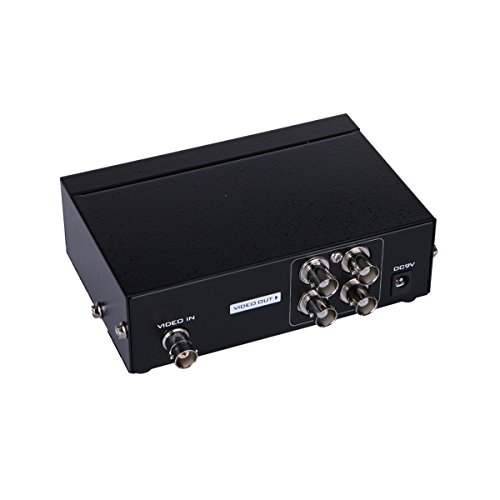
- Splits one BNC input to four outputs
- Supports up to 1080p at 60Hz
- Metal housing with plug-and-play setup
Best For: Analog BNC monitoring and small studio video systems
Best Audio Distribution Pick
4-Channel RCA Audio Distribution Amplifier
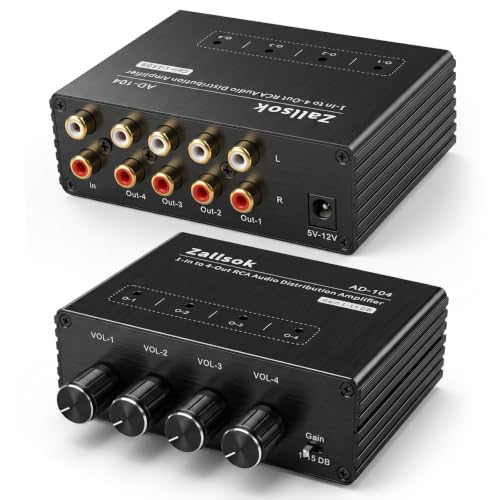
- Routes stereo RCA audio to four outputs
- Independent volume control per channel
- Selectable 1 dB or 15 dB gain boost
Best For: Multi-zone audio monitoring in home AV studios
Best Multi-Display TV Splitter
8-Port Antenna Distribution Amplifier

- Feeds up to eight devices from one line
- Adds a stated +4 dB per-port boost
- Compact design with power supply included
Best For: OTA antenna and standard cable-TV distribution
Best Active RCA Splitter – DTECH Powered 4-Way RCA Splitter
For home studios distributing an analog composite video and stereo audio feed, this powered unit is one of the more practical video distribution amplifiers for home studios. It accepts one 3-RCA input and sends the signal to four outputs for monitors, TVs, speakers, or dubbing setups.
Best For: Home studios, analog video duplication, and multi-monitor composite AV setups.
Pros:
- Splits one composite video and L/R audio signal to four outputs.
- Built-in amplification is intended to support clear images and reliable audio over longer connections.
- Metal housing, anti-skid feet, LED status light, and color-coded RCA jacks suit practical studio installation.
- Includes a 9V AC adapter and requires no software.
Cons:
- Designed for RCA composite video and analog audio rather than modern digital formats.
- Outputs do not have individual switching controls.
Choose this DTECH model when you need a powered 1-in/4-out analog distribution box in a compact, rack-friendly enclosure.
Best Headphone Distribution Amp – Mackie HM-4 Headphone Amplifier
Although it distributes headphone monitoring rather than video, the Mackie HM-4 can complement video distribution amplifiers for home studios by giving four listeners independent control from one source. Its compact four-channel design is suited to tracking sessions and rehearsals.
Best For: Home-studio tracking sessions where multiple performers need separate headphone volume control.
Pros:
- Drives four headphones from a source with a 1/4-inch or 1/8-inch output.
- Each of the four outputs has its own level control.
- Compact metal enclosure can be attached to a desk, rack, or stand.
- Plug-and-play operation avoids software setup.
Cons:
- It is a headphone amplifier, not a composite video distribution device.
- Uses a corded electric power source.
The HM-4 is a useful studio companion when your video workflow also requires straightforward, multi-listener headphone monitoring.
Best Simple RCA Duplicator – MT-VIKI 4-Way Composite AV Splitter
The MT-VIKI 104AV offers straightforward analog duplication for setups comparing video distribution amplifiers for home studios. One RCA audio/video input is mirrored to four outputs, making it suitable for compatible TVs, DVRs, or other composite AV equipment without software.
Best For: Basic plug-and-play composite AV distribution across four RCA-equipped devices.
Pros:
- Duplicates one audio/video input to four audio/video outputs.
- Compatible with devices that use RCA inputs, including TVs and DVRs.
- Plug-and-play design requires no software.
Cons:
- Analog RCA connections limit it to composite video and stereo audio workflows.
- The notes warn that nearby routers, power supplies, or transmitters may cause interference.
- Ground-loop issues may introduce noise with some device combinations.
This is a sensible low-complexity choice when your studio needs mirrored composite AV outputs and you can keep the unit away from potential interference sources.
Best Antenna Distribution Amp – ClearStream JUICE4 Distribution Amplifier
The ClearStream JUICE4 is a specialized RF distribution amplifier rather than an RCA studio splitter. It boosts an antenna or CATV signal for up to four televisions or converter boxes, so it is relevant to home studios that distribute broadcast or cable RF alongside their AV equipment.
Best For: Distributing antenna, CATV, or compatible broadband RF signals to four TV destinations.
Pros:
- Provides four outputs with signal gain intended to preserve reception quality when splitting.
- Supports ATSC 3.0, NEXTGEN TV, 4K, and 8K UHD applications.
- Compact housing supports indoor installation and can be used outdoors with the specified protective fittings.
- Includes a 40-inch RG6 cable, indoor power adapter, mounting screws, and grounding screw.
Cons:
- Uses F-connectors and coaxial RF rather than RCA composite AV connections.
- It cannot provide cable TV channels where the source is only an antenna.
- Reception still depends on tower distance and obstructions.
Consider the JUICE4 when your distribution requirement is broadcast or CATV RF. For analog studio video and stereo audio, one of the RCA-based units is a closer match.
Best RCA Video Hub – Powered 8-Way Composite Splitter
For home studios distributing legacy composite video and stereo audio, this powered 8-way RCA unit duplicates one source to as many as eight displays or audio destinations. Its built-in amplification, color-coded jacks, and included 9V adapter make it a practical choice among video distribution amplifiers for home studios using RCA-connected equipment.
Best For: Home studios, dubbing setups, and monitoring systems that need one analog AV source sent to eight destinations.
Pros:
- Distributes one 3-RCA composite video/audio input to eight outputs.
- Built-in amplifier supports clearer signals over longer connections.
- Metal housing, anti-skid feet, LED indicator, and included power adapter support convenient installation.
Cons:
- Designed for analog RCA composite signals rather than modern digital video.
- Provides mirrored output, not independent source selection.
This is a strong fit when your studio relies on RCA equipment and needs straightforward one-to-many duplication. The compact powered design is easy to place in a rack or behind a monitor.
Best Studio Monitoring Amp – 8-Channel Headphone Distribution Amplifier
Studios that distribute audio rather than video will get more value from this rack-mount headphone amplifier. It provides eight independently controlled channels, two headphone outputs per channel, flexible mono/stereo routing, and LED metering, making it a specialized option among distribution amplifiers for home studios.
Best For: Recording and live-sound setups needing simultaneous headphone monitoring for up to eight channels or 16 listeners.
Pros:
- Offers eight high-power amplifier channels and 16 total 1/4-inch headphone outputs.
- Supports mono/stereo operation, dual inputs, dedicated rear inputs, and independent channel volume.
- Includes six-segment LED meters, overload protection, and a standard 1U rack design.
Cons:
- It is an audio headphone distribution amplifier, not a video signal splitter.
- Requires wired 1/4-inch headphone connections and rack or console space for a full installation.
Choose this model when your home studio’s main distribution challenge is giving several performers or engineers controlled headphone mixes. Its routing and metering are considerably more useful for monitoring than for sending video to displays.
Best Simple AV Duplicator – MT-VIKI 8-Way RCA Splitter
The MT-VIKI MT-108AV is a straightforward powered distributor for mirroring one composite video and stereo audio source across eight outputs. For home studios built around DVRs, monitors, or other RCA gear, it offers the basic functionality expected from video distribution amplifiers for home studios without software or complicated controls.
Best For: Simple one-source-to-eight-monitor or audio/video mirroring with analog RCA equipment.
Pros:
- Duplicates one 3-RCA AV input across eight AV outputs.
- Active signal boosting helps maintain video and audio over longer connections.
- Compact metal housing with anti-skid feet and an included 9V power supply.
Cons:
- Cannot combine eight sources into one display; it only mirrors one source to eight outputs.
- Limited to composite RCA distribution rather than digital video formats.
This unit makes sense when your workflow is simple and predictable: one analog source, multiple mirrored destinations. Confirm that your equipment uses RCA connections and that independent output switching is not required.
Best Analog Video Splitter – 4-Port BNC Video Distribution Amplifier
For home studios using analog video equipment, this AuviPal unit distributes one BNC source to four displays or devices. It supports up to 1080p at 60Hz for compatible analog signals and installs without configuration.
Best For: Home studios, monitoring setups, and small video systems using PAL, NTSC, or SECAM CVBS equipment.
Pros:
- Splits one BNC input across four outputs.
- Supports up to 1080p at 60Hz with compatible analog signals.
- Metal housing, compact design, and included power adapter.
- Plug-and-play installation with a one-year warranty.
Cons:
- Not compatible with SDI or digital signals.
- Requires cameras to be set to CVBS mode.
- Uses BNC connections, so adapters may be needed for other formats.
This is a straightforward choice among video distribution amplifiers for home studios when your workflow is based on analog BNC video rather than modern digital or SDI connections.
Best Audio Distribution Pick – 4-Channel RCA Audio Distribution Amplifier
Although it distributes audio rather than video, the Zallsok AD-104 can complement video distribution amplifiers for home studios by routing one stereo RCA source to four powered speakers or amplifiers. Independent controls and selectable gain make it useful for multi-zone monitoring.
Best For: Home studios and AV setups that need four independently adjustable RCA audio output channels.
Pros:
- Distributes one stereo RCA input to four outputs simultaneously.
- Provides independent volume control for each channel.
- Offers selectable 1 dB or 15 dB gain boost.
- Includes channel activity LEDs and an anti-interference aluminum housing.
Cons:
- It is an audio distribution amplifier, not a video splitter.
- Uses RCA connections rather than BNC or HDMI.
- The 15 dB boost may be unnecessary for already strong line-level sources.
Choose this model when your studio needs coordinated audio routing alongside its video chain. Its four volume knobs are particularly practical for separate speaker zones or monitoring destinations.
Best Multi-Display TV Splitter – 8-Port Antenna Distribution Amplifier
The LSA48 is designed for distributing one antenna or cable-TV line to as many as eight devices. For home studios that also manage broadcast or television feeds, its powered outputs and compact form can help maintain distribution across multiple screens.
Best For: OTA antenna or standard cable-TV distribution to multiple televisions or compatible receivers.
Pros:
- Connects up to eight devices from one antenna or cable line.
- Provides a stated +4 dB boost per port.
- Includes a power supply and F59 terminators.
- Compact form factor supports installation in confined spaces.
Cons:
- Not compatible with satellite TV, amplified antennas, or preamp-based installations.
- Connection cables are sold separately.
- The power supply is for indoor use only.
This is a specialized RF distribution option rather than a general-purpose studio video splitter. Verify that your source is a standard OTA antenna or cable-TV line before choosing it for a multi-screen setup.
How We Picked the Best Video Distribution Amplifiers for Home Studios
We selected products across the main signal-distribution formats used in home studios and small media setups: RCA composite video, stereo audio, BNC video, TV antenna coax, and headphone monitoring. We considered the number of outputs, powered versus passive operation, connector compatibility, independent control options, installation flexibility, and likely use cases.
Because these products are not interchangeable, the best choice is the one that matches your source and destination equipment without requiring unnecessary adapters. Active units are especially useful when a signal must travel to several destinations or over longer cable runs.
Quick Comparison
| Use case | Best fit | What to check |
|---|---|---|
| Composite video and stereo audio | Powered RCA distribution amplifier | RCA layout, video format, and output count |
| Headphone monitoring | Multi-channel headphone amplifier | Number of outputs, mono/stereo modes, and volume controls |
| CCTV or monitoring video | BNC video splitter | BNC compatibility and powered signal distribution |
| TV antenna distribution | Coax distribution amplifier | Frequency range, connectors, gain, and power supply |
Key Buying Factors for Video Distribution Amplifiers for Home Studios
Signal Type and Connectors
Start by identifying whether your source uses composite RCA, BNC, coaxial F-connectors, or 1/4-inch and 3.5 mm headphone connections. RCA video distribution units generally carry composite video alongside left and right audio, while BNC models are more common in surveillance systems. An antenna amplifier is designed for RF signals and should not be substituted for an audio or composite-video unit.
Output Count and Expansion
Choose enough outputs for your current destinations plus modest future expansion. Four outputs suit a small editing or monitoring setup; eight outputs are more practical when several displays, rooms, or listeners need the same source.
Powered Operation and Signal Quality
Powered distribution amplifiers can help preserve usable signal levels when one source feeds multiple destinations. Confirm that the included power adapter matches your outlet and that the unit is intended for your signal format. Passive splitters may be adequate for short, simple runs but can introduce attenuation as the number of outputs increases.
Controls, Mounting, and Cable Runs
For headphone monitoring, individual volume controls and mono/stereo switching improve usability during recording. For installed video or antenna systems, consider mounting options, cable length, ventilation, and access to the power connection. Keep cable runs organized and use the correct impedance and termination standards for the equipment.
Who Should Buy Which Video Distribution Amplifiers for Home Studios?
- Choose a powered four-way RCA unit for a compact retro-gaming, composite-video, or small studio display setup.
- Choose an eight-way RCA unit when one composite source must feed several televisions, monitors, or recording destinations.
- Choose a headphone amplifier when multiple performers or collaborators need to monitor one audio source simultaneously.
- Choose a BNC splitter for CCTV, security-camera, or professional monitoring equipment that already uses BNC cabling.
- Choose an antenna distribution amplifier when one over-the-air TV signal must reach multiple televisions or tuners.
Before ordering, verify every connector, supported signal type, output requirement, and power specification. Matching those details will do more for reliability than simply choosing the unit with the highest output count.