When inspiration hits, the right recorder helps you capture it before it disappears. The best voice recorders for musicians balance sound quality, portability, battery life, and easy controls.
Whether you need a compact pocket recorder for riffs and rehearsals or a more flexible unit for louder sessions, this roundup focuses on practical options that make it easier to record ideas fast and hear them clearly later.
Best 10 Voice Recorders for Musicians Picks for 2026
Field-Ready 4-Track Recorder

- 32-bit float helps avoid clipped takes
- Built-in stereo mics plus 2 XLR/TRS inputs
- USB-C recording and SD card backup
Best For: Musicians recording rehearsals, live sets, and demos
AI Transcription Recorder

- AI transcription and summaries
- 30-hour battery life with 64GB storage
- One-touch recording and file protection
Best For: Musicians who need recording plus notes and transcription
Compact XLR Recorder

- Two XLR/TRS combo inputs
- 32-bit / 96kHz recording with waveform display
- 3.5mm input and headphone output
Best For: Musicians needing a compact recorder with XLR inputs
High-Fidelity Studio Recorder

- 24bit/96kHz recording quality
- XLR and line-in connectors
- Built-in microphones with rechargeable battery
Best For: Musicians wanting high-fidelity capture with external input support
Portable 32-Bit Stereo Recorder

- 32-bit float stereo recording helps avoid clipping.
- X/Y mics suit rehearsals, jams, and acoustic sets.
- USB-C mode supports livestreams, calls, and voiceovers.
Best For: musicians and creators who need a compact recorder for clean stereo audio
High-Capacity Voice Memo Recorder

- 136GB total storage is built for long recording runs.
- Up to 68 hours battery life supports extended use.
- Voice activation and noise reduction simplify capture.
Best For: long-form voice notes, lessons, and practice documentation
Compact 360° Session Recorder
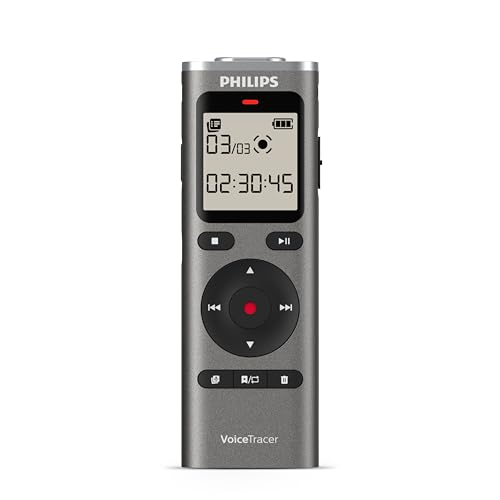
- 360° mic captures broad room sound for quick references.
- WAV format and time stamps help keep files organized.
- MicroSD slot expands the 8GB internal memory.
Best For: portable voice capture, rehearsal notes, and organized practice recordings
Studio-Ready Clarity
EVISTR 64GB Voice Recorder with Playback

- 1536kbps stereo recording with PCM noise reduction
- 7 gain levels and voice activation for flexible capture
- 64GB storage plus playback tools like A-B repeat
Best For: Musicians who want a compact recorder for rehearsal notes and clear reference capture
High-Capacity Capture
EVIDA 128GB Voice Recorder for Long Sessions

- 128GB storage with up to 9,296 hours capacity
- Up to 1536Kbps PCM recording with noise cancellation
- Voice activation plus folders, password protection, and bookmarks
Best For: Musicians who need long battery life, large storage, and organized recording sessions
Quick-Capture Performer
Tonfarb 64GB Voice Recorder with Playback

- One-click record/save is ideal for fast use
- 64GB storage with PCM recording up to 1536kbps
- Voice activation, password protection, and bookmarking
Best For: Musicians who want a fast, easy-to-use recorder for quick ideas and rehearsals
Field-Ready 4-Track Recorder – Zoom H4 Essential
If you need voice recorders for musicians that can handle rehearsals, live sets, and quick song captures, the Zoom H4 Essential is built for practical, flexible recording. Its 4-track design, built-in stereo mics, and two XLR/TRS inputs make it easy to record from multiple sources without a complicated setup.
Best For: Musicians who want a portable recorder for demos, live performances, and direct instrument or mic recording.
Pros:
- 32-bit float recording helps reduce the risk of distorted takes.
- Built-in stereo microphones plus two XLR/TRS inputs add setup flexibility.
- USB-C recording/streaming and SD card backup support different workflows.
- Spoken menu guidance can make navigation easier and more accessible.
Cons:
- Runs on 2 AA batteries, so you’ll need spares for longer sessions.
- The compact screen may feel basic if you prefer a larger interface.
For musicians who want a no-fuss recorder that can move from rehearsal room to live performance, this model covers the essentials well. It focuses on clean capture, simple input options, and backup-friendly recording rather than extra studio-style complexity.
AI Transcription Recorder – AI Voice Recorder
For musicians who also need organized notes, this voice recorder blends audio capture with AI transcription and summaries. In the context of voice recorders for musicians, it is better suited to capturing rehearsal notes, lesson ideas, interviews, and planning sessions than to direct multi-input music recording.
Best For: Musicians who want quick recording with transcription, summaries, and secure file handling.
Pros:
- AI transcription and summaries can help turn spoken ideas into usable notes.
- Supports 90+ languages for transcription and 91 languages for real-time translation.
- One-touch recording makes it easy to start and save files quickly.
- 30-hour battery life and 64GB storage suit long sessions.
Cons:
- It uses built-in microphones and Bluetooth file transfer, not external XLR inputs.
- It is positioned more as a note taker than a music-focused multitrack recorder.
This is a strong pick if your priority is capturing ideas, conversations, and session notes with AI help. Musicians who mainly want a performance recorder will likely prefer a more traditional audio recorder, but this one adds clear productivity features.
Compact XLR Recorder – Zoom H1 XLR
If you’re comparing voice recorders for musicians and want a simple unit with pro-style inputs, the Zoom H1 XLR is an easy fit. It records in 32-bit / 96kHz, includes two XLR/TRS combo inputs, and adds a waveform display so you can monitor levels while tracking instruments or vocals.
Best For: Musicians who want a small recorder with XLR/TRS inputs for straightforward high-quality capture.
Pros:
- Two XLR/TRS combo inputs support microphones, instruments, and other sources.
- 32-bit / 96kHz recording offers detailed capture for simple setups.
- OLED waveform display helps you check levels at a glance.
- 3.5mm input and headphone output add monitoring flexibility.
Cons:
- It’s a 2-channel recorder, so it won’t suit larger multitrack sessions.
- Runs on 2 AA batteries, which may not appeal to everyone.
This model is a practical middle ground for musicians who want better input options without moving to a larger recorder. It keeps the feature set focused on clean capture, simple monitoring, and easy portability.
High-Fidelity Studio Recorder – PHILIPS DVT7500
For musicians who want a more traditional audio recorder, the PHILIPS DVT7500 focuses on high-fidelity capture with high-quality microphones and 24bit/96kHz recording. It also includes XLR and line-in connectors, making it useful when you want to record external instruments or other sound sources in a straightforward setup.
Best For: Musicians looking for a high-fidelity recorder with XLR and line-in connectivity.
Pros:
- 24bit/96kHz sampling supports detailed audio capture.
- XLR and line-in connectors work with external instruments and sound sources.
- High-quality microphones are built in for direct recording.
- Rechargeable battery supports longer recording sessions.
Cons:
- It has 16GB of memory, which is less expansive than some larger-recording options.
- The feature set is centered on audio capture rather than app-based AI tools.
This recorder makes sense if you want fidelity and input flexibility more than extra smart features. It’s a solid pick for musicians who value dependable recording quality and the ability to connect outside gear.
Portable 32-Bit Stereo Recorder – Zoom H1 Essential
If you want one of the most flexible voice recorders for musicians, the Zoom H1 Essential is built to capture rehearsals, songwriting sessions, acoustic performances, lessons, and live music with clean stereo sound. It also works well for creators who need better audio than a phone or camera can provide, while staying simple enough to grab when inspiration hits.
Best For: Musicians, songwriters, and creators who want a compact stereo recorder for music ideas and polished everyday audio.
Pros:
- 32-bit float recording helps capture clip-free audio in changing performance levels.
- X/Y stereo mics are suited to rehearsals, acoustic sets, and room sound.
- USB-C mic mode lets it double as a microphone for livestreams and calls.
- Lightweight 92 g design makes it easy to carry to sessions and gigs.
Cons:
- Uses AAA batteries instead of a built-in rechargeable battery.
- Storage details are listed broadly, so workflow planning may need a closer look.
For musicians who value fast setup and detailed stereo capture, this Zoom recorder is a practical grab-and-go option. It is especially appealing if you want one device that can handle both music recording and creator-style voice work.
High-Capacity Voice Memo Recorder – Tonfarb A20
The Tonfarb A20 is a budget-friendly choice among voice recorders for musicians if your priority is long recording time, simple operation, and easy file storage. With PCM recording, dual noise-reduction microphones, and voice-activated recording, it is geared more toward capturing speech, lessons, and practice notes than specialized performance recording.
Best For: Musicians, students, and interviewers who want a simple recorder with lots of storage and long battery life.
Pros:
- 136GB total capacity includes built-in storage plus a 128GB TF card.
- Up to 68 hours of battery life supports long sessions.
- Voice-activated recording and noise reduction help reduce unnecessary background capture.
- USB-C transfer makes it easy to move files to a computer.
Cons:
- Mono noise-cancellation mode is less ideal for detailed music stereo capture.
- Built-in microphone design is more focused on voice and notes than instrument fidelity.
If you need a straightforward recorder for demos, lesson notes, or long practice-day documentation, the A20 offers a lot of storage and stamina. It is best thought of as a practical voice memo tool rather than a dedicated music-first recorder.
Compact 360° Session Recorder – Philips DVT1170
The Philips DVT1170 is a compact option for musicians who want a simple audio recorder with a 360° microphone and easy organization features. It records in WAV, includes voice-activated recording, and adds time-stamped files, which can be helpful when you are sorting through lessons, rehearsal notes, or practice takes.
Best For: Musicians who want a lightweight recorder for voice capture, rehearsal notes, and organized audio files.
Pros:
- 360° microphone is designed for broad, room-style sound pickup.
- WAV recording offers a clean format for saving audio.
- Voice activation and time stamps make files easier to manage.
- 8GB internal memory plus microSD expansion adds flexibility.
Cons:
- Mono microphone mode is less suited to true stereo music capture.
- 8GB internal storage may feel limited without adding a microSD card.
For musicians who mainly need a portable recorder for quick reference audio and organized file handling, the DVT1170 is easy to live with. It is a sensible pick when simplicity matters more than advanced studio-style features.
Studio-Ready Clarity – EVISTR 64GB Voice Recorder with Playback
If you want voice recorders for musicians that can capture rehearsals, songwriting ideas, or reference audio with strong detail, this EVISTR model is built around high-quality recording and simple operation. Its PCM noise reduction, adjustable gain, and voice activation make it useful when you need to catch usable audio without juggling complicated controls.
Best For: Musicians who want a compact recorder for rehearsal notes, song ideas, and clear spoken or live reference capture.
Pros:
- 1536kbps stereo recording with dynamic noise reduction and PCM intelligent noise reduction.
- 7 levels of recording gain help capture farther or softer sounds.
- Voice activation reduces silent segments and saves playback time and storage.
- Playback tools include A-B repeat, rewind, and variable speed.
Cons:
- Best results will still depend on how close you place it to the sound source.
- Its interface is practical rather than feature-heavy.
For musicians who want a straightforward recorder with solid audio-focused features, this EVISTR model balances clarity, storage, and convenience well. It is especially appealing if you value quick recording and easy file management over extra studio-style controls.
High-Capacity Capture – EVIDA 128GB Voice Recorder for Long Sessions
For musicians comparing voice recorders for musicians, this EVIDA unit stands out for its huge storage and long recording time. It is designed to capture high-quality PCM audio, and its voice-activated recording plus organized file folders make it a practical option for keeping track of long rehearsals, writing sessions, or spoken notes.
Best For: Musicians who need long battery life, large storage, and organized file management for extended recording sessions.
Pros:
- 128GB capacity with up to 9,296 hours of storage.
- Up to 1536Kbps PCM recording with noise-canceling microphone.
- Voice activation with 6 sensitivity levels helps skip quiet gaps.
- 4-folder storage, password protection, A-B repeat, auto record, and bookmarks.
Cons:
- Continuous battery life is rated at up to 54 hours, which may still require planning for very long projects.
- Mono/noise-cancellation mic operation may be less suited to more immersive music capture than dedicated stereo gear.
If storage space and session length matter most, this recorder is a strong fit. It combines practical organization with high-capacity recording, making it a useful companion for musicians who document ideas over many hours.
Quick-Capture Performer – Tonfarb 64GB Voice Recorder with Playback
This Tonfarb model is a strong practical choice among voice recorders for musicians who want fast capture and clear playback. One-click recording, PCM WAV support, and automatic noise reduction make it easy to grab practice takes, demo ideas, or field recordings without slowing down your workflow.
Best For: Musicians who want a fast, easy-to-use recorder for quick ideas, rehearsals, and detail-focused audio capture.
Pros:
- One-click recording and saving make it easy to start and stop quickly.
- 64GB storage and up to 48 hours of recording time support longer use.
- PCM recording at up to 1536kbps with automatic noise reduction.
- Voice activation, password protection, A-B loop playback, and bookmarking add versatility.
Cons:
- Battery life is rated lower than some higher-capacity rivals at 32 hours.
- Its feature set is broad, but the focus is still on practical recording rather than advanced music-production controls.
Overall, this is the most grab-and-go option in the group. If you want a compact recorder that is easy to operate and still offers strong audio quality features, it fits well into a musician’s everyday bag.
How We Picked the Best Voice Recorders for Musicians
We focused on recording quality, microphone performance, ease of use, storage options, battery life, and portability. For musicians, the most useful recorder is usually the one that is fast to start, reliable in rehearsal spaces, and able to capture clean audio without complicated setup.
We also considered whether a model is better suited to song sketching, band rehearsals, lessons, or quick field capture. In this category, simple controls and dependable gain performance often matter more than extra features you may never use.
Quick Comparison
Portable stereo recorders are usually the best all-around choice for rehearsals and songwriting. XLR-equipped models are better if you want to connect external microphones or instruments. Basic voice recorders are ideal for demos, lyric memos, and practice notes when convenience matters most.
Key Buying Factors for Voice Recorders for Musicians
Microphone Quality and Stereo Capture
Look for clear stereo pickup and a low-noise mic system if you want realistic room sound. For band practice or acoustic sessions, wider capture can help preserve the feel of the performance.
Input Options and Flexibility
If you plan to record instruments directly or use outside mics, check for XLR inputs, line-in support, and adjustable gain. These features make a recorder much more useful as your needs grow.
Storage, Battery, and File Management
Long rehearsals and writing sessions can generate a lot of audio, so expandable storage and strong battery life are important. Easy file transfer also saves time when you need to review takes quickly.
Size, Controls, and Everyday Use
A recorder should be easy to grab and use in seconds. Large buttons, a clear display, and simple track naming are small details that make a big difference in real-world use.
Who Should Buy Which Voice Recorders for Musicians?
If you want the most capable all-around option, choose a recorder designed for higher-quality music capture and more control. If you mainly need a simple tool for song ideas, practice notes, or lesson memos, a compact voice recorder may be enough. For musicians who record in different settings, the best choice is the one that matches your workflow, not just the biggest spec sheet.
In short, the best Voice Recorders for Musicians are the ones that help you record quickly, play back clearly, and keep your creative process moving. Focus on the features you will use every day, and you will end up with a recorder that genuinely earns its place in your gear bag.