The best channel strips for podcasting help you shape microphone signals before they reach your recorder, interface, or streaming software. Compression, de-essing, gating, and tone controls can make spoken audio more consistent and easier to mix.
This roundup covers dedicated analog processors, USB-friendly production tools, podcast mixers, and portable recorders so you can match the hardware to your studio, workflow, and budget.
Best 10 Channel Strips for Podcasting Picks for 2026
Versatile Vocal Control

- Integrated mic preamp and four vocal processors
- Balanced XLR and TRS connectivity
- Rack-mountable 1U design with status LEDs
Best For: Hands-on processing for single-microphone podcast setups
Complete Podcast Hub
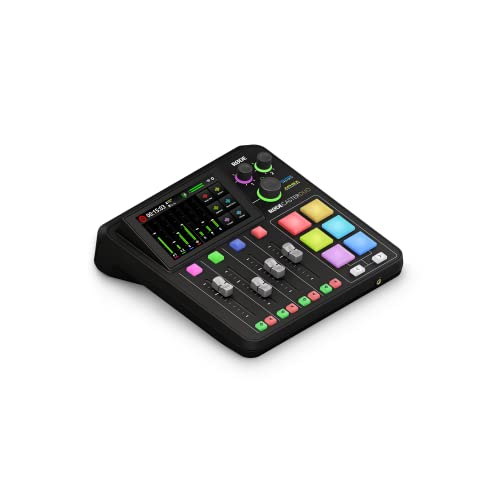
- Two combo inputs with high-gain preamps
- Four faders, touchscreen, and SMART pads
- Built-in APHEX studio effects
Best For: Integrated podcasting, streaming, and content production
Tube-Focused Processing
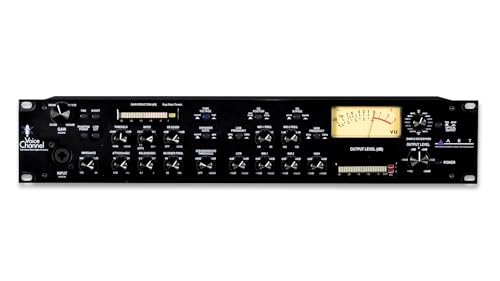
- Tube preamp for warmth and definition
- Compressor, expander, de-esser, and gate
- ADAT, AES/EBU, S/PDIF, TOSLink, and USB outputs
Best For: Single-source recording with flexible digital studio integration
Portable Multiguest Recording

- Four XLR mic inputs with phantom power
- Four headphone outputs with individual volume
- Phone, USB, sound pad, and battery operation
Best For: Portable multiguest and remote-interview podcast recording
Tube Tone Control

- 12AX7 tube preamp with adjustable drive
- VCA compressor and three-band EQ
- Mic, line, and instrument inputs
Best For: Analog vocal processing in a rack-based setup
USB Podcast Hub

- 80 dB gain for XLR microphones
- Onboard compressor, EQ, and voice effects
- Wave Link routing with touch mute control
Best For: Desktop podcasting with software-based audio control
500-Series Signal Shaper
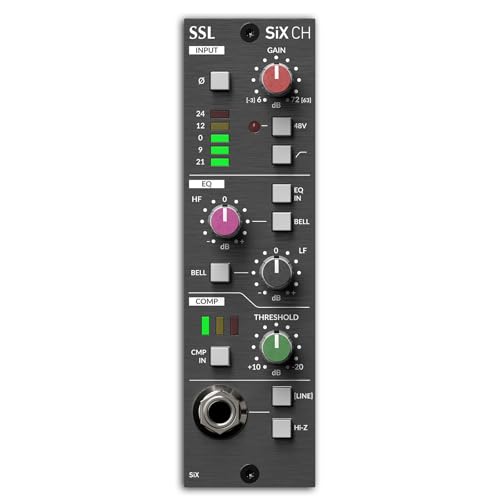
- 500 Series mic pre, EQ, and compressor
- Switchable 75 Hz high-pass filter
- Phantom power and front-panel Hi-Z input
Best For: Modular analog podcast studios with a 500 Series rack
Analog Noise Control
Rodweil RO05 Mic Preamp Noise Gate

- Reduces ambient and preamp-floor noise
- Analog processing with nearly zero stated latency
- Must follow a preamp or line-level source
Best For: Home studios needing hardware noise gating
PC Recording Mixer

- Three XLR inputs with 48V phantom power
- Plug-and-play USB-B PC recording
- EQ, effects, Bluetooth, and headphone monitoring
Best For: Beginner podcasts and streams with multiple sources
Versatile Vocal Control – dbx 286s Channel Strip
The dbx 286s is a practical choice for creators seeking channel strips for podcasting with hands-on control over microphone tone and dynamics. Its preamp combines compression, de-essing, enhancement, and expander/gate processing in a rack-mountable 1U unit.
Best For: Podcasters and vocal-focused setups that want dedicated hardware processing before recording or mixing.
Pros:
- Combines microphone preamp, compressor, de-esser, enhancer, and expander/gate.
- Balanced XLR microphone input and 1/4-inch TRS line input support varied sources.
- Status LEDs provide at-a-glance monitoring of levels and processor activity.
- Insert and loop-out connections allow integration with additional processors.
Cons:
- It is a single-channel unit, so multihost setups require additional hardware.
- Requires corded power and a suitable rack or desktop placement solution.
The 286s is especially appealing when you want straightforward, independent control of spoken-word dynamics and sibilance without relying entirely on software. Its single-channel design makes it best suited to one-microphone or individually processed source setups.
Complete Podcast Hub – RØDECaster Duo
For creators who want channel strips for podcasting in an all-in-one format, the RØDECaster Duo combines microphone inputs, faders, monitoring, effects, and production controls in one compact production studio. It is designed for podcasts, streaming, music, and broader content creation.
Best For: Podcasters and streamers who need integrated production, control, and studio-style effects.
Pros:
- Two Neutrik combo inputs accommodate microphones and instruments.
- Revolution Preamps provide up to 76 dB of gain and a stated -131.5 dBV EIN.
- Includes four broadcast-quality faders, a touchscreen, and six SMART pads.
- Offers APHEX processing, including Aural Exciter and Big Bottom effects.
Cons:
- It has two combination input jacks, which may limit larger multiguest sessions.
- Its wider feature set may be more than a simple single-mic recording workflow needs.
The RØDECaster Duo stands out as a control-centered alternative to a traditional single-channel strip. With faders, touchscreen operation, SMART pads, and effects built in, it suits creators who want to manage more of the recording and production process from one unit.
Tube-Focused Processing – ART VoiceChannel
The ART VoiceChannel is a tube-based option for shoppers comparing channel strips for podcasting and recording. It pairs an ART Tube preamp design with compressor, expander, de-esser, and gate controls, while also offering extensive digital output options.
Best For: Recording setups that want tube preamp character alongside dynamics processing and digital connectivity.
Pros:
- Tube preamp design is intended to provide warmth and definition.
- Includes compressor, expander, de-esser, and gate processing.
- Supports ADAT, AES/EBU, S/PDIF, TOSLink, and USB connections.
- Offers a stated maximum sample rate of 192 kHz.
Cons:
- It is a single-channel unit, limiting simultaneous multi-microphone processing.
- Its broad digital connectivity may be unnecessary for a basic analog podcast setup.
The VoiceChannel is a strong fit when tonal shaping and integration flexibility matter as much as basic microphone processing. Its single-channel layout favors individual source recording, while the digital outputs make it adaptable to more advanced studio systems.
Portable Multiguest Recording – Zoom PodTrak P4
The Zoom PodTrak P4 takes a portable approach to channel strips for podcasting, offering four XLR microphone inputs, four headphone outputs, sound pads, and recording tools in a battery-powered recorder. It also supports phone and USB connections for remote interviews.
Best For: Mobile podcast teams recording multiple guests, local interviews, or remote conversations.
Pros:
- Provides four microphone inputs with phantom power and individual headphone volume control.
- Automatic mix-minus supports phone and remote interviews through TRRS and USB connections.
- Sound pads and multitrack recording add flexibility for podcast production.
- Runs for up to 3.5 hours on two AA batteries.
Cons:
- Battery life is limited to a stated maximum of 3.5 hours.
- It is a recorder and interface rather than a dedicated analog channel strip with extensive tone-shaping controls.
The PodTrak P4 is best understood as a portable podcast production center rather than a conventional one-channel processor. Its four mic inputs, four headphone outputs, remote-interview support, and battery operation make it particularly useful when flexibility and mobility outweigh traditional channel-strip processing.
Tube Tone Control – PreSonus StudioChannel
The PreSonus StudioChannel is a traditional rackmount option for channel strips for podcasting, combining a Class A 12AX7 tube preamplifier, VCA compressor, and three-band EQ. Its mic, line, and instrument inputs make it useful when you want hands-on control over voice tone before recording.
Best For: Podcasters and project studios seeking tube coloration, onboard compression, and detailed EQ in a 1U rack unit.
Pros:
- Class A tube preamp with adjustable gain and tube drive
- VCA compressor includes auto attack/release and soft or hard knee settings
- Three-band EQ includes a variable-Q parametric mid band plus shelving or peak options
- Offers mic, line, and instrument inputs, along with phantom power and a high-pass filter
Cons:
- Rackmount hardware is less compact than a USB podcast interface
- Its analog controls require separate recording hardware or an interface
The StudioChannel is the most feature-rich analog choice here for shaping a microphone signal before it reaches your interface. Choose it if tube character and flexible hardware processing matter more than an all-in-one computer connection.
USB Podcast Hub – Elgato Wave XLR MK.2
The Elgato Wave XLR MK.2 is a compact USB audio interface and DSP mixer built for modern channel strips for podcasting. It provides 80 dB of XLR gain, onboard voice effects, touch controls, and Wave Link software for routing, monitoring, and plugin-based processing.
Best For: Computer-based podcasters who want high-gain XLR support, software routing, and integrated voice processing in a small desktop unit.
Pros:
- 80 dB of gain supports a wide range of XLR microphones
- Built-in voice enhancer, compressor, EQ, and Wave FX processing
- Wave Link provides routing, effects, and monitoring control
- Touch mute and LED feedback make level and status adjustments quick
Cons:
- Requires a compatible Windows 11 or Apple Silicon Mac system for Wave Link
- Provides two channels rather than a larger multichannel setup
Unlike a standalone rack channel strip, the Wave XLR MK.2 combines preamp, DSP, monitoring, and computer connectivity. It is a practical pick for solo creators who prefer software-centered control and a streamlined desktop workflow.
500-Series Signal Shaper – SSL SiX Channel Strip
The Solid State Logic SiX Channel Strip is a 500 Series module for channel strips for podcasting in a modular rack system. It combines a mic preamp, EQ, and single-knob compressor with phantom power, a switchable high-pass filter, and a front-panel Hi-Z line input.
Best For: Podcasters with a 500 Series rack who want a compact analog preamp, EQ, and compressor module.
Pros:
- Combines mic preamp, EQ, and single-knob compression
- Includes +48V phantom power for compatible condenser microphones
- 75 Hz, 12 dB/octave high-pass filter helps manage low-frequency content
- Front-panel TRS input includes a 1 MΩ Hi-Z switch
Cons:
- Requires a compatible 500 Series chassis and power supply
- Single-knob compression offers less adjustment than a mult control compressor
- It is a one-channel module, limiting multitrack expansion per unit
The SiX Channel Strip suits a modular studio rather than a plug-and-play USB setup. Its focused controls are a good fit when you already own a 500 Series enclosure and want SSL processing for a vocal or instrument channel.
Compact Podcast Mixer – BOMGE BM-05 5-Channel Mixer
For creators seeking channel strips for podcasting in a compact mixer format, the BOMGE BM-05 combines three XLR inputs, USB recording, Bluetooth playback, headphone monitoring, and basic channel EQ. Its 48V phantom power also supports compatible condenser microphones.
Best For: Small podcast setups, live streaming, and users who need multiple input and playback options.
Pros:
- Three XLR inputs with switchable 48V phantom power
- USB-B computer recording and USB-A playback/recording
- Built-in headphone monitoring, 2-band EQ, echo, and delay
- Compact design with Bluetooth audio streaming
Cons:
- Bluetooth, USB, and 4/5-channel functions cannot be used simultaneously
- Bluetooth operates within a stated 1.5-foot range
- Phone connection requires a USB OTG adapter for data transfer
The BM-05 is a flexible entry-level mixer rather than a dedicated single-channel strip. It suits podcasters who want routing, playback, and simple effects in one small console, provided they can work within its simultaneous-function limitations.
Analog Noise Control – Rodweil RO05 Mic Preamp Noise Gate
The Rodweil RO05 takes a different approach to channel strips for podcasting: it is an analog noise-gate processor designed to reduce ambient noise and preamp floor noise in a line-level signal chain. It is intended to follow a microphone preamp, not replace one.
Best For: Home-studio podcasters who need hardware noise control after a microphone preamp.
Pros:
- Designed to reduce ambient background and preamp noise
- Fully analog processing with nearly zero stated latency
- Balanced circuit design intended for smoother noise reduction
- Includes an XLR-to-TRS cable
Cons:
- Cannot be connected directly to a raw microphone signal
- Requires placement after a preamp or in a line-level chain
- Higher power consumption and a possible power-off circuit echo are noted
The RO05 is best viewed as a specialized add-on rather than a complete podcast channel strip. It can be useful when unwanted room or preamp noise is the main problem, but your setup must already provide adequate microphone preamplification.
PC Recording Mixer – Aveek 5-Channel Audio Mixer
The Aveek 5-Channel Audio Mixer is a practical choice for channel strips for podcasting when you want a small console with PC recording, three XLR inputs, headphone monitoring, and simple tone shaping. It also supports Bluetooth streaming and USB-drive playback or recording.
Best For: Beginner podcasters and streamers who want plug-and-play computer recording with several input types.
Pros:
- Three XLR inputs with switchable 48V phantom power
- Built-in recording chip for USB-B PC recording
- 2-band EQ, gain controls, echo, and delay effects
- Headphone monitoring plus USB-drive and Bluetooth features
Cons:
- Bluetooth, USB, and 4/5-channel functions cannot be used simultaneously
- Outputs are intended for active speakers or a power amplifier
- It provides basic 2-band EQ rather than extensive channel processing
The Aveek offers broad connectivity and straightforward PC recording for a modest podcast rig. Its feature set is useful for multi-source shows and streaming, while users seeking advanced dynamics control may need additional processing.
How We Picked the Best Channel Strips for Podcasting
We compared these 10 options by focusing on the features that matter most for spoken-word recording: microphone preamp quality, gain range, phantom power, compression, de-essing, noise control, monitoring, connectivity, and ease of use. We also considered whether each product suits a fixed home studio, a USB-based desk setup, or mobile and remote podcast production.
Not every product here is a traditional one-channel analog strip. Podcast production studios, recorders, mixers, and USB interfaces can provide similar voice-processing functions in a more integrated format. That distinction matters when choosing between hands-on hardware and a compact all-in-one workflow.
Quick Comparison
| Best For | Look For | Suitable Options |
|---|---|---|
| Dedicated voice processing | Preamp, compressor, de-esser, gate | dbx DBX286S, ART VoiceChannel |
| USB podcast production | USB audio, routing, DSP, monitoring | RØDECaster Duo, Elgato Wave XLR MK.2 |
| Multiple guests | Several mic inputs and headphone outputs | Zoom PodTrak P4 |
| Analog studio control | High-quality preamp and hands-on processing | PreSonus StudioChannel, SSL SiX Channel |
| Low-cost mixing | Phantom power, USB, basic effects | BOMGE and Aveek mixers |
Key Buying Factors for Channel Strips for Podcasting
Processing Controls
A compressor helps even out volume, while a de-esser can reduce harsh “s” sounds. An expander or gate can lower room noise between phrases, but overly aggressive settings may cut off quiet words. Look for controls that are easy to adjust and bypass when needed.
Inputs, Outputs, and Compatibility
Check whether you need XLR microphone inputs, 48V phantom power for condenser microphones, line-level connections, USB audio, or digital outputs. A traditional channel strip may require a separate audio interface, while a USB mixer or podcast recorder can connect directly to a computer.
Monitoring and Guest Support
For interviews and co-hosted shows, count microphone inputs and headphone outputs carefully. Mix-minus, phone connectivity, sound pads, and independent headphone monitoring can be more useful than advanced analog tone controls.
Workflow and Room Conditions
Hardware processing cannot fully fix a noisy or reverberant room. Prioritize microphone placement and acoustic control first, then choose a strip with the gate, expander, and compression tools needed for your recording environment.
Who Should Buy Which Channel Strips for Podcasting?
Choose the dbx DBX286S if you want a straightforward dedicated voice channel with familiar broadcast-style processing. The ART VoiceChannel or PreSonus StudioChannel is better suited to creators who want a more traditional studio preamp and hands-on analog controls. The SSL SiX Channel is the premium choice for users building a serious 500 Series rack.
For a streamlined computer-based setup, consider the Elgato Wave XLR MK.2. The RØDECaster Duo is a stronger fit for producers who need integrated routing, multiple sources, and a broader podcast workflow. Choose the Zoom PodTrak P4 when portability, multiple XLR microphones, and remote interviews are priorities.
The BOMGE and Aveek mixers make sense for budget-conscious users who need basic USB recording and several inputs. The generic compact channel-strip processor may appeal to shoppers seeking inexpensive noise and dynamics control, but verify its connectors, power requirements, and documentation before relying on it for a professional show.