Choosing the best desktop computer for architecture means balancing processor performance, graphics capability, memory, storage, and upgradeability. CAD, BIM, rendering, and visualization workloads can each favor different hardware priorities.
This roundup compares 10 desktops ranging from compact business systems to dedicated RTX workstations, helping you match your budget and software demands with a capable architecture-focused setup.
Best 10 Desktop Computer for Architects Picks for 2026
Top Performance Pick
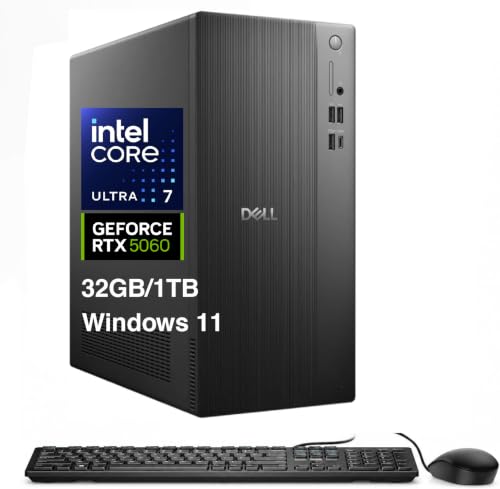
- 20-core Ultra 7 processor
- RTX 5060 8GB dedicated graphics
- 32GB DDR5 and 1TB NVMe SSD
Best For: Demanding architectural design and 3D visualization
Multitasking Workhorse
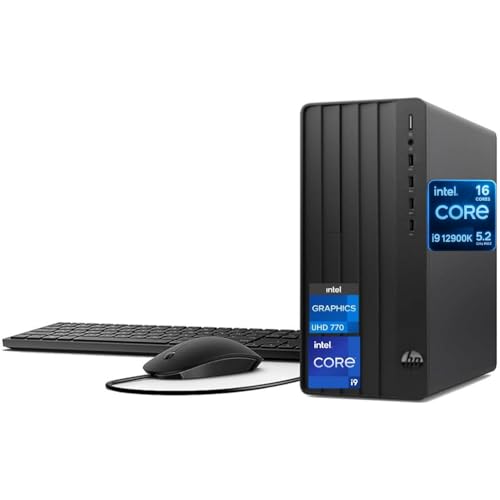
- 16-core Core i9 processor
- 64GB RAM and 2TB PCIe SSD
- HDMI, VGA, Wi-Fi, and Bluetooth
Best For: Large files and productivity-heavy architecture workflows
Compact Workstation Choice

- Professional RTX A400 graphics
- 32GB DDR5 and 1TB SSD
- Supports up to four 4K displays
Best For: Space-constrained CAD and multi-monitor workstations
Everyday Office Value

- 32GB RAM and 1TB SSD
- Eight USB ports and multiple video outputs
- Keyboard, mouse, and USB Wi-Fi adapter included
Best For: Documentation, office work, and light architectural tasks
Best for Easy Setup

- RTX 5060 dedicated graphics with 8GB GDDR7
- 20-core Core Ultra 7 processor
- 32GB DDR5 RAM and 1TB NVMe SSD
Best For: 3D design, rendering, visualization, and heavy multitasking
Best Office-Ready Option

- Core Ultra 7 processor with 32GB DDR5
- Supports up to four 4K monitors
- Windows 11 Pro and accessory bundle included
Best For: Multi-monitor office productivity and architecture documentation
Best Compact Budget Choice

- Space-saving small-form-factor design
- 32GB RAM and 1TB NVMe SSD
- Dual 4K display support via HDMI and DisplayPort
Best For: Basic office work, dual-screen productivity, and compact workspaces
Best Graphics Power
Dell Tower ECT1250 RTX 4060 Desktop

- RTX 4060 graphics with 8GB GDDR6
- 20-core Intel Core Ultra 7 processor
- 32GB DDR5 and 1TB NVMe SSD
Best For: Architectural visualization and graphics-heavy creative work
Best Heavy-Duty Pick
HP OmniDesk Core Ultra 7 Desktop
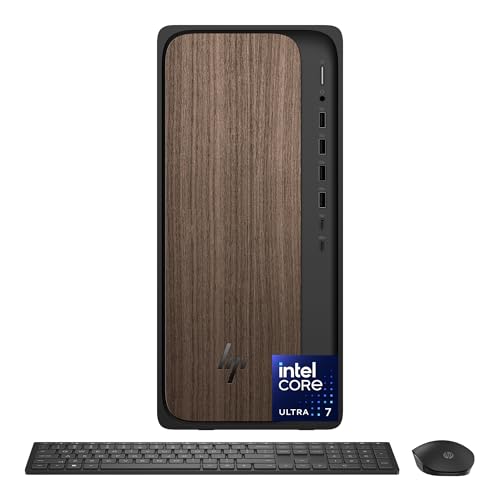
- 20-core Core Ultra 7 265 processor
- 32GB DDR5 and 1TB PCIe SSD
- Windows 11 Pro with Wi-Fi 6
Best For: Professional productivity and multitasking in architecture offices
Best Dual-Display Setup

- Supports dual 4K monitors
- 12-core Intel Core i7-12700K processor
- 32GB DDR5 and 1TB PCIe SSD
Best For: Multi-monitor architectural offices and business workflows
Top Performance Pick – Dell Tower Desktop ECT1250
For architects seeking a powerful desktop computer for architects, the Dell ECT1250 combines a 20-core Intel Core Ultra 7 processor, dedicated RTX 5060 graphics, 32GB of DDR5 memory, and a 1TB NVMe SSD. That combination is well suited to demanding design, visualization, and multitasking workflows.
Best For: Architects and designers who need dedicated graphics for 3D work, multiple displays, and demanding professional applications.
Pros:
- 20-core Ultra 7 processor with boost speeds up to 5.3GHz.
- Dedicated NVIDIA GeForce RTX 5060 graphics with 8GB GDDR7 memory.
- 32GB DDR5 RAM, 1TB PCIe NVMe SSD, and three DisplayPort outputs.
- Windows 11 Pro, Wi-Fi 6, Bluetooth 5.4, keyboard, and mouse included.
Cons:
- The 360W power supply may limit future graphics-card upgrades.
- Storage is limited to 1TB before expansion.
The Dell is the strongest all-around option here for graphics-intensive architectural work. Its dedicated GPU and modern DDR5 platform make it a more suitable choice than integrated-graphics desktops for rendering and visualization.
Multitasking Workhorse – HP Pro Tower 290 G9
The HP Pro Tower 290 G9 is a practical desktop computer for architects who prioritize abundant memory, fast storage, and business-ready connectivity. Its Core i9 processor and 64GB of RAM are especially useful for large project files, extensive multitasking, and professional office workflows.
Best For: Architecture professionals who need high memory capacity, large storage, and a dependable workstation for productivity-focused applications.
Pros:
- 16-core Intel Core i9-12900K processor with speeds up to 5.2GHz.
- 64GB of DDR4 RAM supports extensive multitasking.
- 2TB PCIe SSD with support for an additional 3.5-inch hard drive.
- HDMI, VGA, eight USB ports, Wi-Fi, Bluetooth, keyboard, and mouse included.
Cons:
- Integrated Intel UHD graphics are less suited to intensive 3D rendering than a dedicated GPU.
- Uses older DDR4 memory rather than DDR5.
With its large memory pool and 2TB SSD, this HP is appealing for architecture offices handling numerous documents and applications at once. However, users focused on GPU-heavy rendering should consider a model with dedicated graphics.
Compact Workstation Choice – Dell Pro Max Micro FCM2250
Architects with limited desk space may prefer this compact desktop computer for architects. The Dell Pro Max Micro pairs an Intel Core Ultra 5 235 processor with professional NVIDIA RTX A400 graphics, 32GB of DDR5 RAM, and a 1TB SSD for CAD, 3D modeling, and other technical workflows.
Best For: Architects and engineers who want a space-saving workstation with professional graphics and extensive multi-monitor support.
Pros:
- NVIDIA RTX A400 professional graphics support design and architecture workflows.
- 32GB DDR5 memory and a 1TB SSD provide a capable starting configuration.
- Supports up to four 4K displays or four 5K displays through the RTX A400 outputs.
- Compact form factor, Windows 11 Pro, and ISV certifications for professional applications.
Cons:
- This configuration does not include Wi-Fi or Bluetooth.
- The computer has been resealed for memory and SSD upgrades.
The Pro Max Micro is the most space-conscious option in this group and offers graphics hardware designed for professional workloads. Its lack of wireless connectivity means an Ethernet connection or separate adapters may be necessary.
Everyday Office Value – HP Business Tower Desktop
For straightforward office and study tasks, this HP tower is a budget-minded desktop computer for architects who mainly work with documents, spreadsheets, browser tools, and video meetings. It includes 32GB of RAM and a 1TB SSD, although its integrated graphics are intended for everyday display needs rather than demanding visualization.
Best For: Students, office users, and architecture professionals handling documentation, email, research, and light productivity work.
Pros:
- 32GB RAM supports multiple applications and browser tabs.
- 1TB SSD provides responsive storage for documents and project files.
- Eight USB ports, HDMI, VGA, DVI, Ethernet, and included USB Wi-Fi adapter.
- Keyboard and mouse are included.
Cons:
- Integrated graphics are not designed for demanding 3D modeling or rendering.
- Windows 11 Home is less business-oriented than Windows 11 Pro.
- The listed Core i5-10400 platform is older than the processors in the other options.
This HP makes sense as an economical secondary or general-purpose system. It can handle the administrative side of architectural work well, but users running complex CAD, modeling, or rendering applications should choose a desktop with dedicated graphics.
Best for Easy Setup – Dell RTX 5060 Tower
For architects who need a desktop computer for architects that can handle 3D rendering, creative applications, and demanding multitasking, this Dell tower offers a strong combination of processor and dedicated graphics performance. Its Intel Core Ultra 7 processor, RTX 5060 graphics, 32GB of DDR5 RAM, and 1TB NVMe SSD are well suited to graphics-intensive workflows.
Best For: Architects working with 3D design, rendering, visualization, video, and other GPU-accelerated workloads.
Pros:
- Dedicated NVIDIA GeForce RTX 5060 graphics with 8GB GDDR7 memory.
- 20-core Intel Core Ultra 7 265F processor supports demanding multitasking.
- 32GB DDR5 RAM and 1TB PCIe NVMe SSD provide responsive everyday performance.
- Supports multiple displays and includes Wi-Fi 6, Bluetooth 5.4, and varied ports.
Cons:
- The included 1TB SSD may be limiting for large project archives and media libraries.
- Monitor and other display peripherals are not included.
Among these options, this is the clearest choice when architectural visualization and rendering performance matter most. The removable side panel and tool-less access may also make future compatible upgrades more convenient.
Best Office-Ready Option – HP OmniDesk M03
This HP OmniDesk M03 is a practical desktop computer for architects who prioritize professional office work, multitasking, and flexible monitor support. It combines an Intel Core Ultra 7 processor, 32GB of DDR5 memory, a 1TB NVMe SSD, Windows 11 Pro, and support for up to four 4K monitors.
Best For: Architecture offices focused on documentation, project coordination, research, presentations, and multi-monitor productivity.
Pros:
- 20-core Intel Core Ultra 7 265 processor reaches up to 5.3GHz.
- 32GB DDR5 RAM and 1TB PCIe NVMe SSD support smooth multitasking.
- Supports up to four 4K monitors for expansive project workflows.
- Includes Windows 11 Pro, keyboard, mouse, and a 64GB flash drive bundle.
Cons:
- Uses integrated Intel graphics rather than a dedicated rendering GPU.
- The supplied configuration may be less suitable for intensive 3D rendering.
This HP is a strong fit for architects who spend more time in productivity, documentation, and multi-screen workflows than in GPU-heavy visualization. Its extensive connectivity and Windows 11 Pro make it especially suitable for a conventional office workstation.
Best Compact Budget Choice – HP ProDesk SFF
For basic architectural office work, this compact HP ProDesk provides a space-saving desktop computer for architects with 32GB of RAM, a 1TB SSD, Windows 11 Pro, and dual 4K display support. Its integrated graphics and entry-level Intel processor make it better suited to everyday productivity than advanced 3D modeling or rendering.
Best For: Small offices, education, remote work, drafting-related productivity, web research, and dual-screen administration.
Pros:
- Compact small-form-factor chassis fits easily into space-constrained workstations.
- 32GB DDR4 RAM and 1TB PCIe NVMe SSD support responsive office use.
- HDMI and DisplayPort enable dual-display setups with up to 4K resolution.
- Windows 11 Pro, Wi-Fi, Bluetooth, keyboard, and mouse are included.
Cons:
- Intel Celeron G5905 and integrated UHD Graphics 610 are not designed for demanding rendering.
- DDR4 memory and the older entry-level processor provide less headroom for complex models.
This ProDesk is best viewed as an economical office workstation rather than a primary visualization machine. It can work well for administrative architecture tasks and dual-screen productivity, but users running sophisticated 3D applications should consider a system with dedicated graphics.
Best Graphics Power – Dell Tower ECT1250 RTX 4060 Desktop
For a desktop computer for architects that can handle visualization, content creation, and demanding multitasking, this Dell tower stands out for its dedicated NVIDIA GeForce RTX 4060 graphics. Its 32GB of DDR5 memory and 1TB NVMe SSD provide a capable foundation for design workflows, while Wi-Fi 6 and multiple expansion slots add flexibility.
Best For: Architects who prioritize dedicated graphics performance for 3D visualization, rendering-related workloads, and creative applications.
Pros:
- Dedicated NVIDIA GeForce RTX 4060 with 8GB GDDR6 memory.
- Intel Core Ultra 7-265F processor with 20 cores and built-in AI features.
- 32GB DDR5 RAM and a fast 1TB NVMe SSD.
- Three PCIe expansion slots and eight USB ports support future flexibility.
Cons:
- Supplied details conflict on the operating system, listing both Windows 11 Pro in the title and Windows 11 Home in the specifications.
- It may be more graphics capability than needed for primarily 2D drafting and office work.
With its discrete RTX graphics card, this Dell is the strongest fit here for architecture users whose work includes visual-heavy tasks. Confirm the Windows edition before purchasing if Pro-specific features are important.
Best Heavy-Duty Pick – HP OmniDesk Core Ultra 7 Desktop
This HP OmniDesk is a practical desktop computer for architects who need strong multitasking for productivity software, documents, browser tabs, and business tasks. The 20-core Intel Core Ultra 7 265 processor, 32GB of DDR5 RAM, and 1TB PCIe M.2 SSD provide responsive everyday performance, while Windows 11 Pro and Wi-Fi 6 suit professional environments.
Best For: Architecture offices focused on productivity, business applications, research, and general design-workflow multitasking rather than dedicated 3D graphics.
Pros:
- Intel Core Ultra 7 265 processor with 20 cores and up to 5.3GHz turbo speed.
- 32GB DDR5 RAM helps support multiple applications and browser tabs.
- 1TB PCIe M.2 SSD provides quick boot and file-transfer performance.
- Windows 11 Pro, Wi-Fi 6, Bluetooth, and a broad selection of ports.
Cons:
- Integrated Intel Graphics may be less suitable for demanding 3D visualization than a dedicated GPU.
- Listed maximum display resolution is 1920 × 1080.
The HP offers a well-rounded professional setup for office-centered architectural work. Its integrated graphics keep it less suited to GPU-intensive modeling or rendering, but its memory, storage, connectivity, and Windows 11 Pro support make it a sensible productivity choice.
Best Dual-Display Setup – Dell QCT1250 i7 Desktop Tower
This Dell tower is a practical desktop computer for architects who value multitasking, connectivity, and a dual-monitor workspace. Its Intel Core i7-12700K processor, 32GB of DDR5 RAM, HDMI and DisplayPort outputs, and Windows 11 Pro support make it suitable for business-focused design environments and large-file workflows.
Best For: Architects and design professionals who want a business-ready tower with dual 4K monitor support and versatile wired and wireless connections.
Pros:
- Intel Core i7-12700K offers 12 cores, 20 threads, and speeds up to 5.0GHz.
- Supports dual 4K monitors through HDMI and DisplayPort outputs.
- 32GB DDR5 RAM and a 1TB PCIe SSD support responsive multitasking.
- Includes USB-C, multiple USB ports, Wi-Fi, Bluetooth, TPM security, keyboard, and mouse.
Cons:
- Integrated Intel UHD Graphics 770 is less appropriate for demanding GPU-accelerated rendering.
- The listed specifications state a 32GB maximum memory capacity, limiting documented upgrade headroom.
Choose this Dell when a multi-monitor office setup and broad connectivity matter more than a dedicated graphics card. It is a capable business workstation foundation, though users focused on advanced 3D rendering may need a system with discrete graphics.
How We Picked the Best Desktop Computer for Architects
We compared these systems by focusing on the hardware most relevant to architecture workflows: CPU performance for modeling and document-heavy multitasking, dedicated GPU capability for 3D views and rendering, RAM capacity, SSD storage, display support, and practical upgrade potential. We also considered whether each desktop is better suited to everyday CAD, demanding BIM coordination, visualization, or a compact office.
Specifications can vary by configuration, so verify the exact processor, graphics card, memory, operating system, ports, and warranty before purchasing.
Quick Comparison
| Best For | Recommended Hardware Profile | What to Prioritize |
|---|---|---|
| 2D CAD and office work | Modern Core i5 or Ultra 5, 16GB–32GB RAM, SSD | Fast single-core performance and reliable display outputs |
| BIM and large project files | Core i7/i9 or Ultra 7, 32GB–64GB RAM, NVMe SSD | CPU speed, memory capacity, and upgradeability |
| 3D modeling and viewport work | Dedicated RTX or professional RTX A-series GPU | GPU memory, driver compatibility, and cooling |
| Rendering and visualization | High-core-count CPU, dedicated RTX GPU, 32GB–64GB RAM | Parallel processing, GPU acceleration, and thermals |
| Compact workstation setup | Small-form-factor system with integrated or professional graphics | Size, noise, connectivity, and expansion limits |
Key Buying Factors for a Desktop Computer for Architects
Processor
Architecture applications often benefit from strong single-core performance for interactive modeling, while rendering and exports can use multiple cores. A current Core Ultra 7, Core i7, Core i9, or comparable processor is a strong all-around choice for professional use.
Graphics Card
Integrated graphics may be sufficient for office work and lighter 2D CAD, but dedicated RTX graphics are preferable for complex models, real-time visualization, and GPU-accelerated rendering. Professional graphics cards can be worth considering when certified drivers and workstation stability are priorities.
Memory and Storage
Choose at least 32GB of RAM for serious architectural work, especially with BIM software, large linked models, spreadsheets, and browser tabs open together. A 1TB NVMe SSD provides a good starting point; 2TB is more comfortable for local project files, textures, render assets, and applications.
Ports, Displays, and Upgrades
Check support for the number and resolution of monitors you use. Dual 4K output is useful for most offices, while four-monitor support benefits multi-window workflows. Tower systems generally offer better upgrade access, cooling, and future GPU or storage expansion than compact desktops.
Who Should Buy Which Desktop Computer for Architects?
Students and 2D-focused users: Choose a capable Core i5 or Ultra 5 desktop with 32GB RAM and an SSD. A dedicated GPU is helpful but not essential for lighter coursework.
Architects using Revit, AutoCAD, or similar BIM tools: Favor a Core i7, i9, or Ultra 7 system with 32GB or 64GB RAM, fast storage, and a dedicated graphics card when working with large models.
Visualization specialists: Select an RTX-equipped tower with strong cooling and room for future upgrades. More GPU memory and 64GB RAM become increasingly valuable for complex scenes and rendering.
Small offices and compact workspaces: A professional compact or small-form-factor desktop can reduce desk clutter, but confirm its graphics performance and upgrade limitations before buying.