The best external SSD for a workstation should deliver fast sustained transfers, dependable construction, and enough capacity for active projects, media libraries, backups, or portable scratch storage.
We compare 10 Samsung, SanDisk, and SSK portable SSDs across speed, capacity, connectivity, durability, and value to help you choose the right drive for your workflow.
Best 10 External SSD for Workstation Picks for 2026
Top Speed Pick
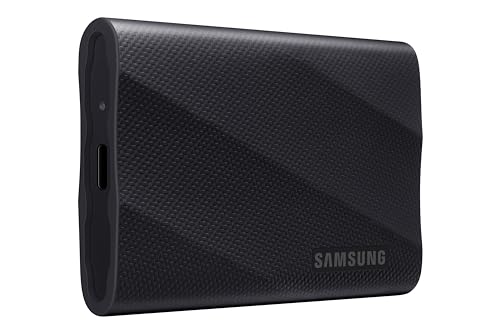
- Up to 2,000 MB/s read and write speeds
- Thermal management for extended workloads
- AES 256-bit encryption and rugged drop resistance
Best For: Creators needing fast, sustained transfers in a 1TB drive
Portable Capacity Pick

- 2TB capacity for active projects
- Up to 2,000 MB/s transfer speeds
- IP65 protection and up to 3-meter drop resistance
Best For: Mobile professionals carrying large photo and video projects
Value Connectivity Pick

- Up to 1,050 MB/s read speed
- Includes USB-C and USB-A cables
- Lightweight aluminum design with TRIM support
Best For: Everyday transfers across USB-C and USB-A devices
Maximum Capacity Pick
- 4TB capacity for large project libraries
- Up to 2,000 MB/s transfer speeds
- IP65 protection with 256-bit AES encryption
Best For: Professionals storing extensive video, photo, and backup files
Balanced Workstation Pick
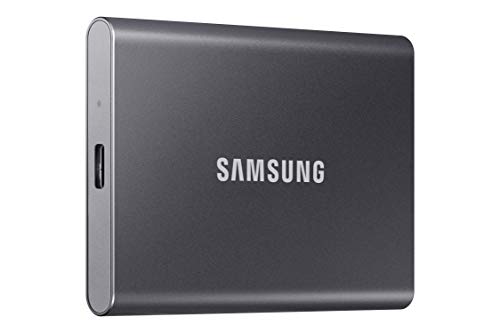
- Up to 1,050MB/s read and 1,000MB/s write speeds
- Compact aluminum body with 6-foot drop protection
- 256-bit AES encryption and broad device compatibility
Best For: Creative users needing fast, portable 1TB storage
Rugged Capacity Choice
SanDisk Extreme 2TB Portable SSD
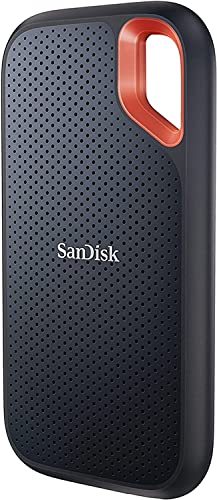
- 2TB capacity for larger workstation projects
- Up to 1,050MB/s read and 1,000MB/s write speeds
- IP65 protection and up to 3-meter drop resistance
Best For: Traveling professionals needing durable, higher-capacity storage
High-Speed Workstation Upgrade
- Up to 2,000MB/s read and write speeds
- Large 4TB capacity for multimedia workflows
- Thermal management and 9.8-foot drop durability
Best For: Creators handling large files and sustained workstation workloads
Fastest Portable Pick
- Up to 2000MB/s transfer speeds
- IP65 and 3-meter drop protection
- 256-bit AES password protection
Best For: Speed-focused creators moving large workstation files
High-Capacity Workhorse
- 2TB capacity for large projects
- Up to 1050MB/s read speeds
- Shock-resistant aluminum unibody
Best For: Workstations needing portable capacity for active files and backups
Simple Everyday Option
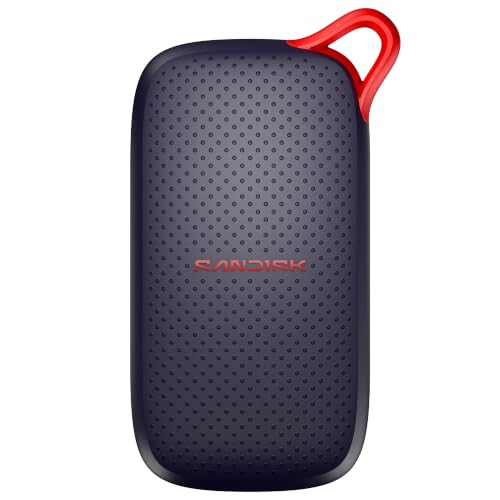
- Up to 1000MB/s read speeds
- 2-meter drop protection
- Lightweight USB-C design
Best For: Everyday workstation transfers and portable project storage
Top Speed Pick – Samsung T9 1TB Portable SSD
The Samsung T9 is a strong external SSD for workstation users who regularly move large project files. With advertised read and write speeds up to 2,000 MB/s, Dynamic Thermal Guard, and AES 256-bit hardware encryption, it is designed for demanding transfers and extended use.
Best For: Creators and workstation users who prioritize high sustained performance in a compact 1TB drive.
Pros:
- Read and write speeds up to 2,000 MB/s.
- Dynamic Thermal Guard helps manage heat during heavy use.
- AES 256-bit hardware encryption and a five-year limited warranty.
- Rugged design rated to endure drops of up to 9.8 feet.
Cons:
- Provides 1TB of storage, which may be limiting for large media libraries.
- Its full advertised speed depends on compatible USB 3.2 Gen 2×2 hardware.
The T9 is a practical performance-focused choice when fast transfers and thermal management matter more than maximum capacity. Its compatibility with Mac, PC, tablets, and iPhone 15/16 adds flexibility for mixed-device workflows.
Portable Capacity Pick – SanDisk Extreme 2TB SSD
The 2TB SanDisk Extreme is a capable external SSD for workstation users who need both speed and room for active projects. It offers transfer speeds up to 2,000 MB/s, a pocket-sized design, IP65 protection, and up to 3 meters of drop protection.
Best For: Mobile professionals who want a high-capacity drive for photo, video, and general workstation files.
Pros:
- 2TB capacity gives more working space than a typical 1TB portable SSD.
- Transfer speeds up to 2,000 MB/s.
- IP65-rated protection against dust and water, plus up to 3-meter drop protection.
- 256-bit AES encryption with password protection.
Cons:
- Its maximum speed requires compatible USB-C hardware.
- The supplied details do not specify an included USB-A adapter.
This SanDisk model balances workstation capacity, portability, and physical protection. It is especially appealing for users who carry project files between a desktop, laptop, tablet, or smartphone.
Value Connectivity Pick – SSK 1TB USB-C Portable SSD
The SSK 1TB is a practical external SSD for workstation users who need straightforward cross-platform connectivity. It reaches read speeds up to 1,050 MB/s, includes both USB-C and USB-A cables, and uses SLC caching to help maintain transfer performance within the cache capacity.
Best For: Users seeking an affordable, lightweight drive for file transfers across computers, mobile devices, and tablets.
Pros:
- Read speeds up to 1,050 MB/s and write speeds up to 1,000 MB/s.
- Includes both USB-C and USB-A cables for broader compatibility.
- Compact aluminum enclosure with LED activity indicator.
- Supports TRIM and S.M.A.R.T. health diagnostics.
Cons:
- Slower than the 2,000 MB/s drives in this roundup.
- Its high-speed SLC cache is limited to a portion of available capacity.
- Offers 1TB of storage.
The SSK is a sensible option for everyday workstation backups and project transfers when 10Gbps-class performance is sufficient. Its included cables and low weight make it convenient for mixed-device setups.
Maximum Capacity Pick – SanDisk Extreme 4TB SSD
The 4TB SanDisk Extreme is a strong external SSD for workstation users managing large media libraries, backups, or extensive project archives. It combines up to 2,000 MB/s transfer speeds with a high-capacity design, IP65 protection, and password-based 256-bit AES encryption.
Best For: Video editors, photographers, and professionals who need substantial portable storage without giving up high transfer speeds.
Pros:
- 4TB capacity supports large project collections and high-resolution media.
- Transfer speeds up to 2,000 MB/s.
- IP65 rating and up to 3 meters of drop protection.
- Password protection with 256-bit AES encryption.
Cons:
- Its maximum speed depends on compatible USB-C hardware.
- The larger capacity may be unnecessary for users with modest storage needs.
For a workstation external SSD, this SanDisk model is the capacity leader in the group while retaining the same advertised speed and rugged protection as the 2TB version. It is a good fit when replacing multiple smaller portable drives is the priority.
Balanced Workstation Pick – Samsung T7 1TB Portable SSD
For an external ssd for workstation setups that balances speed, portability, and everyday compatibility, the Samsung T7 is a practical choice. Its USB 3.2 Gen 2 connection delivers read speeds up to 1,050MB/s and write speeds up to 1,000MB/s, making it well suited to moving project files, photographs, and video assets.
Best For: Creative professionals and workstation users who need a compact 1TB drive for file transfers, backups, and portable project storage.
Pros:
- Fast NVMe-based performance with up to 1,050MB/s read speeds.
- Compact aluminum design with shock resistance and drop protection up to 6 feet.
- Compatible with PCs, Macs, smartphones, tablets, and gaming consoles.
- Supports 256-bit AES hardware encryption.
Cons:
- Its 1TB capacity may be limiting for large workstation media libraries.
- USB 3.2 Gen 2 performance is lower than the speeds offered by newer 20Gbps drives.
The T7 is a strong all-purpose option when you want reliable portable storage without a bulky enclosure. It is especially appealing for workstation users handling moderate-sized creative projects and routine backups.
Rugged Capacity Choice – SanDisk Extreme 2TB Portable SSD
If your external ssd for workstation work needs to travel between locations, the SanDisk Extreme combines 2TB of capacity with fast USB 3.2 performance. It reaches up to 1,050MB/s read and 1,000MB/s write speeds while adding water, dust, and drop protection for demanding mobile workflows.
Best For: Mobile workstation users, photographers, and editors who need extra capacity and a drive built for travel.
Pros:
- Provides 2TB of storage for larger project folders and backups.
- Up to 1,050MB/s read and 1,000MB/s write speeds.
- IP65 water and dust resistance plus up to 3-meter drop protection.
- Includes 256-bit AES hardware encryption and a convenient carabiner loop.
Cons:
- It uses USB 3.2 Gen 2, so it does not match the 2,000MB/s speeds of faster interfaces.
- The listing identifies this as an old model.
The Extreme is a sensible fit when physical durability and capacity matter as much as transfer speed. Its rugged design makes it particularly useful for workstation files that move between the studio, office, and field.
High-Speed Workstation Upgrade – Samsung T9 4TB Portable SSD
For demanding workstation workloads, the Samsung T9 offers a major step up in portable transfer speed and capacity. Its USB 3.2 Gen 2×2 interface supports read and write speeds up to 2,000MB/s, while Dynamic Thermal Guard is designed to help manage heat during longer processes.
Best For: Video editors, creators, and workstation users working with large multimedia projects who need 4TB of fast external storage.
Pros:
- Up to 2,000MB/s read and write speeds for rapid transfers and project loading.
- Generous 4TB capacity for large video, image, and business files.
- Dynamic Thermal Guard helps control heat during heavy use.
- Supports AES 256-bit hardware encryption and includes Magician software for drive management.
Cons:
- Maximum performance depends on a compatible USB 3.2 Gen 2×2 host connection.
- Its 4.32-ounce, 0.55-inch-thick body is less compact than the Samsung T7.
The T9 is the strongest performance choice in this group for users moving large workstation files frequently. Its high capacity and thermal management make it well suited to sustained creative workloads, provided the host system supports its fastest interface.
Fastest Portable Pick – SANDISK Extreme 1TB
For workstation users moving large photo libraries, video projects, or AI-generated media, the SANDISK Extreme 1TB is a speedy external SSD for workstation setups. Its listed transfer speed reaches up to 2000MB/s, while the compact, rugged design makes it practical for mobile workflows and desk-to-desk transfers.
Best For: Creators and professionals who prioritize high transfer speeds, portability, and added protection for working files.
Pros:
- Up to 2000MB/s transfer speeds for large files
- IP65 rating and up to 3-meter drop protection
- 256-bit AES password protection for private files
- Compact 1.6-ounce design with USB-C connectivity
Cons:
- 1TB capacity may be limiting for very large workstation libraries
- Maximum speeds depend on the connected hardware and interface
This is the strongest speed-focused option in the group, particularly for users who frequently move high-resolution media. Its 1TB capacity and portable build make it better suited to active projects and transfers than serving as a sole archive.
High-Capacity Workhorse – Samsung T7 Portable SSD 2TB
The Samsung T7 Portable SSD is a practical external SSD for workstation users who need more room for active projects, backups, or game data. Its 2TB capacity, PCIe NVMe technology, and read speeds up to 1050MB/s provide a balanced combination of storage and everyday performance.
Best For: Workstation owners who want 2TB of portable storage for creative files, backups, and general heavy-duty applications.
Pros:
- Generous 2TB capacity for large working files
- Read speeds up to 1050MB/s and write speeds up to 1000MB/s
- Shock resistance and fall protection up to 6 feet
- 256-bit AES hardware encryption and broad device compatibility
Cons:
- Slower listed transfer speeds than the SANDISK Extreme model
- Only a 3-year limited warranty is listed
The T7 is the capacity-oriented choice here. It offers enough space for a larger project rotation while remaining compact, durable, and compatible with PCs, Macs, mobile devices, and gaming consoles.
Simple Everyday Option – SANDISK Portable SSD 1TB
The SANDISK Portable SSD 1TB is a straightforward external SSD for workstation users who want faster file handling than a traditional portable hard drive. With read speeds up to 1000MB/s, USB-C connectivity, and a slim pocket-sized design, it fits well into everyday office and creative workflows.
Best For: Professionals seeking a compact 1TB drive for routine file transfers, photo storage, and portable project work.
Pros:
- Read speeds up to 1000MB/s
- Drop protection up to 2 meters with no moving parts
- Lightweight 1.12-ounce pocket-sized design
- USB-C ready with no drivers or setup required
Cons:
- Lower rated speed and drop protection than the SANDISK Extreme
- 1TB capacity may not suit extensive workstation archives
- No password protection is listed in the supplied details
This model keeps things simple and portable. It is a sensible fit for routine workstation transfers and active files, but users handling especially large media libraries may prefer the higher speed or capacity of the other options.
How We Picked the Best External SSD for Workstation Use
We focused on portable SSDs with USB-C connectivity, solid-state durability, useful real-world capacities, and published sequential read or transfer speeds. The selection spans compact 1TB drives, larger 2TB and 4TB options, and performance tiers from approximately 1,000MB/s to 2,000MB/s.
Because advertised speeds depend on the computer, cable, port, file sizes, and workload, specifications are best used for comparison rather than as a guarantee of sustained performance. We also considered portability, model generation, and whether a drive is better suited to everyday storage, demanding creative work, or large project archives.
Quick Comparison
- Fastest listed performance: Samsung T9 and newer SanDisk Extreme models advertise speeds up to 2,000MB/s.
- Most capacity: The Samsung T9 and SanDisk Extreme are available in 4TB configurations among these selections.
- Balanced everyday choices: Samsung T7 models offer up to 1,050MB/s in a compact, established design.
- Budget-friendly capacity: SSK and standard SanDisk Portable models target general storage at lower peak speeds.
Key Buying Factors for an External SSD for Workstation
Speed and Workstation Connectivity
A 2,000MB/s-rated drive can shorten large file transfers and improve workflows involving high-resolution video, photo catalogs, virtual machines, or large project folders. To approach those speeds, your workstation needs a compatible USB 3.2 Gen 2×2 port and an appropriate cable. On many systems, a 1,050MB/s-class USB 3.2 Gen 2 drive may perform similarly in practice.
Capacity and Project Organization
Choose 1TB for active projects and portable working files, 2TB for a broader library or frequent media work, and 4TB when you need room for multiple projects, footage, samples, or local archives. Keep free space available because nearly full SSDs can be less convenient for large transfers and project management.
Durability, Heat, and Backup Planning
Portable SSDs are more resistant to movement than hard drives, but they are not a replacement for backups. Use at least one additional copy of important data. For sustained workloads, consider ventilation and occasional temperature checks, since heat can reduce performance during long transfers.
Who Should Buy Which External SSD for Workstation?
Choose a Samsung T9 or newer SanDisk Extreme if you have a compatible high-speed workstation port and regularly move large video, design, engineering, or scientific files. Choose a 4TB model if capacity matters more than minimizing size or cost.
Choose a Samsung T7 for dependable everyday workstation expansion, project transport, and backups when 1,050MB/s-class performance is sufficient. Choose the SSK or standard SanDisk Portable for general file storage, travel, and lighter workloads where maximum transfer speed is not the priority.
Before buying, verify the exact model generation, included cable, workstation port type, operating-system compatibility, and current price. Those details can determine whether a faster-rated drive delivers a meaningful advantage in your setup.