The best MIDI interfaces make it easier to connect keyboards, synthesizers, drum machines, and other MIDI hardware to a computer or modern USB-C device. The right choice depends on your ports, connection direction, latency needs, and whether you also need audio recording.
This roundup covers simple USB-to-MIDI cables, compact host interfaces, and full audio/MIDI interfaces for home studios and live setups. Use the guide below to narrow the options by workflow rather than choosing on price alone.
Best 10 Midi Interfaces Picks for 2026
Best Plug-and-Play Cable
LEKATO USB-C MIDI Interface Cable

- 1-in/1-out MIDI over USB-C
- Plug-and-play Windows and Mac support
- LEDs show power and signal activity
Best For: Simple USB-C keyboard and synthesizer connections
Best Full Studio Hub
Focusrite Scarlett 4i4 4th Gen

- MIDI I/O plus flexible audio connections
- Two mic preamps and two Hi-Z inputs
- 24-bit/192kHz audio with Auto Gain
Best For: Producers building a MIDI-enabled recording studio
Best for MIDI Routing

- Filtering, mapping, and routing support
- Works across major desktop and mobile OSes
- Supports all MIDI channels and listed message types
Best For: Advanced MIDI control with standard five-pin devices
Best Type-C Value
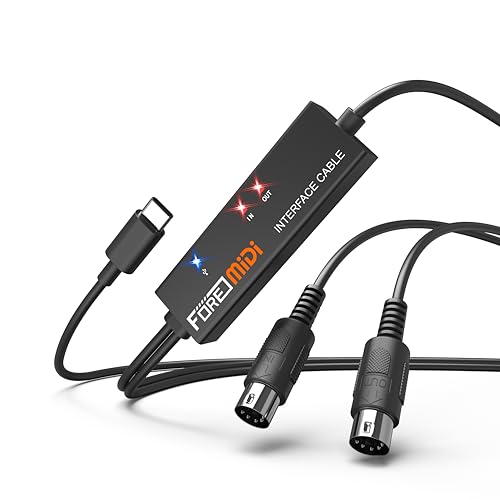
- 1-in/1-out MIDI with 16 channels
- Plug-and-play support for iOS, Android, Mac, and Windows
- LED status indicators and 6.5-foot cable
Best For: Basic USB-C MIDI connections for mobile and computer setups
Best Hybrid MIDI Router
Compact USB Host MIDI Interface

- Standalone USB host mode connects USB MIDI gear to 5-pin DIN hardware.
- Supports up to eight USB MIDI device ports with a hub.
- Includes routing, filtering, mapping, splitting, and four presets.
Best For: Compact hybrid rigs using USB and traditional MIDI hardware
Best Simple MIDI Cable

- Connects a 5-pin MIDI keyboard or piano to a computer.
- Uses a simple 1-in/1-out design for MIDI transfer.
- Includes a USB Type-C adapter for compatible mobile devices.
Best For: Basic keyboard-to-computer recording and MIDI editing
Best Expanded MIDI Interface
Advanced USB Host MIDI Interface

- Combines USB host support with up to 2-in/2-out DIN MIDI.
- Provides 4-in/4-out virtual MIDI over USB-C.
- Supports USB or 9V DC power and optional WIDI expansion.
Best For: Guitarists and producers with complex studio or pedalboard setups
Best Compact Studio Pick
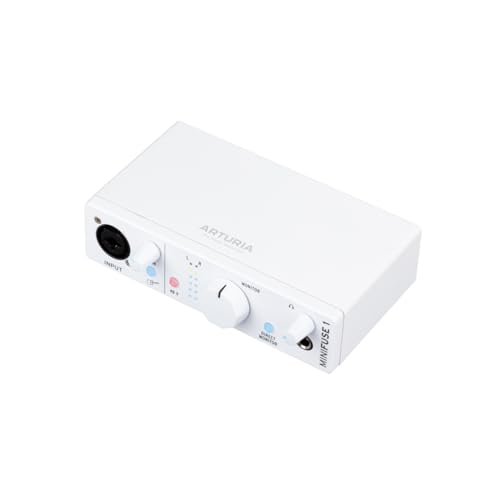
- 5-pin MIDI input and output
- Compact audio interface with loopback
- Five-year warranty and bundled software
Best For: Solo musicians and compact home studios
Best Simple MIDI Adapter

- 5-pin MIDI input and output
- Plug-and-play USB Type-A connection
- Works with computers and mobile devices
Best For: Basic keyboard and synthesizer connections
Best for Multi-Input Recording

- Four inputs and four outputs
- One MIDI input/output
- Four preamps with 48V phantom power
Best For: Small ensembles and expanding home studios
Best Plug-and-Play Cable – LEKATO USB-C MIDI Interface Cable
The LEKATO is a straightforward choice among midi interfaces for connecting a keyboard, synthesizer, drum pad, or digital piano to a Windows computer, Mac, or iPad. Its USB-C connection, built-in driver, and status LEDs make it practical for recording, editing, and troubleshooting MIDI data.
Best For: Home-studio musicians who need a simple USB-C connection for standard MIDI equipment.
Pros:
- Provides one MIDI input and one MIDI output across 16 channels.
- Plug-and-play operation with Windows and macOS, plus stated compatibility with iPad.
- Power and signal LEDs help monitor connections and data activity.
- 6.5-foot cable uses shielding intended to resist electromagnetic interference.
Cons:
- Its integrated cable design is less flexible than a separate box-and-cable interface.
- Older or proprietary devices may require specific settings or may not be recognized immediately.
- It is designed for standard MIDI rather than a larger multi-I/O studio setup.
The LEKATO focuses on convenience and essential MIDI connectivity. It is a sensible budget-oriented fit when USB-C access and visible connection status matter more than expanded routing or audio-interface features.
Best Full Studio Hub – Focusrite Scarlett 4i4 4th Gen
The Focusrite Scarlett 4i4 4th Gen is a broader studio solution than a cable-style MIDI interface. Along with MIDI input and output, it provides microphone, instrument, and line connections, making it useful for recording synths, drum machines, guitars, and vocals through one USB-C audio interface.
Best For: Home studios and producers who need MIDI plus multiple audio inputs and outputs.
Pros:
- Combines MIDI I/O with two mic preamps, two Hi-Z inputs, four line inputs, and four line outputs.
- Offers up to 24-bit/192kHz operation and a stated 120dB dynamic range.
- Air mode adds presence and harmonic drive to vocals and guitars.
- Auto Gain and Clip Safe help simplify level setting and prevent clipping.
Cons:
- It is larger and more involved than a basic one-cable MIDI interface.
- The extra audio hardware may be unnecessary if you only need MIDI connectivity.
- Its included power supply and multiple connections make it less portable than bus-powered cable options.
The Scarlett 4i4 makes the most sense when MIDI is only part of your setup. Its expanded I/O and recording features provide room to connect several instruments and microphones, while the included software bundle adds value for a new or growing studio.
Best for MIDI Routing – CME U2MIDI Pro USB MIDI Cable
The CME U2MIDI Pro stands out among midi interfaces for users who want more control than basic note transmission. This USB-A-to-MIDI cable supports all 16 channels and includes filtering, mapping, and routing tools for managing keyboards, synthesizers, drum machines, and other standard five-pin MIDI devices.
Best For: Musicians who need advanced MIDI filtering, mapping, or routing across multiple operating systems.
Pros:
- Supports MIDI notes, controllers, clock, SysEx, MTC, and MPE across 16 channels.
- Works without drivers on macOS, iOS, Windows, Android, Linux, and ChromeOS.
- UxMIDI Tools enables MIDI filtering and routing, including merge and split functions.
- Uses a 32-bit processor, high-speed optocoupler, and status LEDs for responsive operation.
Cons:
- Its USB-A connector may require an adapter for devices with only USB-C ports.
- Advanced routing features may be more than a beginner needs.
- It provides one MIDI input and one MIDI output rather than multiple physical MIDI ports.
The U2MIDI Pro is a strong choice when dependable transmission and software-configurable MIDI control are priorities. Its broad operating-system support and lifetime updates make it particularly useful for varied computer and mobile setups.
Best Type-C Value – FORE T1 USB-C MIDI Interface
The FORE T1 is a compact cable-style option for connecting a five-pin MIDI keyboard, synthesizer, electronic drum, or other MIDI device to a USB-C computer, phone, or tablet. For shoppers comparing midi interfaces, its built-in driver, status indicators, and compatibility with common music software keep setup simple.
Best For: Mobile and computer musicians needing basic MIDI input and output over USB-C.
Pros:
- Offers one MIDI input and one MIDI output across 16 channels.
- Supports iOS, Android, Windows, and macOS, with compatibility stated for several DAWs and music apps.
- Built-in driver and LED indicators support plug-and-play setup and status monitoring.
- High-performance processing and layered cable protection are intended to provide stable transmission.
Cons:
- The USB A-C adapter mentioned for Type-A connections is not included.
- It is limited to basic one-in/one-out MIDI connectivity.
- Device compatibility should be checked carefully, especially with older equipment and mobile adapters.
The FORE T1 is a practical fit for musicians who already use USB-C devices and want a direct way to record or edit MIDI. Its main limitation is the need for an additional adapter when connecting to a USB-A port.
Best Hybrid MIDI Router – Compact USB Host MIDI Interface
The CME H2MIDI Pro is one of the more flexible MIDI interfaces for combining USB controllers and traditional 5-pin DIN gear. Its standalone USB-host mode works without a computer, while USB-C client mode supports computer and mobile setups.
Best For: Producers and performers building compact hybrid MIDI rigs with USB and legacy hardware.
Pros:
- Connects class-compliant USB MIDI devices to 5-pin DIN hardware without a computer.
- Supports up to eight USB MIDI device ports through a standard USB hub.
- Offers routing, filtering, mapping, splitting, and four saved presets.
- Works with macOS, Windows, iOS, Android, Linux, and ChromeOS.
Cons:
- Its single 5-pin DIN input and output may be limiting for larger traditional MIDI systems.
- Advanced configuration relies on the HxMIDI Tools software.
Choose the H2MIDI Pro when you need sophisticated MIDI routing in a very small enclosure. It is especially appealing for portable or hybrid setups, though larger rigs may benefit from the H4MIDI WC’s expanded DIN connectivity.
Best Simple MIDI Cable – USB to MIDI Cable Adapter
This NUOSIYA USB-to-MIDI cable is a straightforward option among MIDI interfaces for connecting a compatible keyboard or piano to a computer for MIDI recording and editing. Its 1-in/1-out design keeps the setup simple for basic transfers.
Best For: Keyboard players who need an affordable, direct connection to a Windows or Mac computer.
Pros:
- Provides a direct 5-pin MIDI connection to a computer over USB.
- Supports Windows systems and Mac OS X, with 16 MIDI input and output channels.
- Includes a USB Type-C adapter for compatible mobile or tablet connections.
- The recessed connector design is intended to make plugging and unplugging easier.
Cons:
- It is a cable-style 1-in/1-out interface rather than a configurable MIDI router.
- Mobile compatibility may require an adapter and depends on the device.
- Older audio equipment with RCA-only connections may require additional adapters.
For basic keyboard-to-computer MIDI transfer, this cable avoids unnecessary features and hardware. It is less suitable for complex routing, multiple devices, or standalone operation than the CME interfaces.
Best Expanded MIDI Interface – Advanced USB Host MIDI Interface
The CME H4MIDI WC is a feature-rich choice among MIDI interfaces, combining standalone USB-host operation with up to two MIDI input and output ports. Its 4-in/4-out USB-C client mode and optional WIDI expansion make it well suited to more demanding studio, pedalboard, and performance systems.
Best For: Guitarists and producers who need expanded routing, multiple MIDI connections, and flexible power options.
Pros:
- Connects USB MIDI instruments, controllers, pedals, and synthesizers without a computer.
- Provides up to 2-in/2-out 5-pin DIN MIDI and 4-in/4-out virtual MIDI over USB-C.
- Supports USB or 9V DC standalone power for studio and stage use.
- Offers routing, filtering, mapping, thru, split, merge, and four saved presets.
Cons:
- WIDI Bluetooth MIDI requires the optional WIDI Core module.
- Its broader feature set may be more than needed for a basic keyboard-to-computer connection.
- Advanced routing setup requires HxMIDI Tools.
The H4MIDI WC is the stronger pick when a setup needs more physical MIDI connectivity and configurable signal handling. Its optional wireless expansion and dual-power design add flexibility, especially for pedalboards and live rigs.
Best Compact Studio Pick – Arturia MiniFuse 1
If you want a compact option for recording voice, guitar, synths, or other instruments, the Arturia MiniFuse 1 is one of the more versatile MIDI interfaces in this roundup. It combines 5-pin MIDI input and output with a USB audio interface, balanced outputs, headphone monitoring, 48V phantom power, and a USB hub in a small, portable design.
Best For: Home-studio musicians, vocalists, guitarists, and beginners who want audio recording plus MIDI connectivity in a compact interface.
Pros:
- Includes 5-pin MIDI input and output for synths, controllers, and drum machines.
- Supports recording voice, guitar, synths, and microphones with up to 192 kHz sample rate.
- Includes 48V phantom power, balanced line outputs, headphone volume control, and loopback functionality.
- Comes with creative software and a five-year warranty.
Cons:
- Its single-channel design is less suitable for recording several sources at once.
- Some included software requires separate accounts or subscriptions to use fully.
The MiniFuse 1 is a strong all-around choice when you need a portable audio interface with traditional MIDI connections. Its limited input count favors solo recording and compact setups rather than larger ensembles.
Best Simple MIDI Adapter – FORE MIDI USB Interface
The FORE MIDI USB Interface is a straightforward choice for connecting a keyboard, synthesizer, electronic drum, or other 5-pin MIDI device to a computer. Unlike full audio interfaces, this cable-style adapter focuses on MIDI data transfer, with plug-and-play setup and USB Type-A connectivity.
Best For: Musicians who need an inexpensive, dedicated connection between one 5-pin MIDI device and a computer or compatible mobile device.
Pros:
- Provides one MIDI input and one MIDI output with 16 MIDI channels.
- Plug-and-play design uses a built-in driver and LED status indicators.
- Supports Windows, macOS, iOS, and Android devices, as well as software such as GarageBand, Cubase, and FL Studio.
- Uses a 6.5-foot integrated cable and USB bus power.
Cons:
- It does not provide audio inputs, outputs, microphone preamps, or headphone monitoring.
- The included connection is USB Type-A; a USB A-to-C adapter is needed for some devices and is not included.
This FORE adapter makes sense when your setup only needs MIDI communication rather than audio recording. Its dedicated input and output are practical for basic sequencing and recording, but it cannot replace a combined USB audio/MIDI interface.
Best for Multi-Input Recording – Behringer UMC404HD
The Behringer U-PHORIA UMC404HD is a practical choice for musicians who need more simultaneous audio inputs alongside MIDI. This 4×4 USB audio/MIDI interface offers four inputs and outputs, one MIDI input/output, four MIDAS-designed microphone preamps, 48V phantom power, and 24-bit/192 kHz recording.
Best For: Home studios, small ensembles, and producers recording multiple microphones or instruments while keeping MIDI gear connected.
Pros:
- Provides four audio inputs and four outputs for flexible recording and routing.
- Includes one MIDI input/output for connecting compatible keyboards, synthesizers, and controllers.
- Four MIDAS-designed microphone preamps include +48V phantom power.
- Features 24-bit/192 kHz resolution, ultra-low-latency streaming, and a metal chassis.
Cons:
- At 2.7 pounds, it is less portable than compact one-channel interfaces.
- Its larger feature set may be more than needed for a simple single-instrument MIDI setup.
The UMC404HD stands out when audio input capacity matters as much as MIDI connectivity. It is better suited to a growing recording setup than to users seeking a small, dedicated MIDI adapter.
How We Picked These Midi Interfaces
We selected these Midi Interfaces to cover the most common studio and performance setups: connecting classic 5-pin MIDI gear to a computer, controlling USB MIDI devices without a computer, and combining MIDI with microphone or instrument recording. We considered connection type, input and output availability, USB compatibility, portability, host functionality, and the practical needs of keyboards, synthesizers, and home studios.
Simple cables can be the best value when you only need a direct computer connection. More advanced units are better suited to routing, filtering, mapping, or using USB MIDI hardware with traditional MIDI equipment.
Quick Comparison of the Midi Interfaces
| Best For | Look For | Recommended Type |
|---|---|---|
| Basic computer connection | USB and 5-pin MIDI input/output | USB-to-MIDI cable |
| USB-C keyboards and newer devices | Native USB-C compatibility | USB-C MIDI interface |
| Routing and MIDI control | Filtering, mapping, or host mode | Advanced MIDI interface |
| Recording audio and MIDI | Mic preamps, instrument inputs, and MIDI I/O | USB audio/MIDI interface |
| Computer-free hardware setups | USB host functionality | USB MIDI host interface |
Key Buying Factors for Midi Interfaces
Ports and Connection Direction
Check whether your equipment uses 5-pin DIN MIDI, USB-A, USB-C, or a combination. A standard USB-to-MIDI cable typically connects one MIDI device to a computer, while interfaces with both MIDI In and MIDI Out support two-way communication. If you need to connect multiple devices, confirm the number of independent ports before buying.
USB Host Support
Most USB MIDI controllers expect a computer or host device. A USB host interface can let one USB MIDI device communicate with traditional MIDI hardware without a computer, which is useful for live rigs and hardware-focused studios. Do not assume every USB MIDI interface includes this feature.
Audio Features
If you record vocals, guitars, or microphones as well as MIDI, an audio/MIDI interface may offer better long-term value. Compare input count, microphone preamp quality, phantom power, headphone monitoring, and maximum sample rate. If MIDI is your only concern, a smaller dedicated adapter is usually simpler and less expensive.
Compatibility and Reliability
Look for compatibility with your operating system and device ports, especially when using USB-C tablets, phones, or newer laptops. Stable drivers, clear MIDI signal direction, durable connectors, and low-latency performance matter more than headline specifications for most musicians.
Who Should Buy Which Midi Interfaces?
Choose a Basic MIDI Cable If:
You need an affordable way to connect a keyboard or synthesizer with 5-pin MIDI to a Windows, Mac, or compatible mobile device. Prioritize the correct USB connector and confirm whether the cable supports both input and output.
Choose a Compact USB MIDI Interface If:
You want better portability, USB-C support, or dedicated filtering and mapping features. These are a strong fit for electronic musicians who use a small hardware setup and need dependable MIDI control on the road.
Choose a USB Host Interface If:
You want to connect USB MIDI equipment to hardware MIDI devices without relying on a computer. This is especially useful for standalone keyboards, sequencers, drum machines, and live performance systems.
Choose an Audio/MIDI Interface If:
You are building a home studio and need MIDI alongside microphones, instruments, headphones, and monitor speakers. Models with multiple analog inputs are the better choice for recording several sources or expanding your setup over time.