The best MIDI interfaces for recording make it easier to connect microphones, instruments, headphones, and studio monitors without complicating your workflow. The right model depends on how many inputs you need, whether MIDI connectivity is essential, and how much room you want to leave for future expansion.
We compared compact two-channel interfaces, beginner-friendly bundles, and higher-I/O options to help you choose a reliable fit for home recording, music production, podcasting, and small studio work.
Best 10 Midi Interfaces for Recording Picks for 2026
Best Overall
Focusrite Scarlett 2i2 4th Gen

- Two mic preamps and Hi-Z instrument inputs
- 24-bit/192kHz audio with 120dB dynamic range
- Auto Gain, Clip Safe, and Air modes
Best For: Solo vocalists, guitarists, and compact home studios
Best MIDI Connectivity

- Five-pin MIDI input and output
- Four analog inputs with phantom power
- Loopback and extensive included software
Best For: Beginners using synths, controllers, and home-recording gear
Best Studio Hub
Focusrite Scarlett 4i4 4th Gen

- Four inputs and four outputs
- MIDI I/O plus mic, Hi-Z, and line inputs
- Auto Gain, Clip Safe, and Air modes
Best For: Growing home studios with multiple instruments
Best for Larger Setups

- 18 inputs and 20 outputs over USB
- Eight MIDAS-designed mic preamps
- ADAT I/O and 24-bit/96kHz audio
Best For: Ensemble recording and expandable home studios
Versatile Studio Pick
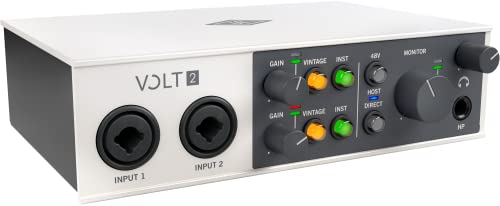
- 610-style Vintage mode for richer preamp character
- 24-bit/192 kHz recording with MIDI connectivity
- Supports desktop and compatible mobile devices
Best For: Musicians, podcasters, and streamers wanting portable, characterful recording
Compact MIDI Value
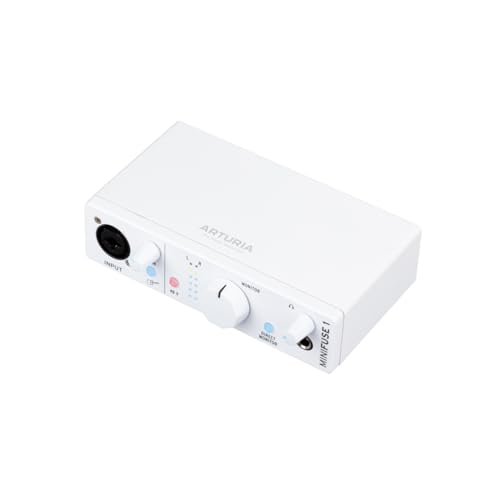
- 5-pin MIDI input and output for traditional MIDI gear
- Compact USB interface with loopback and phantom power
- Includes Ableton Live Lite and Arturia creative software
Best For: Beginners and mobile musicians using synths, controllers, or drum machines
Simple Vocal and Guitar Choice
Focusrite Scarlett Solo 3rd Gen

- XLR mic preamp plus Hi-Z instrument input
- Air mode and 24-bit/192 kHz recording support
- Includes a broad starter software bundle
Best For: Solo vocalists, guitarists, podcasters, and simple home studios
Versatile Starter Pick

- Two combo inputs with phantom power
- Zero-latency USB/direct monitoring
- Includes MPC Beats software
Best For: Beginner recording, podcasting, and streaming setups
Complete Songwriter Bundle
Focusrite Scarlett Solo Studio 4th Gen

- Includes mic, headphones, and recording software
- 120dB dynamic range with up to 192kHz recording
- Air mode enhances vocal and guitar presence
Best For: Solo songwriters building a complete home studio
MIDI-Ready Value Pick
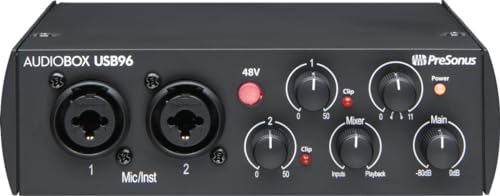
- Built-in MIDI input and output
- Two mic preamps plus instrument inputs
- Bus-powered with 24-bit/96kHz support
Best For: Portable home recording with MIDI hardware
Best Overall – Focusrite Scarlett 2i2 4th Gen
The Focusrite Scarlett 2i2 4th Gen is a straightforward choice for anyone shopping for midi interfaces for recording who mainly needs two input channels. Its two mic preamps, Hi-Z instrument inputs, 24-bit/192kHz support, and USB connectivity cover common vocal and guitar recording setups.
Best For: Solo musicians, vocalists, and guitarists building a compact home studio.
Pros:
- Two mic preamps and two Hi-Z instrument inputs
- 120dB dynamic range with 24-bit/192kHz recording
- Auto Gain and Clip Safe help prevent poorly set levels and clipping
- Includes Ableton Live Lite, Pro Tools Intro+, Cubase LE, and additional production software
Cons:
- Two inputs may be limiting for recording several sources at once
- No MIDI input or output is listed
The 2i2 is a focused, portable recording interface rather than a full studio hub. Choose it when simplicity and reliable two-channel recording matter more than extensive routing or MIDI connectivity.
Best MIDI Connectivity – Arturia MiniFuse 2
The Arturia MiniFuse 2 is a practical pick among midi interfaces for recording when you need to connect microphones, instruments, and MIDI hardware in one compact unit. It adds five-pin MIDI I/O, loopback, a USB hub, and bundled creative software to a plug-and-play design.
Best For: Beginners and mobile producers working with microphones, guitars, synths, controllers, or drum machines.
Pros:
- Includes five-pin MIDI input and output connections
- Two combo mic/instrument/line inputs plus two additional instrument/line inputs
- Loopback supports capturing voiceovers alongside in-app or in-game audio
- Comes with Ableton Live Lite, Analog Lab Intro, effects, guitar software, and other creative tools
Cons:
- Its compact I/O is less extensive than a larger rack-style interface
- USB connectivity is specified, without USB-C being listed in the supplied details
With MIDI connections and an approachable software bundle, the MiniFuse 2 is well suited to producers who want to start quickly and expand beyond basic microphone recording.
Best Studio Hub – Focusrite Scarlett 4i4 4th Gen
The Focusrite Scarlett 4i4 4th Gen is a stronger fit for midi interfaces for recording when your setup includes several instruments or line-level sources. It combines two mic preamps, two Hi-Z inputs, four line inputs, four outputs, and MIDI I/O with 24-bit/192kHz recording.
Best For: Home studios connecting microphones, guitars, synths, drum machines, and MIDI equipment.
Pros:
- Offers four inputs and four outputs for broader studio connectivity
- Includes two mic preamps, two Hi-Z inputs, four line inputs, and MIDI I/O
- 120dB dynamic range with Auto Gain, Clip Safe, and Air modes
- Includes Ableton Live Lite, Pro Tools Intro+, Cubase LE, and Hitmaker Expansion
Cons:
- Larger and heavier than the Scarlett 2i2
- More features may be unnecessary for a simple one- or two-source setup
The 4i4 makes more sense than a basic two-input interface when you need to leave multiple sources connected. Its MIDI I/O and line inputs also make it a flexible centerpiece for a growing home studio.
Best for Larger Setups – Behringer UMC1820
The Behringer UMC1820 is designed for larger recording systems rather than minimal desktop rigs. For shoppers comparing midi interfaces for recording, its 18×20 USB audio/MIDI architecture, ADAT I/O, and eight MIDAS-designed mic preamps provide substantial room for microphones and instruments.
Best For: Larger home studios, ensemble recording, and setups that need many simultaneous inputs and outputs.
Pros:
- Streams 18 inputs and 20 outputs over USB 2.0
- Eight mic preamps with +48V phantom power
- Includes ADAT I/O for expanding a compatible studio system
- Supports 24-bit/96kHz audio and popular recording software
Cons:
- Its 96kHz maximum sample rate is lower than the 192kHz options listed for the other interfaces
- The larger 24.35-inch-wide chassis is less suited to compact desks
- The supplied compatibility details are less broad than those of the other products
The UMC1820 is the practical choice when channel count matters most. It is overbuilt for a solo singer-songwriter, but valuable for recording multiple microphones, instruments, or an expanded hardware setup.
Versatile Studio Pick – Universal Audio Volt 2
The Universal Audio Volt 2 is a strong choice among midi interfaces for recording when you want two-channel connectivity, high-resolution capture, and a portable setup. Its Vintage mode adds 610-style tube-preamp character, while support for Mac, Windows, iPad, and iPhone expands where you can record.
Best For: Musicians, podcasters, and streamers seeking rich preamp color and flexible mobile recording.
Pros:
- Vintage mode provides UA 610 tube-emulation character.
- Supports recording and mixing up to 24-bit/192 kHz.
- Includes MIDI and works with Mac, Windows, iPad, and iPhone.
- Works with LUNA and supports several included or compatible software options.
Cons:
- Mobile Apple recording may require an external power supply and Lightning adapter.
- Only two channels are available for simultaneous recording.
The Volt 2 balances portable design with a characterful preamp sound and modern high-resolution recording. It is especially appealing if MIDI connectivity and access to the LUNA workflow matter as much as basic audio capture.
Compact MIDI Value – Arturia MiniFuse 1
The Arturia MiniFuse 1 is a compact option among midi interfaces for recording, combining a plug-and-play USB workflow with 5-pin MIDI input and output. It provides a microphone, instrument, and line input, plus bundled software for producing, practicing, and shaping sounds.
Best For: Beginners, mobile creators, and musicians who need a small interface with traditional MIDI connections.
Pros:
- Includes 5-pin MIDI input and output for synths, controllers, and drum machines.
- Offers 192 kHz maximum sample-rate support and 48V phantom power.
- Compact design includes loopback, headphone control, balanced outputs, and a USB hub.
- Comes with Ableton Live Lite, Analog Lab Intro, effects, instruments, and other creative software.
Cons:
- Its single-channel design is less suited to recording multiple sources at once.
- The compact input arrangement may be limiting for larger studio setups.
MiniFuse 1 stands out for putting genuine MIDI I/O and a generous software bundle into a small interface. It is a practical starting point for home recording, especially when simplicity, portability, and synth integration are priorities.
Simple Vocal and Guitar Choice – Focusrite Scarlett Solo 3rd Gen
The Focusrite Scarlett Solo 3rd Gen is a straightforward option for midi interfaces for recording when your setup centers on one microphone and one instrument. Its Air mode, Hi-Z input, Gain Halos, and 24-bit/192 kHz converters support clear vocal, guitar, and podcast recordings.
Best For: Solo vocalists, guitarists, podcasters, and producers building a simple home studio.
Pros:
- Combines an XLR mic preamp with a Hi-Z instrument input.
- Air mode can add clarity to acoustic instruments and recordings.
- Records and mixes up to 24-bit/192 kHz with low-noise balanced outputs.
- Includes Pro Tools Intro+, Ableton Live Lite, Cubase LE, and Hitmaker Expansion.
Cons:
- It does not list dedicated MIDI input or output in the supplied specifications.
- Its one-mic/one-instrument layout is not designed for multi-source sessions.
The Scarlett Solo 3rd Gen is best viewed as a focused audio interface rather than a full MIDI hub. Choose it when clean vocal or guitar recording is the priority and your MIDI devices can connect through another route.
Versatile Starter Pick – M-Audio M-Track Duo
The M-AUDIO M-Track Duo is a practical choice for musicians, podcasters, and streamers looking for midi interfaces for recording alongside two-channel audio capture. Its combo inputs, phantom power, and USB/direct monitoring make it flexible for home recording and live use.
Best For: Beginners who need an affordable, portable interface for guitar, vocals, podcasting, or streaming.
Pros:
- Two combo XLR/line/instrument inputs with phantom power
- USB/direct switch supports zero-latency monitoring
- Includes MPC Beats and supports up to 48kHz audio
Cons:
- Maximum sample rate is limited to 48kHz
- Only two input channels are provided
The M-Track Duo covers the essentials without adding unnecessary complexity. It is especially suitable when portability, straightforward monitoring, and flexible input options matter more than high-resolution recording.
Complete Songwriter Bundle – Focusrite Scarlett Solo Studio 4th Gen
The Focusrite Scarlett Solo Studio 4th Gen is a ready-to-use option for anyone comparing midi interfaces for recording and wanting the microphone, headphones, and software included. Its 120dB dynamic range, 192kHz capability, and Air mode are designed for detailed vocal and instrument recording.
Best For: Songwriters and home producers who want a complete recording setup with a condenser microphone and headphones.
Pros:
- Includes CM25 MkIII condenser microphone and SH-450 headphones
- Offers 24-bit/192kHz recording and a 120dB dynamic range
- Air mode adds presence and harmonic drive to vocals and guitars
- Includes Ableton Live Lite, Pro Tools Intro+, Cubase LE, and additional software
Cons:
- Provides one XLR microphone input and one Hi-Z instrument input
- More bundle-focused than suited to multi-microphone recording
With its included recording essentials and broad software package, the Scarlett Solo Studio is a convenient way to start making music immediately. Choose it when sound quality and an all-in-one bundle are higher priorities than expanding beyond a solo setup.
MIDI-Ready Value Pick – PreSonus AudioBox 96
The PreSonus AudioBox 96 25th Anniversary is a strong fit for shoppers seeking midi interfaces for recording with built-in MIDI I/O. It combines two mic preamps, instrument inputs, zero-latency mixer control, and bus-powered USB operation in a portable two-channel design.
Best For: Home recordists who need MIDI hardware connectivity, dual microphone inputs, and mobile-friendly operation.
Pros:
- Includes MIDI input and output for compatible hardware
- Two Class-A mic preamps and high-headroom instrument inputs
- Supports up to 24-bit/96kHz recording and playback
- Includes Studio One Artist, Ableton Live Lite, and Studio Magic Plug-In suite
Cons:
- USB 2.0 connectivity is less modern than USB-C
- Only two audio channels are available
- Phantom power is global rather than individually switchable
The AudioBox 96 stands out when MIDI connectivity and flexible software support are important. Its bus-powered design also makes it convenient for portable recording, while the two-channel layout keeps the setup simple.
How We Picked the Best Midi Interfaces for Recording
We focused on practical features that affect everyday recording: input and output count, microphone preamp quality, MIDI connectivity, monitoring controls, computer compatibility, included software, portability, and upgrade potential. The selection includes affordable interfaces for first-time users as well as models with enough I/O for more advanced sessions.
Because product needs vary widely, we did not treat the most expensive or feature-rich model as automatically best. A compact interface can be the smarter choice for a singer-songwriter, while a larger unit may be more economical for a band or hardware-based setup.
Quick Comparison
- Best for basic two-channel recording: Focusrite Scarlett 2i2, Universal Audio Volt 2, or Arturia MiniFuse 2.
- Best for a solo musician: Focusrite Scarlett Solo or MiniFuse 1.
- Best for a complete starter setup: Focusrite Scarlett Solo Studio 4th Gen bundle.
- Best for multiple microphones and instruments: Focusrite Scarlett 4i4 or Behringer UMC1820.
- Best for a simple budget setup: M-Audio M-Track Duo or PreSonus AudioBox 96.
Key Buying Factors for Midi Interfaces for Recording
Input and Output Count
Count the sources you expect to record at the same time. One or two inputs suit vocals, guitar, keyboards, and simple overdubs. Four or more inputs are better for stereo instruments, multiple microphones, drum recording, or small ensembles. Extra line outputs are useful when routing audio to external hardware or separate monitor mixes.
MIDI and Instrument Connectivity
If you use a hardware keyboard, drum machine, or other MIDI equipment, look for dedicated MIDI input and output. USB MIDI may be enough for some controllers, but traditional five-pin MIDI offers broader compatibility with external instruments. Also check for high-impedance instrument inputs if you record guitar or bass directly.
Monitoring and Recording Quality
Look for direct monitoring, a convenient headphone output, phantom power for condenser microphones, and low-latency operation. Modern 24-bit interfaces are suitable for most home recording, but preamp gain range and clean headphone output can matter more than headline specifications.
Software, Power, and Compatibility
Confirm that the interface works with your computer and preferred digital audio workstation. USB-C models may still require an adapter on older computers. Bus-powered units are convenient for mobile work, while larger interfaces may use external power and provide more stable connectivity for expanded setups.
Who Should Buy Which Midi Interfaces for Recording?
Choose a compact one- or two-input model if you mainly record yourself, travel, or want a straightforward first interface. Choose a four-input model if you expect to record two performers, stereo sources, or several hardware devices. Choose an expandable multi-input interface if you record bands, drums, or several microphones at once.
Before buying, prioritize your current workflow and then leave modest room for growth. The best option is the one that provides the required inputs, monitoring features, and connections without making your setup harder to use.