Traveling musicians need an interface that fits the workflow as well as the luggage. The right model can connect keyboards, controllers, synths, instruments, and mobile devices without adding unnecessary bulk or setup time.
These 10 picks cover dedicated MIDI interfaces, USB-C MIDI cables, and compact audio interfaces with MIDI-friendly features, helping you choose a reliable solution for rehearsals, live work, production, and recording on the move.
Best 10 Midi Interfaces for Traveling Musicians Picks for 2026
Best Budget Cable

- USB-C plug-and-play connection
- LED power and signal indicators
- One MIDI input and output
Best For: Simple, affordable travel MIDI setups
Best for Complex Rigs

- Standalone 3-in/3-out MIDI routing
- Merge, split, filter, and map functions
- Works across major operating systems
Best For: Traveling musicians with multi-device MIDI rigs
Best for Mobile Recording
Synido A20 USB-C Audio Interface

- Pocket-sized audio recording design
- 24-bit/96 kHz capture with adaptive gain
- Supports mobile streaming and phone charging
Best For: Mobile recording, practice, and live streaming
Best Dual-Purpose Design

- USB-C interface and standalone cable modes
- Retractable plug for compact packing
- Routing, filtering, and mapping tools
Best For: Minimalist travel rigs using computers and MIDI hardware
Best Overall Audio Pick
Focusrite Scarlett Solo 3rd Gen

- 24-bit/192kHz recording with Air mode
- Mic and Hi-Z instrument inputs
- Lightweight, Mac/Windows/iPadOS compatible
Best For: Solo artists recording vocals, guitar, or bass while traveling
Best MIDI Travel Hub

- Standalone USB host with 5-pin DIN MIDI
- Expandable to eight USB MIDI devices
- Ultra-compact 2.08-ounce design
Best For: Hybrid rigs combining USB and traditional MIDI hardware
Best Budget Recording Companion

- Two combo mic, line, and instrument inputs
- Zero-latency USB/direct monitoring
- Includes MPC Beats software
Best For: Affordable mobile recording, streaming, and podcasting
Best All-Around Pick
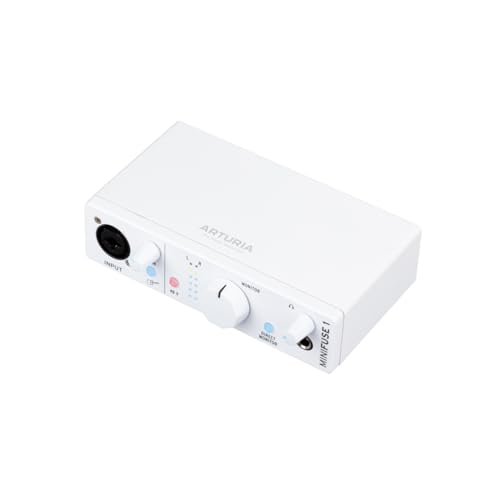
- Compact interface with 5-pin MIDI input and output
- Supports microphones, instruments, synths, and Loopback
- Includes software bundle and five-year warranty
Best For: Traveling musicians needing MIDI plus flexible audio recording
Most Portable Guitar Option

- Pocket-sized USB-C interface for mobile recording
- Bus-powered with no separate power supply
- High-impedance guitar and bass input with headphone mix control
Best For: Guitarists and bassists traveling with a minimal setup
Best for Two-Channel Mobile Studios
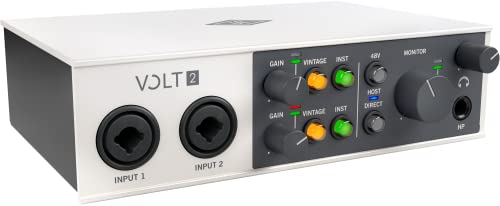
- Two-channel interface with MIDI connectivity
- 24-bit/192 kHz recording and Vintage preamp mode
- Supports Mac, Windows, iPad, and iPhone recording
Best For: Traveling creators who need two channels and studio-oriented features
Best Budget Cable – LEKATO USB-C MIDI Cable
The LEKATO is a straightforward option for musicians seeking midi interfaces for traveling musicians. Its USB-C connection, integrated cable design, and plug-and-play operation make it easy to connect a keyboard, synthesizer, drum pad, or digital piano to a compatible computer or iPad.
Best For: Travelers who need a simple USB-C MIDI connection for standard setups.
Pros:
- Built-in driver supports plug-and-play use with Windows and macOS.
- USB-C connection works with compatible computers and iPads.
- LED indicators show power and MIDI signal activity.
- Supports 16 input and output MIDI channels with low-latency transmission.
Cons:
- Only provides one MIDI input and one MIDI output.
- Older or proprietary instruments may require additional compatibility checks.
For compact travel rigs with one standard MIDI device, the LEKATO keeps the setup affordable and uncomplicated. Its fixed 6.5-foot cable is useful when you need reach, though it is less flexible than a small standalone interface.
Best for Complex Rigs – CME U6MIDI Pro
The CME U6MIDI Pro is a strong choice among midi interfaces for traveling musicians who need routing flexibility in a small package. It can operate as a USB-C interface or a standalone 3-in/3-out MIDI router, making it suitable for connecting multiple keyboards, synths, drum machines, and other MIDI hardware.
Best For: Mobile performers and producers managing multiple MIDI devices or advanced signal paths.
Pros:
- Standalone 3-in/3-out operation supports merge, split, and thru configurations.
- Router, filter, and mapper functions are configurable through UxMIDI Tools.
- Compatible with macOS, iOS, Windows, Android, Linux, and Chrome OS.
- Designed for low-latency, no-jitter transmission across all MIDI channels and messages.
Cons:
- Advanced routing features may be unnecessary for a basic one-device setup.
- Configuration of filters and mappings requires the companion software.
With its compact 3.49-ounce design and broad operating-system support, the U6MIDI Pro is travel-friendly without limiting more elaborate MIDI workflows. It is particularly appealing when you want one device for both computer-based and standalone routing.
Best for Mobile Recording – Synido A20 USB-C Audio Interface
The Synido A20 takes a different approach to midi interfaces for traveling musicians by combining MIDI-keyboard support with two-channel audio recording. Its pocket-sized USB-C design, adaptive gain control, monitoring, and phone-charging support make it useful for mobile practice, live streaming, and quick recordings.
Best For: Creators recording instruments or streaming from a smartphone, tablet, or computer.
Pros:
- Compact design includes built-in wire storage for easier travel.
- Supports 24-bit/96 kHz recording with adaptive instrument gain.
- Works with guitars, MIDI keyboards, digital pianos, basses, and electronic drums.
- Offers loopback, monitoring, wireless backing tracks, and phone charging during mobile broadcasts.
Cons:
- It is an audio interface rather than a dedicated multi-port MIDI interface.
- USB-C audio compatibility should be confirmed for the specific phone or camera.
The A20 is best viewed as a compact mobile recording dock, not a traditional MIDI routing box. Choose it when capturing instrument audio or streaming matters as much as connecting a MIDI keyboard.
Best Dual-Purpose Design – CME C2MIDI Pro
The CME C2MIDI Pro stands out among midi interfaces for traveling musicians because it works both as a USB-C computer interface and as a smart MIDI cable. Its retractable plug and compact form help minimize travel clutter, while routing, filtering, and mapping tools add flexibility for studio and stage setups.
Best For: Musicians who want one compact cable for computer-based and direct MIDI connections.
Pros:
- Connects MIDI hardware to computers through USB-C or links two MIDI devices directly.
- Smart MIDI Cable Mode can operate without a computer and is powered through the MIDI Out port.
- Supports routing, filtering, and mapping through UxMIDI Tools.
- Compatible with major desktop and mobile operating systems.
Cons:
- Direct device-to-device use depends on compatible MIDI power behavior.
- Its single-cable format is less suited to setups requiring multiple physical MIDI ports.
For minimalist travel rigs, the C2MIDI Pro offers unusually broad functionality in an 89-gram cable. It is a practical pick when reducing adapters and carrying one solution for both mobile computer work and direct hardware connections is the priority.
Best Overall Audio Pick – Focusrite Scarlett Solo 3rd Gen
For traveling musicians who need a compact recording interface alongside their midi interfaces for traveling musicians, the Focusrite Scarlett Solo 3rd Gen combines a mic preamp, Hi-Z instrument input, and high-resolution recording in a lightweight format. Its USB connectivity and Mac, Windows, and iPadOS compatibility make it practical for mobile recording setups.
Best For: Solo artists recording vocals, guitar, or bass while traveling.
Pros:
- Lightweight design with USB-C connectivity and broad device compatibility.
- Records at up to 24-bit/192kHz with a switchable Air mode for added clarity.
- Includes a mic input, Hi-Z instrument input, low-noise outputs, and useful recording software.
Cons:
- Provides only one XLR mic preamp and one instrument input.
- It is an audio interface rather than a dedicated MIDI interface.
The Scarlett Solo is a strong choice when your travel rig centers on guitar, bass, vocals, and computer-based recording. Choose it over a MIDI-focused device when audio capture quality is the priority.
Best MIDI Travel Hub – CME H2MIDI Pro
The CME H2MIDI Pro is purpose-built for musicians who need flexible MIDI routing on the road. As one of the more capable midi interfaces for traveling musicians, it connects USB MIDI gear to traditional 5-pin DIN hardware, can operate without a computer, and weighs just 2.08 ounces.
Best For: Traveling performers combining modern USB controllers with legacy MIDI keyboards, synths, pedals, or other DIN hardware.
Pros:
- Standalone USB host operation connects USB MIDI devices to 5-pin DIN equipment without a computer.
- Supports up to eight USB MIDI devices through a hub and offers USB-C computer connectivity.
- Provides routing, filtering, mapping, splitting, four presets, and compatibility with major operating systems.
Cons:
- Requires a separate USB hub to expand beyond its built-in USB connection.
- It handles MIDI data, not microphone or instrument audio recording.
For compact hybrid rigs, the H2MIDI Pro offers unusually broad routing flexibility in a very small enclosure. It is the most directly suited option here for controlling and linking MIDI hardware during travel.
Best Budget Recording Companion – M-AUDIO M-Track Duo
The M-AUDIO M-Track Duo is a practical two-channel audio interface for musicians who want to record, stream, or monitor from a portable setup. While it is not a MIDI interface, it complements midi interfaces for traveling musicians by adding microphone, guitar, and line-input recording to a mobile rig.
Best For: Budget-conscious travelers recording vocals, guitar, keyboards, podcasts, or live streams.
Pros:
- Two combo XLR/line/instrument inputs with phantom power support flexible recording setups.
- USB/direct monitoring helps provide zero-latency monitoring through the headphone output.
- Includes MPC Beats and supports Mac, Windows, iOS, and Android systems.
Cons:
- Maximum recording resolution is 48kHz, lower than the Scarlett Solo’s 192kHz capability.
- Uses a USB Type-B connection rather than USB-C.
- It does not provide dedicated MIDI routing or DIN MIDI ports.
The M-Track Duo makes sense when affordability and two-input audio recording matter more than advanced MIDI control. Its direct monitoring and broad device compatibility are useful for travel recording and streaming.
Best All-Around Pick – Arturia MiniFuse 1
For musicians seeking flexible midi interfaces for traveling musicians, the Arturia MiniFuse 1 combines a compact design with USB connectivity, 5-pin MIDI input and output, instrument and microphone support, and a useful software bundle. It is well suited to portable recording setups that need more than MIDI alone.
Best For: Traveling musicians who want MIDI connectivity alongside vocal, guitar, synth, or other instrument recording.
Pros:
- Compact 14.4-ounce design with a plug-and-play workflow.
- Includes 5-pin MIDI input and output for synths, controllers, and drum machines.
- Offers 48V phantom power, balanced outputs, headphone monitoring, and Loopback.
- Includes a five-year warranty and a broad creative software bundle.
Cons:
- Provides one main combo microphone/instrument/line input.
- Requires USB connectivity to a compatible computer or laptop.
The MiniFuse 1 is a strong portable choice when your travel rig includes both MIDI hardware and recorded audio sources. Its five-year warranty and included software add value for musicians building a compact setup.
Most Portable Guitar Option – Fender Link I/O
The Fender Link I/O is a pocket-sized USB-C interface for musicians who prioritize a minimal travel rig. While it is focused on instrument audio rather than dedicated MIDI connections, its bus-powered design and compatibility with computers and mobile devices make it a practical companion for mobile recording.
Best For: Guitarists and bassists who want an ultra-compact interface for recording and monitoring on the move.
Pros:
- Ultra-compact, pocket-friendly USB-C design.
- Bus-powered by the connected USB-C device, with no additional power supply.
- High-impedance instrument input is designed for guitar and bass.
- Supports up to 24-bit/96 kHz recording and includes a low-latency headphone mix control.
Cons:
- Offers one 1/4-inch instrument input rather than dedicated MIDI input and output.
- Its 96 kHz maximum sample rate is lower than some larger interfaces.
For players who mainly need to capture guitar or bass while traveling, the Link I/O keeps the setup exceptionally simple. Choose it over a MIDI-focused interface only if portability and direct instrument recording matter more than 5-pin MIDI connectivity.
Best for Two-Channel Mobile Studios – Universal Audio Volt 2
The Universal Audio Volt 2 is a two-channel USB interface for traveling musicians who need higher recording capacity and MIDI support in one unit. It offers 24-bit/192 kHz recording, Vintage-mode preamp emulation, and compatibility with Mac, Windows, iPad, and iPhone setups.
Best For: Musicians, producers, podcasters, and streamers who need two channels and a more studio-oriented mobile rig.
Pros:
- Two-channel USB interface with MIDI for musicians and creators.
- Supports up to 24-bit/192 kHz recording and playback.
- Vintage mode provides the character of UA’s classic 610 preamps.
- Works with macOS, Windows, iPad, and iPhone, and includes access to LUNA and other software.
Cons:
- Requires an external Volt power supply.
- iPhone use requires an Apple Lightning to USB Camera Adapter, except with USB-C iPads.
- At 650 g, it is heavier than the most compact travel interfaces.
The Volt 2 makes sense when your portable setup needs two channels, MIDI, and studio-style recording features rather than the smallest possible footprint. Factor in its external power requirement when planning a mobile rig.
How We Picked the Best Midi Interfaces for Traveling Musicians
We focused on portability, connection flexibility, setup simplicity, and usefulness in real mobile workflows. The selection includes dedicated MIDI interfaces for hardware rigs, USB-C cables for minimal setups, and compact audio interfaces for musicians who also need microphone or instrument inputs.
We also considered whether each option suits modern laptops, tablets, and USB-C devices; whether it requires external power; and how easily it can fit into a small travel bag. A compact design is helpful, but dependable ports, clear routing, and compatibility matter more than size alone.
Quick Comparison
| Best For | What to Look For | Typical Choice |
|---|---|---|
| Basic keyboard or synth connection | Reliable MIDI input and output | Dedicated MIDI cable or compact interface |
| Multiple hardware instruments | Several MIDI ports and routing options | Multi-in, multi-out MIDI interface |
| Mobile recording | USB-C, instrument or microphone inputs | Portable audio interface |
| Controller and computer setups | USB host support and flexible routing | USB host MIDI interface |
Key Buying Factors for Midi Interfaces for Traveling Musicians
Connection Type and Compatibility
Check the ports on every device in your setup before buying. Traditional five-pin MIDI is useful for keyboards, drum machines, and synths, while USB-C is convenient for newer computers, tablets, and phones. Some interfaces connect directly to a host device; others are designed to route MIDI hardware without a computer.
Portability and Power
Look for a rugged, compact enclosure and a cable arrangement that will not become difficult to pack. Bus-powered models are usually easiest for travel, but verify whether your tablet or phone can supply enough power. A powered hub or optional adapter may be necessary for larger hardware rigs.
Routing and Expandability
If you use one keyboard with a laptop, a simple interface may be enough. Multiple synths, controllers, or effects require more inputs and outputs, filtering, merging, or routing. Extra flexibility can prevent you from replacing the interface as your setup grows.
Audio Requirements
A MIDI-only interface is the smallest option, but it will not record guitar, vocals, or line-level instruments. Choose a compact audio interface instead if you need microphone preamps, instrument inputs, headphone monitoring, or simultaneous audio and MIDI work.
Who Should Buy Which Midi Interfaces for Traveling Musicians?
Choose a USB-C MIDI cable if you want the lightest solution for connecting one compatible keyboard or synth. Select a dedicated multi-port MIDI interface if you travel with several hardware instruments or need more advanced routing. A USB host model is a better fit for connecting MIDI devices without relying on a computer as the central hub.
Musicians who record vocals, guitar, DJ sources, or other live audio should choose a compact audio interface. Models with simple controls are ideal for quick hotel-room or rehearsal recording, while more capable two-channel units suit stereo sources and expanded mobile production. Before ordering, confirm operating-system support, included cables, connector types, and power requirements for the exact devices you plan to carry.