Choosing among MIDI interfaces for home studios can be confusing because many products combine MIDI connectivity with USB audio recording, bundled software, or microphones. The right pick depends on your setup, instruments, computer, and plans for expansion.
This roundup includes dedicated MIDI hardware and compact audio interfaces with MIDI or recording-focused features, helping beginners, vocalists, guitarists, and producers narrow the field quickly.
Best 10 Midi Interfaces for Home Studios Picks for 2026
Best Routing Flexibility

- Three MIDI inputs and outputs for hardware-heavy setups
- Built-in routing, filtering, merge, split, and thru tools
- Broad OS compatibility, including mobile platforms
Best For: Connecting and managing multiple MIDI instruments
Best Complete Starter Bundle
PreSonus AudioBox USB 96 Package

- Includes interface, microphone, headphones, stand, and cables
- Two-channel audio/MIDI recording capability
- Studio One Artist and Studio Magic software included
Best For: Starting a basic home recording setup in one purchase
Best Audio Quality Features
Focusrite Scarlett 2i2 4th Gen

- Two mic preamps and Hi-Z instrument inputs
- 120 dB dynamic range with up to 192 kHz recording
- Auto Gain, Clip Safe, and Air modes included
Best For: Recording vocals and instruments with a simple two-channel setup
Best Budget Mobile Setup

- Bus-powered USB-C design needs no external supply
- Two combo inputs with 48V phantom power
- Direct monitoring, loopback, and 24-bit/192 kHz support
Best For: Portable microphone and guitar recording on a laptop
Versatile Starter Pick

- Two combo inputs with phantom power
- Zero-latency direct monitoring
- Includes MPC Beats software
Best For: Beginners recording vocals, guitar, podcasts, or streams
Complete Studio Bundle
Focusrite Scarlett 2i2 Studio 4th Gen

- Includes microphone and headphones
- Supports up to 24-bit/192 kHz recording
- Auto Gain and Clip Safe help prevent recording issues
Best For: New artists wanting a ready-to-record studio package
Guitar-Centered Choice
Fender Quantum LT2 USB Audio Interface
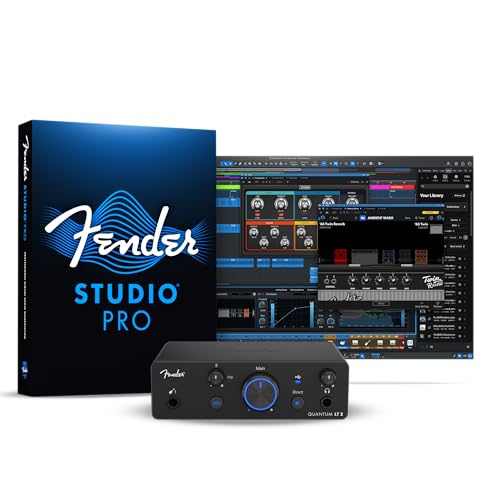
- Fender-voiced guitar and bass input
- 75 dB clean microphone gain
- Includes Fender amp and effects software
Best For: Guitarists and creators recording, streaming, or shaping tones
Compact Starter Pick
Focusrite Scarlett Solo 3rd Gen

- One XLR mic preamp and one Hi-Z input
- 24-bit/192kHz recording with Air mode
- Includes several recording tools and plugins
Best For: Songwriters recording vocals and guitar
Best Heavy-Duty Pick
PreSonus AudioBox 96 Anniversary Kit

- Two combo inputs with MIDI and zero-latency monitoring
- Includes microphone, stand, headphones, and accessories
- Studio One Artist and Studio Magic software included
Best For: First-time home studios and content creators
Enhanced Recording Choice
Focusrite Scarlett Solo 4th Gen

- 120dB dynamic range and 24-bit/192kHz recording
- Improved Air mode for vocals and guitars
- Compact two-input design with included software
Best For: Solo creators prioritizing recording quality
Best Routing Flexibility – CME U6MIDI Pro 3-in-3-out
For home studios that need dedicated MIDI connectivity rather than audio recording, the CME U6MIDI Pro is a versatile choice. Its three MIDI inputs and three outputs, USB-C connection, and configurable routing make it well suited to hardware-heavy setups.
Best For: Musicians using multiple keyboards, synths, drum machines, or other MIDI hardware.
Pros:
- Three MIDI inputs and three MIDI outputs support larger hardware setups.
- Built-in router, filter, merge, split, and thru functions add useful configuration flexibility.
- Works with macOS, iOS, Windows, Android, Linux, and Chrome OS.
- Supports detailed MIDI data, including clock, SysEx, MIDI timecode, and MPE.
Cons:
- It handles MIDI only, so it cannot record microphones or instruments directly.
- Advanced routing and filtering require the UxMIDI Tools software.
The U6MIDI Pro is one of the more specialized midi interfaces for home studios, prioritizing reliable hardware synchronization and flexible MIDI management over audio inputs.
Best Complete Starter Bundle – PreSonus AudioBox USB 96 Package
The PreSonus AudioBox USB 96 package is designed for beginners who want to start recording at home with one purchase. Along with a two-channel audio/MIDI interface, it includes a condenser microphone, headphones, cables, a desktop stand, and recording software.
Best For: New home-studio users who need an interface and basic recording accessories together.
Pros:
- Includes the AudioBox USB 96, M7 condenser microphone, HD7 headphones, cables, and mic stand.
- Provides two channels for recording vocals, instruments, or MIDI hardware.
- Includes Studio One Artist and Studio Magic software.
- Supports sample rates up to 96 kHz and works with Windows and macOS.
Cons:
- The package is less focused on advanced MIDI routing than a dedicated MIDI interface.
- Its listed operating-system support is limited to Windows and macOS.
As midi interfaces for home studios go, this is a practical all-in-one option when recording vocals or instruments matters as much as connecting MIDI gear.
Best Audio Quality Features – Focusrite Scarlett 2i2 4th Gen
The Focusrite Scarlett 2i2 4th Gen is a compact two-channel audio interface for recording microphones and instruments at home. Its 120 dB dynamic range, 192 kHz recording support, Auto Gain, Clip Safe, and Air modes are useful for creators who want a straightforward recording workflow.
Best For: Singer-songwriters and producers recording two microphones or instruments at a time.
Pros:
- Two mic preamps and two Hi-Z instrument inputs support common recording setups.
- Offers up to 24-bit/192 kHz recording and a stated 120 dB dynamic range.
- Auto Gain and Clip Safe help simplify level setting and prevent clipping.
- Includes Pro Tools Intro+, Ableton Live Lite, Cubase LE, and Hitmaker Expansion.
Cons:
- It provides two channels rather than a larger multichannel setup.
- Its primary connection is USB, so it is not a standalone multi-device MIDI router.
The Scarlett 2i2 is a strong fit among midi interfaces for home studios when MIDI is part of a broader audio-recording setup and clean, easy-to-manage inputs are the priority.
Best Budget Mobile Setup – PIYONE Q2 2×2 Audio Interface
The PIYONE Q2 is a compact two-channel USB-C audio interface aimed at straightforward home and mobile recording. It combines 24-bit/192 kHz conversion with combo inputs, 48V phantom power, direct monitoring, loopback, and bus-powered operation.
Best For: Laptop and mobile creators who need an affordable, portable interface for microphones and guitar.
Pros:
- USB-C provides data and bus power without a separate power supply.
- Two combo inputs accept microphones and instruments, with 48V phantom power for condenser microphones.
- 24-bit/192 kHz recording and direct monitoring support detailed, low-latency tracking.
- Includes a 3.5mm headphone connection and illuminated gain controls.
Cons:
- The supplied details list Windows support but do not specify broader OS compatibility.
- It has two channels, limiting larger recording sessions.
This Q2 is a practical entry point for midi interfaces for home studios where audio recording, portability, and simple USB-C operation are more important than advanced MIDI routing.
Versatile Starter Pick – M-AUDIO M-Track Duo
For home studios seeking practical midi interfaces for home studios, the M-AUDIO M-Track Duo is a compact two-channel USB interface for recording, podcasting, and livestreaming. Its dual combo inputs, phantom power, and direct monitoring cover common starter setups.
Best For: Beginners recording vocals, guitar, instruments, podcasts, or livestreams on Mac or PC.
Pros:
- Two combo XLR/line/instrument inputs with phantom power
- USB/direct switch supports zero-latency monitoring
- Includes MPC Beats and additional recording software
Cons:
- Maximum sample rate is 48 kHz
- Only two input channels are available
The M-Track Duo keeps the essentials straightforward and portable. It is a sensible choice for a basic home recording or streaming rig, particularly if you want flexible inputs without a complicated setup.
Complete Studio Bundle – Focusrite Scarlett 2i2 Studio 4th Gen
The Focusrite Scarlett 2i2 Studio 4th Gen is a strong all-in-one option for midi interfaces for home studios, pairing a two-channel USB interface with a condenser microphone, headphones, and recording software. Its 192 kHz capability and built-in workflow tools suit new and developing producers.
Best For: Artists who want a ready-to-record vocal or instrument setup with headphones and software included.
Pros:
- Includes CM25 MkIII condenser microphone and SH-450 headphones
- 120 dB dynamic range and up to 24-bit/192 kHz recording
- Auto Gain, Clip Safe, and Air modes simplify recording
- Includes Pro Tools Intro+, Ableton Live Lite, Cubase LE, and Hitmaker Expansion
Cons:
- Two input channels may limit larger recording sessions
- The bundle is less suitable if you already own a microphone and headphones
This bundle delivers more than the interface alone, reducing the number of separate purchases needed to start recording. Its automated gain features and included software make it especially approachable for first-time home-studio users.
Guitar-Centered Choice – Fender Quantum LT2 USB Audio Interface
For guitarists comparing midi interfaces for home studios, the Fender Quantum LT2 combines a compact 2×2 USB-C design with a Fender-voiced instrument input, high-gain microphone preamp, and amp-and-effects software. Loopback and low-latency drivers also support streaming and content creation.
Best For: Guitarists, bassists, vocalists, and creators who want Fender tones alongside flexible monitoring.
Pros:
- Purpose-built instrument input for guitar and bass
- 75 dB of clean microphone gain
- Includes access to Fender amp and effects software
- Loopback routing, balanced outputs, and a high-power headphone amp
Cons:
- Two-channel design is limited for larger recording setups
- Some software benefits require registration and app downloads
The Quantum LT2 stands out when guitar tone and software integration matter as much as basic recording. Its compact format and loopback features make it versatile for home tracking, streaming, and other creator workflows.
Compact Starter Pick – Focusrite Scarlett Solo 3rd Gen
The Focusrite Scarlett Solo 3rd Gen is a practical choice for home producers seeking midi interfaces for home studios with a simple two-channel setup. It combines one XLR mic preamp, one Hi-Z instrument input, USB connectivity, and 24-bit/192kHz recording in a compact enclosure.
Best For: Songwriters, vocalists, and guitarists who need a straightforward interface for recording one microphone and one instrument.
Pros:
- Air mode can add clarity to acoustic instruments and vocals.
- 24-bit/192kHz converters support high-resolution recording.
- Includes Pro Tools Intro+, Ableton Live Lite, Cubase LE, and Hitmaker Expansion.
- Low-noise balanced outputs support clean monitor playback.
Cons:
- Its two-input layout is limited for multi-microphone or larger ensemble sessions.
- The supplied details list MIDI as a supported use case but do not specify dedicated MIDI ports.
Choose the Solo 3rd Gen when simplicity, portability, and included recording software matter more than expanding beyond one mic and one instrument at a time.
Best Heavy-Duty Pick – PreSonus AudioBox 96 Anniversary Kit
The PreSonus AudioBox 96 25th Anniversary bundle stands out among midi interfaces for home studios because it includes the core interface plus a microphone, stand, headphones, and recording software. Its two combo inputs, MIDI interface functionality, 24-bit/96kHz capture, and zero-latency monitoring support a ready-to-use setup.
Best For: Beginners, podcasters, streamers, and musicians who want an all-in-one recording kit with minimal extra purchases.
Pros:
- Includes dual XLR/TRS combo inputs and MIDI connectivity.
- 24-bit/96kHz recording and zero-latency monitoring support clean tracking.
- Bundle includes a condenser microphone, shockmount, pop filter, XLR cable, stand, and headphones.
- Studio One Artist and Studio Magic software are included.
Cons:
- The maximum sample rate is 96kHz, below the 192kHz rate offered by the Focusrite options.
- USB 2.0 connectivity and two channels may not suit larger recording setups.
This is the most convenient option for building a home studio from scratch, particularly if you also need the microphone accessories and DAW software included in the package.
Enhanced Recording Choice – Focusrite Scarlett Solo 4th Gen
The Focusrite Scarlett Solo 4th Gen is a refined option for home producers comparing midi interfaces for home studios. It pairs one mic input and one Hi-Z instrument input with a 120dB dynamic range, 24-bit/192kHz recording, improved Air modes, and broad Mac, Windows, and iPad compatibility.
Best For: Songwriters and solo creators who want high-resolution recording and a compact interface with enhanced vocal and guitar presence.
Pros:
- 120dB dynamic range uses converters from Focusrite’s flagship interface range.
- Improved Air mode adds presence and harmonic drive to vocals and guitars.
- Supports recording up to 24-bit/192kHz.
- Includes Pro Tools Intro+, Ableton Live Lite, Cubase LE, and Hitmaker Expansion.
Cons:
- One XLR input and one instrument input limit simultaneous recording.
- The supplied details do not specify dedicated MIDI ports.
The Solo 4th Gen is a strong fit when you want the smallest possible setup without giving up Focusrite’s higher dynamic-range specification and updated sound-shaping features.
How We Picked the Best Midi Interfaces for Home Studios
We focused on products that suit practical home-recording workflows, including dedicated MIDI connectivity, USB audio interfaces with MIDI support, and complete starter bundles. We considered input and output flexibility, computer and mobile compatibility, monitoring options, ease of setup, bundled software, recording resolution, and overall value.
Because these products are not identical, the list includes both MIDI-focused hardware and audio interfaces designed for recording vocals, guitars, keyboards, and software instruments. Check the detailed specifications before buying, especially if you need traditional five-pin MIDI ports, multiple outputs, or a microphone included in the box.
Quick Comparison
| Best For | What to Look For | Recommended Type |
|---|---|---|
| Connecting several hardware MIDI devices | Multiple MIDI inputs and outputs | Dedicated MIDI interface |
| Recording vocals or instruments | Mic preamps, combo inputs, and direct monitoring | USB audio interface |
| Starting a complete home studio | Included microphone, headphones, cables, and software | Recording bundle |
| Portable or mobile recording | USB-C compatibility, compact design, and low power needs | Small two-channel interface |
Key Buying Factors for Midi Interfaces for Home Studios
MIDI Connections and Expansion
Count the MIDI devices you plan to connect now—not just your current keyboard. A single MIDI input and output may be enough for one controller, while drum machines, synthesizers, and hardware effects can require several independent ports. Traditional five-pin DIN connections are useful for older hardware; USB MIDI may be sufficient for modern controllers.
Audio Inputs, Outputs, and Monitoring
If you will record vocals, guitar, or microphones, prioritize the audio interface specifications. Combo XLR/TRS inputs provide flexibility, while phantom power is necessary for most condenser microphones. Direct monitoring can reduce distracting latency, and balanced monitor outputs are preferable for connected studio speakers.
Computer, Mobile, and Software Compatibility
Confirm that the interface works with your operating system and connection type. USB-C does not always mean the same thing as full mobile compatibility, so check power requirements and included adapters. Bundled DAW software, virtual instruments, amp modeling, and effects can add substantial value for beginners.
Resolution, Drivers, and Everyday Usability
24-bit recording is a sensible baseline for home studios, while higher sample-rate support may matter for specific workflows but is not a substitute for good microphones or room treatment. Clear controls, reliable drivers, sturdy construction, and simple gain monitoring often matter more than headline specifications.
Who Should Buy Which Midi Interfaces for Home Studios?
Choose a dedicated MIDI interface if your priority is routing several external synthesizers, drum machines, or controllers. Choose a compact two-channel audio interface if you mainly record one or two sources and use software instruments. Bundles make sense for beginners who need a microphone, DAW software, and basic recording equipment in one purchase. Guitarists and vocalists should look for suitable preamps, instrument inputs, direct monitoring, and software effects. Producers with expanding hardware setups should favor more MIDI ports and outputs, even if the initial cost is higher.