Choosing among optical audio cables for professional recording is less about chasing expensive materials and more about matching the cable to your studio hardware, routing needs, and working environment.
This roundup compares 10 Toslink and S/PDIF options across different lengths, connector designs, construction styles, and use cases, so you can select a dependable digital connection without paying for features you do not need.
Best 10 Optical Audio Cables for Professional Recording Picks for 2026
Reliable Everyday Pick
Amazon Basics 6-Foot Toslink Cable

- 6-foot flexible fiber-optic cable
- Multi-channel digital audio support
- Gold-plated connectors with removable caps
Best For: Routine Toslink connections between home-audio devices
PCM Conversion Solution
eSynic Optical-to-RCA DAC with 7-Foot Cable

- 192kHz/24-bit PCM conversion
- Optical input to RCA stereo output
- 7-foot cable and aluminum housing
Best For: PCM optical sources feeding analog RCA equipment
Compact Premium Option
AudioQuest Forest 0.75m Toslink Cable

- Short 0.75-meter design
- Solid 0.5% silver conductors
- Compatible with Toslink-equipped audio devices
Best For: Close-range connections between DACs, receivers, TVs, and consoles
Durable Long-Run Choice
SVS SoundPath 2M Optical Cable
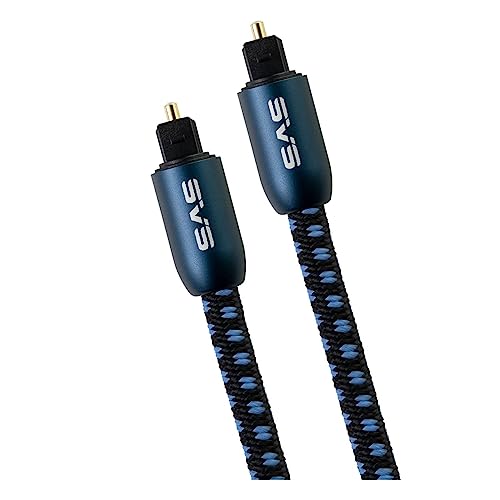
- 2-meter length for flexible routing
- Braided cotton jacket
- Aluminum shells and gold-plated connectors
Best For: Longer, physically demanding indoor optical connections
Best for Easy Setup

- Flexible PVC fiber-optic construction
- Gold-plated TOSLINK connectors
- 36-month manufacturer warranty
Best For: Standard-length connections between home theater and digital audio components
Long-Run Option
Cable Matters Premium 15ft TOSLINK Cable

- 15-foot length for separated components
- Braided jacket with thick PVC layer
- Supports listed multi-channel formats
Best For: Longer optical connections to receivers or soundbars
Long-Run Professional Choice

- 25-foot reach for flexible installations
- Supports PCM, ADAT, LPCM, and 5.1–7.1 audio
- Durable jacket with interference-free optical transmission
Best For: Long cable runs in professional AV and digital audio setups
Heavy-Duty Compact Pick
Premium 6ft S/PDIF Toslink Cable

- Protective metal mesh jacket
- Metal connector heads and polished fiber tips
- Six-foot length for nearby digital equipment
Best For: Short, rugged connections in studios and AV systems
Flexible Installation Pick

- 10-foot length for easier equipment placement
- Japan Toray fiber core supports PCM and surround formats
- Braided, CL3-rated design with gold-plated connectors
Best For: Flexible studio, DAC, recorder, and AV connections
Reliable Everyday Pick – Amazon Basics 6-Foot Toslink Cable
For straightforward optical audio cables for professional recording setups, this Amazon Basics Toslink cable offers a flexible 6-foot connection between compatible audio and video equipment. Its fiber-optic construction and gold-plated connectors suit routine digital audio routing, though users should remove the protective caps before connecting.
Best For: Connecting TVs, sound bars, audio systems, Blu-ray players, and game consoles with Toslink ports.
Pros:
- 6-foot length provides useful placement flexibility.
- Supports multi-channel fiber-optic digital audio output.
- Flexible PVC exterior and protective removable rubber tips.
- Gold-plated, corrosion-resistant connectors.
Cons:
- Protective end caps must be removed before use.
- Designed as a general-purpose cable rather than a specialized studio interconnect.
This is a practical, low-complexity choice when you need a standard Toslink link at a useful length. It is best suited to compatible consumer and home-audio components rather than a highly specialized recording chain.
PCM Conversion Solution – eSynic Optical-to-RCA DAC with 7-Foot Cable
This eSynic unit combines a 7-foot optical cable with a DAC for systems that need optical input converted to analog RCA output. Among optical audio cables for professional recording applications, it stands out as a compatibility-focused adapter, but the source must output PCM audio and the converter requires USB power.
Best For: Connecting a PCM-compatible TV, Blu-ray player, or gaming console with optical output to a stereo amplifier or powered speakers with RCA inputs.
Pros:
- Supports up to 192kHz/24-bit conversion.
- Includes a convenient 7-foot optical cable.
- Aluminum housing and gold-plated RCA ports.
- Plug-and-play design with a status LED.
Cons:
- Supports PCM 2.0 only, not Dolby or DTS formats.
- Optical-to-RCA conversion is not bidirectional.
- Requires a 5V/1A USB power adapter, which is not included.
The eSynic is useful when the challenge is interface conversion rather than simply extending an optical connection. Confirm PCM output and plan for volume control at the amplifier or speakers before buying.
Compact Premium Option – AudioQuest Forest 0.75m Toslink Cable
AudioQuest Forest Toslink Fiber Optic Digital Audio Cable - 2.46 ft. (.75m) Green
Check Price On AmazonThe AudioQuest Forest is a short Toslink cable for neat, close-range connections in audio systems and computer setups. For shoppers comparing optical audio cables for professional recording, its solid 0.5% silver conductors are intended to reduce strand-interaction distortion and jitter, while the 0.75-meter length keeps excess cable to a minimum.
Best For: Short connections among Toslink-equipped DACs, AV receivers, televisions, sound bars, and gaming consoles.
Pros:
- Compact 0.75-meter length suits nearby components.
- Solid 0.5% silver conductors.
- Compatible with a broad range of Toslink-equipped devices.
- Braided outer material provides a finished exterior.
Cons:
- Short length may not suit equipment positioned far apart.
- Only one cable is included.
This cable makes the most sense when your components are close together and you want to avoid unnecessary slack. Measure the route carefully, since its compact length offers less installation flexibility than longer alternatives.
Durable Long-Run Choice – SVS SoundPath 2M Optical Cable
The SVS SoundPath Digital Optical Cable is a 2-meter option with a braided cotton jacket and reinforced metal terminal shells. For optical audio cables for professional recording installations that need additional reach and physical protection, it combines a polished optical conductor with a flexible, easy-grip exterior.
Best For: Longer indoor connections between compatible digital audio components, speakers, and home-theater equipment.
Pros:
- 2-meter length supports more flexible component placement.
- Polished monofilament pipeline and optical conductor support PCM signal transfer.
- Aircraft-grade aluminum terminal shells improve durability.
- Densely braided cotton jacket provides protection and flexibility.
Cons:
- Longer than necessary for closely positioned components.
- Supplied as a single cable.
The SoundPath is a strong fit when cable durability, reach, and handling matter more than a minimal footprint. Its specifications emphasize PCM signal transfer and robust construction for repeatable indoor connections.
Best for Easy Setup – KabelDirekt 6ft TOSLINK Cable
For shoppers comparing optical audio cables for professional recording and dependable home setups, the KabelDirekt 6ft TOSLINK cable offers a straightforward fiber-optic connection for compatible S/PDIF equipment. Its flexible PVC jacket and interference-resistant construction suit clean, uncomplicated digital-audio routing.
Best For: Connecting a TV, console, streaming box, or player to a soundbar, amplifier, DAC, or other TOSLINK-equipped audio device.
Pros:
- Supports TOSLINK connections across TVs, consoles, amplifiers, DACs, and digital audio equipment.
- Fiber-optic design is immune to electrical interference and is specified for 100% signal transmission.
- Flexible PVC jacket, gold-plated connectors, and a 36-month manufacturer warranty.
Cons:
- The 6-foot length may be limiting for widely spaced equipment.
- It uses standard straight TOSLINK connectors rather than a space-saving angled design.
This is a practical choice when you want a conventional, flexible optical cable with broad device compatibility and a longer stated warranty. For professional recording applications, confirm that your equipment uses standard TOSLINK rather than another digital interface.
Space-Saving Choice – EMK 90-Degree Rotating TOSLINK Cable
Among optical audio cables for professional recording, the EMK stands out for installations where connector clearance matters. Its 90-degree plug and 360-degree rotation help manage tight spaces, while the braided jacket is designed to reduce kinks and protect the fiber core.
Best For: Short, tight-space connections between soundbars, receivers, DACs, consoles, PCs, and other TOSLINK-equipped components.
Pros:
- 90-degree, 360-degree free-rotating plug helps accommodate restricted spaces and cable routing.
- Nylon-braided, 6.0 mm construction helps resist kinks and nicks.
- Supports uncompressed PCM and listed surround formats including Dolby Digital Plus, DTS-HD High Resolution, ADAT, and LPCM.
- Includes an 18-month warranty and a 30-day change-or-refund guarantee.
Cons:
- The 3.3-foot length is less suitable for longer equipment runs.
- The angled connector may not be ideal where a straight plug is required.
The EMK is the most installation-focused option here, particularly when a conventional straight cable would bend sharply behind equipment. Its short length makes it best for compact setups rather than distant studio components.
Long-Run Option – Cable Matters Premium 15ft TOSLINK Cable
For longer runs, this Cable Matters model is a useful candidate among optical audio cables for professional recording and home entertainment. Its 15-foot reach, braided outer jacket, and metal gold-plated connectors are suited to routing audio between separated components without using an electrical connection.
Best For: Connecting TVs, consoles, Blu-ray players, satellite DVRs, or other S/PDIF sources to receivers and soundbars positioned farther away.
Pros:
- 15-foot length provides more routing flexibility than shorter cables.
- Thick PVC and braided construction help resist nicks, cuts, and kinks.
- Supports uncompressed PCM, Dolby Digital Plus, DTS-HD, and multi-channel surround formats as listed.
- Fiber-optic construction avoids EMI and RFI interference, with metal gold-plated Toslink connectors.
Cons:
- The longer cable can be excessive for compact equipment layouts.
- Its braided, heavy-duty construction may be less convenient where a slimmer cable is preferred.
This is the strongest fit when distance and physical durability matter more than minimizing cable length. As with any Toslink cable, verify that the source and destination both provide compatible optical digital ports.
Long-Run Professional Choice – BlueRigger 25FT Toslink Cable
For professional recording and AV setups that require extra reach, the BlueRigger 25-foot Toslink cable combines long-distance flexibility with support for PCM, ADAT, and compressed 5.1 to 7.1 formats. Its optical design avoids electrical interference, making it a practical choice for connecting compatible digital audio equipment.
Best For: Long cable runs between professional AV components, receivers, DACs, and audio processors.
Pros:
- Supports uncompressed PCM, ADAT, LPCM, and compressed 5.1 to 7.1 surround formats.
- Optical transmission eliminates RFI, EMI, and ground-loop interference.
- Flexible PVC jacket is rated for more than 25,000 bend cycles.
- Includes aluminum-alloy shells, 24K gold-plated connectors, protective tips, and a lifetime warranty.
Cons:
- The 25-foot length may be excessive for compact recording racks.
- Protective connector covers must be removed before use.
Choose this model when installation distance and interference resistance matter most. Its broad format support and durable construction make it especially useful for larger professional audio or theater-style systems.
Heavy-Duty Compact Pick – Premium 6ft S/PDIF Toslink Cable
For professional recording setups where a shorter connection is preferable, this six-foot S/PDIF optical cable emphasizes physical protection and secure signal transfer. Its metal mesh jacket, square metal connector heads, and polished fiber tips suit indoor or outdoor connections between compatible digital audio devices.
Best For: Short, protected connections in home studios, home theaters, gaming systems, and digital audio racks.
Pros:
- Heavy-duty metal mesh jacket helps protect against nicks, cuts, and kinks.
- Metal connector heads and gold-plated ferrules provide a robust, corrosion-resistant connection.
- Precision-polished fiber tips are designed for maximum signal transfer.
- Six-foot length works well for nearby equipment.
Cons:
- Six feet may not be enough for separated equipment or larger installations.
- The heavy-duty construction may be less flexible than a lightweight jacket.
This cable is a sensible choice when durability and connector protection take priority over extended reach. Its standard Toslink format makes it suitable for compatible digital audio connections, though it is best matched to equipment positioned relatively close together.
Flexible Installation Pick – iVANKY 10FT Optical Cable
The iVANKY 10-foot optical cable is a versatile option for professional recording and digital audio setups that need moderate extra reach. Its Japan Toray fiber core supports lossless optical transmission, while the braided jacket, compact connectors, and CL3 rating help simplify flexible or in-wall installations.
Best For: Medium-distance connections involving DACs, A/V receivers, recorders, audio amplifiers, and other Toslink-equipped gear.
Pros:
- Japan Toray fiber core supports uncompressed PCM and compressed 5.1 to 7.1 formats.
- 10-foot length offers more setup flexibility than a standard short cable.
- Nylon braided jacket withstands more than 16,000 bends.
- CL3-rated construction, aluminum shell, gold-plated connectors, and removable dust caps add installation convenience.
Cons:
- It is limited to devices with standard Toslink optical ports.
- Its 10-foot length may still be short for widely separated equipment.
Consider this model when you want a balance between reach, handling, and installation versatility. The braided construction and broad compatibility make it a practical fit for recording rooms and mixed digital audio systems.
How We Picked These Optical Audio Cables for Professional Recording
We focused on practical factors that affect studio setup and day-to-day reliability: connector fit, cable length, flexibility, physical protection, compatibility with optical S/PDIF equipment, and suitability for routing between interfaces, converters, mixers, sound systems, and monitoring hardware. We also included options for compact installations, long runs, right-angle connections, and setups that require optical-to-RCA conversion.
Optical cables carry digital audio through light, so a correctly connected, undamaged cable should not introduce the gradual noise or hum associated with some electrical analog connections. However, cable quality still matters for secure seating, bend resistance, and consistent handling.
Quick Comparison
| Need | What to prioritize | Best-fit options in this roundup |
|---|---|---|
| Basic studio connection | Reliable connectors and sensible length | Amazon Basics, KabelDirekt, IVANKY |
| Long-distance routing | Extra length and protected jacket | BlueRigger 25FT, Cable Matters 15ft |
| Restricted space | Right-angle or rotating connector | EMK 90 Degree Toslink |
| Optical-to-RCA setup | Compatible converter hardware | eSynic adapter and cable |
| Premium short connection | Compact routing and upgraded construction | AudioQuest Forest |
Key Buying Factors for Optical Audio Cables for Professional Recording
Connector and Device Compatibility
Confirm that both devices use standard Toslink optical ports and that your equipment supports the required S/PDIF format and sample rate. An optical cable cannot convert incompatible signals by itself. If one device has RCA coaxial output, you need an appropriate converter rather than a standard Toslink-to-Toslink lead.
Length and Routing
Choose the shortest practical length that reaches comfortably without sharp bends. Shorter cables are often easier to manage in racks, while 10- to 25-foot options help when equipment is separated across a room. Avoid coiling excess cable tightly, and maintain generous curves around corners.
Build Quality and Strain Relief
Look for secure plugs, protective jackets, and strain relief that can tolerate repeated plugging and unplugging. Metal connector shells, mesh jackets, and reinforced housings may improve handling durability, but they do not automatically improve digital sound quality.
Connector Shape and Clearance
A right-angle or rotating plug can prevent side pressure when an optical port sits close to a wall, console, or rack panel. Check the connector dimensions before buying if your equipment has limited clearance.
Who Should Buy Which Optical Audio Cables for Professional Recording?
For a straightforward interface, monitor, or sound-system connection, a standard 6-foot cable such as the Amazon Basics or KabelDirekt is a sensible starting point. Choose IVANKY or the 7-foot eSynic option when you want additional reach, with the latter suited to systems that specifically require optical-to-RCA conversion hardware.
For equipment spread across a room, consider Cable Matters at 15 feet or BlueRigger at 25 feet. If the optical port is awkwardly positioned, the EMK right-angle design can make installation cleaner and reduce connector strain. Buyers seeking a shorter, more premium-feeling cable may prefer AudioQuest Forest, while SVS SoundPath offers a practical 2-meter length for many rack and desk setups.
Before ordering, verify port type, required length, bend clearance, and supported audio format. Once those basics match, prioritize secure fit and manageable routing over claims that promise audible improvements from a passive digital optical cable.