The best audio interface can make vocals, instruments, podcasts, and live streams sound cleaner while giving you dependable control over gain, monitoring, and latency. The right choice depends on how many inputs you need, which devices you use, and how much room you want to grow.
We’ve gathered 10 notable USB audio interfaces for beginners, creators, musicians, and home studios, ranging from compact two-input models to more flexible options for multi-microphone setups.
Best 10 Audio Interface Picks for 2026
Classic Studio Color
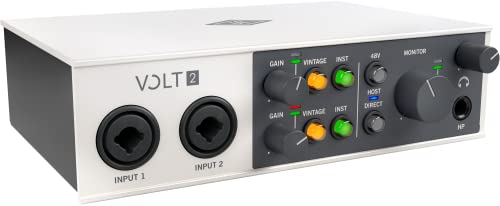
- 610-inspired Vintage preamp mode
- 24-bit/192 kHz recording and MIDI
- Supports computer and mobile workflows
Best For: Musicians, podcasters, and streamers wanting vintage-style tone
Portable Value Pick

- USB-C bus-powered plug-and-play design
- 24-bit/192 kHz with combo inputs
- Direct monitoring and 48V phantom power
Best For: Laptop creators recording vocals, guitar, or streams
Beginner-Friendly Upgrade
Focusrite Scarlett 2i2 4th Gen
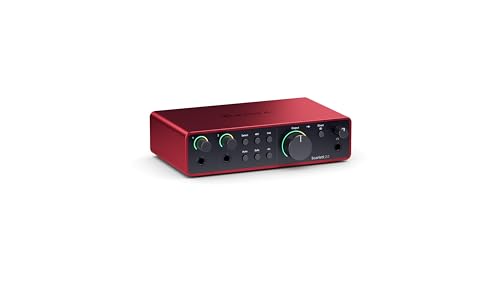
- 120 dB dynamic range and 24-bit/192 kHz
- Auto Gain, Clip Safe, and Air mode
- Includes major recording software
Best For: Home producers recording vocals, guitars, and instruments
Monitoring-Focused Choice

- 2-in/2-out USB-C interface
- 24-bit/192 kHz recording support
- Hardware monitoring and iOS compatibility
Best For: Home recordists needing simple two-channel monitoring
Best Budget Recording Pick
Focusrite Scarlett Solo 3rd Gen

- One mic preamp and one Hi-Z instrument input
- Air mode and 24-bit/192kHz recording
- Compact setup with included recording software
Best For: Solo musicians, vocalists, and home-recording beginners
Best Streaming and Podcasting Choice

- Loopback and Smart Vocal Chain for content creation
- Onboard DSP supports zero-latency effects
- Two independent headphone mixes for collaboration
Best For: Streamers, podcasters, guitarists, and mobile creators
Best Expandable Home Studio Hub
Focusrite Scarlett 4i4 4th Gen

- Four line inputs and four line outputs
- Two mic preamps, two Hi-Z inputs, and MIDI I/O
- Auto Gain, Clip Safe, Air mode, and 120 dB dynamic range
Best For: Producers and musicians with multiple instruments and studio gear
Flexible Starter Pick
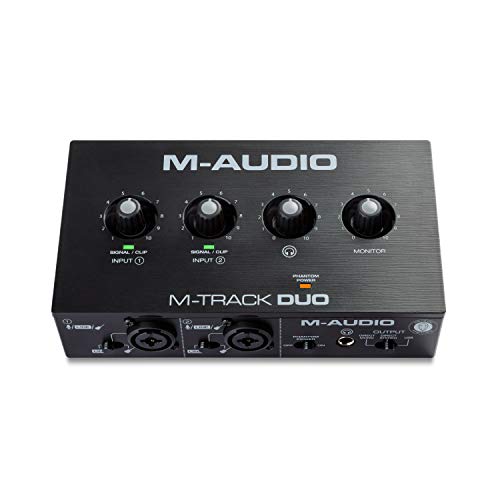
- Two combo inputs for mic, instrument, and line signals
- Zero-latency USB/Direct monitoring
- Includes MPC Beats software
Best For: Home recording, podcasting, and live streaming
Portable Studio Value
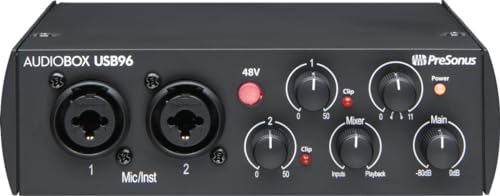
- Two Class-A mic preamps with phantom power
- 24-bit/96 kHz recording and playback
- Includes Studio One Artist and other software
Best For: Mobile musicians and MIDI-equipped home studios
High-Resolution Solo Choice
Focusrite Scarlett Solo 4th Gen

- 24-bit/192 kHz capture and 120 dB dynamic range
- One mic preamp plus one Hi-Z instrument input
- Air modes and a broad software bundle
Best For: Solo vocal-and-guitar recording
Classic Studio Color – Universal Audio Volt 2
The Universal Audio Volt 2 is a versatile audio interface for musicians, podcasters, and streamers who want two-channel recording with UA-inspired preamp character. Its Vintage mode, 24-bit/192 kHz support, and MIDI connectivity make it a flexible choice for home and mobile setups.
Best For: Musicians and creators seeking vintage-style preamp color, high-resolution recording, and broad computer or mobile compatibility.
Pros:
- Vintage mode emulates the rich sound of UA’s classic 610 preamps.
- Supports up to 24-bit/192 kHz recording with clear converters.
- Works with macOS, Windows, iPad, and iPhone, and includes MIDI connectivity.
- Supports LUNA and a range of recording software and instruments.
Cons:
- Mobile iPhone and some iPad setups require additional Apple adapters.
- External Volt power supply is required for supported mobile recording configurations.
The Volt 2 stands out when tonal character and software flexibility matter as much as straightforward recording. It is a strong fit for creators who want an audio interface that can serve both a desktop studio and selected mobile workflows.
Portable Value Pick – PIYONE Q28 2X2 USB Interface
This PIYONE 2X2 audio interface is designed for simple, portable recording on Mac or PC. It combines USB-C bus power, 24-bit/192 kHz conversion, combo inputs, direct monitoring, and loopback-oriented functionality in a compact setup.
Best For: Laptop-based creators who need an affordable two-input interface for vocals, guitar, streaming, or mobile recording.
Pros:
- USB-C connection provides data and bus power without a bulky external supply.
- Two combo inputs support microphones and Hi-Z guitar sources.
- Offers 24-bit/192 kHz recording, 48V phantom power, and direct monitoring.
- Built-in 3.5mm headphone output and illuminated gain controls support convenient operation.
Cons:
- The supplied details list Windows support but do not specify macOS or iOS operating-system support.
- Its two-channel design may be limiting for larger recording sessions.
The Q28 focuses on convenience: one-cable USB-C operation, flexible inputs, and low-latency monitoring. It makes the most sense for compact home or laptop recording rather than expanding multi-microphone productions.
Beginner-Friendly Upgrade – Focusrite Scarlett 2i2 4th Gen
The Focusrite Scarlett 2i2 4th Gen is a well-equipped audio interface for starting or upgrading a two-channel recording setup. Its 120 dB dynamic range, Auto Gain, Clip Safe, Air mode, and bundled production software make it approachable while retaining serious recording features.
Best For: Beginners and home producers recording microphones or instruments who want level-assistance tools and a substantial software bundle.
Pros:
- Provides two mic preamps and two Hi-Z instrument inputs with 24-bit/192 kHz support.
- Auto Gain helps set recording levels, while Clip Safe helps prevent clipping.
- Air mode adds presence and harmonic drive to vocals and guitars.
- Includes Pro Tools Intro+, Ableton Live Lite, Cubase LE, and Hitmaker Expansion.
Cons:
- It is limited to two channels for simultaneous recording.
- The supplied details specify a USB-A-to-C cable, so host-device connections may require planning.
Scarlett 2i2 4th Gen is especially practical when ease of setup and included software are priorities. Auto Gain and Clip Safe reduce common recording hurdles, while Air mode gives users an easy way to shape the source sound.
Monitoring-Focused Choice – MOTU M2
The MOTU M2 is a compact 2-in/2-out USB-C audio interface for computer and iOS recording. With two preamps, hardware monitoring, and 24-bit/192 kHz support, it covers the core needs of a small home recording setup.
Best For: Musicians and home recordists who want a straightforward two-channel interface with hardware monitoring and high-resolution capture.
Pros:
- Offers two preamps in a 2-in/2-out configuration.
- Supports 24-bit/192 kHz recording.
- Includes hardware monitoring for tracking workflows.
- Compatible with macOS, Windows, and iOS, with 6+ GB of free content listed.
Cons:
- The supplied details provide limited information about included inputs, outputs, and software beyond MOTU drivers.
- Two inputs may not accommodate larger ensembles or multi-microphone sessions.
The M2 is a focused option for recording two sources at a time without unnecessary complexity. Its hardware monitoring and cross-platform support make it a sensible choice for compact music setups and mobile-compatible workflows.
Best Budget Recording Pick – Focusrite Scarlett Solo 3rd Gen
The Focusrite Scarlett Solo 3rd Gen is a compact audio interface for singers, guitarists, podcasters, and home-recording beginners. It combines one XLR mic preamp, one Hi-Z instrument input, Air mode, and 24-bit/192kHz recording in a small USB-C-compatible setup.
Best For: Solo musicians, vocalists, guitarists, and creators who need a straightforward two-channel audio interface.
Pros:
- Air mode can add clarity to acoustic instruments and vocals.
- High-headroom instrument input suits guitar and bass recording.
- Supports recording and mixing up to 24-bit/192kHz.
- Includes several recording tools and software packages.
Cons:
- Its single mic preamp limits simultaneous vocal and microphone recording.
- It has fewer inputs and outputs than larger studio interfaces.
The Solo is a practical entry-level audio interface when simplicity and portability matter more than expansion. Its focused input layout makes it particularly suitable for one-person recording workflows.
Best Streaming and Podcasting Choice – Antelope Audio Zenith 2
The Antelope Audio Zenith 2 is a versatile audio interface built for streaming, podcasting, guitar processing, and mobile recording. Its USB-C, class-compliant design works with PC, Mac, iOS, and Android, while onboard DSP provides real-time vocal and guitar effects.
Best For: Streamers, podcasters, guitarists, and creators who want flexible routing, built-in processing, and independent headphone mixes.
Pros:
- Includes loopback and a Smart Vocal Chain for streaming and podcast production.
- Onboard DSP enables zero-latency monitoring with effects.
- Two independent headphone mixes support collaboration and interviews.
- Offers two preamps, up to 75 dB of gain, and 123 dB/192kHz/32-bit conversion.
Cons:
- Its extensive controls and effects may be more than a basic recording setup requires.
- Some software control features depend on the optional computer control panel.
The Zenith 2 stands out as a feature-rich audio interface for content creators who need more than clean inputs and outputs. Loopback, DSP effects, guitar processing, and dual monitoring make it especially adaptable for live and collaborative work.
Best Expandable Home Studio Hub – Focusrite Scarlett 4i4 4th Gen
The Focusrite Scarlett 4i4 4th Gen is a capable audio interface for musicians building a more connected home studio. It provides two mic preamps, two Hi-Z inputs, four line inputs, four line outputs, and MIDI I/O, along with 24-bit/192kHz conversion and automatic recording-level tools.
Best For: Producers and bands connecting microphones, guitars, synths, drum machines, line-level gear, and MIDI equipment.
Pros:
- Offers 4-in/4-out connectivity with four line inputs and outputs.
- Includes MIDI input and output for compatible instruments and controllers.
- Auto Gain and Clip Safe help manage recording levels.
- Air mode and 120 dB dynamic range support polished recordings.
Cons:
- Its larger feature set may be unnecessary for a single-input recording workflow.
- The interface weighs more and occupies more space than the Scarlett Solo.
The 4i4 is the stronger choice when an audio interface needs to serve as a central studio hub. Its additional line connectivity and MIDI I/O give it room to accommodate a growing collection of instruments and recording equipment.
Flexible Starter Pick – M-Audio M-Track Duo
The M-AUDIO M-Track Duo is a versatile two-channel audio interface for podcasting, recording, and live streaming. Its dual combo inputs support microphones, instruments, and line-level sources, while the USB/Direct switch enables zero-latency monitoring.
Best For: Home creators who need a flexible, portable audio interface for vocals, guitar, podcasting, or streaming.
Pros:
- Two combo XLR/line/instrument inputs with phantom power
- USB/Direct monitoring switch helps provide zero-latency monitoring
- Includes MPC Beats software and supports up to 48 kHz audio
Cons:
- Maximum sample rate is 48 kHz
- Only two input channels are available
The M-Track Duo stands out for its broad input flexibility and straightforward monitoring controls. It is a practical choice when you want one compact audio interface for several basic recording and streaming tasks.
Portable Studio Value – PreSonus AudioBox 96
The PreSonus AudioBox 96 25th Anniversary is a portable two-channel audio interface with Class-A mic preamps, instrument inputs, and MIDI I/O. USB bus power and a mixer control make it well suited to mobile recording and zero-latency monitoring.
Best For: Musicians building a portable recording setup who want MIDI connectivity and a substantial bundled software package.
Pros:
- Two Class-A mic preamps and 48V phantom power
- Records and plays back at up to 24-bit/96 kHz
- Includes Studio One Artist, Ableton Live Lite, and Studio Magic plug-ins
- USB bus-powered design needs no additional power supply
Cons:
- Only two input channels are available
- Compatible operating systems listed are Windows and macOS
With MIDI I/O, strong recording specifications, and USB bus power, the AudioBox 96 offers a well-rounded foundation for personal recording. Its included software also helps new users begin creating without assembling a separate software bundle.
High-Resolution Solo Choice – Focusrite Scarlett Solo 4th Gen
The Focusrite Scarlett Solo 4th Gen is a compact audio interface designed for recording one microphone and one instrument. It combines 24-bit/192 kHz operation and a 120 dB dynamic range with an Air mode intended to add presence and harmonic drive to vocals and guitars.
Best For: Songwriters and solo creators recording vocals and guitar who want high-resolution capture and a compact USB-C setup.
Pros:
- Dedicated XLR mic preamp and Hi-Z instrument input
- Up to 24-bit/192 kHz recording with 120 dB dynamic range
- Air modes can add presence to vocals and guitars
- Includes Pro Tools Intro+, Ableton Live Lite, Cubase LE, and Hitmaker Expansion
Cons:
- Provides one microphone input and one instrument input
- Designed for solo recording rather than multi-mic sessions
The Scarlett Solo 4th Gen is a focused option for a singer-songwriter workflow. Its high-resolution specifications, Air modes, and bundled production tools make it especially appealing when the main goal is capturing one voice and one instrument.
How We Picked These Audio Interfaces
We focused on practical features that matter in everyday recording: input and output counts, microphone preamp flexibility, connection type, monitoring controls, portability, compatibility, and overall value. The selection includes established models from Focusrite, Universal Audio, MOTU, Antelope Audio, M-Audio, and PreSonus, alongside an affordable 2×2 option for buyers working with a tighter budget.
USB-C models are especially convenient for newer computers and mobile workflows, although many remain compatible with USB connections through the appropriate cable or adapter. We also considered whether each interface suits a solo creator, musician, podcaster, streamer, or expanding home studio.
Quick Comparison
| Best For | What to Look For |
|---|---|
| Solo vocals or instruments | Two combo inputs, quality preamps, and direct monitoring |
| Podcasting and streaming | Simple controls, reliable headphone monitoring, and flexible routing |
| Electronic music and production | Low-latency performance, MIDI support, and accurate metering |
| Growing home studios | Four or more inputs, multiple outputs, and expansion options |
| Portable recording | Compact construction, bus power, and device compatibility |
Key Buying Factors for an Audio Interface
Inputs and Outputs
Choose an interface based on the sources you will record at the same time. Two inputs are enough for one or two microphones, a stereo instrument, or a basic vocal-and-guitar setup. Four inputs provide more flexibility for interviews, small ensembles, and future expansion. Check whether inputs accept XLR microphones, 1/4-inch line sources, or high-impedance instruments directly.
Sound Quality and Latency
Most current interfaces offer more than enough resolution for home recording. Pay attention to preamp gain, noise performance, direct monitoring, and driver stability as well as headline sample-rate numbers. Direct monitoring can reduce distracting delay while recording, particularly when computer processing creates latency.
Connectivity and Compatibility
Confirm that the interface works with your computer, tablet, or phone and that the required cable is included or easy to obtain. USB-C is convenient, but power requirements can matter when recording with an iPad or other mobile device. MIDI connectivity is useful if you work with keyboards, drum machines, or external hardware.
Controls and Workflow
Separate gain controls, clear meters, a dedicated headphone output, monitor volume, and phantom power make an interface easier to use. Loopback or routing features may be valuable for streaming, software playback, and podcast production.
Who Should Buy Which Audio Interface?
Solo musicians and first-time home recordists should start with a reliable 2×2 interface such as the Focusrite Scarlett Solo, Scarlett 2i2, Universal Audio Volt 2, MOTU M2, or M-AUDIO M-Track Duo. These provide a straightforward path for recording vocals, guitars, keyboards, and other single-source projects.
Choose a four-input model such as the Focusrite Scarlett 4i4 if you expect to record multiple sources, use external hardware, or build a more capable studio. Podcasters and streamers should prioritize easy monitoring, routing, and dependable operation; the Antelope Audio Zenith 2 is designed with those creator workflows in mind. Buyers seeking a simple, affordable setup can consider the PreSonus AudioBox 96 or another compact 2×2 option, while those prioritizing premium recording features may prefer the Universal Audio or MOTU models.