The right compressor can smooth uneven vocals, add punch to drums, and help a home-studio mix sit together without sounding crushed. This roundup covers dedicated rack units, channel strips, and compact microphone-focused options for different recording setups.
Consider your available rack space, preferred compressor character, channel count, and whether you need extras such as gating, de-essing, microphone preamplification, or sidechain control.
Best 10 Audio Compressors for Home Studios Picks for 2026
Best Rackmount Value

- Combines compression and gating
- Clear threshold and gain-reduction metering
- Compact 1U analog rack design
Best For: General studio dynamics control and mix tightening
Best Tube Character

- Tube-based optical compression
- MIDAS transformers and balanced I/O
- Compress and Limit modes
Best For: Warm vocals, instruments, and bus processing
Best Multifunction Processor
Behringer Composer Pro-XL MDX2600

- Two-channel compressor and limiter
- Includes gate and de-esser functions
- Designed for production, mixing, and mastering
Best For: Flexible dual-channel dynamics processing
Best All-in-One Channel Strip

- Class A tube preamp with VCA compressor
- Three-band EQ with parametric mid band
- Mic, instrument, and line inputs
Best For: Recording and shaping individual sources
Flexible Rack Control
ART SCL2 Dual/Stereo Compressor
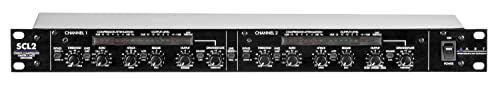
- Dual or linked-stereo operation
- Compression, limiting, expansion, and gate functions
- Balanced XLR/TRS connections with LED meters
Best For: Versatile home-studio rack processing
Simple Mic Leveling
Triton Audio Kompressor In-Line Compressor
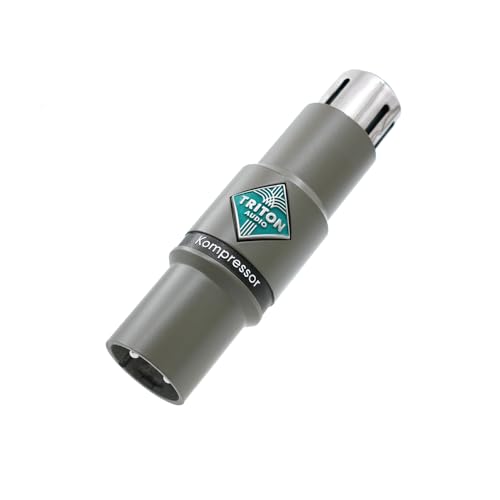
- Adds 25 dB of microphone gain
- FET-OPTO compression in a compact XLR barrel
- One-knob control for quick setup
Best For: Dynamic and ribbon microphone users
Tube-Style Blend Control
ART Solo VLA Single-Channel Compressor

- Selectable tube or solid-state control
- Variable compressed/uncompressed blend
- Switchable +4 dBu and -10 dBV modes
Best For: Single-channel tone shaping and parallel-style compression
Versatile Channel Strip
dbx 286s Mic Preamp and Compressor

- Single-channel compressor with mic preamp
- Adds de-esser, enhancer, and expander/gate
- XLR/TRS connectivity with loop-out and insert
Best For: Vocal, voiceover, and instrument tracking
Dual-Channel Rack Control
Professional Vocal Compressor/Limiter

- Two-channel VCA compression and limiting
- Noise gate, LED metering, and sidechain insert
- XLR/TRS connections for studio or live integration
Best For: Two-source recording, streaming, and live sound
Automatic Dynamics Shaping

- Dual-channel Overeasy compression
- Auto attack/release settings for simpler setup
- Noise gate, LED monitoring, and sidechain control
Best For: Vocals, streaming, and rack-based home studios
Best Rackmount Value – dbx 266xs Compressor/Gate
For home studios seeking practical audio compressors for home studios, the dbx 266xs combines compression and gating in a single 1U rack unit. Its front-panel controls and separate LED displays are designed to make setup quick and straightforward.
Best For: Smoothing uneven levels, adding guitar sustain, tightening mixes, and controlling drum dynamics.
Pros:
- Combines compressor and expander/gate functions.
- Program-adaptive gates provide smooth release characteristics.
- Separate LED displays show gain reduction, compression threshold, and gate threshold.
- Compact 1U rackmount design suits studio or portable setups.
Cons:
- Analog rack hardware may require additional cabling and rack space.
- Its feature set is focused on dynamics control rather than full channel-strip processing.
The 266xs is a sensible choice when you want dependable, visible dynamics control without adding multiple processors to your signal chain.
Best Tube Character – Klark Teknik 2A-KT
The Klark Teknik 2A-KT brings optical compression and tube circuitry to the search for audio compressors for home studios. With MIDAS transformers, balanced connections, and classic VU metering, it is aimed at smooth, musical level control.
Best For: Vocals, instruments, and buses that benefit from warm optical compression and vintage-inspired character.
Pros:
- Uses a vintage-style optical attenuator and premium tubes.
- MIDAS input and output transformers support its analog signal path.
- Offers Compress/Limit modes and adjustable release control.
- Balanced XLR and 1/4-inch TRS connections support studio integration.
Cons:
- Tube-based hardware is less compact than a software compressor.
- Its classic optical design may be less suited to highly surgical compression tasks.
The 2A-KT is a strong fit for home-studio users who prioritize smooth analog behavior and tonal color over extensive modern processing features.
Best Multifunction Processor – Behringer Composer Pro-XL MDX2600
The Behringer Composer Pro-XL MDX2600 is a practical option among audio compressors for home studios when you need more than basic compression. Its 2-channel design combines compressor, limiter, gate, and de-esser functions in one rack-style processor.
Best For: Stereo or dual-channel recording, mixing, mastering, and projects needing integrated de-essing and gating.
Pros:
- Provides two channels for flexible studio routing.
- Combines compression, limiting, gating, and de-essing.
- Suitable for audio production, mixing, and mastering applications.
Cons:
- The supplied notes provide limited detail about its specific metering and controls.
- It may offer more functions than needed for users seeking a simple compressor.
If you want one processor to cover several common dynamics tasks, the MDX2600 offers a broad feature category in a single unit rather than requiring separate hardware.
Best All-in-One Channel Strip – PreSonus StudioChannel
The PreSonus StudioChannel expands the usual role of audio compressors for home studios by combining a Class A tube preamplifier, VCA compressor, and three-band EQ. It accepts mic, instrument, and line sources, making it useful at the recording stage as well as during processing.
Best For: Shaping vocals, guitars, bass, keyboards, synths, piano, and drums while recording through one rackmount channel.
Pros:
- Combines tube preamp, VCA compressor, and three-band EQ.
- Includes phantom power, polarity reverse, high-pass filter, and a -20 dB pad.
- Offers auto attack/release and soft/hard compressor knee options.
- Accepts microphone, instrument, and line-level inputs.
Cons:
- A single-channel strip is less convenient for stereo processing.
- Its broader preamp-and-EQ design may be unnecessary if compression alone is the goal.
The StudioChannel is a versatile front-end choice for home studios that want recording input control, tonal shaping, and compression in one 1U chassis.
Flexible Rack Control – ART SCL2 Dual/Stereo Compressor
For home studios needing flexible rack processing, the ART SCL2 combines compression, limiting, expansion, and gating in a dual-channel unit. Its balanced XLR and 1/4-inch TRS connections, selectable attack and release, and stereo-linking capability make it a versatile choice among audio compressors for home studios.
Best For: Home-studio users who want dual-channel or linked-stereo dynamics control with hands-on metering.
Pros:
- Supports dual-channel or linked-stereo operation.
- Includes compression, limiting, expansion, and gating functions.
- Offers balanced XLR and 1/4-inch TRS inputs.
- Provides selectable automatic or manual attack and release controls with LED meters.
Cons:
- Its 19-inch rack-style format may be less convenient for compact setups.
- The broad feature set may be more than needed for users seeking simple compression.
The SCL2 is a strong all-purpose rack option when you need more than a single compressor. Stereo linking, balanced connectivity, and visible level metering add useful flexibility for tracking and mixing.
Simple Mic Leveling – Triton Audio Kompressor In-Line Compressor
The Triton Audio Kompressor is a compact in-line solution for adding gain and basic dynamics control directly to a microphone signal. With 25 dB of gain, one-knob operation, and an XLR barrel design, it is a straightforward option among audio compressors for home studios, especially with dynamic and ribbon microphones.
Best For: Home-studio recording and podcast setups using low-output dynamic or ribbon microphones.
Pros:
- Combines an in-line FET-OPTO compressor with a microphone preamp.
- Provides up to 25 dB of gain for dynamic and ribbon microphones.
- Uses a simple one-knob control ranging from “Less” to “More.”
- Requires 48V phantom power while blocking it from reaching the microphone.
Cons:
- One-knob control offers less adjustment than a full-size compressor.
- Operation depends on 48V phantom power.
- Its in-line XLR format is designed for microphone use rather than broad studio routing.
The Kompressor prioritizes speed and simplicity over detailed control. It is particularly practical when a low-output microphone needs both additional gain and smoother dynamics without adding a rack unit.
Tube-Style Blend Control – ART Solo VLA Single-Channel Compressor
The ART Solo VLA is a single-channel compressor designed for users who want selectable tube or solid-state character and a blend control between compressed and uncompressed signals. Its multi-voice design makes it a flexible choice among audio compressors for home studios that need shaping options in a single channel.
Best For: Home-studio engineers seeking single-channel compression with tube/solid-state voicing and parallel-style blend control.
Pros:
- Offers selectable tube and solid-state control.
- Uses analog optical isolators for its OPTO compression design.
- Includes variable blending of uncompressed and compressed signals.
- Provides switch-selectable +4 dBu and -10 dBV level modes.
Cons:
- It provides only one compressor channel.
- Its corded, full-size format may require dedicated studio space.
- The tube-based design may not suit users seeking a minimal compact processor.
The Solo VLA is best suited to deliberate tone shaping rather than one-knob convenience. Its selectable voicing and variable blend give a home-studio setup more ways to balance character, control, and transient detail.
Versatile Channel Strip – dbx 286s Mic Preamp and Compressor
For home studios seeking audio compressors for home studios with extra recording tools, the dbx 286s combines a microphone preamp with compression, de-essing, enhancement, and an expander/gate. Its single-channel design suits vocal and instrument tracking where hands-on signal shaping is useful.
Best For: Vocal recording, voiceover, podcasting, and instrument processing in a rack-based home studio.
Pros:
- Combines compression with de-esser, enhancer, and expander/gate processing.
- Accepts XLR microphone and 1/4-inch TRS line or instrument connections.
- Includes loop-out and insert connections for adding external processors.
- LED metering provides at-a-glance level and processor-status feedback.
Cons:
- Only one channel is provided.
- Its broad channel-strip feature set may be more than needed for simple compression.
The dbx 286s is a practical choice when compression is only one part of the desired front-end setup. It is especially appealing for users who want vocal-focused processing and rack mounting in one unit.
Dual-Channel Rack Control – Professional Vocal Compressor/Limiter
This dual-channel unit is a strong option for home studios comparing audio compressors for home studios that can also serve live, streaming, and broadcast setups. It combines VCA compression, limiting, a noise gate, LED metering, and sidechain control in a 1U rackmount format.
Best For: Stereo or two-source vocal, instrument, streaming, and live-sound setups needing flexible dynamics control.
Pros:
- Provides two channels for processing multiple sources.
- Overeasy compression and adjustable attack and release support smooth dynamics shaping.
- XLR and 1/4-inch TRS inputs and outputs integrate with mixers and interfaces.
- Includes a noise gate, LED metering, and sidechain insert.
Cons:
- The rackmount format requires suitable space and cabling.
- The supplied notes do not specify automatic attack or release controls.
With dual-channel operation and sidechain functionality, this compressor offers more routing flexibility than a basic single-channel unit. It is a sensible fit for users who want one rack processor to cover vocals, instruments, and live or streaming duties.
Automatic Dynamics Shaping – Dual-Channel Audio Processor
For buyers researching audio compressors for home studios, this 1U dual-channel processor emphasizes straightforward dynamics management with Overeasy compression and automatic attack and release settings. It also adds vocal-oriented VCA processing, a noise gate, LED monitoring, and sidechain control.
Best For: Home-studio vocals, live streaming, and setups that benefit from automatic compression timing.
Pros:
- Dual-channel design supports two audio sources.
- Overeasy compression and auto attack/release settings aim for smooth transitions.
- XLR and 1/4-inch TRS connectivity suits mixers, interfaces, and PA systems.
- Includes LED monitoring, noise gate, and sidechain frequency control.
Cons:
- The supplied notes provide limited information about the control layout and operating voltage.
- Its 1U rackmount design may not suit compact desktop-only studios.
This model is geared toward users who want dual-channel processing without manually setting every compression timing parameter. Its combination of automatic timing, vocal-focused circuitry, and sidechain control makes it a flexible rack addition for recording and streaming.
How We Picked the Best Audio Compressors for Home Studios
We focused on practical features for project studios rather than assuming every buyer needs a high-end, multi-channel system. The selection includes single- and dual-channel hardware, channel strips, tube and opto-style designs, FET-inspired circuits, and straightforward rack processors. We also considered useful home-recording details such as input and output connectivity, gain range, metering, sidechain access, noise control, portability, and the ability to handle vocals, instruments, buses, or live sources.
Because compressor controls and circuit designs vary widely, the best choice depends on the source and workflow. A transparent limiter may be ideal for protecting peaks, while a colored tube or opto compressor may be better when you want tone as well as dynamic control.
Quick Comparison
| Best For | Look For |
|---|---|
| Vocals and spoken word | Stable compression, low noise, de-essing, and easy metering |
| Drums and percussion | Fast attack and release controls, sidechain options, and high headroom |
| Bass and electric instruments | Consistent leveling, suitable gain range, and reliable peak handling |
| Flexible home-studio routing | Dual channels, stereo linking, insert points, and rack compatibility |
| Small or mobile setups | Compact construction, microphone gain, and minimal additional hardware |
Key Buying Factors for Audio Compressors for Home Studios
Compressor Character and Controls
Optical and tube-style units often provide smooth, forgiving leveling, while FET-style designs can deliver faster, more assertive control. Traditional threshold, ratio, attack, and release controls offer precision; simpler units may be faster to operate but less adaptable. Check whether the processor includes a bypass switch, makeup gain, and gain-reduction metering.
Channels, Routing, and Connectivity
A single channel is sufficient for one vocal or instrument at a time, but dual-channel hardware can process stereo sources or two mono signals. XLR and TRS connections make integration easier, while sidechain inserts are useful for frequency-conscious compression and external control. Confirm that the unit matches your interface’s line-level workflow and available rack space.
Extra Processing
De-essers, expanders, gates, microphone preamps, enhancers, and channel-strip sections can reduce the number of separate processors you need. These features are valuable for vocals and tracking, but avoid paying for controls you will not use if a dedicated compressor is all your setup requires.
Headroom and Gain Staging
Set conservative levels between the interface, compressor, and monitors. Adequate headroom helps avoid unwanted clipping, especially when applying makeup gain. A compressor should control dynamics—not compensate for a poorly calibrated recording chain.
Who Should Buy Which Audio Compressors for Home Studios?
Choose a channel strip if you want one front-end unit for recording vocals or microphones. A dual-channel rack processor is a better fit for stereo buses, two simultaneous sources, or future expansion. Pick a tube or opto-oriented model when smooth, musical leveling is the priority; choose a faster, more controllable design for drums, aggressive vocals, and detailed corrective work. If desk space and portability matter most, a compact inline preamp-compressor can simplify a small microphone setup. For beginners, prioritize clear metering, familiar controls, and dependable bypass operation over a long list of extra features.