The best external SSD with hardware encryption protects sensitive files at the drive level while delivering the speed, portability, and durability modern workflows require. This roundup compares 10 options for professionals, businesses, travelers, and security-conscious home users.
We considered encryption standards, authentication methods, connection speeds, capacity, ruggedness, compliance features, and everyday usability so you can choose secure storage that fits your threat model and budget.
Best 10 External SSD with Hardware Encryption Picks for 2026
Fast Everyday Security
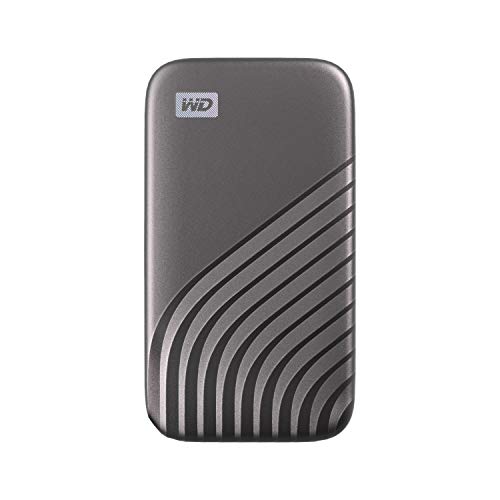
- Up to 1,050MB/s read speeds
- Password-enabled 256-bit AES hardware encryption
- Drop-resistant and USB-C/USB-A compatible
Best For: Portable backups and everyday secure file transfers
Rugged Professional Security
ArmorLock Encrypted NVMe SSD 2TB

- 2TB capacity with up to 1,000MB/s read/write speeds
- 256-bit AES-XTS hardware encryption
- IP67-rated with drop and crush resistance
Best For: Professional, multimedia, and shared secure storage
Keypad-Controlled Protection

- XTS-AES 256-bit hardware encryption
- Integrated keypad with Admin and User modes
- Auto-lock and broad cable compatibility
Best For: Shared access and keypad-controlled secure storage
PIN-Based NVMe Security

- Up to 1,000MB/s read/write speeds
- Separate Admin and User PIN modes
- Brute-force defense and unattended auto-lock
Best For: PIN-controlled secure storage and portable performance
Best for Regulated Field Use

- AES 256-bit XTS hardware encryption
- IP67-rated rugged, portable enclosure
- TAA compliant; FIPS 140-3 Level 3 pending
Best For: Government, enterprise, and regulated field environments
Best for Advanced Drive Control

- AES256-XTS hardware encryption
- Integrated hardware write-blocker
- Bootable ISO, VHD, and VMDK support
Best For: IT, recovery, and security-focused workflows
Best for Fast Mobile-Friendly Security

- Phone-based ArmorLock unlocking
- Up to 1000MB/s read and write speeds
- Multi-user and multi-drive management
Best For: Creators and mobile professionals needing fast encrypted storage
Key-Controlled Security

- 256-bit AES hardware encryption
- Physical CipherKey authentication
- 2TB capacity and cross-platform support
Best For: Compliance-focused users who prefer physical-key access
Flexible Unlocking
SecureData SecureDrive Duo 500GB
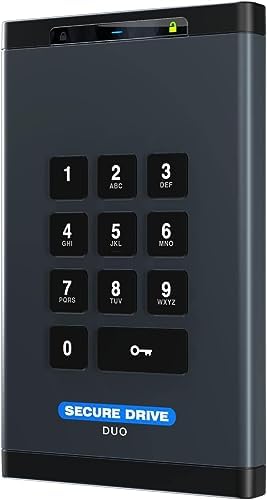
- FIPS 140-2 Level 3 encryption
- Phone app, biometric, and password unlocking
- USB-C and USB-A cables included
Best For: Users wanting flexible authentication and portable protection
Mobile Compliance

- FIPS 140-2 Level 3 hardware encryption
- Phone-based biometric or password unlocking
- 1TB capacity with protective pouch
Best For: Regulated teams needing app-unlocked portable storage
Fast Everyday Security – My Passport SSD 1TB
The Western Digital My Passport SSD is a practical external ssd with hardware encryption for everyday backups and portable file storage. Its NVMe design reaches read speeds of up to 1,050MB/s, while password-enabled 256-bit AES hardware encryption helps protect stored data.
Best For: Portable backups, everyday file transfers, and users who want password-protected storage in a compact drive.
Pros:
- Up to 1,050MB/s read and 1,000MB/s write speeds.
- Password-enabled 256-bit AES hardware encryption.
- Drop-resistant up to 6.5 feet and compatible with USB-C and USB-A systems.
- Includes a five-year limited manufacturer’s warranty.
Cons:
- Other operating systems may require reformatting.
- Its 1TB capacity may be limiting for very large media libraries.
This is a well-rounded choice when you want fast, compact storage with straightforward password protection and broad USB compatibility.
Rugged Professional Security – ArmorLock Encrypted NVMe SSD 2TB
G-Technology’s ArmorLock is a high-capacity external ssd with hardware encryption aimed at demanding personal and professional storage needs. It combines 256-bit AES-XTS hardware encryption with phone-based unlocking, multi-user management, and speeds up to 1,000MB/s.
Best For: Business users, multimedia work, and anyone needing rugged, shared encrypted storage.
Pros:
- 2TB capacity for larger projects and media collections.
- 256-bit AES-XTS hardware encryption with phone-based unlocking.
- IP67 dust and water resistance, up to 3-meter drop resistance, and 1,000-pound crush resistance.
- Supports multi-user and multi-drive management.
Cons:
- Phone-based unlocking may be less convenient than a built-in keypad for some workflows.
- Its premium security and rugged design may be more than casual users need.
ArmorLock stands out for combining substantial capacity, strong hardware encryption, and serious physical protection in a drive designed for collaborative or mobile work.
Keypad-Controlled Protection – SecureDrive+ SSD 1TB
The Glyph SecureDrive+ offers an external ssd with hardware encryption that is unlocked directly from its integrated keypad. XTS-AES 256-bit encryption, brute-force prevention, auto-lock, and separate Admin and User modes make it suited to users who want access controls built into the drive itself.
Best For: Shared work environments and users who prefer keypad access without relying on a phone or host software.
Pros:
- XTS-AES 256-bit hardware encryption with anti-hacking and brute-force protection.
- Integrated 10+1 keypad with Admin and User codes.
- Inactivity auto-lock and a tamper-proof enclosure.
- ExFAT formatting and compatibility with USB, USB-C, and Thunderbolt 3 connections.
Cons:
- The supplied specifications list a 360MB/s transfer rate, slower than the NVMe options here.
- The drive uses a USB 3.2 Gen 1 Type-microB port, requiring the appropriate cable.
- It weighs 1.1 pounds, making it less lightweight than many portable SSDs.
This model prioritizes hands-on access control over maximum speed, making its keypad and user-management features the main reasons to choose it.
PIN-Based NVMe Security – Aegis NVX 500GB
The Apricorn Aegis NVX is a compact external ssd with hardware encryption designed for PIN-controlled access. Separate Admin and User modes, programmable brute-force defense, recovery PINs, and unattended auto-lock add practical safeguards while the NVMe drive supports speeds up to 1,000MB/s.
Best For: Users who need direct PIN security, portable NVMe performance, and compatibility with computers or supported game consoles.
Pros:
- NVMe storage with up to 1,000MB/s read and write speeds.
- Separate Admin and User PIN modes with recovery PIN support.
- Programmable brute-force defense and unattended auto-lock.
- Durable 6061 aircraft-grade aluminum enclosure.
Cons:
- Its 500GB capacity is smaller than the other listed drives.
- The supplied details specify a USB 2.0 port, despite the drive’s USB 3.2 interface listing.
- Only a three-year manufacturer’s warranty is listed.
The Aegis NVX is a focused security choice for buyers who prefer hardware PIN controls and a durable enclosure, provided 500GB meets their storage needs.
Best for Regulated Field Use – DataLocker DL450 2TB
The DataLocker DL450 is a strong external ssd with hardware encryption for organizations that need rugged construction, compliance-focused security, and flexible authentication. It combines AES 256-bit XTS hardware encryption with password, Windows Hello, and Touch ID access.
Best For: Government, enterprise, and regulated users who need a durable, portable encrypted drive with 2TB of capacity.
Pros:
- AES 256-bit XTS hardware encryption with onboard key generation
- FIPS 140-3 Level 3 pending and TAA-compliant design
- IP67-rated enclosure for dust and water resistance
- Optional SafeConsole management supports policy enforcement and audit logging
Cons:
- SafeConsole management is sold separately
- Listed read speed is 0.25GB/s, below the fastest portable SSDs
- Its security-focused design may be more than casual users need
The DL450 prioritizes protection, compliance, and field durability over headline speed. It is particularly compelling when secure handling and centralized oversight matter as much as portable storage.
Best for Advanced Drive Control – IODD MINI Pro 1TB
The IODD MINI Pro is an external ssd with hardware encryption aimed at users who want more than secure file storage. AES256-XTS protection, a hardware write-blocker, decoy PIN support, and bootable virtual drive features make it a versatile security tool.
Best For: IT professionals, technicians, and security-conscious users who need encrypted storage with boot, recovery, and write-protection functions.
Pros:
- AES256-XTS encryption with 38-digit PIN and device-bound secondary password
- Hardware write-blocker helps prevent malware or accidental changes
- Supports bootable ISO, VHD, and VMDK virtual drives
- USB-C 3.1 Gen 1 connectivity with up to 5Gbps transfer rates
Cons:
- 1TB capacity may be limiting for large media libraries or backups
- Its extensive features may require more setup than a conventional external SSD
- Performance is tied to the USB 3.1 Gen 1 interface
This drive stands out for functionality rather than simplicity. The write-blocker and virtual boot-drive capabilities make it a practical choice for troubleshooting, recovery, and controlled data access.
Best for Fast Mobile-Friendly Security – SanDisk ArmorLock 1TB
The SanDisk Professional G-DRIVE ArmorLock is an external ssd with hardware encryption for users who want high-level security without relying on a traditional password workflow. Its phone-based unlocking, rugged design, and up to 1000MB/s read and write speeds suit demanding mobile and multimedia work.
Best For: Creators, businesses, and mobile professionals who need fast encrypted storage with smartphone-based access.
Pros:
- ArmorLock security enables phone-based unlocking without a password
- Auto Unlock can provide quick access from a pre-authorized device
- Up to 1000MB/s read and write performance
- Supports multi-user and multi-drive management
Cons:
- Its 1TB capacity may not suit very large project files
- Phone-based access may be less convenient for users who prefer standalone authentication
- Actual performance can vary by host device and usage conditions
ArmorLock is a good balance of speed and secure access, especially for workflows that move between computers and mobile devices. Its management features also make it more suitable for team use than a basic encrypted portable drive.
Key-Controlled Security – BUSlink CipherShield 2TB SSD
The BUSlink CipherShield is an external SSD with hardware encryption designed for users who want physical-key authentication rather than password-based access. Its 256-bit AES full-disk encryption runs at the hardware level, while the bus-powered design works across Windows, macOS, and Linux without drivers or software.
Best For: Compliance-conscious professionals, healthcare organizations, and anyone prioritizing physical access control for portable data.
Pros:
- 256-bit AES hardware encryption with FIPS 140-2 Level 2 certification.
- Physical CipherKey authentication; removing the key or cutting power locks the drive.
- 2TB SSD capacity with USB 3.2 Gen 1 speeds up to 5 Gbps.
- Compatible with Windows, macOS, Linux, and Windows Server.
Cons:
- Access depends on the included physical key, so key management is important.
- Uses USB 3.0-class connectivity rather than a faster USB 3.2 Gen 2 interface.
This drive stands out when hardware-based protection and compliance support matter more than the convenience of app- or password-based unlocking. Mode 1 also permits key removal after authentication for uninterrupted transfers.
Flexible Unlocking – SecureData SecureDrive Duo 500GB
The SecureData SecureDrive Duo is an external SSD with hardware encryption that combines keypad and phone-app unlocking. It includes USB-C and USB-A cables, works with major operating systems without drivers, and adds a splash-proof pouch for carrying the drive and accessories.
Best For: Personal and business users who want multiple biometric or password-based unlocking options in a compact 500GB drive.
Pros:
- FIPS 140-2 Level 3 hardware encryption.
- Supports phone-based unlocking with Face ID, fingerprint, or password options.
- Includes both USB-C and USB-A cables for flexible connectivity.
- Water-resistant and shockproof case with a splash-proof carrying pouch.
Cons:
- 500GB capacity is smaller than the other drives in this roundup.
- Included antivirus protection is a subscription service after the first year.
- May require reformatting for Mac, Linux, or universal exFAT use.
The Duo is a practical choice for users who want strong hardware encryption without carrying a dedicated security key. Its included cables and protective pouch make it convenient for mixed-device travel and everyday backups.
Mobile Compliance – SecureData SecureDrive BT 1TB
The SecureData SecureDrive BT is an external SSD with hardware encryption aimed at mobile professionals and regulated environments. It offers phone-app unlocking, FIPS 140-2 Level 3 protection, USB-C and USB-A cables, and stated support for CJIS, HIPAA, CMMC, and GDPR-related requirements.
Best For: Organizations and professionals needing 1TB of portable encrypted storage with app-based access and broad compliance positioning.
Pros:
- FIPS 140-2 Level 3 hardware encryption.
- Phone unlocking supports Face ID, fingerprint, or a remembered password.
- 1TB capacity with USB-C and USB-A cables included.
- Water-resistant and shockproof case with a protective carrying pouch.
Cons:
- The supplied specifications list USB 3.0/3.2-class transfer performance at up to 5 MB/s, which may limit large transfers.
- Antivirus software requires activation and becomes a subscription service after the included first year.
- May need reformatting for Mac, Linux, or exFAT compatibility.
Compared with the Duo, the SecureDrive BT doubles the listed capacity while retaining app-based access and strong compliance credentials. It is a sensible fit for field work, regulated data, and users who prefer phone-based authentication.
How We Picked the Best External SSD with Hardware Encryption
We evaluated the selected drives by looking beyond storage capacity and advertised transfer rates. Hardware-based encryption, authentication, and security certifications were primary considerations, followed by interface performance, physical protection, portability, warranty support, and ease of deployment.
The list includes compact consumer drives, keypad- and app-unlocked models, rugged NVMe storage, and compliance-focused devices. Because encryption implementations and included software can vary by configuration, verify the current manufacturer specifications before purchase—especially if your organization requires FIPS validation, TAA compliance, CJIS support, or a particular AES mode.
Quick Comparison
- Best for general personal use: Western Digital My Passport SSD offers a familiar portable format with password protection and hardware security.
- Best for fast professional workflows: G-Technology and SanDisk Professional ArmorLock models pair NVMe performance with rugged construction and app-based access control.
- Best for keypad access: Glyph SecureDrive+, SecureData SecureDrive Duo, and Apricorn Aegis NVX allow authentication without relying exclusively on a host computer.
- Best for regulated environments: DataLocker, BUSlink, and SecureData models emphasize compliance, tamper resistance, or enterprise-oriented management features.
Key Buying Factors for an External SSD with Hardware Encryption
Encryption and Authentication
Look for clearly stated AES-256 hardware encryption and determine how the drive is unlocked. Keypads are convenient for standalone use, phone apps can simplify administration, and software passwords may be more familiar but can depend on operating-system support. Confirm whether the design protects the encryption key if the drive is lost or tampered with.
Speed, Interface, and Compatibility
USB 3.2 Gen 2 and NVMe-based models can approach 1,000 MB/s in suitable conditions, while USB 3.0 or USB 3.1 Gen 1 drives are slower but often adequate for documents and backups. Check the computer’s port, cable type, file-system compatibility, and whether the quoted speed applies to your selected capacity.
Capacity and Physical Protection
Choose enough room for current files plus growth, particularly when storing video, photo libraries, or encrypted backups. Rugged housings, sealed connectors, and shock resistance matter for field work, while a slimmer drive may be preferable for daily commuting.
Compliance and Recovery
Business buyers should confirm the exact certification level and whether it applies to the complete product configuration. Also review password recovery, administrator controls, reset behavior, firmware updates, and warranty terms before storing irreplaceable data.
Who Should Buy Which External SSD with Hardware Encryption?
Choose a consumer-focused model if you primarily need secure portable backups and straightforward password protection. Select a keypad drive if you regularly use multiple computers or want authentication independent of host software. NVMe ArmorLock-style drives suit photographers, video editors, and mobile professionals who need stronger performance and rugged portability. For government, healthcare, legal, or corporate deployments, prioritize the DataLocker, BUSlink, Apricorn, and SecureData options that match your organization’s documented security and compliance requirements.
Whichever model you choose, maintain a second encrypted backup. Hardware encryption protects data if the drive is lost or stolen, but it cannot replace redundancy, careful password management, or a tested recovery plan.