The best hard drive docking stations for Windows make it easier to read, clone, back up, and reuse bare internal drives without installing them in a PC. They are especially useful for upgrading storage, recovering files, and managing spare SATA or NVMe drives.
This roundup compares 10 docking stations across connection speeds, bay capacity, drive compatibility, and offline cloning features so you can choose the right setup for your workflow.
Best 10 Hard Drive Docking Stations for Windows Picks for 2026
Best Single-Bay SATA Pick
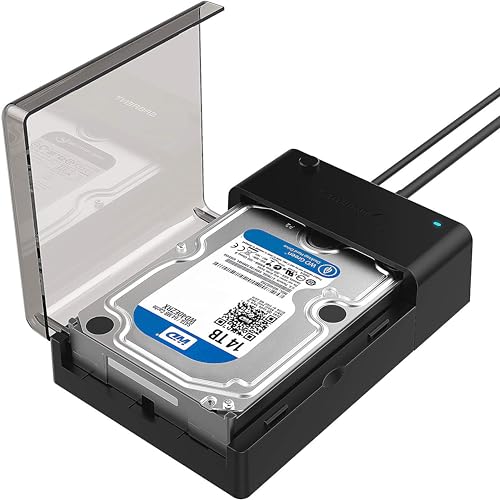
- Accepts one bare 2.5-inch or 3.5-inch SATA drive
- Tool-free hot-swap design for Windows 10/11
- Includes 12V power adapter; USB Type-A host connection
Best For: Simple access to one bare SATA HDD or SSD
Best Dual-Bay Cloning Value

- Holds two 2.5-inch or 3.5-inch SATA drives
- Offline cloning without a connected computer
- UASP and TRIM support over USB 3.0
Best For: SATA drive cloning, backups, and two-drive access
Best NVMe and SATA Flexibility

- Supports M.2 NVMe plus 2.5-inch and 3.5-inch SATA drives
- 10Gbps USB 3.2 Gen 2 interface
- Offline cloning between NVMe and SATA drives
Best For: Mixed-format drive upgrades and high-speed cloning
Best Established Dual-Bay SATA Dock
Sabrent EC-HD2B Dual-Bay Cloner
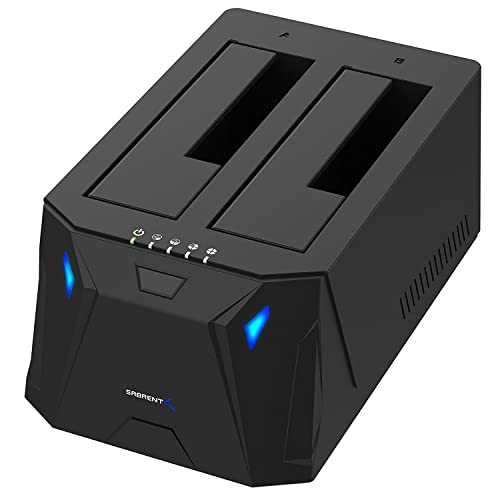
- Supports two 2.5-inch or 3.5-inch SATA drives
- Plug-and-play with USB 3.0 and UASP
- Includes offline cloning and power supply
Best For: Routine SATA drive access, migration, and backups
Fast Single-Drive Pick
SABRENT USB-C 10Gbps SATA Dock

- 10Gbps USB connection
- Fits 2.5-inch and 3.5-inch SATA drives
- Tool-free hot-swap design
Best For: Single-drive backups, transfers, and storage upgrades
Best for Everyday Use

- Two bays for simultaneous drive access
- Offline cloning without a computer
- UASP support up to 5Gbps
Best For: Drive migration and two-drive backup tasks
Offline Clone Specialist

- Offline 1-to-1 cloning
- Dual bays for separate drive access
- Supports 2.5-inch and 3.5-inch SATA drives
Best For: SATA drive cloning and two-drive file transfers
Best Budget Dual-Bay Dock

- Dual bays for 2.5-inch and 3.5-inch SATA drives
- Offline cloning without a computer
- USB 3.0 speeds up to 5Gbps
Best For: Windows users needing an affordable SATA-only dock
Best Multi-Format Dock
ICY BOX Triple-Bay NVMe/SATA Cloner

- Supports NVMe and 2.5/3.5-inch SATA drives
- Three bays for simultaneous drive access
- USB 3.2 Gen 2 speeds up to 10Gbps
Best For: Mixed-storage setups and frequent drive cloning
Best Protected SATA Dock

- Dual bays support SATA HDDs and SSDs
- Fixed bezels improve drive stability
- Offline cloning and up to two 20TB drives
Best For: Windows backups and SATA drive duplication
Best Single-Bay SATA Pick – Sabrent USB 3.0 SATA Dock
For shoppers comparing hard drive docking stations for Windows, the SABRENT EC-DFLT is a straightforward option for reading or swapping one bare 2.5-inch or 3.5-inch SATA drive. It is tool-free, supports plug-and-play use on Windows 10 and 11, and includes the power adapter required for desktop drives.
Best For: Windows users who need a simple single-drive dock for SATA HDDs or SSDs.
Pros:
- Supports 2.5-inch and 3.5-inch SATA I/II/III drives.
- Tool-free, hot-swappable design with power and activity LED.
- Includes a 12V adapter for stable 3.5-inch drive operation.
- Supports UASP over USB 3.0.
Cons:
- Supports SATA drives only; it does not support IDE/PATA, M.2, or SAS.
- Uses a USB Type-A host cable, so USB-C-only computers need an adapter.
- S.M.A.R.T. diagnostics do not pass through the USB bridge.
This is a practical, compact choice when you already have a bare SATA drive and do not need cloning or dual-bay functionality. Confirm the drive connector and your computer’s available ports before ordering.
Best Dual-Bay Cloning Value – ORICO Dual-Bay SATA Cloner
The ORICO DD28U3-C is a versatile choice among hard drive docking stations for Windows, combining two SATA bays with offline cloning. It can access 2.5-inch and 3.5-inch SATA drives, connect through USB 3.0, and duplicate a source drive without requiring a computer.
Best For: Windows users who need dual-drive access, backups, or offline SATA disk duplication.
Pros:
- Supports two 2.5-inch or 3.5-inch SATA I/II/III HDDs or SSDs.
- Offline clone function works without a computer.
- Includes a 36W 12V/3A power adapter and USB-A cable.
- Supports UASP, TRIM, and up to 5Gbps USB 3.0 transfers.
Cons:
- The target disk must be larger than the source disk for cloning.
- It does not power on without a hard drive inserted.
- The included host connection is USB-A rather than USB-C.
For SATA-only workflows, this ORICO offers more flexibility than a single-bay reader and adds a useful standalone clone mode. Its dual-bay layout suits upgrades and backup tasks, provided both drives are compatible SATA models.
Best NVMe and SATA Flexibility – WAVLINK Dual-Bay Cloner
The WAVLINK RapidFire U2C stands out among hard drive docking stations for Windows by supporting both M.2 NVMe SSDs and 2.5-inch or 3.5-inch SATA drives. Its USB 3.2 Gen 2 interface is rated up to 10Gbps, and its offline clone function can duplicate drives in either direction without a computer.
Best For: Users upgrading, cloning, or transferring data between NVMe and SATA drives.
Pros:
- Supports M.2 NVMe sizes 2230, 2242, 2260, and 2280.
- Also accepts 2.5-inch and 3.5-inch SATA HDDs and SSDs.
- Provides up to 10Gbps USB 3.2 Gen 2 connectivity.
- Supports offline, one-to-one cloning without a computer.
Cons:
- Actual transfer speeds depend on the drives and host system.
- The product’s broad drive support may be unnecessary for SATA-only users.
- Its listed compatible device category focuses on laptops, so verify your setup before buying.
This is the most flexible option in the group for mixed-drive environments. Choose it when NVMe support and cross-format cloning matter; for a basic SATA reader, a simpler dock may be more economical.
Best Established Dual-Bay SATA Dock – Sabrent EC-HD2B Dual-Bay Cloner
The SABRENT EC-HD2B is a dual-bay option for Windows users comparing hard drive docking stations for Windows-compatible storage tasks. It supports standard 2.5-inch and 3.5-inch SATA drives, offers plug-and-play operation, and includes an offline duplicator for copying one drive to another.
Best For: Users who want a familiar dual-bay SATA dock for drive access and basic offline cloning.
Pros:
- Accepts standard 2.5-inch and 3.5-inch SATA HDDs or SSDs.
- Supports two drives for convenient copying and transfers.
- Plug-and-play operation requires no drivers.
- Supports USB 3.0 transfer rates up to 5Gbps and UASP.
Cons:
- Listed support is for drives up to 10TB, unlike higher-capacity alternatives.
- Offline cloning is specified at up to 60Mbps.
- It does not support M.2 NVMe drives.
The EC-HD2B is a sensible SATA-focused dock when you need two bays and do not require NVMe compatibility. Its included power supply, USB 3.0 cable, and cloning function make it ready for routine drive migration and backup work.
Fast Single-Drive Pick – SABRENT USB-C 10Gbps SATA Dock
For shoppers comparing hard drive docking stations for windows, the SABRENT DS-UC1B is a straightforward single-drive option with a fast 10Gbps USB connection. Its tool-less bay accepts bare 2.5-inch and 3.5-inch SATA SSDs and HDDs, while included USB-C and USB-A-to-USB-C cables make connecting to compatible computers easier.
Best For: Windows users who need to swap, back up, or transfer data from one 2.5-inch or 3.5-inch SATA drive at a time.
Pros:
- Supports both 2.5-inch and 3.5-inch SATA SSDs and HDDs.
- 10Gbps USB 3.2 Gen 2×1 connection with backward compatibility.
- Tool-free, hot-swappable design with a retractable dust cover.
- Includes power adapter and both USB-C cable options.
Cons:
- Only supports one drive at a time.
- Designed for SATA drives, not M.2 or NVMe media.
The DS-UC1B is a practical choice when speed and broad 2.5/3.5-inch SATA compatibility matter more than dual-bay features. Its Windows plug-and-play setup and support for drives up to 20TB or larger make it suitable for ongoing storage work.
Best for Everyday Use – BENFEI USB-C HDD SSD Dock
The BENFEI dual-bay dock is a useful option among hard drive docking stations for windows when you need to manage two drives together. It supports simultaneous reading and writing, and its offline clone function can duplicate one drive to another without a computer.
Best For: Users migrating, backing up, or comparing two 2.5-inch or 3.5-inch HDDs or SSDs.
Pros:
- Dual bays allow two drives to be used at once.
- One-button offline cloning works without a PC.
- UASP support and USB 3.2 Gen 1 speeds up to 5Gbps.
- Dedicated 12V/2.5A adapter powers two drives, including 3.5-inch models.
Cons:
- Cloning requires the target drive to have greater capacity than the source.
- 5Gbps USB connection is slower than 10Gbps alternatives.
- The power switch should be turned off before connecting or removing drives.
Choose the BENFEI when dual-drive workflows and computer-free cloning are priorities. It offers practical capacity for migration projects, though its 5Gbps interface is better suited to dependable everyday transfers than maximum USB throughput.
Offline Clone Specialist – SABRENT Dual-Bay SATA Cloner
The SABRENT EC-CH2B stands out among hard drive docking stations for windows with its offline 1-to-1 cloning feature. It holds two bare 2.5-inch or 3.5-inch SATA drives, exposes both as separate drives over USB, and can clone without being connected to a computer.
Best For: Windows users who need a simple dual-bay SATA dock for drive cloning and file transfers.
Pros:
- Offline cloning works with the press of a button and no computer.
- Two drives can be read and written simultaneously when connected to a PC.
- Tool-free, hot-swappable bays with an access LED for each drive.
- Plug-and-play USB 3.0 connection supports speeds up to 5Gbps.
Cons:
- Supports SATA drives only; IDE/PATA, M.2, and NVMe drives are incompatible.
- Offline cloning runs up to 60MBps by design.
- The included cable is USB-C on the dock end, so a USB-A adapter or cable may be needed.
The EC-CH2B is a focused choice for cloning and two-drive access rather than high-speed connectivity. Confirm that your computer has the required USB-C connection and that the target drive is the same size as or larger than the source before ordering.
Best Budget Dual-Bay Dock – FIDECO SATA HDD/SSD Dock
For shoppers comparing hard drive docking stations for windows, the FIDECO offers a straightforward dual-bay solution for 2.5-inch and 3.5-inch SATA HDDs and SSDs. It connects over USB 3.0, supports plug-and-play use, and can clone drives offline without a computer.
Best For: Windows users who need an affordable SATA-only dock for accessing two drives or performing offline clones.
Pros:
- Supports two 2.5-inch or 3.5-inch SATA drives simultaneously.
- Offline cloning works without a connected computer.
- USB 3.0 transfers reach up to 5Gbps and require no driver installation.
- Compatible with Windows XP through Windows 10, as well as macOS and Linux.
Cons:
- Supports SATA drives only, not M.2 NVMe storage.
- New drives may need to be initialized before Windows recognizes them.
The FIDECO is a practical choice for routine backups, drive transfers, and SATA cloning. Its main limitation is the lack of support for newer NVMe drives, but its dual-bay layout and simple controls make it useful for basic Windows storage work.
Best Multi-Format Dock – ICY BOX Triple-Bay NVMe/SATA Cloner
Among hard drive docking stations for windows, the ICY BOX stands out for supporting both M.2 PCIe NVMe and 2.5-inch or 3.5-inch SATA drives. Its three independent bays, USB 3.2 Gen 2 interface, and one-touch offline cloning make it suited to more varied storage setups.
Best For: Professionals and mixed-storage households that need to access or clone NVMe and SATA drives from a Windows PC.
Pros:
- Supports M.2 PCIe NVMe, 2.5-inch SATA, and 3.5-inch SATA drives.
- Three independent bays allow multiple drives to be connected at once.
- USB 3.2 Gen 2 provides transfer speeds up to 10Gbps.
- Includes USB-C to USB-C and USB-C to USB-A connectivity.
Cons:
- The plastic construction may be less rugged than a metal enclosure.
- Its broader feature set may be unnecessary for users with SATA drives only.
This ICY BOX model is the most versatile option in the group, especially when NVMe and SATA media must share one workstation. The triple-bay design and fast USB interface add convenience for frequent drive management, while Windows and macOS compatibility supports mixed environments.
Best Protected SATA Dock – WAVLINK Dual-Bay HDD/SSD Dock
The WAVLINK is a dependable pick among hard drive docking stations for windows when you want a dual-bay SATA dock with added drive stability. It supports 2.5-inch and 3.5-inch SATA I, II, and III drives, includes fixed bezels, and offers USB 3.0 access plus offline cloning.
Best For: Windows users who want a tool-free dual-bay SATA dock for backups, file transfers, and offline drive duplication.
Pros:
- Supports 2.5-inch and 3.5-inch SATA I, II, and III HDDs and SSDs.
- Fixed bezels help provide stable drive positioning and protection.
- Offline cloning works without a computer, provided the target drive is at least as large as the source.
- Supports up to two 20TB drives and works with Windows 7 through 11.
Cons:
- It is designed for SATA storage and does not support M.2 NVMe drives.
- Offline cloning requires the target disk capacity to be equal to or greater than the source.
WAVLINK balances simple operation with useful drive protection. Its fixed-bezel design is a differentiator for users who frequently swap drives, while UASP and USB 3.0 provide faster transfers than USB 2.0 for everyday Windows backups and file management.
How We Picked the Best Hard Drive Docking Stations for Windows
We focused on practical compatibility and workflow features rather than headline specifications alone. The selected models cover 2.5-inch and 3.5-inch SATA HDDs and SSDs, dual-bay cloning docks, USB-C and USB 3.0 connections, and options that also support M.2 NVMe drives.
We also considered whether a dock supports offline cloning, tool-free installation, UASP, fixed or open drive bays, and clear power requirements. A good dock should make drives easy to insert and remove while maintaining a stable connection during transfers or cloning.
Quick Comparison
| Feature | What to look for |
|---|---|
| Drive support | 2.5-inch and 3.5-inch SATA, or SATA plus M.2 NVMe |
| Bay count | Single bay for occasional access; dual or triple bay for cloning and multitasking |
| Connection | USB 3.0 for basic transfers; USB-C 10Gbps for newer PCs and faster SSDs |
| Cloning | Offline cloning when copying one drive directly to another without Windows software |
| Windows use | Plug-and-play support, UASP compatibility, and dependable external power |
Key Buying Factors for Hard Drive Docking Stations for Windows
Drive Type and Size
Check whether your drives use SATA or M.2 NVMe. Most traditional 2.5-inch laptop drives and 3.5-inch desktop drives use SATA, while newer M.2 SSDs may require a dedicated NVMe slot. A SATA-only dock cannot read NVMe drives.
USB Speed and Host Compatibility
USB 3.0 is sufficient for many hard drives, but USB-C models rated at 10Gbps can reduce bottlenecks with SATA SSDs and compatible computers. The connector alone does not guarantee speed, so check the dock, cable, and Windows PC specifications.
Cloning and Backup Features
Offline cloning is convenient when the source and destination drives are installed directly in the dock. Confirm that the destination drive is at least as large as the source and remember that cloning usually overwrites existing data. For selective file copies, use Windows software instead.
Power, Cooling, and Stability
3.5-inch desktop drives require dedicated power, and multiple drives can draw more power during sustained transfers. Look for a secure enclosure, stable base, ventilation, and an included power adapter. Safely eject drives in Windows before removing them.
Who Should Buy Which Hard Drive Docking Stations for Windows?
Choose a single-bay SATA dock if you mainly access one spare drive at a time or need a simple recovery and backup tool. A dual-bay model is better for drive-to-drive cloning, routine migrations, or comparing two disks simultaneously. USB-C docks suit newer laptops and desktops, particularly when faster SSD transfers matter.
If your collection includes M.2 NVMe drives as well as 2.5-inch or 3.5-inch SATA disks, choose a multi-interface model instead of buying separate adapters. For occasional cloning, offline support can save setup time; for scheduled backups, Windows-based software offers more control over folders, partitions, and automation.