A great live recording can capture the energy of a room—but loud drums, shifting volume, and a poor mic position can ruin a take. The right portable recorder makes it easier to bring home audio you can actually use.
These eight options span pocket-friendly stereo recorders and more capable setups for external microphones. Start with how you plan to record: a quick rehearsal reference, a full-room concert capture, or separate tracks you can mix later.
Best 8 Portable Digital Recorders for Live Music Picks for 2026
Best for Mixer Feeds

- Four-track recording
- Two XLR/TRS inputs
- 32-bit float audio
Best For: Live sets with external mics or a mixer feed
Best for Songwriting Practice
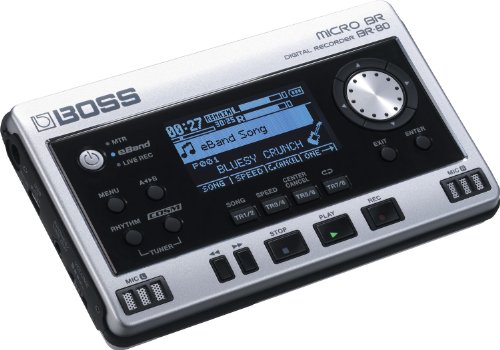
- Stereo live-recorder mode
- Multitrack recording tools
- Built-in rhythms and effects
Best For: Musicians who record, practice, and arrange on one device
Best for Built-In Mic Versatility

- Three built-in mics
- Nine pickup patterns
- 32-bit float recording
Best For: Live performances recorded without separate microphones
Best for Adjustable Stereo Mics

- Switchable A-B/X-Y positions
- Quick-access recording controls
- AA or USB mobile-battery power
Best For: Hands-on stereo recording at live performances
Best Grab-and-Go Stereo Recorder

- Built-in X/Y stereo microphones
- 32-bit float recording
- USB-C microphone mode
Best For: Quick rehearsal and acoustic-set recordings
Best for Loud Stereo Captures

- X/Y microphones rated to 130 dB SPL
- 32-bit float WAV up to 96 kHz
- No headphone jack
Best For: Loud concerts and rehearsals recorded in stereo
Best for Multitrack Productions

- Six XLR inputs
- Up to 14 tracks
- 32-bit float with dual AD converters
Best For: Multimicrophone live sessions and video productions
Best Compact XLR Option

- Two locking XLR/TRS inputs
- 32-bit/96 kHz recording
- Headphone output and waveform display
Best For: Compact two-source microphone or instrument recording
Best for Mixer Feeds – Zoom H4 Essential
Among portable digital recorders for live music, the Zoom H4 Essential is a practical choice when you want to capture room sound and connect microphones, instruments, or a mixer. Its four tracks and two XLR/TRS inputs give you more setup options than built-in mics alone.
Best For: Musicians recording performances with external mics or a soundboard feed.
Pros:
- 32-bit float recording helps protect loud performances from clipped takes.
- Built-in stereo mics and two XLR/TRS inputs support flexible setups.
- USB-C recording or streaming can run alongside an SD-card backup.
Cons:
- Limited to two XLR/TRS inputs for external sources.
- Requires two AA batteries for battery operation.
Choose the H4 Essential if input flexibility matters more than an all-in-one built-in-mic setup; check that two external inputs cover your stage plan.
Best for Songwriting Practice – Roland BR-80
The Roland BR-80 takes a musician-focused approach to portable digital recorders for live music. Its built-in stereo condenser mic can capture a performance quickly, while its multitrack and eBand modes make the recording useful for arranging and practice afterward.
Best For: Musicians who want a portable live recorder that doubles as a songwriting and practice tool.
Pros:
- Built-in stereo condenser mic supports quick live capture.
- Multitrack mode offers 64 V-Tracks and eight simultaneous playback tracks.
- Includes backing and rhythm patterns, COSM effects, and USB audio-interface functionality.
Cons:
- SD/SDHC card support is limited to 32 GB.
- Its multiple modes may be more than you need for straightforward concert recording.
The BR-80 makes most sense if you will use its creative features between gigs, not just record a stereo set and put it away.
Best for Built-In Mic Versatility – Zoom H2 Essential
If you prefer not to set up separate microphones, the Zoom H2 Essential stands out among portable digital recorders for live music. Three built-in mics and nine selectable patterns let you adapt its pickup to different performances and spaces.
Best For: Recording live music with built-in mics and a choice of mono, stereo, or surround pickup.
Pros:
- Nine recording patterns provide options for different sound sources.
- 32-bit float recording helps avoid clipped takes without adjusting gain.
- Can work as a USB microphone while recording an SD-card backup.
Cons:
- The supplied features do not list XLR/TRS inputs for external mics or a mixer feed.
- Bluetooth control and timecode syncing are optional workflows rather than essentials for a single-recorder setup.
Pick the H2 Essential when flexible built-in pickup is your priority; choose a recorder with listed external inputs if your plan depends on a soundboard connection.
Best for Adjustable Stereo Mics – Tascam DR-07X
The Tascam DR-07X is a straightforward option among portable digital recorders for live music when mic placement matters. Its adjustable built-in condenser mics can be set in A-B or X-Y positions to suit the sound you want to capture.
Best For: Listeners and musicians who want a handheld stereo recorder with adjustable mic positioning.
Pros:
- A-B and X-Y mic positions offer two stereo recording arrangements.
- Controls make recording, level changes, markers, and take deletion quick to access.
- Runs on two AA batteries or USB mobile-battery power; the listed recording time is 17.5 hours.
Cons:
- The supplied features do not list XLR/TRS inputs for external mics or a soundboard feed.
- Level adjustment is part of the workflow, unlike the listed 32-bit float Zoom models.
The DR-07X is a good fit for hands-on stereo recording, especially if you value choosing between A-B and X-Y before a set.
Best Grab-and-Go Stereo Recorder – Zoom H1 Essential
Among portable digital recorders for live music, the Zoom H1 Essential is a straightforward pick for capturing rehearsals, acoustic sets, and songwriting ideas with its built-in X/Y stereo microphones. Its 32-bit float recording helps when volume changes unexpectedly.
Best For: Musicians who want a compact recorder for quick stereo captures without setting up external microphones.
Pros:
- Built-in X/Y microphones make spontaneous stereo recording simple.
- 32-bit float recording helps protect against clipped takes.
- USB-C microphone mode adds a use for streaming and calls.
Cons:
- Runs on two AAA batteries.
- The supplied notes do not list XLR inputs for external microphones.
Choose this for a quick, self-contained recording workflow; look to an input-focused model if you need to connect stage microphones directly.
Best for Loud Stereo Captures – Xvive XV1-R
The Xvive XV1-R stands out among portable digital recorders for live music when the room gets loud: its built-in X/Y microphones are specified to handle up to 130 dB SPL. It records 32-bit float WAV at sample rates up to 96 kHz, with AAC available when smaller files matter more.
Best For: Musicians recording loud rehearsals or concerts with built-in stereo microphones.
Pros:
- X/Y microphones are rated for sound levels up to 130 dB SPL.
- 32-bit float WAV recording reduces the need to set gain precisely.
- Pre-record and auto-record offer useful capture options.
Cons:
- No headphone jack is listed for direct monitoring.
- Runs on two AA batteries.
Its loud-sound capability is appealing for concerts, but the lack of a headphone jack is a meaningful trade-off if you want to check the recording while it happens.
Best for Multitrack Productions – Zoom F6
For portable digital recorders for live music that can handle a larger microphone setup, the Zoom F6 offers six XLR inputs and recording across up to 14 tracks. Its 32-bit float recording with dual AD converters is designed for performances with wide swings in volume.
Best For: Musicians and production teams recording multiple microphones at the same live session.
Pros:
- Six XLR inputs support multichannel microphone setups.
- Records up to 14 tracks for flexible production.
- Timecode I/O helps when syncing audio to video.
- Headphone monitoring and USB audio-interface operation add workflow flexibility.
Cons:
- External microphones are needed to take advantage of its XLR-focused setup.
- Its 2.4-pound listed weight is less pocket-friendly than the smaller recorders here.
The F6 makes the most sense when separate tracks and microphone inputs justify the extra gear; it is more recorder than a simple stereo rehearsal capture requires.
Best Compact XLR Option – Zoom H1 XLR
The Zoom H1 XLR is a compact choice among portable digital recorders for live music if you already use external microphones or want to connect an instrument. Its two locking XLR/TRS combo inputs record at up to 32-bit/96 kHz, and an OLED waveform display provides a quick visual check.
Best For: Musicians who need a small two-input recorder for microphones or instruments.
Pros:
- Two locking XLR/TRS inputs accept a range of external sources.
- 32-bit/96 kHz recording supports detailed capture.
- Headphone output and OLED waveform display help with monitoring.
- Supports SDXC cards up to 1 TB.
Cons:
- The supplied notes do not list built-in stereo microphones; plan on an external source.
- Two main XLR/TRS inputs may be limiting for larger live setups.
Pick this when two connected sources are enough. For a full multitrack microphone setup, the six-input F6 is the more suitable option.
How We Picked the Best Portable Digital Recorders for Live Music
We focused on features that matter when recording live music: onboard microphones, external-input options, channel count, recording format, portable operation, and controls you can manage during a show. We also considered different workflows, from pressing record before rehearsal to capturing separate microphone or mixer feeds. This is a feature-based buying guide, not a claim that every recorder was tested in the same venue.
Quick Comparison: Which Type Fits Your Setup?
For a simple stereo capture, start with handheld models such as the Zoom H1 Essential, H2 Essential, H4 Essential, Tascam DR-07X, or Xvive XV1-R. The Zoom H1 XLR is better suited to a two-channel setup using external microphones or a feed from a mixer. Consider the Zoom F6 when you need multiple isolated inputs and a more deliberate recording setup. The Roland BR-80 is worth considering if you want a portable recorder geared toward building music projects as well as capturing ideas.
Key Buying Factors for Portable Digital Recorders for Live Music
Microphones, Inputs, and Track Count
Built-in stereo mics are convenient for documenting a performance from one position. External XLR inputs offer more flexibility when you have your own microphones or access to a soundboard feed. If you want to adjust individual sources after the show, check how many separate tracks the recorder can capture—not just how many microphones you can plug in.
Headroom and Recording Format
Live volume can jump suddenly. A 32-bit float recording option can give you more room to adjust unexpectedly high or low levels afterward, but it cannot fix a microphone that overloads acoustically or a distorted feed from the mixer. With a conventional recording setup, leave headroom and check levels during soundcheck. Confirm that your preferred model supports the file format and sample rate your editing workflow needs.
Placement, Power, and Monitoring
Mic placement often matters more than a spec-sheet upgrade. A recorder too close to the stage may emphasize one instrument; one too far back may capture more audience and room noise than music. Plan for a stable stand or mount, enough storage and power for the full set, and headphones for a quick check before the performance begins. If using a board feed, confirm the available outputs and connections with the sound engineer in advance.
Who Should Buy Which Portable Digital Recorders for Live Music?
Choose a compact stereo handheld if you mainly want fast rehearsal notes or a listenable record of a gig. Step up to a recorder with external inputs when mic choice or a mixer feed matters. Choose a multitrack field recorder if you need independent sources for a later mix and are willing to carry cables, microphones, and additional power. Whatever you buy, make a short test recording at performance volume before relying on it for an important show.