The best lavalier microphones for singing balance clear vocal pickup, dependable wireless performance, and comfortable hands-free use. The right choice depends on whether you perform live, record videos, or connect directly to a phone.
We compare 10 notable options across wireless formats, connector types, microphone systems, and price ranges to help you find a practical match for your voice, equipment, and performance setup.
Best 10 Lavalier Microphones for Singing Picks for 2026
Best Wireless Pick

- Two transmitters with mobile receiver
- Adjustable noise cancellation and limiting
- Up to 300 m range and 11.5-hour operation
Best For: Wireless singing videos, livestreams, and mobile creators
Best Wired Option

- Discreet 4.0 mm omnidirectional capsule
- 3.5 mm TRS connection for compatible gear
- Kevlar-reinforced cable and included pop shield
Best For: Wired recording with cameras, interfaces, or transmitters
Best Budget Wireless Kit
SUDEHO Mini Lavalier Microphone
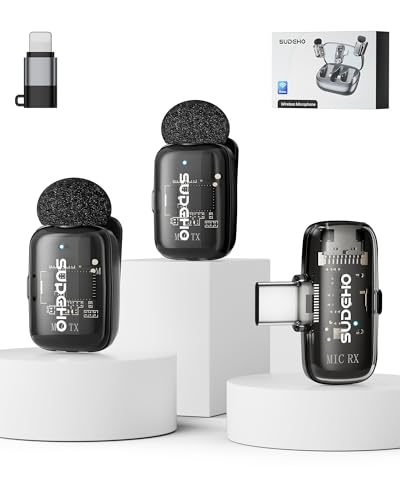
- Automatic plug-and-play pairing
- Three noise-cancellation levels
- Up to 36 hours with the charging case
Best For: Quick phone-based singing clips and livestreams
Best DJI Add-On

- Designed for DJI Mic and Mic 2
- Rotating design for flexible placement
- Cable routing helps prevent unplugging
Best For: DJI system owners needing a compact wired lavalier
Best for Flexible Live Performance
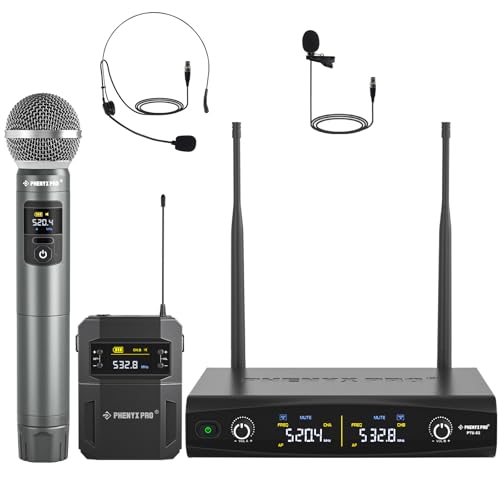
- Includes lapel, headset, and handheld microphones
- 30 tunable groups with up to 200-foot range
- XLR and 1/4-inch outputs for PA gear
Best For: Live singers, karaoke, and event performers
Best for Phone Content Creation

- Two microphones for shared recordings
- Lightning and USB-C device compatibility
- Plug-and-play setup with noise reduction
Best For: Mobile singing videos, livestreams, and interviews
Best for Portable Singing Performances

- Digital 48kHz/24-bit wireless transmission
- Includes headset and lapel microphones
- USB-C rechargeable receiver and bodypack
Best For: Solo singers, karaoke, weddings, and small stages
Best Plug-and-Play Pick
PQRQP 3-in-1 Wireless Lavalier

- USB-C, Lightning, and 3.5mm receiver options
- Up to 65 feet of wireless range
- Noise reduction with about seven hours of use
Best For: Mobile singing recordings and livestreams
Best for Karaoke

- Dual cordless UHF microphone setup
- Eight selectable frequency channels
- Up to 160 feet of operating range
Best For: Karaoke and small event audio systems
Best Wireless Pick – DJI Mic Mini
For singers who want freedom of movement, the DJI Mic Mini is a versatile choice among lavalier microphones for singing. Its two transmitters, mobile receiver, adjustable noise cancellation, automatic limiting, and up to 300 m transmission range suit rehearsals, livestreams, interviews, and mobile video recording.
Best For: Wireless singing videos, livestreams, and creators who need two transmitters and broad device compatibility.
Pros:
- Lightweight 10 g transmitters are discreet and comfortable to wear.
- Two noise-cancellation levels help reduce background sound.
- Up to 11.5 hours of operating time with the included setup.
- Works with iPhone, Android, PC, and tablet devices through USB-C.
Cons:
- Its wireless system is more elaborate than a simple wired lavalier.
- The strongest noise-cancellation setting may not suit every singing environment.
The Mic Mini stands out when mobility and quick setup matter. Automatic limiting adds protection against clipping, while the dual-transmitter package is useful for recording multiple performers or speakers.
Best Wired Option – Rode Lavalier GO
The Rode Lavalier GO is a straightforward wired option for singers comparing lavalier microphones for singing. Its 3.5 mm TRS connector works with compatible cameras, audio interfaces, and wireless transmitters, while the omnidirectional capsule offers flexible placement for performances and recordings.
Best For: Singers using cameras, audio interfaces, or compatible wireless transmitters who prefer a dependable wired connection.
Pros:
- Broadcast-grade audio capture from a discreet 4.0 mm capsule.
- Omnidirectional pattern is forgiving when the microphone moves slightly.
- Kevlar-reinforced 1.2 m cable is designed for durability.
- Includes a clip, cable management, pop shield, and pouch.
Cons:
- The 3.5 mm TRS connection may require an adapter for some phones.
- A wired cable provides less movement freedom than a wireless system.
Choose the Lavalier GO when simplicity, compatibility with traditional recording gear, and a robust cable are higher priorities than wireless convenience. Its included pop shield is also useful for reducing wind noise and vocal plosives.
Best Budget Wireless Kit – SUDEHO Mini Lavalier Microphone
The SUDEHO mini wireless microphone is designed for quick phone recording, making it a practical entry point for creators exploring lavalier microphones for singing. Its plug-and-play receiver, automatic pairing, adjustable noise cancellation, and charging case are aimed at simple video, livestream, and field-recording setups.
Best For: Phone-based singing clips, casual livestreams, and creators who want automatic pairing without an app.
Pros:
- Plug-and-play setup does not require Bluetooth or an app.
- Three noise-cancellation levels accommodate different environments.
- Up to 6 hours of continuous recording and 36 hours with the charging case.
- Up to 50 m of wireless transmission range.
Cons:
- The supplied notes do not specify the connector type or detailed audio specifications.
- Voice-changing modes may be less relevant for straightforward singing recordings.
This kit prioritizes convenience over detailed recording controls. It is a sensible choice for quick mobile content, particularly when automatic pairing and a compact charging case matter more than a traditional audio workflow.
Best DJI Add-On – DJI Lavalier Microphone
The DJI Lavalier Microphone is a compact wired add-on for users already working with DJI Mic 2 or DJI Mic systems. For singers seeking lavalier microphones for singing, its unidirectional pickup, rotating design, and cable-routing feature are useful when concealment and secure connection matter.
Best For: DJI Mic and DJI Mic 2 owners who want a compact wired lavalier for singing videos, livestreams, or interviews.
Pros:
- Compatible with DJI Mic 2 and DJI Mic systems.
- Rotating design supports flexible recording angles.
- Cable routing helps prevent accidental unplugging.
- Unidirectional pattern can focus pickup more narrowly than an omnidirectional lavalier.
Cons:
- It is an add-on microphone rather than a complete wireless system.
- Its 3.5 mm TRS connector is specifically described for a digital receiver.
This microphone makes the most sense within the DJI ecosystem. Its adjustable angle and cable protection address practical rigging problems, while the compact design helps keep the microphone discreet during performance recording.
Best for Flexible Live Performance – Dual UHF Lavalier System
For singers seeking lavalier microphones for singing in live venues, the Phenyx Pro PTU-52-1H1B combines a wireless bodypack with both lapel and headset microphones. Its UHF design, tunable frequency groups, and multiple outputs make it suited to karaoke, events, and PA systems.
Best For: Singers, presenters, and performers who need hands-free microphone options and flexible PA connectivity.
Pros:
- Includes both lapel and headset microphones, plus a handheld microphone.
- Offers 30 tunable frequency groups and up to 200 feet of open-space range.
- Cardioid and unidirectional pickup helps reject ambient noise.
- Provides two XLR outputs and one mixed 1/4-inch output.
Cons:
- Uses four AA batteries rather than rechargeable transmitters.
- The larger receiver and multiple components are less portable than a phone-focused wireless mic.
This is a strong choice when performance flexibility matters more than minimal setup. The included lapel and headset options let you adapt the system for singing, speaking, or shared-use events.
Best for Phone Content Creation – Wireless Mini Lavalier Pair
The MAYBESTA WM356-1 is a compact option for creators who want lavalier microphones for singing, short-form video, livestreaming, or mobile recording. Its two microphones, plug-and-play receiver, and Lightning and USB-C compatibility make it convenient for phone-based setups.
Best For: Mobile singers, vloggers, livestreamers, and creators recording with smartphones, tablets, or laptops.
Pros:
- Includes two lavalier microphones for interviews, duets, or shared recordings.
- Supports iPhone, iPad, Android, laptops, and tablets through Lightning or USB-C connections.
- Plug-and-play setup requires no adapter or application.
- Omnidirectional pickup, windscreen tips, and noise reduction support clear recordings.
Cons:
- Its 2.4GHz wireless design is aimed at mobile recording rather than professional PA systems.
- Omnidirectional pickup may capture more surrounding sound than a directional live-performance microphone.
Choose this set for convenience and portability rather than stage-grade integration. It is particularly practical when your singing content is recorded directly to a phone or tablet.
Best for Portable Singing Performances – Digital UHF Lavalier System
The Phenyx Pro PDP-1-1B is a portable digital UHF system for singers who want lavalier microphones for singing without giving up live-performance features. It includes both a lapel and headset microphone, rechargeable USB-C batteries, and a receiver designed for powered speakers, mixers, and karaoke equipment.
Best For: Solo singers performing at karaoke events, weddings, churches, small stages, and other indoor or outdoor venues.
Pros:
- 48kHz/24-bit digital circuitry is designed for delay-free, accurate transmission.
- Provides 15 tunable UHF frequencies in the 902–928MHz range.
- Includes both headset and lapel microphones with a portable bodypack.
- Rechargeable receiver and transmitter batteries charge through USB-C.
Cons:
- The receiver uses a 1/4-inch connection, so some devices may need the included adapters.
- Its 160–200-foot range depends on line-of-sight placement and keeping the antenna upright.
This system offers a useful balance between portability and live-use reliability. The rechargeable design and one-tap frequency selection simplify setup, while the included microphone choices accommodate different singing styles.
Best Plug-and-Play Pick – PQRQP 3-in-1 Wireless Lavalier
For creators seeking lavalier microphones for singing, the PQRQP GT16 is a flexible option for phone, tablet, and camera recording. Its 3-in-1 receiver, automatic pairing, and built-in noise reduction make it convenient for singing clips, livestreams, and mobile content.
Best For: Mobile singing recordings, livestreams, vlogs, and users who need broad device compatibility.
Pros:
- Includes USB-C, Lightning, and 3.5mm receiver connections for phones, tablets, cameras, and other devices.
- Offers up to 65 feet of wireless transmission and approximately seven hours of working time.
- Active noise reduction and an omnidirectional microphone help keep vocals prominent in recordings.
- Plug-and-play setup requires no app or Bluetooth connection.
Cons:
- The laptop 3.5mm connector does not support audio input according to the product notes.
- Some Android and USB-C devices may require OTG to be enabled manually.
- It is designed primarily for recording devices rather than direct connection to a PA system.
The PQRQP is a practical choice when portability and device flexibility matter most. It is especially suited to singers recording directly to a smartphone, though users should confirm connector and OTG compatibility before buying.
Best for PA Systems – TONOR UHF Bodypack Lavalier
The TONOR TW621 takes lavalier microphones for singing in a more traditional performance direction, using UHF transmission and a 1/4-inch receiver output. It is built for speakers, mixers, amplifiers, karaoke machines, and other compatible sound systems rather than phones or Bluetooth devices.
Best For: Singers, teachers, presenters, and performers using a PA system, mixer, amplifier, or karaoke machine.
Pros:
- Provides a stated wireless range of up to 200 feet line of sight.
- Includes both a lapel microphone and headset microphone for different hands-free uses.
- Offers 15 adjustable frequencies per bodypack to help manage interference.
- Receiver includes rechargeable power, while the bodypack uses two AA batteries.
Cons:
- It does not support Bluetooth and cannot connect directly to soundbars or TVs.
- The receiver uses a 6.35mm output, so an adapter may be needed for some inputs.
- A speaker, mixer, amplifier, or other compatible sound system is required; it does not play sound independently.
For live singing or spoken vocals through a venue sound system, the TONOR offers more range and frequency control than a typical mobile microphone kit. Check that your equipment has a compatible 1/4-inch microphone input before purchasing.
Best for Karaoke – Pyle Dual UHF Lavalier System
The Pyle PDWMU211 is a dual UHF microphone kit for singers who want cordless performance with a karaoke machine, amplifier, stereo, or DJ mixer. Its selectable channels, LCD frequency display, and independent volume controls make it suited to group entertainment and small event setups.
Best For: Karaoke, classroom use, conferences, and singers performing through compatible audio equipment.
Pros:
- UHF transmission is designed for clear, distortion-free vocal reproduction.
- Offers eight selectable frequency channels with an LCD frequency display.
- Provides up to 160 feet of operating range for movement during performances.
- Independent channel volume controls simplify adjustment for the two microphones.
Cons:
- The receiver connects through a 1/4-inch, 6.3mm audio jack, which may require an adapter for other inputs.
- The system is battery-operated, so replacement batteries are part of ongoing use.
- It is intended for compatible audio equipment rather than direct smartphone recording.
The Pyle is a sensible pick for karaoke and shared singing sessions where two wireless channels and simple onboard controls are useful. Its strongest fit is a compatible amplifier, mixer, or karaoke setup—not a standalone mobile recording workflow.
How We Picked the Best Lavalier Microphones for Singing
We evaluated these microphones by looking at the features that matter most to singers: vocal clarity, connection reliability, compatibility, freedom of movement, setup difficulty, and portability. We also separated compact plug-and-play systems from UHF equipment designed for stage, rehearsal, presentation, or more permanent setups.
Because lavalier microphones are worn near the chest rather than positioned directly in front of the mouth, placement and gain control are especially important. Noise reduction can help with room sound, but aggressive processing may affect vocal character. We favored products whose included transmitters, receivers, cables, and adapters match their intended use.
Quick Comparison
| Best For | Look For | Typical Advantage |
|---|---|---|
| Phone videos and social content | USB-C or Lightning compatibility | Fast setup and compact storage |
| Live singing and rehearsals | UHF or dependable digital wireless | Greater range and hands-free movement |
| Two-person recording | Dual transmitters | Records two voices at once |
| Camera recording | Camera-compatible receiver and cable | Direct connection to filming equipment |
Key Buying Factors for Lavalier Microphones for Singing
Sound and Vocal Pickup
Choose a microphone that captures the full vocal range without excessive hiss or harshness. A lavalier should remain clear when you sing softly and avoid unpleasant clipping when you project. Adjustable input gain, a suitable windscreen, and careful placement can matter as much as the microphone capsule itself.
Wireless Range and Stability
Digital systems are convenient for phones and content creation, while UHF systems are often better suited to live environments where performers need more room to move. Check the stated range, operating method, battery life, and whether the system can handle nearby wireless equipment without interference.
Device Compatibility
Confirm the connector before buying. USB-C, Lightning, camera, and mixer connections are not interchangeable without the correct receiver or adapter. Some compact kits are designed primarily for smartphones, while bodypack systems may require a camera input, audio interface, or mixer.
Fit, Battery Life, and Controls
A secure clip prevents clothing noise and keeps the capsule consistently positioned. For performances, prioritize rechargeable transmitters, visible battery indicators, mute controls, and enough operating time for the entire event. For casual recording, a charging case and small receiver may be more useful than maximum range.
Who Should Buy Which Lavalier Microphones for Singing?
- Phone-first singers and creators: Choose a compact wireless kit with the correct USB-C or Lightning receiver, automatic pairing, and a charging case.
- Live performers: Consider a UHF bodypack and lavalier system for extended range, replaceable or rechargeable power, and connection to a mixer or PA.
- Mobile filmmakers: Look for dual transmitters, onboard noise reduction, and compatibility with the camera or phone used for filming.
- Presenters, teachers, and casual vocalists: A straightforward single-transmitter system is usually easier to operate and avoids paying for unnecessary multi-person features.
Before ordering, verify the included receiver, connector, frequency requirements, and return policy. Even among the best Lavalier Microphones for Singing, results depend on placement, gain settings, room acoustics, and the input device.