The best hard drive docking stations for small businesses make it easier to access loose SATA drives, migrate systems, recover files, and expand storage without installing drives in a desktop enclosure.
We selected 10 versatile docks ranging from compact single-bay models to four-bay workstations, including USB-C, USB 3.0, offline cloning, SATA, and M.2 NVMe options.
Best 10 Hard Drive Docking Stations for Small Businesses Picks for 2026
Best Dual-Bay Cloner
SABRENT USB 3.0 Docking Station
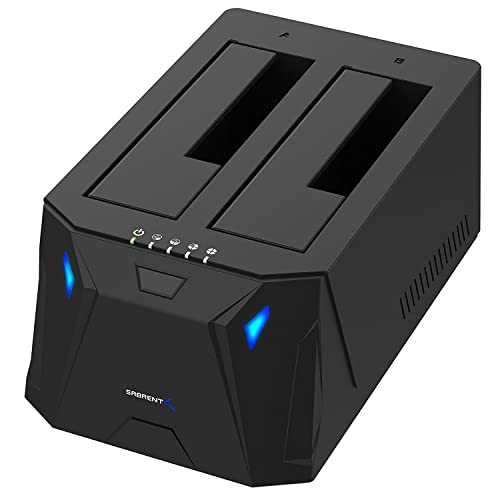
- Dual-bay SATA HDD/SSD support
- Offline cloning without a computer
- USB 3.0 transfers up to 5Gbps
Best For: Small offices managing and duplicating SATA drives
Best Universal Drive Reader

- Reads SATA and M.2 NVMe drives
- USB 3.2 Gen 2 up to 10Gbps
- Includes USB-C and USB-A cable support
Best For: Mixed-drive workflows involving legacy and NVMe storage
Best High-Capacity Workflow

- Four-bay SATA drive capacity
- Offline cloning with progress LEDs
- Trayless, tool-free drive access
Best For: IT teams handling several SATA drives simultaneously
Best Hub-Enhanced Cloner

- Dual-bay SATA cloning support
- Up to 48TB total listed capacity
- Three USB 3.0 hub ports
Best For: Offices needing cloning and extra USB-A connectivity
Best USB-C Single-Bay Dock

- 10Gbps USB-C connection with USB-A and USB-C cables
- Supports 2.5/3.5-inch SATA drives up to 20TB and larger
- Tool-free, hot-swappable operation across major desktop OSes
Best For: Small offices needing fast access to one SATA drive at a time
Best Dual-Bay Dock for IT Work

- Two bays for simultaneous 2.5/3.5-inch SATA drive access
- Independent power buttons support flexible hot-swapping
- Designed for backups, imaging, and data transfers
Best For: Small-business IT teams working with two SATA drives
Best Budget SATA Drive Reader
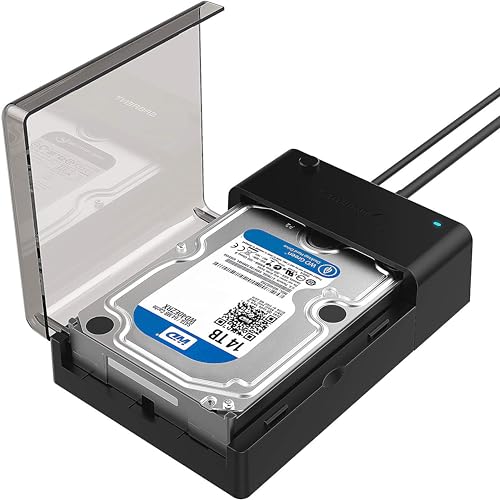
- Single-bay dock for 2.5/3.5-inch SATA drives
- Plug-and-play, tool-free, hot-swappable design
- Includes 12V adapter for 3.5-inch drives
Best For: USB-A offices needing an affordable SATA drive reader
Best Offline Cloner

- Computer-free SATA drive cloning
- Reads and writes two drives at once
- Tool-free 2.5-inch and 3.5-inch bays
Best For: Small offices handling regular drive duplication
Best for Broad OS Support

- Works with Windows, Mac, and Linux
- Offline cloning with no computer
- Two-bay USB 3.0 SATA access
Best For: Mixed-OS offices using SATA drives
Best Capacity Flexibility

- Supports up to two 20TB drives
- Offline cloning and UASP support
- Includes USB-A-to-C adapter
Best For: Businesses managing large SATA drive backups
Best Dual-Bay Cloner – SABRENT USB 3.0 Docking Station
For small businesses comparing hard drive docking stations, the SABRENT EC-HD2B is a practical dual-bay choice for reading, backing up, and cloning 2.5-inch or 3.5-inch SATA drives. Its USB 3.0 connection supports transfers up to 5Gbps, while offline cloning works without a computer.
Best For: Small offices that regularly access or duplicate SATA HDDs and SSDs.
Pros:
- Supports two 2.5-inch or 3.5-inch SATA HDDs or SSDs.
- Handles drives up to 10TB, with 20TB total storage capacity listed.
- Offers plug-and-play operation and offline cloning.
- Includes a USB 3.0 cable and power supply.
Cons:
- Limited to SATA drives rather than M.2 NVMe storage.
- Offline cloning is specified at up to 60Mbps, below the USB 3.0 interface’s maximum transfer rate.
The EC-HD2B is a straightforward fit for routine drive maintenance and one-to-one cloning. Its two-bay design provides useful flexibility without the larger footprint of a multi-bay dock.
Best Universal Drive Reader – ICY BOX M.2 and SATA Dock
The ICY BOX is one of the more versatile hard drive docking stations for small businesses because it accepts 3.5-inch HDDs, 2.5-inch SSDs, and M.2 NVMe SSDs in one compact, single-bay unit. USB 3.2 Gen 2 connectivity supports speeds up to 10Gbps, and the included cable works with USB-C and USB-A systems.
Best For: Teams that work with both legacy SATA drives and newer M.2 NVMe SSDs.
Pros:
- Supports 3.5-inch HDDs, 2.5-inch SSDs, and M.2 NVMe SSDs.
- USB 3.2 Gen 2 interface supports transfers up to 10Gbps.
- Screwless, open-vertical design makes drive changes quick.
- Compatible with Windows, macOS, Linux, and Android devices.
Cons:
- Single-bay design only accommodates one drive at a time.
- It is a reader/dock rather than a listed offline cloning station.
This dock is especially useful when a business handles mixed storage formats. Its broad compatibility and included USB-C-to-C+A cable reduce the need to maintain separate adapters.
Best High-Capacity Workflow – SABRENT 4-Bay Dock
For businesses managing several drives at once, the SABRENT DS-U3B4 provides four bays for 2.5-inch or 3.5-inch SATA HDDs and SSDs. It connects over USB 3.0, supports trayless insertion, and can clone drives offline with LED indicators showing progress.
Best For: Small-business IT work involving multi-drive access, backups, and drive-to-drive cloning.
Pros:
- Supports up to four 2.5-inch or 3.5-inch SATA drives.
- Trayless design simplifies drive insertion and removal.
- Offline cloning works without a computer or additional software.
- USB 3.0 supports transfers up to 5Gbps and remains compatible with USB 2.0 systems.
Cons:
- Supports SATA drives but does not list M.2 NVMe compatibility.
- Offline cloning is limited to drive-to-drive operations.
- The four-bay format is larger than a basic single- or dual-bay dock.
The DS-U3B4 is a strong operational choice when drive volume matters more than portability. Four bays can reduce repeated swapping during maintenance and backup tasks, while the external power adapter supports multiple installed drives.
Best Hub-Enhanced Cloner – MAIWO Dual-Bay Dock
The MAIWO dual-bay dock combines SATA drive cloning with three USB 3.0 hub ports, making it a useful option among hard drive docking stations for small businesses that need extra peripheral connectivity. It supports 2.5-inch and 3.5-inch SATA HDDs and SSDs, with up to 48TB total capacity and offline cloning.
Best For: Small offices needing a SATA cloner plus convenient USB-A expansion.
Pros:
- Supports two 2.5-inch or 3.5-inch SATA HDDs or SSDs.
- Lists support for up to 24TB per bay and 48TB total capacity.
- Offline cloning requires no computer or drivers and includes progress indicators.
- Provides three USB 3.0 hub ports, including one with 2.4A phone charging.
Cons:
- Uses USB 3.0 with transfer bandwidth up to 5Gbps rather than USB 3.2 speeds.
- Does not list M.2 NVMe compatibility.
- Its USB hub ports are Type-A, which may require adapters for newer USB-C devices.
The MAIWO stands out when a team wants more than a basic drive reader. Its dual-bay cloning setup and integrated hub can consolidate storage tasks and peripheral connections on one desktop accessory.
Best USB-C Single-Bay Dock – Sabrent DS-UC1B
For small businesses seeking hard drive docking stations for small businesses, the SABRENT DS-UC1B is a flexible single-bay option for accessing bare 2.5-inch and 3.5-inch SATA SSDs and HDDs. Its USB-C 10Gbps connection, included cables, and tool-free design suit routine backups, transfers, and drive swaps.
Best For: Small offices that need fast, straightforward access to one SATA drive at a time across Windows, macOS, or Linux systems.
Pros:
- Supports both 2.5-inch and 3.5-inch SATA SSDs and HDDs.
- Offers USB 3.2 Gen 2×1 speeds up to 10Gbps and includes USB-A and USB-C cables.
- Tool-free, hot-swappable design supports drives up to 20TB and larger.
- Includes a power adapter for reliable 3.5-inch drive operation.
Cons:
- Only one drive bay is available at a time.
- Requires a compatible USB port and bare SATA drive; it is not presented as a multi-interface dock.
The DS-UC1B is a practical choice when USB-C connectivity and higher transfer potential matter more than simultaneous drive access. Its broad SATA and operating-system compatibility gives a small business room to handle varied storage media.
Best Dual-Bay Dock for IT Work – StarTech SDOCK2U33
For teams comparing hard drive docking stations for small businesses, the StarTech.com SDOCK2U33 stands out when two SATA drives need to be available. Its dual-bay layout, independent power controls, and hot-swapping support are useful for backups, disk imaging, and data transfers.
Best For: Small-business IT work involving two 2.5-inch or 3.5-inch SATA drives, such as imaging, backup, and drive-to-drive workflows.
Pros:
- Provides two tool-less, top-loading bays for 2.5-inch and 3.5-inch SATA HDDs or SSDs.
- Independent power buttons allow an idle drive to be swapped while the other bay remains in use.
- Supports USB 3.2 Gen 1 transfer rates up to 5Gbps and includes a USB-A cable and power adapter.
- Backed by a two-year warranty and lifetime 24/5 multilingual technical assistance.
Cons:
- Uses a 5Gbps USB connection rather than the faster 10Gbps interface found on some newer docks.
- IDE drives require a separately sold adapter.
The SDOCK2U33 is a strong operational fit for a small IT department or office that regularly handles two SATA drives. Independent bay controls add useful flexibility, especially during staged backup or imaging tasks.
Best Budget SATA Drive Reader – Sabrent EC-DFLT
For straightforward hard drive docking stations for small businesses, the SABRENT EC-DFLT provides a simple single-bay solution for bare 2.5-inch and 3.5-inch SATA drives. It offers plug-and-play USB 3.0 connectivity, hot-swapping, and an included 12V adapter for 3.5-inch drives.
Best For: Budget-conscious offices that use SATA drives with computers equipped with USB-A ports.
Pros:
- Works with 2.5-inch and 3.5-inch SATA I/II/III HDDs and SSDs.
- Tool-free, plug-and-play design supports hot-swapping without a reboot.
- Includes the required 12V power adapter for 3.5-inch drives.
- Supports UASP and typical USB 3.0 transfer performance, with backward compatibility for USB 2.0 and 1.1.
Cons:
- Uses a USB Type-A host cable and has no USB-C port; a USB-C-to-USB-A adapter is needed for USB-C-only computers.
- Supports SATA drives only, not IDE/PATA, M.2 NVMe, M.2 SATA, or SAS drives.
- S.M.A.R.T. diagnostics do not pass through the USB bridge.
The EC-DFLT keeps the job simple and affordable for offices with USB-A computers and SATA media. Verify the drive connector and host-port requirements first, particularly if your equipment includes newer USB-C-only laptops.
Best Offline Cloner – SABRENT Dual-Bay USB-C Dock
For small businesses comparing hard drive docking stations for small businesses, the SABRENT EC-CH2B combines two-drive access with a computer-free cloning mode. It accepts bare 2.5-inch and 3.5-inch SATA HDDs and SSDs, connects over USB-C, and requires no driver installation.
Best For: Small offices that regularly duplicate SATA drives or move data between two mounted drives.
Pros:
- Offline 1-to-1 cloning without a computer, at speeds up to 60MBps.
- Reads and writes two SATA drives simultaneously when connected to a computer.
- Tool-free, hot-swappable bays with separate drive-access LEDs.
- Includes a USB-C cable, power adapter, and supports 2.5-inch and 3.5-inch SATA drives.
Cons:
- Supports SATA drives only; it does not support IDE/PATA, Molex-powered, M.2, or NVMe drives.
- The computer must have a USB-C port unless you supply a USB-C-to-USB-A cable.
- Offline cloning requires the target drive to be the same size as or larger than the source.
This is a practical choice when cloning and dual-drive workflows matter more than broad interface compatibility. Its USB 3.0 connection is rated up to 5Gbps, though actual performance depends on the installed drives.
Best for Broad OS Support – FIDECO Dual-Bay SATA Dock
The FIDECO dual-bay dock is a straightforward option for small businesses needing flexible access to two bare SATA drives. It supports Windows, macOS, Linux, and several older Windows versions, while offering USB 3.0 transfers and offline cloning without a computer.
Best For: Mixed-device workplaces that need a plug-and-play SATA dock across Windows, Mac, or Linux systems.
Pros:
- Supports two 2.5-inch or 3.5-inch SATA HDDs or SSDs simultaneously.
- Offers offline cloning by pressing and holding the Clone button.
- USB 3.0 transfer rates reach up to 5Gbps with no driver installation.
- Compatible with Windows XP through Windows 10, macOS, and Linux.
Cons:
- Supports SATA HDDs and SSDs only.
- New drives may need to be initialized before the computer recognizes them.
- The listed computer interface is USB 3.0 rather than USB-C.
FIDECO emphasizes broad operating-system compatibility and simple two-drive access. It is well suited to routine backups and transfers, provided your workflow uses SATA drives and you are prepared to initialize new disks when necessary.
Best Capacity Flexibility – WAVLINK Dual-Bay SATA Dock
The WAVLINK ST341UA provides two bays for 2.5-inch and 3.5-inch SATA drives, making it a useful contender among hard drive docking stations for small businesses. It adds offline cloning, UASP support, fixed bezels for drive stability, and included USB-A-to-C connectivity options.
Best For: Teams that need a dual-bay SATA dock for backups, file transfers, and large-capacity drives.
Pros:
- Supports SATA I, II, and III 2.5-inch and 3.5-inch HDDs and SSDs.
- Rated to support up to two 20TB drives.
- Provides offline cloning without a computer and supports hot-swapping.
- Includes a USB 3.0 Type-B-to-A cable and a Type-A-to-C adapter.
Cons:
- Works with SATA drives only and does not support other drive interfaces.
- Offline cloning requires a target disk with capacity equal to or greater than the source.
- Actual transfer performance depends on the drives and connection; the listed USB rate is up to 5Gbps.
The WAVLINK stands out for its stated two-drive, 20TB-per-bay capacity and flexible cable setup. Its fixed bezels may also help keep installed drives stable, making it a sensible fit for recurring storage expansion and backup tasks.
How We Picked the Best Hard Drive Docking Stations for Small Businesses
We focused on features that matter in offices, repair benches, studios, and small IT departments. The selection covers single- and dual-bay docks, a four-bay model, USB 3.0 and USB-C connectivity, SATA support, and an M.2 NVMe option. We also considered offline cloning, drive-size compatibility, stated capacity limits, power requirements, hub functions, and the practicality of swapping drives frequently.
A docking station is not a substitute for a backup strategy, so we favored products that can support dependable file transfers and straightforward drive management. Compatibility details should still be verified against your computer, operating system, drive interface, and workload.
Quick Comparison
- Best for occasional drive access: A single-bay SATA dock keeps the setup compact and simple.
- Best for cloning and migrations: Choose a dual-bay model with offline cloning, while confirming that the destination drive is equal to or larger than the source.
- Best for multiple drives: A four-bay dock can reduce cable clutter and make comparing or organizing several SATA drives easier.
- Best for newer laptops: USB-C models are convenient, but check whether the port supports the advertised data rate.
- Best for mixed storage: An M.2 NVMe/SATA dock can serve newer SSDs alongside traditional 2.5- and 3.5-inch drives.
Key Buying Factors for Hard Drive Docking Stations for Small Businesses
Drive and Interface Compatibility
Confirm support for 2.5-inch and 3.5-inch SATA HDDs or SSDs. M.2 drives are not automatically compatible with SATA docks; NVMe and SATA M.2 devices use different protocols. If your team handles both types, select a dock designed for the exact formats you use.
Connection Speed and Computer Ports
USB 3.0 is adequate for many archival and backup tasks, while USB-C 10Gbps models can shorten transfers when the host computer, cable, and drive all support the faster standard. A USB-C connector alone does not guarantee 10Gbps performance.
Cloning, Bays, and Workflow
Offline cloning can simplify one-to-one upgrades without running cloning software, but it is not the same as incremental backup or secure erasure. Dual bays are useful for migrations; multiple bays are better for technicians managing several drives.
Power, Capacity, and Reliability
3.5-inch hard drives generally require external power, so check the included adapter and voltage requirements. Review the stated maximum capacity, cooling and ventilation, indicator lights, eject or disconnect procedures, and warranty before deploying a dock for frequent business use.
Who Should Buy Which Hard Drive Docking Stations for Small Businesses?
Choose a compact single-bay dock if staff only need occasional access to removed drives. Select a dual-bay cloner for workstation upgrades, drive duplication, and routine technician tasks. A four-bay model suits small IT teams that compare, inventory, or back up several SATA drives at once. Businesses standardizing on modern laptops should lean toward USB-C, while mixed-device environments may prefer a dock with broad USB compatibility. If your storage fleet includes M.2 NVMe drives, choose a model with explicit NVMe support rather than assuming a SATA dock will work.