SDI converters can help integrate gaming consoles with broadcast monitors, long cable runs, switchers, and capture systems—but the right model depends heavily on your console’s output and your display workflow.
This roundup covers HDMI-to-SDI units, retro-video scalers, SDI-to-AV converters, and flexible capture-oriented options. Before buying, confirm the supported resolution, connectors, audio handling, and whether you need conversion in one direction or both.
Best 10 Sdi Converters for Gaming Consoles Picks for 2026
Flexible SDI/HDMI Pick

- Bidirectional SDI and HDMI conversion
- Supports SD, HD, and 3G-SDI
- Includes universal 5V power supply
Best For: Portable compatible SDI/HDMI setups
VGA and AV Conversion Choice
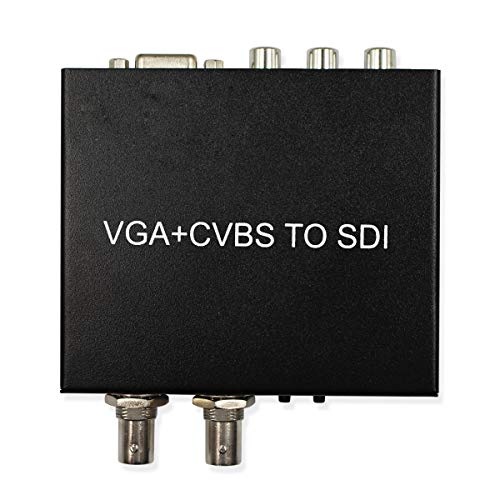
- Accepts VGA and composite AV
- Outputs SD, HD, or 3G-SDI
- Provides two BNC SDI outputs
Best For: Analog sources and SDI displays
Retro Console HDMI Option

- Supports several classic consoles
- Accepts AV, S-Video, component, and HDMI
- Outputs 720p or 1080p HDMI
Best For: Retro gaming on modern HDMI displays
12G Signal Upgrade
Micro Converter BiDirectional 12G

- Supports HDMI 2.0 input
- Provides bidirectional SDI/HDMI conversion
- Includes international 5V power supply
Best For: Compact compatible HDMI 2.0 workflows
SDI-to-AV Monitor Link

- Accepts 3G-SDI and HD-SDI
- Outputs composite video with L/R audio
- Does not support SD-SDI
Best For: HD-SDI or 3G-SDI equipment with an AV display
Professional SDI Flexibility
Blackmagic Design 12G Micro Converter

- Bidirectional SDI and HDMI conversion
- Compact 0.19 kg design
- Includes a two-year warranty
Best For: Mixed SDI/HDMI setups needing compact bidirectional conversion
Lag-Free Retro Play
Analog Retro Console to HDMI Scaler

- Line-doubles analog signals to 480p/576p HDMI
- Designed for zero input lag
- Supports smoothing and pass-through modes
Best For: Retro consoles connected to modern HDMI televisions
Best 4K Loopout Pick

- 4K HDMI to SD/HD/3G-SDI conversion
- Dual SDI outputs and HDMI loop-out
- Compact design for console setups
Best For: Gaming-console rigs needing SDI distribution and HDMI monitoring
Best Capture-and-Stream Option

- Captures HDMI or SDI video at up to 1080p60
- USB 3.0 connection for streaming and recording
- Microphone input with audio mixing support
Best For: Console streaming and recording with voice commentary
Best Long-Run HDMI-to-SDI Pick

- Dual SDI outputs from one HDMI source
- Supports up to 1080p60 input
- Long-distance SDI transmission claims
Best For: 1080p console installations using extended SDI cable runs
Flexible SDI/HDMI Pick – Micro Converter BiDirectional
The Blackmagic Design Micro Converter BiDirectional is a compact option for setups that need two-way SDI and HDMI conversion. For users comparing sdi converters for gaming consoles, its portable metal construction and included international power adapters make it useful when moving between displays, capture equipment, or other compatible HDMI devices.
Best For: Portable SDI/HDMI routing with compatible gaming and display equipment.
Pros:
- Supports one SD, HD, or 3G-SDI input.
- Provides HDMI Type A input and output connections.
- SDI output automatically matches the HDMI video input.
- Includes a 5V universal power supply with international socket adapters.
Cons:
- Its supplied specifications do not identify dedicated console compatibility.
- Power is limited to the included 5V supply requirement.
This is a practical choice when your console setup already uses compatible HDMI or SDI equipment and you want bidirectional conversion in a small enclosure. Confirm the required signal format and connections before buying.
VGA and AV Conversion Choice – VGA+CVBS to SDI Converter
The HDSUNWSTD VGA+CVBS to SDI Converter is designed for converting either VGA or composite AV video into SD, HD, or 3G-SDI. Among sdi converters for gaming consoles, it is most relevant when a console or other source uses analog video and the destination is an SDI-equipped monitor, projector, or broadcast-style setup.
Best For: VGA or composite AV sources feeding SDI monitors and projectors.
Pros:
- Accepts VGA and AV inputs.
- Converts sources to SD-SDI, HD-SDI, or 3G-SDI.
- Offers two BNC SDI output ports.
- Supports VGA or CVBS video for compatible monitors and projectors.
Cons:
- It does not list HDMI input or output.
- Console compatibility depends on the console’s VGA or composite AV connection.
- The supplied package uses a US power adapter.
This converter makes sense for older or analog gaming hardware in an SDI-centered installation. Check your console’s output type and your display’s supported SDI format before choosing it.
Retro Console HDMI Option – Portta AH180 4-in-1
The Portta AH180 is aimed directly at legacy systems rather than SDI workflows, converting AV, S-Video, component, or HDMI into HDMI output. It belongs in a comparison of sdi converters for gaming consoles only when your goal is to prepare retro-console video for an HDMI display before integrating it with other equipment.
Best For: Retro consoles that need flexible analog-to-HDMI conversion.
Pros:
- Supports Wii, PS1/PS2, N64, GameCube, Sega Saturn, and Dreamcast.
- Accepts composite, S-Video, component, and HDMI inputs.
- Offers 720p or 1080p HDMI output with 4:3 and 16:9 options.
- Includes picture controls, overscan adjustment, and settings memory.
Cons:
- It outputs HDMI rather than SDI.
- It is intended for legacy video sources, not a dedicated SDI signal path.
- It does not list support for every possible console model.
Choose the AH180 when broad retro-console support and HDMI output matter more than direct SDI conversion. Its format and picture controls can simplify connection to modern HDMI televisions and monitors.
12G Signal Upgrade – Micro Converter BiDirectional 12G
The Blackmagic Design Micro Converter BiDirectional 12G adds HDMI 2.0 support to a compact two-way SDI/HDMI converter. For buyers researching sdi converters for gaming consoles, it can suit compatible HDMI sources and pro-style displays, projectors, or SDI equipment where higher-bandwidth connectivity is required.
Best For: Compatible HDMI 2.0 sources in compact SDI/HDMI installations.
Pros:
- Includes one SDI input and one HDMI 2.0 Type A input.
- Provides SDI output that automatically matches the HDMI video input.
- Includes HDMI Type A output.
- Comes with a 5V universal power supply and international adapters.
Cons:
- The supplied notes do not specify gaming-console compatibility.
- It requires equipment with suitable HDMI, SDI, or display support.
- Its compact converter design may require separate cables and accessories.
This is the more advanced choice of the two listed Blackmagic converters when HDMI 2.0 compatibility is important. Verify the console’s output format and the receiving SDI or HDMI equipment before purchase.
SDI-to-AV Monitor Link – 3G SDI to Composite Converter
For buyers comparing sdi converters for gaming consoles, this unit is designed to turn SDI video into analog AV output for compatible televisions and monitors. It accepts 3G-SDI and HD-SDI signals through two BNC ports and provides L/R composite output, but it is not suitable for standard-definition SDI sources.
Best For: Connecting supported 3G-SDI or HD-SDI equipment to an AV-equipped TV or monitor.
Pros:
- Supports 3G-SDI and HD-SDI formats.
- Provides composite video with left/right audio output.
- Offers two SDI BNC ports in a compact black enclosure.
Cons:
- Does not support SD-SDI, including 480i and 576i sources.
- Outputs analog AV rather than HDMI.
- Its listed input voltage is 12 volts.
This converter is a focused choice when your source is HD-SDI or 3G-SDI and your display relies on composite AV. Confirm the source format and your TV’s available inputs before buying.
Professional SDI Flexibility – Blackmagic Design 12G Micro Converter
Among sdi converters for gaming consoles, the Blackmagic Design Bidirectional SDI/HDMI 12G Micro Converter stands out for its two-way SDI and HDMI conversion design. Its compact form suits setups that need to work across SDI and HDMI connections, though the supplied details identify camera compatibility rather than a specific console.
Best For: Compact SDI/HDMI workflows where bidirectional conversion and a two-year warranty are useful.
Pros:
- Supports bidirectional SDI and HDMI conversion.
- Compact micro-converter design with a listed weight of 0.19 kg.
- Includes a two-year warranty.
Cons:
- The supplied information does not specify particular gaming-console compatibility.
- Only one channel is listed.
- Operating temperature is listed as 72°F.
This is the most adaptable option of the three for mixed SDI and HDMI setups, but console users should verify the console’s signal path and required connections before purchase.
Lag-Free Retro Play – Analog Retro Console to HDMI Scaler
For retro-focused buyers researching sdi converters for gaming consoles, this product takes a different approach: it converts AV, S-Video, or YPbPr analog signals to HDMI. Its hardware line-doubling produces 480p or 576p output with no stated input lag, making it aimed at classic consoles rather than SDI-based systems.
Best For: Retro consoles such as N64, GameCube, SNES, PS1, PS2, Saturn, and Genesis systems used with modern HDMI TVs.
Pros:
- Converts 240p, 480i, 288p, and 576i analog signals to progressive HDMI output.
- Hardware line-doubling is designed for zero input lag.
- Offers smoothing and pass-through modes for different visual preferences.
- Supports a range of listed classic gaming consoles.
Cons:
- It is an analog-to-HDMI scaler, not an SDI converter.
- Requires a stable 5V/1A Micro-USB power source.
- The wall adapter is not included.
This is a practical choice for retro-console owners who need HDMI compatibility and low-latency line doubling. Keep the TV at 4:3 when needed, and plan to supply the required USB power adapter separately.
Best 4K Loopout Pick – Wiistar UHD to SDI Converter
For shoppers comparing sdi converters for gaming consoles, the Wiistar UHD to SDI Converter is a compact option when you need to convert an HDMI console signal into SDI while keeping an HDMI display connected. It supports SD-, HD-, and 3G-SDI output formats and accepts 4K UHD HDMI input.
Best For: Console setups that need dual SDI outputs plus an HDMI loop-out for a monitor or TV.
Pros:
- Converts 4K UHD HDMI input to SD-, HD-, or 3G-SDI.
- Provides two simultaneous SDI outputs for multiple displays or recording devices.
- HDMI loop-out mirrors the input to an HDMI display.
- Compact, lightweight design with BNC connectors.
Cons:
- No warranty is listed in the supplied details.
- SDI output is limited to the supported SD/HD/3G-SDI standards.
This is a strong fit for console video workflows built around SDI equipment, especially where 4K HDMI input and local HDMI monitoring are both useful.
Best Capture-and-Stream Option – SDI USB 1080p60 Capture Card
Among sdi converters for gaming consoles, this SDI USB capture card is aimed at recording and live streaming rather than simple display conversion. It accepts 1080p60 HDMI or SDI input, offers SDI loopout, and connects to a computer over USB 3.0.
Best For: Xbox One, PlayStation, and other console setups used for 1080p60 streaming or recording with voice commentary.
Pros:
- Supports up to 1080p60 capture over USB 3.0.
- Accepts HDMI or SDI input and includes SDI loopout.
- Supports microphone input and mixes line audio with microphone audio.
- Compatible with Windows, Linux, and Mac OSX without a listed driver requirement.
Cons:
- Maximum listed resolution is 1080p at 60 fps.
- Its computer-capture focus may be unnecessary for a basic SDI display connection.
- The supplied details list one SDI port.
This model makes the most sense when your console workflow includes a computer, live broadcast, or recording software and you want audio mixing alongside video capture.
Best Long-Run HDMI-to-SDI Pick – Dual SDI 3G Converter
If you need sdi converters for gaming consoles and prioritize straightforward HDMI-to-SDI distribution, this dual-output adapter supports common console-friendly resolutions through 1080p60. Its metal housing and stated long-distance SDI transmission make it suitable for home theater or extended cable runs.
Best For: HDMI-output consoles connected to two SDI displays over longer cable distances.
Pros:
- Provides two SDI outputs from one HDMI input.
- Supports HDMI resolutions from 480i through 1080p at 60 Hz.
- Lists transmission distances up to 100 m for 3G-SDI, 200 m for HD-SDI, and 300 m for SD-SDI.
- Metal shell is designed for durability and heat dissipation.
Cons:
- It converts HDMI to SDI only and does not support SDI-to-HDMI conversion.
- It does not list 4K input support.
- Audio embedding is mentioned, but detailed audio specifications are not supplied.
Choose this converter when your console outputs HDMI and your installation calls for two SDI feeds or a longer SDI run, rather than bidirectional conversion or 4K support.
How We Picked These Sdi Converters for Gaming Consoles
We selected models that cover the most common console and production scenarios: modern HDMI consoles, older systems using composite, S-Video, or component output, SDI distribution, and USB capture. We also considered signal direction, supported formats, audio connectivity, loop-through options, power requirements, and practical setup flexibility.
Because product specifications vary considerably, verify the exact input and output standards before purchase. “SDI converter” can describe anything from a simple HDMI-to-3G-SDI adapter to a retro-video scaler or an SDI-to-analog downconverter.
Quick Comparison
| Best For | Look For | Recommended Type |
|---|---|---|
| Modern HDMI consoles | HDMI input, supported resolution, stable SDI output | HDMI-to-SDI converter |
| Older retro consoles | Composite, S-Video, component, and scaling | Retro-video converter or scaler |
| Broadcast or long cable runs | 3G-SDI or 12G-SDI compatibility and locking BNC output | Professional SDI converter |
| Streaming and recording | USB 3.0 capture, frame-rate support, and audio handling | SDI capture card or converter |
Key Buying Factors for Sdi Converters for Gaming Consoles
Input and Output Compatibility
Start with the console’s native connection. HDMI-to-SDI models suit PlayStation, Xbox, Switch, PCs, and other modern sources, while retro systems may require composite, S-Video, or component inputs. If you need to connect several source types, a multi-input scaler can be more useful than a basic SDI adapter.
Resolution, Refresh Rate, and SDI Speed
Check whether the converter supports the console’s actual output, such as 720p, 1080p, 1080p60, or 4K. 3G-SDI is generally appropriate for many HD workflows, while 12G-SDI is intended for higher-bandwidth signals. Do not assume that a 12G model upscales or accepts every 4K format automatically.
Latency and Scaling
For gaming, low latency matters. A passive format conversion may feel more immediate than a scaler, but retro sources often need deinterlacing or line doubling to produce a clean modern display signal. Choose a purpose-built scaler when image compatibility is more important than absolute simplicity.
Audio and Connectivity
Look for embedded HDMI audio, analog stereo inputs or outputs, audio embedding, and extraction if your setup requires them. HDMI loop-through is useful for maintaining a direct display connection while sending a second feed to SDI equipment. Also check power delivery, included adapters, and the number of SDI outputs.
Who Should Buy Which Sdi Converters for Gaming Consoles?
Choose a Blackmagic Design bidirectional model if you want a compact, established solution for flexible HDMI and SDI workflows, especially in a production or streaming setup.
Choose an HDMI-to-SDI converter if your console is modern and your main goal is feeding an SDI monitor, switcher, router, or long cable run.
Choose a retro scaler if you use older consoles with AV, S-Video, or component output and need a cleaner HDMI signal with minimal delay.
Choose an SDI-to-AV converter if your workflow ends at an older television or analog display rather than an SDI monitor.
Choose a USB capture-oriented device if recording or livestreaming is the priority. Confirm that it supports your target frame rate and operating system before ordering.